(CHARLOTTE, NC.) – Charlotte City Council members spent much of their June 1 committee meetings requesting additional data and performance tracking across multiple policy areas, including affordable housing investments, Opportunity Zone designations, street vending enforcement, and the city’s ongoing transit authority transition.
The meeting highlighted a consistent focus from council members on how the city measures outcomes and evaluates the long-term effectiveness of major public investments.
Council members reviewed updates on the Affordable Housing Fund and housing bond investments, where staff outlined progress on homeownership initiatives and ongoing development activity. While the presentation emphasized increased investment activity, several members requested more detailed reporting on long-term outcomes, including project performance and geographic distribution of housing benefits.
Discussions also included a potential public development model for affordable housing, which would allow the city to take a more direct role in development.
Staff was directed to further evaluate the legal and financial feasibility of the approach, including the possibility of incorporating deeper affordability thresholds.
The housing discussion builds on previous council debates over how affordable housing dollars should be allocated and measured. Earlier this year, council members clashed over funding priorities, affordability requirements, and whether public investments were reaching the residents most in need, as detailed in "Housing Trust Fund Showdown Exposes Deep Divides Over Equity, Innovation, and Who Affordable Housing Actually Serves." The debate highlighted ongoing questions about equity and long-term outcomes in the city’s housing strategy.
A related discussion on Opportunity Zones 2.0 also drew attention, as council members considered the nomination of 14 census tracts for the federal program.
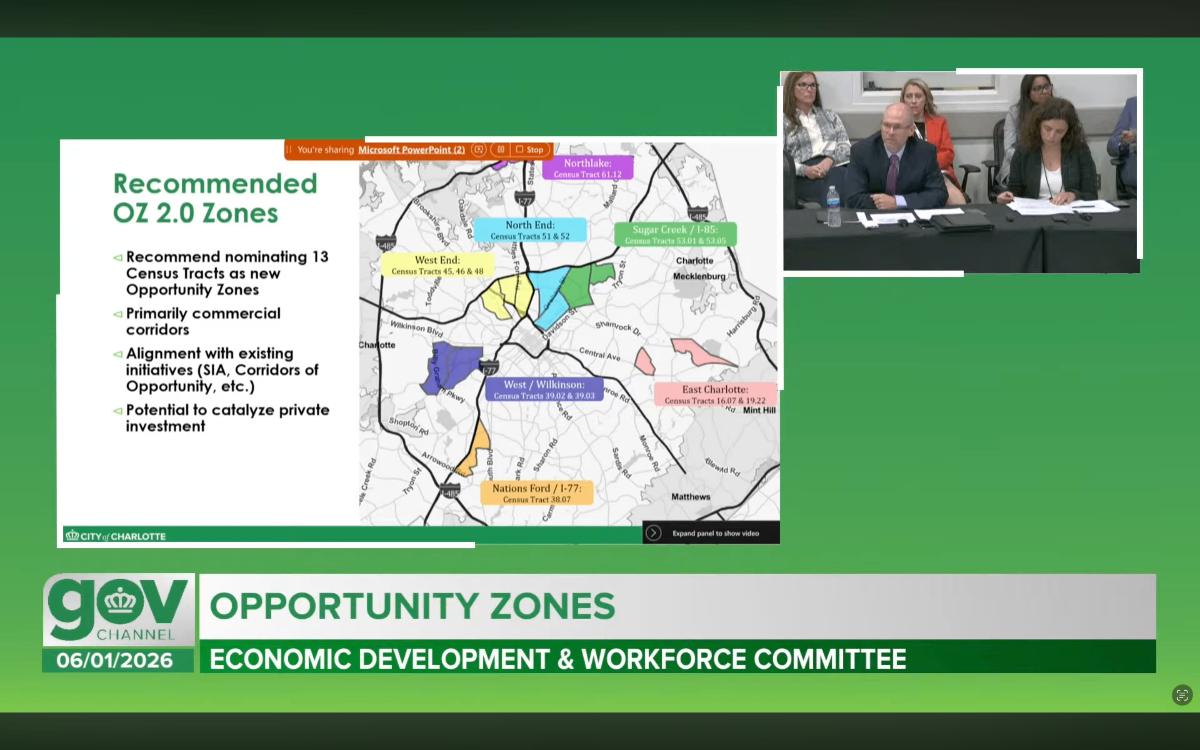
Members of the Economic Development and Workforce Committee evaluate a map of proposed census tracts for the federal Opportunity Zones 2.0 designation.
Photo Credit: City of Charlotte/YouTube
The designation aims to encourage private investment in targeted areas, but members raised questions about how previous opportunity zone investments have affected local communities.
Council ultimately approved the nominations after discussion about investment potential and community impact.
In transportation, officials provided an update on the transition to the Metropolitan Public Transportation Authority (MPTA), which is overseeing the restructuring of the region’s transit governance system. Council members raised questions about the pace of community engagement, employee protections during the transition, and participation opportunities for minority- and women-owned businesses.
Street vending enforcement also returned to the agenda, where council members voted to expand regulations citywide and introduce additional penalties for repeat violations.
Staff noted that existing civil penalties have had limited effectiveness due to low collection rates and enforcement challenges.
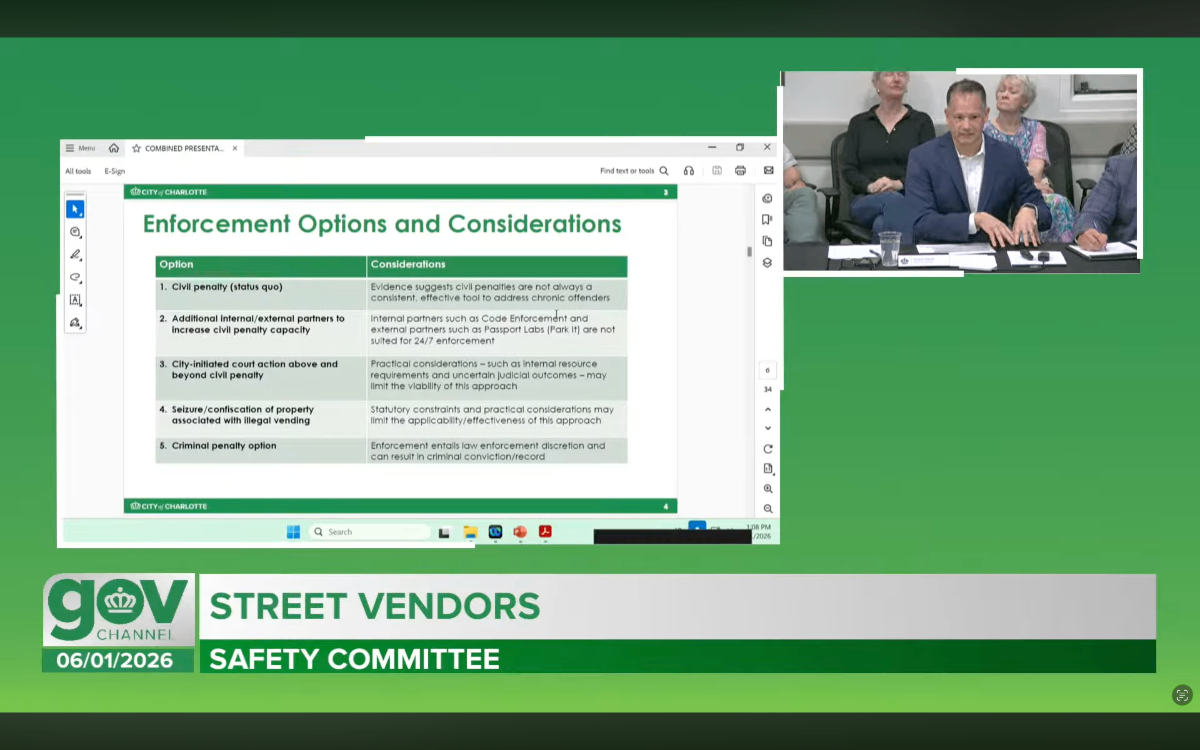
The Safety Committee reviews a matrix of enforcement options and civil penalties intended to address chronic violations among city street vendors.
Photo Credit: City of Charlotte/YouTube
Council members also requested additional data on citation tracking, collection rates, and repeat offenders, despite staff concerns about the administrative burden of compiling manual records under current systems.
The transit governance conversation also follows recent action by the Metropolitan Transit Commission, which approved a fare modernization plan during its final meeting before authority transitions to the Metropolitan Public Transportation Authority. As reported in "MTC Approves Fare Modernization in Final Meeting Ahead of Governance Shift," the change represents a significant shift in regional transit oversight and has prompted continued discussion about accountability, public engagement, and service accessibility during the transition.
Quality-of-life issues were also discussed, including updates to nuisance abatement ordinances and ongoing concerns related to code enforcement in commercial districts.
While most of the meeting focused on housing, transit, and enforcement policies, council members also reviewed a proposed 150-day moratorium on new data center development applications, which is scheduled for a full council vote on June 8.
The moratorium would temporarily pause new applications while staff evaluate potential impacts related to infrastructure demand, land use, and environmental concerns. Projects with approved permits or complete applications would be exempt from the pause.
The discussion follows a May 26 public hearing where residents and stakeholders raised concerns about energy use, water demand, and environmental impacts associated with large-scale data center development. Other speakers argued that data centers are essential infrastructure supporting digital and economic growth.
Council members did not take final action on the proposal during the June 1 meeting.
Throughout the session, members repeatedly emphasized the need for improved data collection and clearer performance metrics across departments.
The recurring requests reflected broader concerns about how the city evaluates the effectiveness of its investments in housing, transit, and economic development programs.
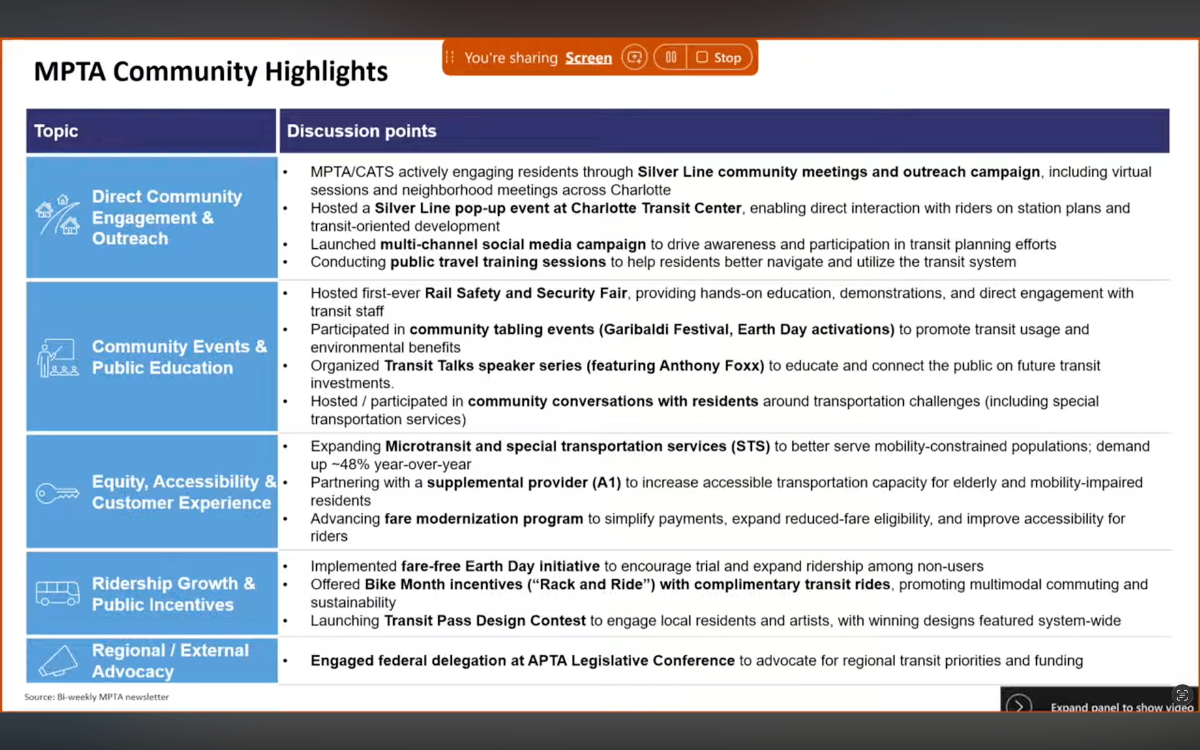
A presentation slide outlines the Metropolitan Public Transportation Authority's community highlights, focusing on public engagement, equity, and ridership growth during the governance transition.
Photo Credit: City of Charlotte/YouTube
To add to or correct any information in this report, please contact me at victoria.o@lead4earth.org.
Thumbnail Photo Credit: City of Charlotte/YouTube
0
0

Comments