(CHARLOTTE, NC.) – Residents packed the May 26 meeting of the Charlotte City Council as a proposed 150-day moratorium on new data centers drew overwhelming public comment, with the majority of speakers urging city officials to pause approvals while long-term environmental and zoning regulations are developed.
The public hearing focused on temporarily halting new telecommunications and data storage facility applications while city staff studied impacts on water usage, energy demand, infrastructure strain, land use, and environmental concerns across Charlotte.
A final vote on the moratorium is expected on June 8.
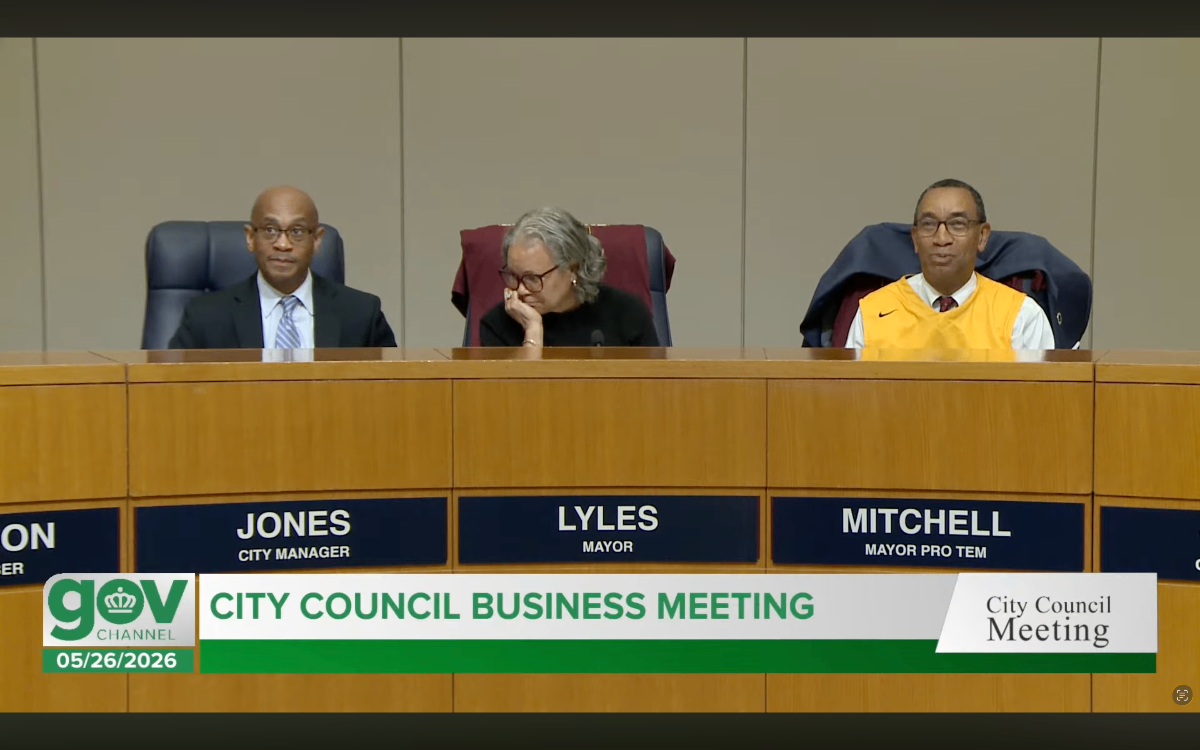
Charlotte City Manager Jones, Mayor Lyles, and Mayor Pro Tem Mitchell preside over the heavily attended May 26 public hearing.
Photo Credit: City of Charlotte/YouTube
Community members who attended and followed the meeting described a heavily one-sided public comment period, with strong opposition to new data centers dominating the discussion.
“It was a very passionate meeting and the residents, including PhD level environmentalists who spoke in opposition,” Mo Drayton wrote following the meeting. “There were about 5 who spoke for it. The vote will be on June 8th.”
Nancy Carter said approximately 36 residents spoke during the hearing, with only a small number in support of continued development.
“About 4 in favor and the rest of us passionate about protecting the Eastside, the environment, the use of land, energy and water!” Carter wrote.
Other residents echoed similar sentiments online, thanking attendees who spoke and expressing frustration that many people were unaware of the meeting in advance.
“I could not attend but greatly appreciate those of you who made the argument against these monstrosities,” Lori S. wrote. “Let us hope, for all our sakes, that you were successful.”
Concerns raised during the hearing centered on water consumption, electricity demand, noise pollution, heat generation, and the placement of hyperscale facilities near residential neighborhoods and environmentally sensitive areas.
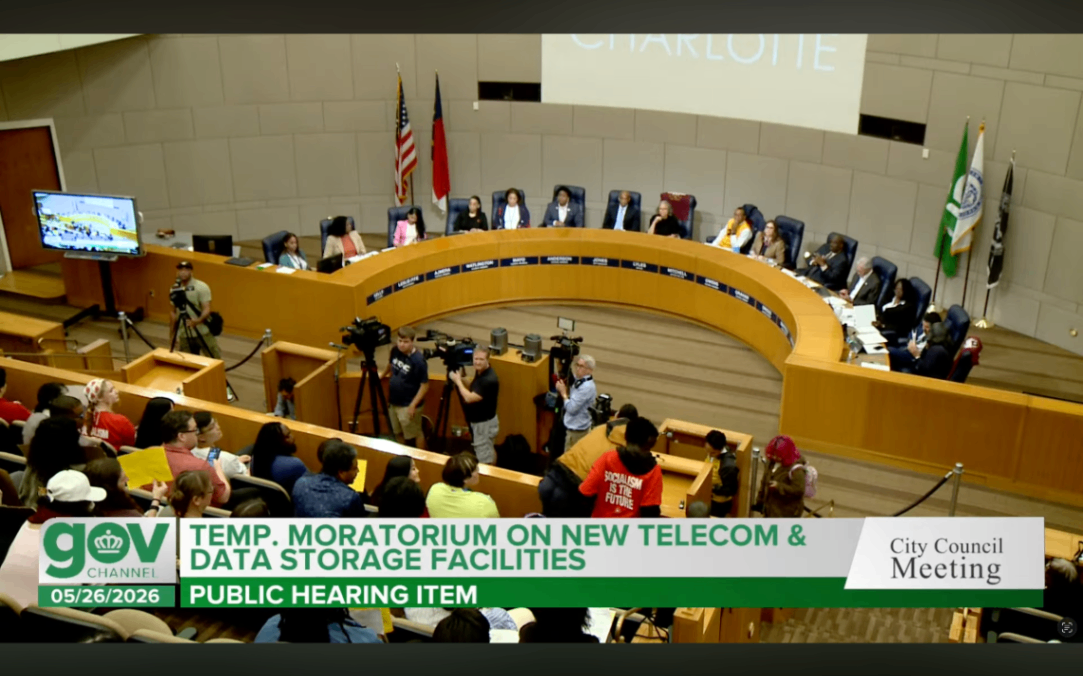
The Charlotte City Council listens to hours of public testimony regarding the long-term environmental and infrastructural impacts of hyperscale facility placement.
Photo Credit: City of Charlotte/YouTube
Brandon Jones of the Catawba Riverkeeper warned that large-scale data centers could place significant strain on regional water resources, especially during drought conditions, while other speakers cited concerns about rising energy costs tied to increased demand from industrial-scale computing facilities.
Environmental justice concerns were also repeatedly raised, with residents and researchers arguing that many proposed or approved facilities are located in communities already facing pollution burdens and infrastructure strain.
Tina Schaw, an associate professor at the University of North Carolina at Charlotte, said the siting patterns reflect broader inequities in land use planning and development.
The hearing also comes amid broader national attention on how local governments are handling large-scale infrastructure approvals.
In Sacramento, California, author Angela Underwood reported in “New Political Action Committee in Town,” that political action committees are increasingly influencing how development and infrastructure debates are framed, raising questions about how messaging and funding shape public understanding of local projects.
Industry representatives in Charlotte, however, urged the council to consider a balanced approach.
Bobby Joe Laris, president of NAIOP Charlotte, cautioned against policies that could discourage investment, while arguing that data centers are becoming increasingly efficient and essential to modern infrastructure.
Attorney Casey Moravec of the Southern Environmental Law Center supported the moratorium, stating it would allow the city time to develop more targeted regulations for hyperscale facilities.
The debate in Charlotte mirrors similar discussions occurring in other cities facing rapid data center expansion.
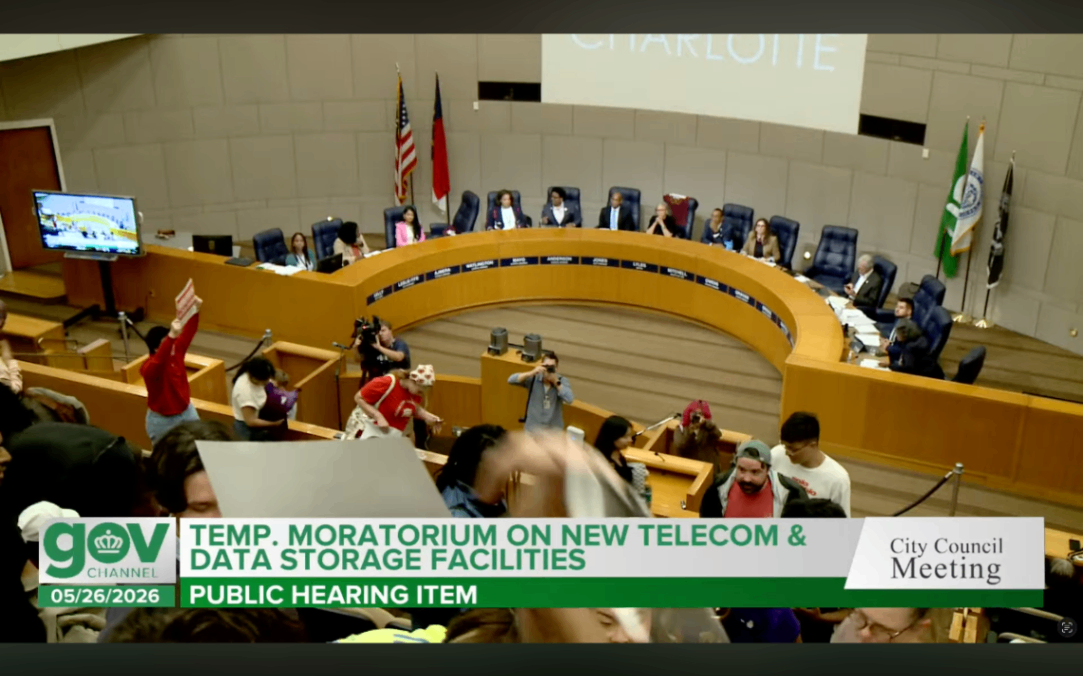
Media crews and residents document a highly energized public comment period that drew sharp contrasts between corporate expansion and neighborhood preservation.
Photo Credit: City of Charlotte/YouTube
In Minneapolis, Minnesota, Kristin Hassel reported in “Minneapolis City Council Effectively Pauses CCS Nomination Reconsideration Cycle,” that city leaders temporarily delayed key appointment and decision-making processes amid public pressure, highlighting a broader trend of local governments slowing major actions to allow for additional review and community input.
While Charlotte’s decision is still pending, the volume of public testimony and growing regional attention suggest the moratorium debate is becoming part of a larger national conversation about how cities regulate emerging digital infrastructure.
Residents who spoke at the meeting emphasized that the issue extends beyond zoning and technology policy.
“This is about who gets protected,” one speaker said. “People or corporations.”
The proposed moratorium remains under review, with city staff continuing to evaluate regulatory options ahead of the June 8 vote.
To add to or correct any information in this report, please contact me at victoria.o@lead4earth.org.
Thumbnail Photo Credit: City of Charlotte/YouTube
0
0

Comments