(OPGOV GLOBAL) – Attention-deficit/hyperactivity disorder (ADHD) has historically been diagnosed less often in girls and women, with differences in symptom presentation, masking and gender expectations potentially contributing to delayed identification.
ADHD is a neurodevelopmental disorder associated with patterns of inattention, hyperactivity and impulsivity.
Although the condition affects people of all genders, research has found that ADHD can present differently among females, potentially making some cases more difficult to recognize.
A 2023 systematic review examining ADHD in adult women found that women living with undiagnosed ADHD can experience difficulties involving social and emotional well-being, relationships and feelings of a lack of control.
The review also identified gender expectations and coping strategies as factors that can contribute to ADHD symptoms being overlooked.
Girls with ADHD may be less likely to attract attention from teachers or parents when their symptoms do not involve disruptive behavior.
Research has found that girls are more likely to display inattentive symptoms, including distractibility, disorganization, and forgetfulness. These symptoms may be less disruptive in classrooms than hyperactive or impulsive behaviors, potentially reducing the likelihood that a child will be referred for an ADHD evaluation.
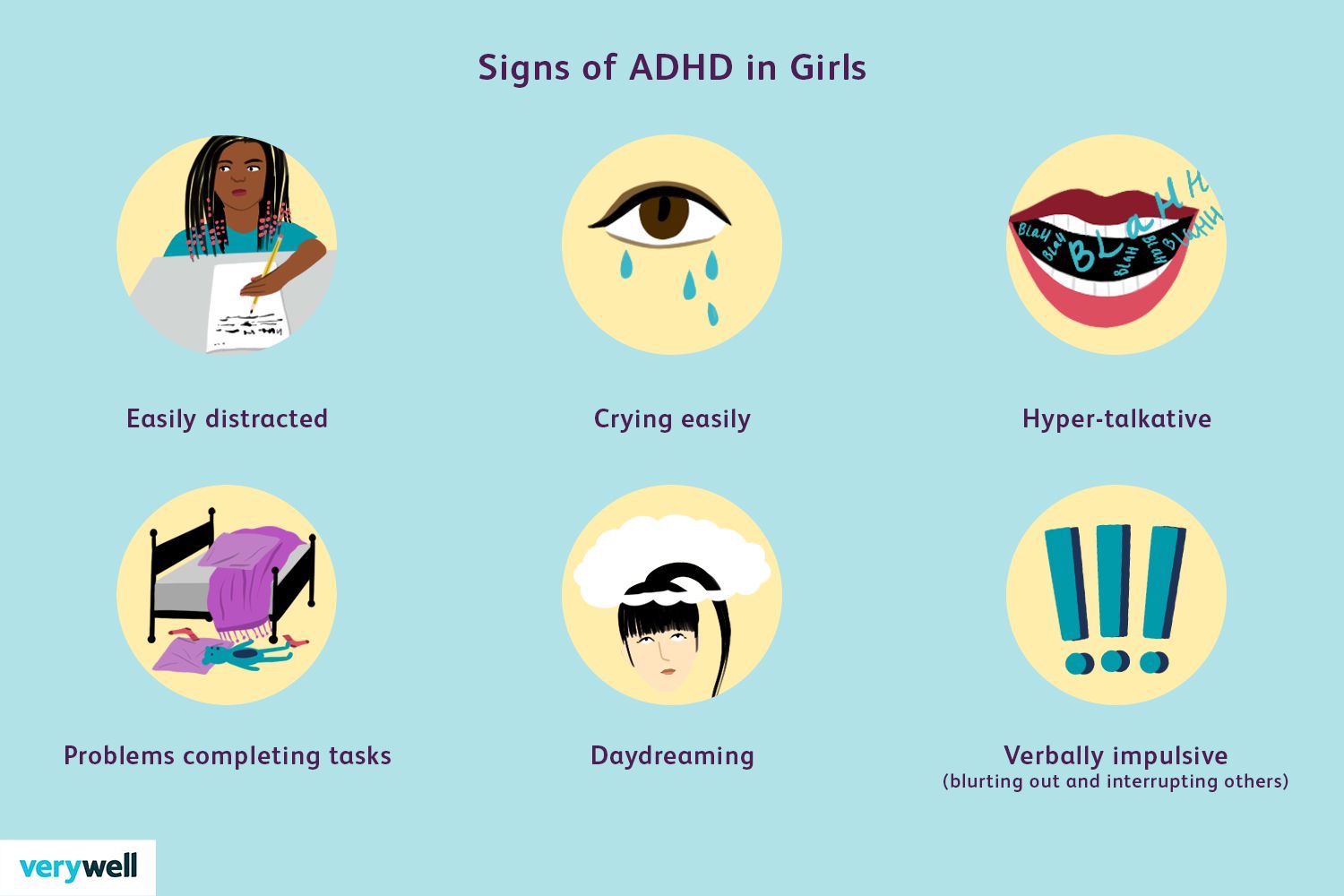
Primary signs of ADHD in girls often center on inattention, daydreaming, and emotional sensitivity rather than disruptive behaviors.
Photo Credit: Verywell Health/Website
A 2025 systematic review examining ADHD symptoms and impairments in females similarly found evidence of differences in some ADHD symptoms and areas of impairment between males and females.
The researchers noted that relatively few studies have directly examined these differences, limiting the available evidence on how ADHD presents in females.
Some studies included in the review reported higher rates of symptoms such as mind-wandering among females with ADHD, along with difficulties involving friendships and other areas of functioning.
Researchers said examining individual symptoms rather than relying only on overall symptom scores could improve understanding of ADHD in females.
The difference in recognition can continue into adulthood.
Women may develop strategies to compensate for difficulties with attention, organization and time management. Extensive lists, reminders, strict routines or repeatedly checking work can help someone meet expectations while making underlying difficulties less visible.
These behaviors are sometimes described as masking or compensatory strategies.
The 2023 systematic review found that girls and women may use coping strategies to hide ADHD-related difficulties, particularly when their behavior conflicts with social expectations.
Girls are often expected to be organized, attentive, and well-behaved.
When they struggle with those expectations but learn to compensate, their difficulties may instead be interpreted as forgetfulness, carelessness or a lack of effort.
Academic performance can also make ADHD more difficult to identify.
The 2023 review found that satisfactory academic performance should not necessarily exclude ADHD as a possibility in women. A student may maintain strong grades while using significant effort and organizational strategies to compensate for attention-related difficulties.
Mental health conditions can further complicate recognition.
The systematic review of adult women found that women with ADHD may experience anxiety and other emotional difficulties alongside the disorder. These concerns may sometimes be identified before ADHD, potentially delaying recognition of the underlying condition.
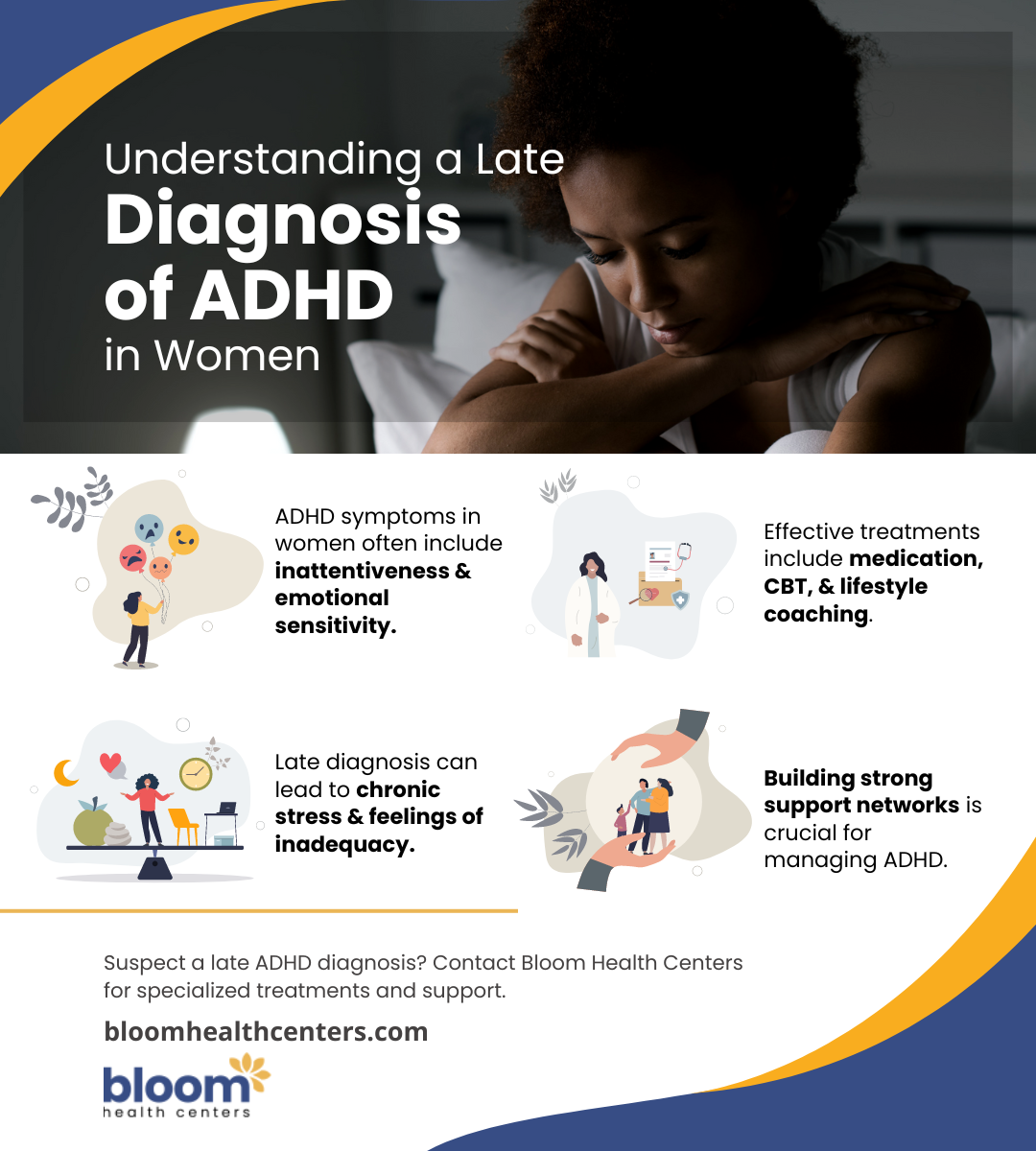
Understanding late diagnosis highlights how compensatory strategies and emotional factors can delay ADHD recognition in adult women.
Photo Credit: Bloom Health Centers
The limited research available on female ADHD also makes it difficult to establish a complete picture of how symptoms differ.
The 2025 systematic review initially identified more than 5,000 articles but included only 13 studies that met its criteria for detailed analysis. Seven studies focused on children and six focused on adults.
Researchers said the small number of studies highlights the need for additional research into sex differences in ADHD symptoms, impairment and risk factors.
ADHD can also become more noticeable when demands on attention and organization increase.
Transitions such as entering college, beginning a career or taking on additional responsibilities can place greater demands on executive functioning. Difficulties previously managed through established routines or support from parents and teachers may become more apparent when those structures change.
However, occasional problems with concentration or organization do not necessarily indicate ADHD.

Heightened adult responsibilities can trigger cognitive overload and make previously masked executive functioning struggles more noticeable.
Photo Credit: Verywell Mind/Website
A clinical evaluation considers a person's symptoms, their impact on daily functioning and evidence that relevant difficulties began during childhood. Other factors, including anxiety, depression, sleep problems and stress, can also affect attention and concentration.
Research into neurological and mental health conditions continues to examine how everyday experiences can affect symptoms and functioning.
OpGov.News previously reported on “Can Overthinking Become A Migraine Trigger?” written by OpGov.News journalist Teri Tracy, which examined potential connections between heightened emotion, deep thinking, and migraine symptoms.
The broader role of medical research in evaluating emerging health practices was also examined in “GLP-1 Microdosing Trend Grows Despite Limited Scientific Evidence,” which explored the limited evidence surrounding lower-than-approved doses of GLP-1 medications.
As research continues to examine ADHD in girls and women, researchers have emphasized the importance of recognizing symptoms that may be less visible or more easily masked.
The research does not suggest that every woman who struggles with attention or organization has ADHD. It does indicate that relying on a narrow stereotype of the disorder may make some cases more difficult to identify.
Improving understanding of female presentations could help researchers and clinicians develop more effective approaches to assessment and support, particularly for women whose symptoms were overlooked during childhood.
To add to or correct any information in this report, please contact me at victoria.o@lead4earth.org.
Thumbnail Photo Credit: UCLA Health/Website
1
1

Comments