(OPGOV GLOBAL) – The global race to develop cancer treatments is raising questions about how quickly promising medicines reach patients, how clinical trials determine eligibility and whether the United States can maintain its position as a leader in pharmaceutical innovation.
One example is sunvozertinib, a targeted therapy developed by China-based Dizal Pharmaceutical for certain adults with advanced non-small cell lung cancer. The drug targets tumors with a specific genetic alteration known as an epidermal growth factor receptor, or EGFR, exon 20 insertion mutation.
The U.S. Food and Drug Administration granted sunvozertinib accelerated approval on July 2, 2025, for adults with locally advanced or metastatic non-small cell lung cancer whose disease progressed during or after platinum-based chemotherapy. The approval was based on clinical trial results showing an objective response rate of 46% among the 85 patients in the primary efficacy analysis. An objective response means a tumor shrank by a specified amount or disappeared following treatment.
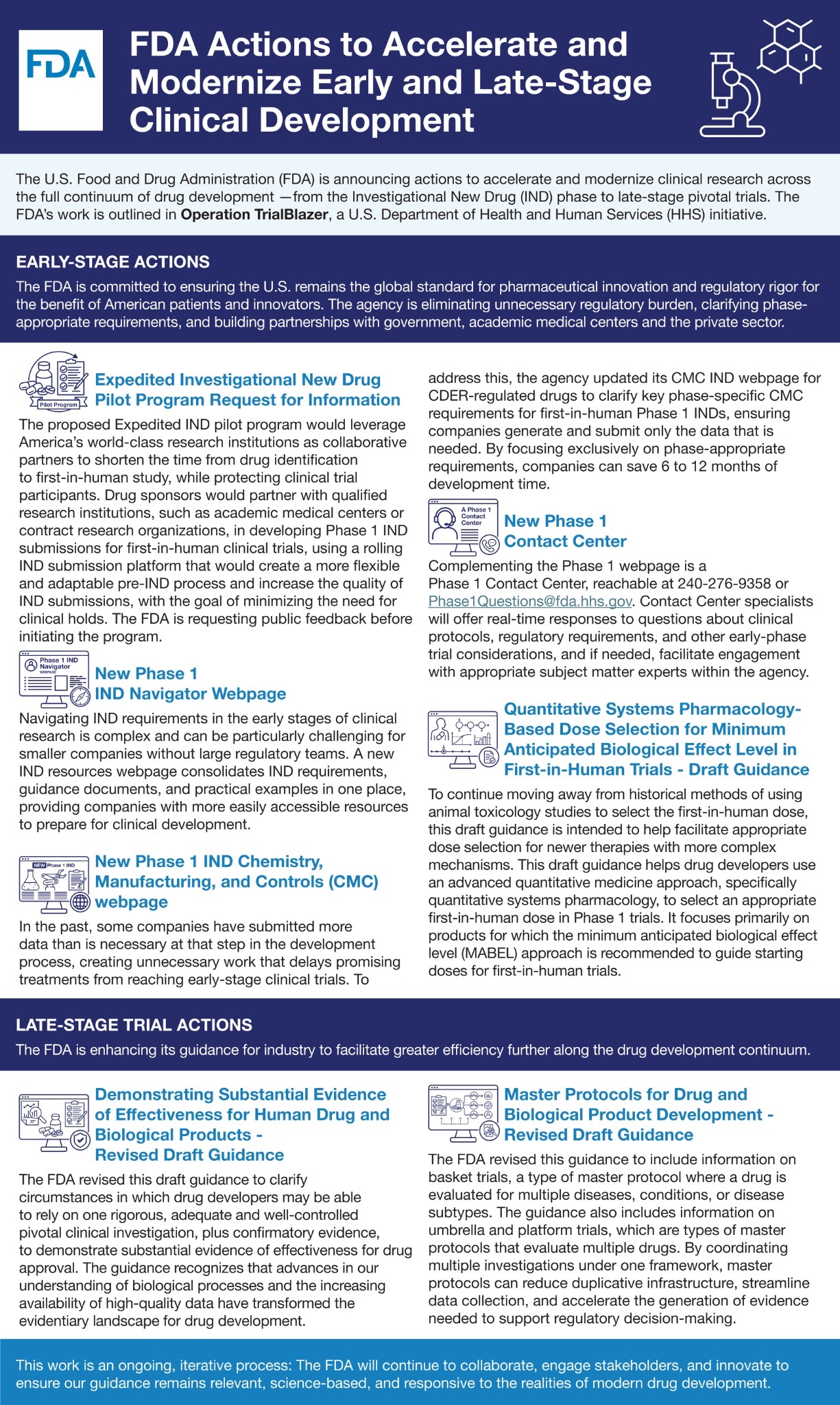
Photo Credit: U.S. Food and Drug Administration (FDA) / Website / The U.S. Department of Health and Human Services announced Operation TrialBlazer on June 22, 2026, as a coordinated effort to strengthen clinical research and accelerate the development of new treatments.
According to the FDA’s approval announcement, the trial also found a median duration of response of 11.1 months. Accelerated approval allows certain drugs for serious conditions to reach patients based on evidence that they may provide a clinical benefit, with additional studies required to confirm that benefit.
The National Cancer Institute’s drug information page provides additional information about sunvozertinib, its approved use and related clinical trials.
The drug’s development also reflects the increasingly international nature of pharmaceutical research. In July 2026, AstraZeneca announced an exclusive global licensing agreement with Dizal to develop and commercialize Zegfrovy, the brand name for sunvozertinib. The agreement illustrates how pharmaceutical companies in different countries can work together to develop and distribute treatments.
As drug development becomes more global, access to promising therapies depends on more than scientific discoveries. Patients must also meet treatment criteria, qualify for clinical trials when necessary, and navigate regulatory and financial barriers.
Clinical trials are a central part of that process. Researchers use them to evaluate whether new treatments are safe and effective, identify potential side effects, and determine which patients may benefit. Eligibility criteria can depend on a person’s cancer type, genetic markers, previous treatments, and overall health.
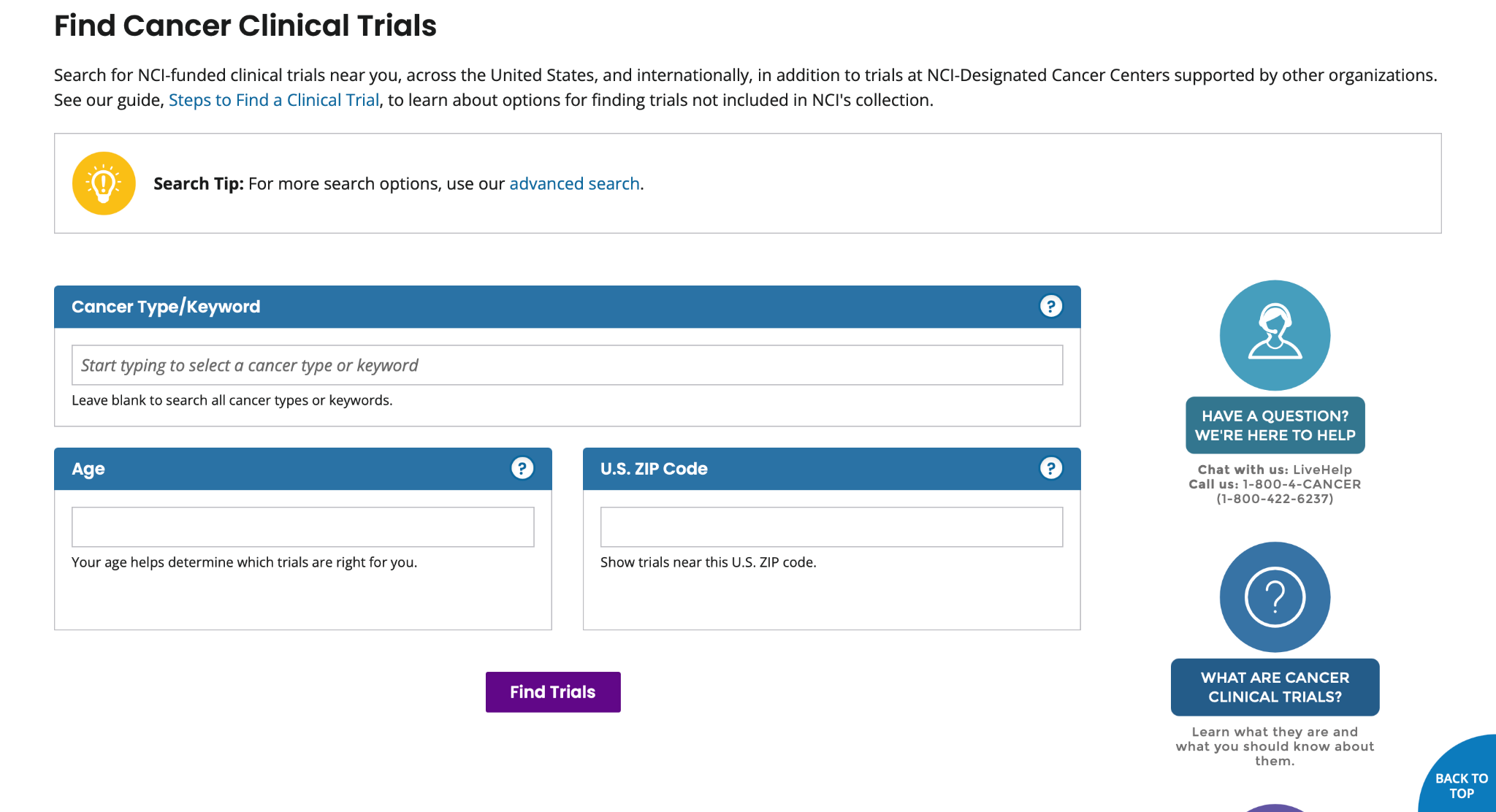
Photo Credit: National Cancer Institute (NCI) / Website / The National Cancer Institute’s online database helps patients and healthcare professionals find cancer clinical trials by cancer type, location, and other criteria.
Those requirements can limit the options available to some patients, particularly when their cancer has progressed after standard treatment. However, trial restrictions are also intended to protect participants and ensure that researchers can reliably evaluate a treatment.
The National Cancer Institute maintains a searchable database of cancer clinical trials that patients and healthcare professionals can use to identify studies by cancer type, location, and other criteria. Finding a trial does not guarantee eligibility or enrollment, and participation may involve additional appointments, risks, and costs.
The United States has also announced efforts to make its clinical research system more competitive. In June 2026, the U.S. Department of Health and Human Services announced Operation TrialBlazer, an initiative intended to accelerate clinical research and strengthen domestic leadership in developing new treatments.
The FDA’s description of Operation TrialBlazer outlines efforts to modernize parts of the drug development process, including early-stage research and later clinical trials. The initiative seeks to reduce unnecessary regulatory burdens while maintaining standards for safety and effectiveness.
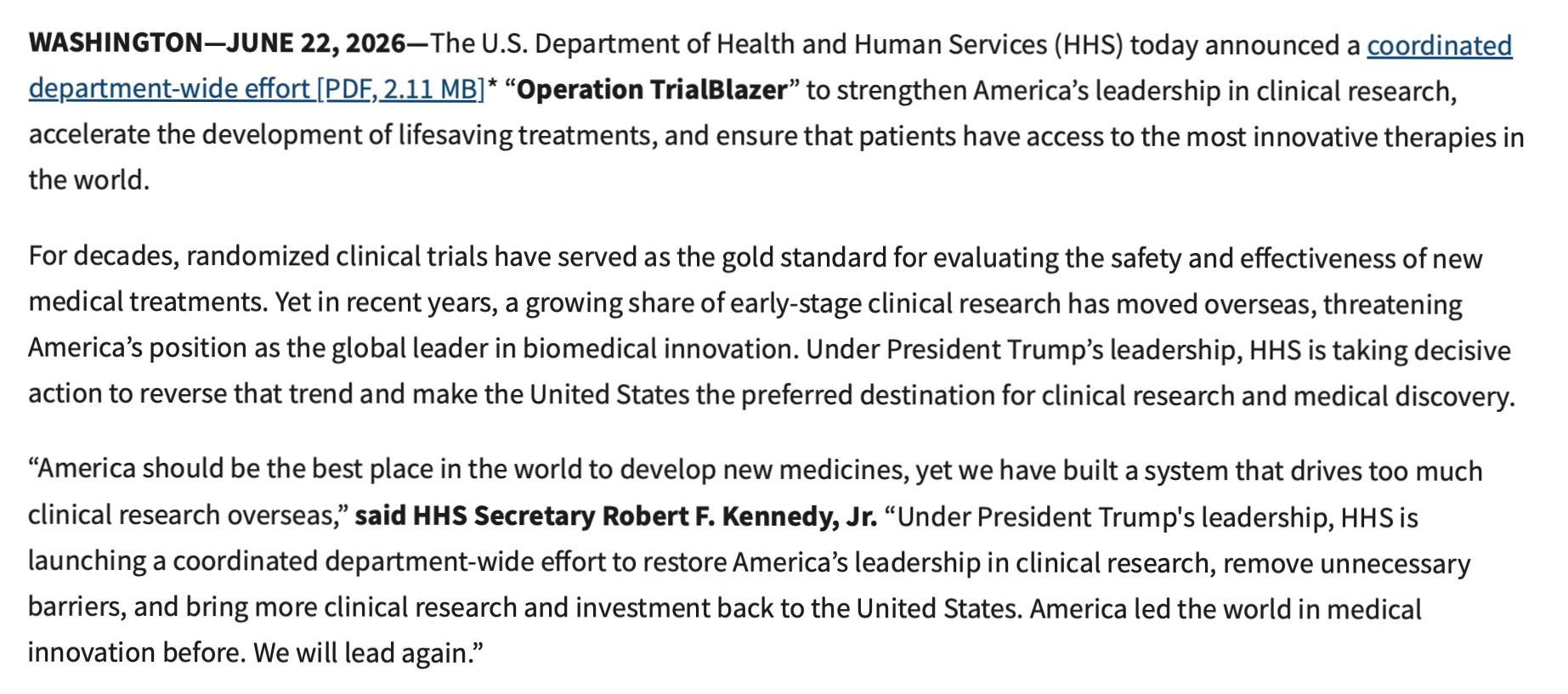
Photo Credit: U.S. Department of Health and Human Services (HHS) / Website / The FDA’s Operation TrialBlazer initiative outlines proposed changes intended to modernize clinical research and improve efficiency throughout the drug development process.
The challenge is balancing speed with sufficient evidence. Moving a drug through development more efficiently could help researchers evaluate potential treatments sooner, but patients also need reliable information about a medicine’s benefits, limitations, and risks.
Access to treatment is closely tied to broader questions about healthcare affordability and navigating complicated medical systems.
OpGov.News previously examined how AI tools are expanding in medical billing as Americans face growing medical debt. Although medical billing and cancer drug development are different issues, both demonstrate how healthcare decisions can involve financial uncertainty alongside difficult medical choices.
Patients must also be cautious when considering medicines obtained from outside the United States. The FDA warns that drugs obtained through foreign sources may not have the same assurances of safety, effectiveness, and quality as products distributed through legitimate U.S. supply chains. The agency generally restricts the importation of unapproved prescription drugs, although limited circumstances may receive consideration under its personal importation policy.
The FDA’s personal importation guidance explains the relevant restrictions and circumstances the agency may consider. Patients should consult their healthcare professionals before pursuing treatment abroad and should not change prescribed care without medical guidance.
Healthcare oversight is important beyond drug approval and distribution. OpGov.News has also reported on a Medicare fraud case involving more than $6 million in alleged improper billing. The case underscores the need for safeguards that protect patients as they navigate complex healthcare services.
As pharmaceutical research continues to cross national borders, policymakers, regulators, and researchers face a shared challenge: encouraging innovation without compromising patient safety. Faster clinical development, international partnerships, and clearer pathways to treatment may expand options, but patients still need evidence-based guidance to make informed decisions.
For more information or to share a relevant community health issue, contact victoria.o@lead4earth.org.
Thumbnail Photo Credit: U.S. Food and Drug Administration (FDA) / Website / Advances in pharmaceutical research are driving the development of targeted cancer treatments while raising questions about clinical testing, regulatory approval, and patient access.
0
0

Comments