(OPGOV GLOBAL) – A Massachusetts man has pleaded guilty to conspiring to launder proceeds from a Medicare fraud scheme involving more than $6 million in claims for medical equipment that patients did not need or doctors had not prescribed, according to the U.S. Department of Justice.
Leo Anzivino Jr., 35, of Falmouth, Massachusetts, pleaded guilty Oct. 13 in federal court in New Hampshire to one count of money laundering conspiracy. Prosecutors said the scheme involved Advanced Medical Supply Corp., a medical equipment company based in Rochester, New Hampshire, that submitted claims for knee braces, back braces, and other durable medical equipment.
The company submitted more than $6 million in claims to Medicare using fabricated physician orders, according to federal prosecutors. Medicare paid more than $3 million on the fraudulent claims.
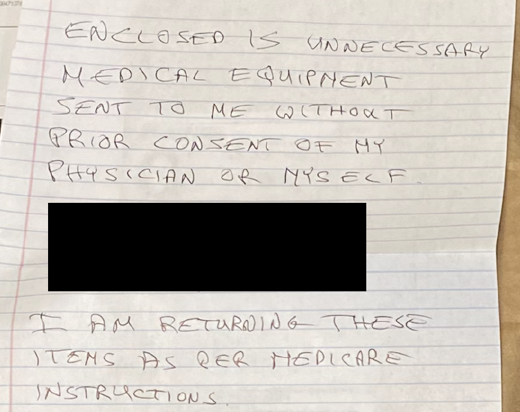
Photo Credit: U.S. Department of Justice / Website / A beneficiary’s return note said the medical equipment arrived without prior consent from the patient or their physician.
Anzivino agreed to serve as the company’s listed owner, although prosecutors said other individuals actually owned and managed the business. He also submitted false bank documents to conceal the company’s ownership and helped transfer money connected to the scheme.
Court documents and statements made in court indicated that some Medicare beneficiaries received medical equipment they had never ordered. Several returned the products with handwritten notes disputing the shipments, including one describing the delivery as fraud.
The case illustrates how Medicare beneficiaries’ information can become associated with fraudulent claims even when they did not request the products or receive a medical recommendation for them.
Anzivino faces a maximum penalty of 10 years in federal prison. His sentencing is scheduled for Jan. 21, 2027. A federal judge will determine the sentence after considering applicable sentencing guidelines and other statutory factors.
The investigation involved the U.S. Department of Health and Human Services Office of Inspector General and the FBI, with assistance from IRS Criminal Investigation and the Defense Criminal Investigative Service.
Medicare beneficiaries can take several steps to recognize suspicious activity and protect their benefits. The Centers for Medicare & Medicaid Services advises people to be cautious about medical supplies they did not request, products their doctors did not prescribe, and offers from unfamiliar individuals or companies promising equipment at no cost in exchange for a Medicare number.
Unsolicited medical equipment does not automatically establish that a beneficiary’s information has been misused, but it can be a reason to investigate. Beneficiaries should contact their healthcare provider or Medicare directly to determine whether equipment was ordered and whether a claim was submitted in their name.
Reviewing Medicare billing records can also help identify unfamiliar services, equipment, or charges. People enrolled in Original Medicare can check their Medicare Summary Notices, which list services and supplies billed to Medicare and show what Medicare paid. Beneficiaries with Medicare Advantage plans should review the statements provided by their plans.
Anyone who finds a suspicious charge can contact Medicare at 1-800-MEDICARE (1-800-633-4227). Suspected fraud can also be reported to the HHS Office of Inspector General hotline at 1-800-HHS-TIPS (1-800-447-8477) or through its online reporting portal.
The Federal Trade Commission also warns consumers about callers who impersonate government representatives to obtain personal or financial information. Beneficiaries should avoid sharing their Medicare numbers with unsolicited callers and should independently contact official agencies when they receive unexpected requests for information. More guidance is available in the FTC’s information on Medicare impersonation scams.
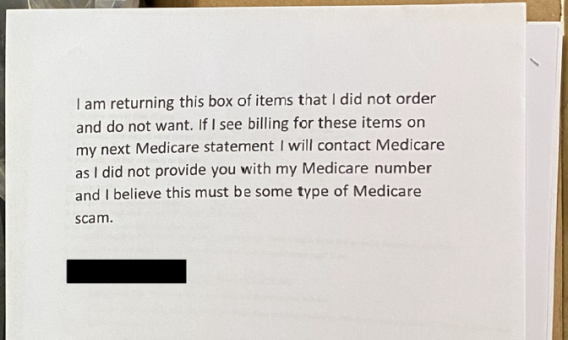
Photo Credit: U.S. Department of Justice / Website / A beneficiary wrote that they would contact Medicare if the unrequested medical equipment appeared on a billing statement.
The Medicare case comes amid broader concerns about healthcare costs, billing practices and consumer protections. OpGov.News has also examined how artificial intelligence is being used in medical billing and debt collection and reported on a blood pressure medication recall after tablets failed dissolution testing.
Federal prosecutors said the Justice Department’s Health Care Fraud Strike Force Program has charged more than 6,200 defendants since 2007 in cases involving more than $45 billion in combined billings to federal healthcare programs and private insurers. The figure represents the total amount billed by charged defendants, not a finding that every dollar was fraudulently obtained.
For Medicare beneficiaries, the case underscores the importance of checking billing statements, questioning unexpected medical supplies, and protecting personal information. Reporting suspicious claims promptly can help authorities investigate possible fraud and reduce the risk of further unauthorized use of a beneficiary’s information.
For additional information about OpGov.News reporting, contact victoria.o@lead4earth.org.
Thumbnail Photo Credit: U.S. Department of Justice / Website / A Medicare beneficiary returned medical equipment they said they had not ordered, writing “Medicare fraud” on the accompanying paperwork.
0
0

Comments