(UNITED STATES) – How many of you have heard the term ‘band-aid solution’? Basically, it refers to applying a temporary solution to something to ‘get by’ until a more permanent solution is available or the issue can no longer be avoided.
The recent chaos surrounding tech-related issues, from system failures and incompatibilities to cyberattacks and bugs, has many U.S. citizens concerned for their data (and overall) safety. People have already begun to blame AI, but it’s not that simple.
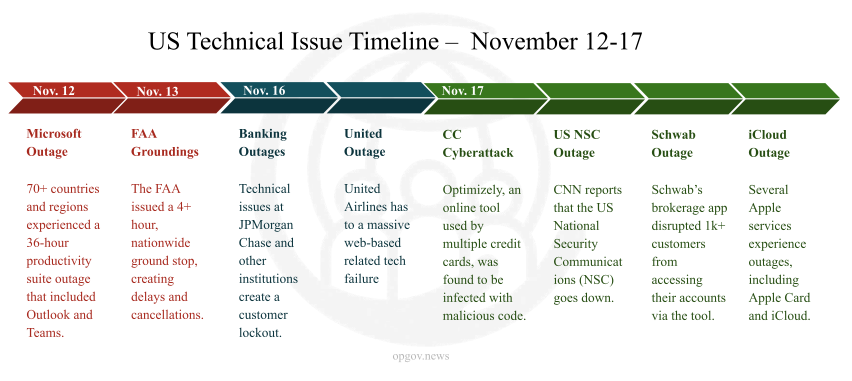
Timeline Credit: Kristin Hassel / Open Governance News
As I predicted in my FAA groundstop article, legacy systems are front and center in all these scenarios. Here’s where the term ‘band-aid solution’ comes in. After years of patches, upgrades, and making it ‘work,’ legacy systems are finally ready to retire.
The brutal honesty is we didn’t prepare for it, and our country runs on them. Many of these systems have been forced into upgrades that create structural and security vulnerabilities. Recent pushes from the current administration to rush AI into these network infrastructures aren’t helping matters.
AI is innovative, but it’s a hot mess. I know, unpopular opinion, but the data speaks for itself. For instance, CrowdStrike’s 2026 Global Threat Report shows an 89% year-over-year increase in attacks using AI tools. Major AI companies, including Anthropic (8), Meta (1), and OpenAI (8), have experienced unexpected responses from AI tools during live and test runs.
Integrating this technology with legacy models that can barely handle upgrades is asking for disaster. According to Verizon’s Data Breach Investigation Report (in attachments), 31% of access breaches rely on exploiting system vulnerabilities. A further 48% involve ransomware, which also needs an opening to do damage.
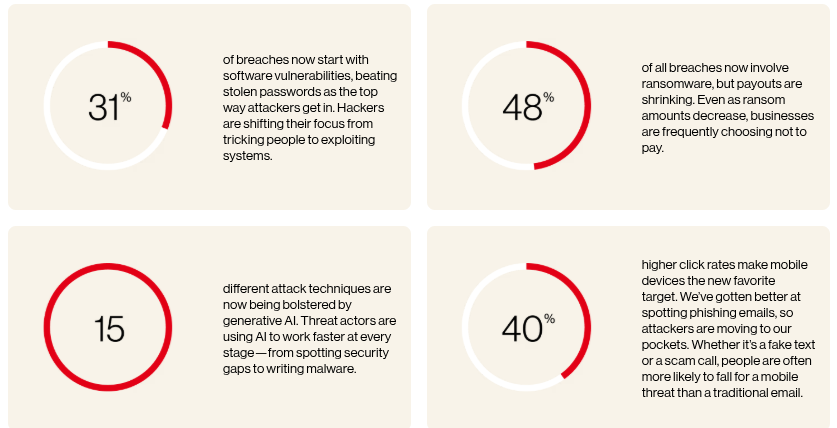
Photo Credit: Verizon / DBI Report / Key takeaways
For old systems that can barely manage the load they already carry, forcing AI task automation, constant updates, requiring them to handle increasingly more data, and upgrading only what’s ‘needed’ for the tech to continue to stumble along is… ambitious.
Essentially, it’s the equivalent of putting a standard band-aid on a gaping head wound. The guarded, careful responses to the issues aren’t helping increase the public's trust in technology. Which isn’t fair; not really.
If these systems are meant to protect our lives, data, money, homes, and personal information, I’m more upset with the government entities, businesses, banks, etc., that decided it was a good idea to keep updating legacy systems instead of making long-term, reliable, well-documented rollout plans for the entirety of a system's infrastructure before it reaches the end of its lifecycle.
President Donald Trump's dismissal of the FSA outage with the statement, “Things like that happen. It’s fine,” is ludicrous. U.S. citizens pay plenty of taxes, so things like this ‘don’t happen’ on the regular. Once is a ‘things like this happen’ moment; tech isn’t infallible.
Several times in two weeks is a bit more vexing and should warrant concern, especially when the FAA, NSC, and a slew of major banks are all experiencing these ‘things.’ I’m not trying to incite panic. What I am saying is that it’s time these entities made a real plan to weed out legacy software and hardware before band-aids quit working and put our data at serious risk.
To add to or correct any information in this report, please contact me at kristin.h@lead4earth.org.
2026-dbir-data-breach-investigations-report
2026-dbir-data-breach-investigations-report.pdf
0
0

Comments