(SAN DIEGO) — The San Diego City Council approved new rules for public participation, added funding for District 8 recreation centers, and created a new Affordable Housing Preservation Fund during its June 29 meeting. Officials said the changes aim to improve access and equity while residents raised concerns about housing, homelessness, and government accountability.
The council's first major action was approving new public participation procedures required under Senate Bill 707, which expands language access and changes how people speak during meetings in person and online.
Council President Joe LaCava said the changes were required under state law but also aimed at keeping meetings open and accessible.
"Modifications to our public comment procedures were done out of a requirement to comply with state law and our commitment to preserving public participation," LaCava said.
The new rules allow organized groups to give online presentations and expand language access. They also create more consistent rules for people speaking in person and online.
Several speakers supported the changes but said that the city should also give more power to community planning groups.
"Community planning groups should be the city's front door to civic participation," Community Planners Committee Chair Victoria Brousseau said.
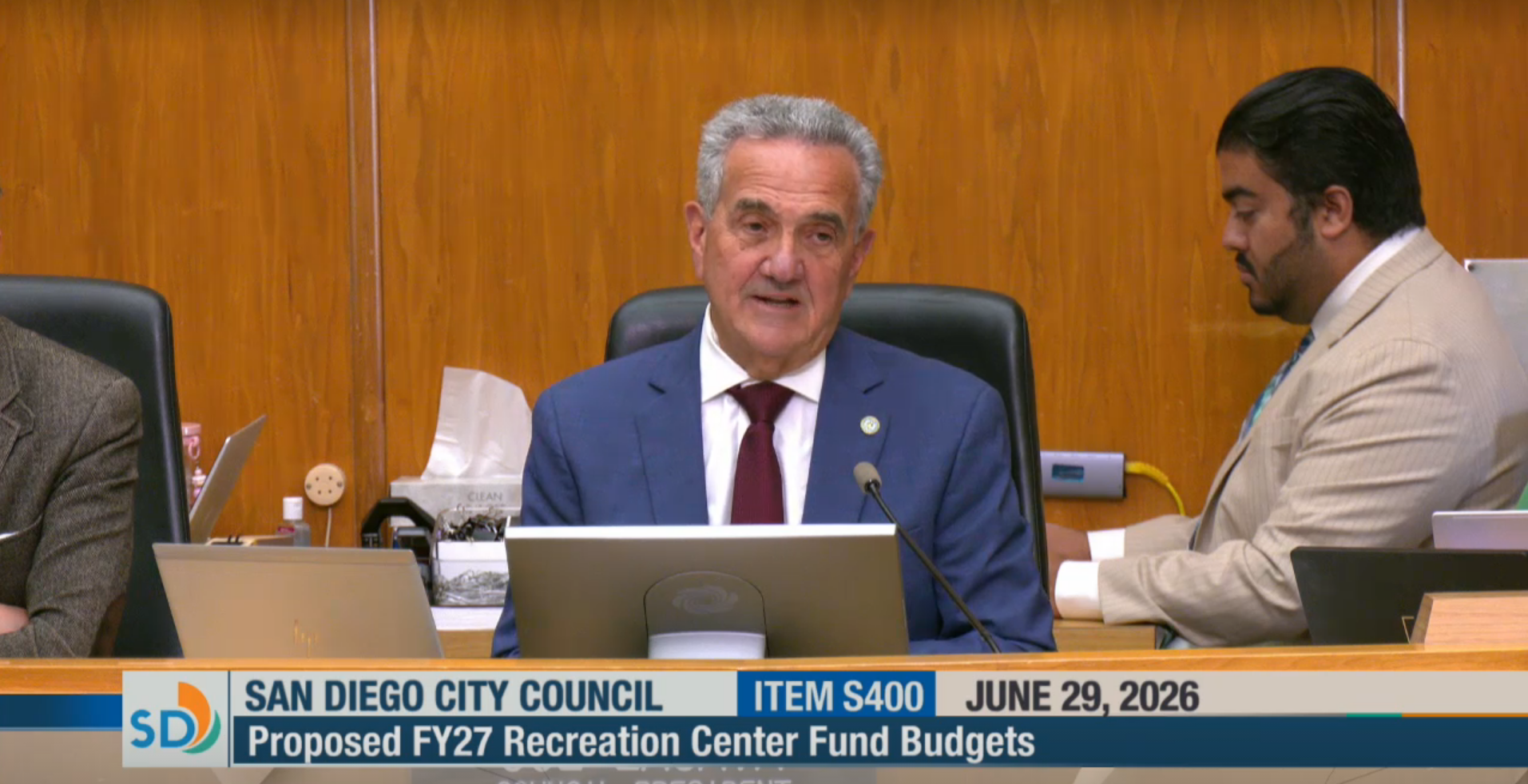
Photo Credit: City of San Diego
The council then discussed the Fiscal Year 2027 Recreation Center and Opportunity Fund budgets. Several residents criticized uneven funding for parks and recreation in District 8. Councilmember Vivian Moreno introduced an amendment to redirect an additional $100,000 in future Surf Club lease revenue to District 8. This includes $34,000 for a new scoreboard at Montgomery-Waller Park, with the remaining funds split among other recreation centers in the district.
Moreno said the Opportunity Fund, created to reduce inequities in recreation services, has not met its goal in her district.
"The Opportunity Funds exist precisely to close the gap, and right now it's falling short of that promise for District 8," Moreno said.
Moreno also said District 8 has historically received a small share of Opportunity Fund allocations despite being one of the city's underserved communities.
"My residents deserve the same quality of parks and recreation programs that other communities across this city take for granted," she said.
The council unanimously approved the amendment.
Residents described ongoing safety and maintenance problems in District 8 parks. Joanne Paquette, secretary of Lucky Waller Little League, said Montgomery-Waller Park has faced years of neglect.
"The community has been stepping up to make sure that our parks look good, but it's not enough, and our kids deserve better," Paquette said.
She said the park has issues, including a non-ADA-compliant playground, poor lighting, broken bathrooms, and overreliance on private donations to maintain fields.
"We cannot depend on the charity of organizations to come in and step in to take care of what's being neglected," she said.
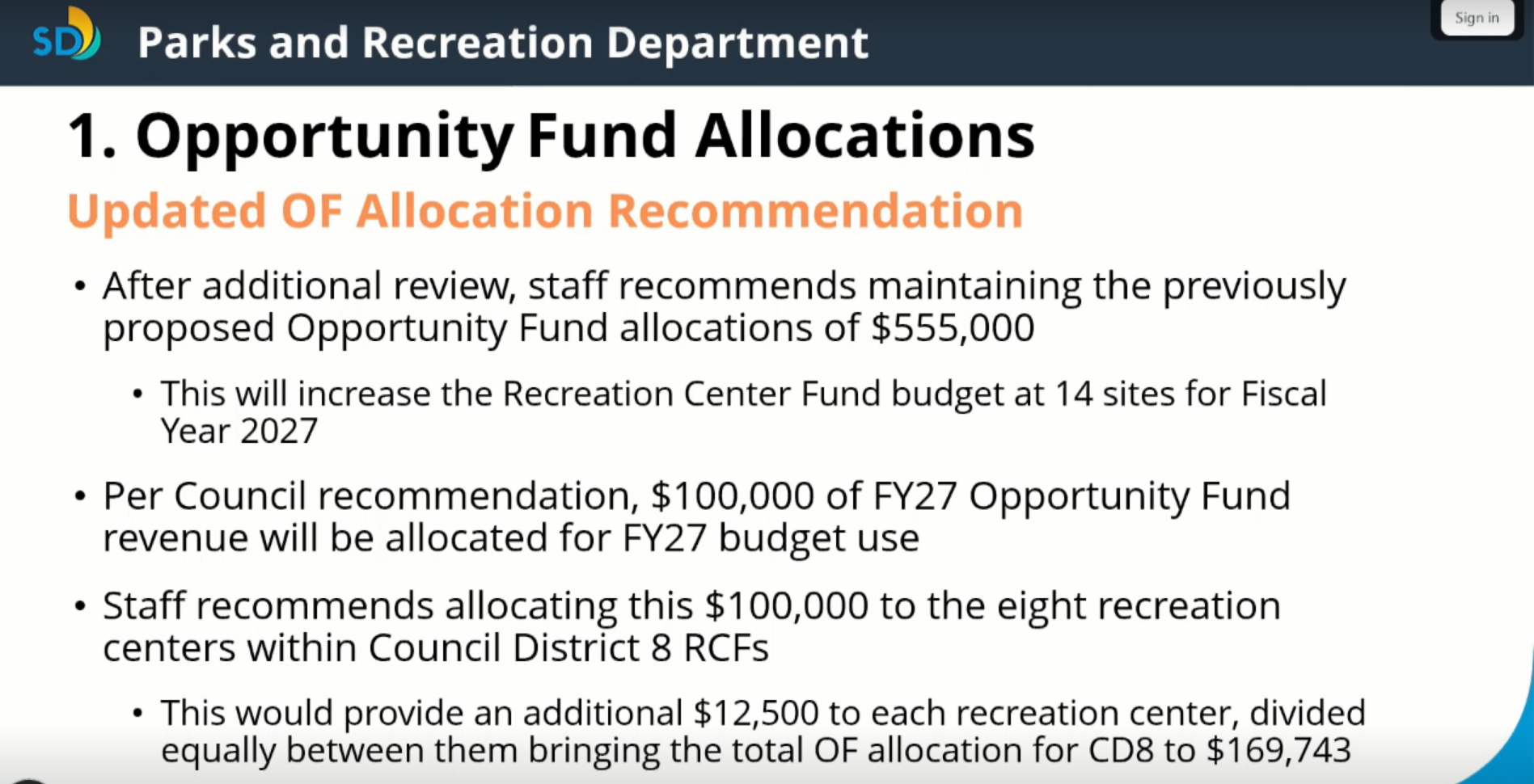
Photo Credit: The City of San Diego
The council also unanimously approved creating an Affordable Housing Preservation Fund. The fund will receive about $8.5 million in Neighborhood Enhancement Fund fees to help protect existing affordable housing before it is converted into market-rate housing.
Councilmember Moreno said the city needs both tools and funding to prevent affordable housing from being lost to rising market prices.
"This is why preserving the affordable homes we already have is just as important as building new ones," she said.
Moreno added that the ordinance approved earlier this year gives the city the legal opportunity to step in when affordable housing properties are sold, while the new fund provides money to do so.
"The first ordinance gave us the right to do it. Now this is providing us the money to do it," she said.
Public reaction was mixed. Some speakers supported preserving affordable housing, while others said the funding was too small and did not address the deeper causes of high housing costs and homelessness.
One speaker, Paul Krueger, said earlier city policies contributed to the loss of naturally affordable housing.
"If you had only listened to us six years ago and simply took a critical look at these two programs, you would have saved a significant number of affordable homes," Krueger said.
He pointed to programs such as Complete Communities and bonus ADU policies as contributing factors to the loss of naturally affordable housing.
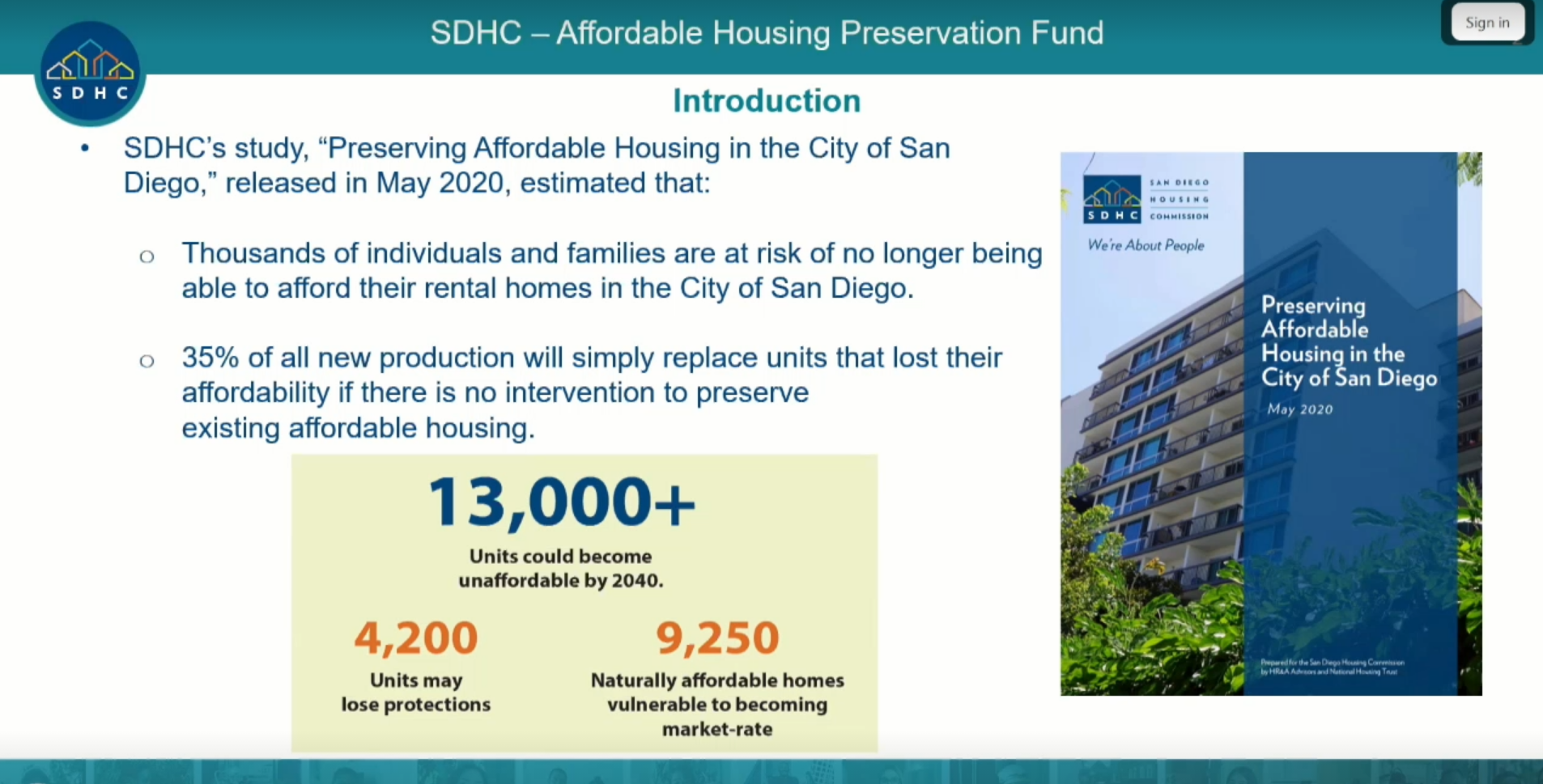
Photo Credit: City of San Diego
Homelessness and shelter conditions were also discussed during public comment. Speakers raised concerns about the closure of the New Day Center and conditions at temporary shelters, calling for more oversight of city-funded programs.
Blair Beckman said she was “pretty shocked” by the closure and urged the city to continue discussing shelter services openly.
“We have to be having that conversation more openly and regularly,” she said.
The meeting also included public comment on safety, drug policy, and privacy concerns. Residents raised questions about surveillance technology and the balance between public safety and privacy rights.
Public commenter Anthony Robles referenced legal rulings on cell phone location data and urged the council to consider stronger privacy protections.
"An individual has a reasonable expectation of privacy in records about his cell phone's location," Robles said, citing a U.S. Supreme Court ruling. "There are lawsuits all over the state of California against Flock."
Other comments addressed marijuana regulation, impaired driving, and public safety enforcement.
The meeting reflected ongoing debates in San Diego over housing, homelessness, public safety, and how city resources are distributed. While council members said the new actions improve access and invest in underserved communities, many residents said the city still needs stronger accountability and better alignment with community needs.
If you have any questions or comments about this article, message me at jenny.r@lead4earth.org.
0
0

Comments