(Pensacola) -- Councilman Charles Bare and city staff are drafting an ordinance against data centers.
Residents at the June 18th City Council Meeting said opposition to Flock cameras and AI data centers is bipartisan, with several citing privacy, constitutional rights, and the misuse of opioid settlement funds to pay for surveillance.
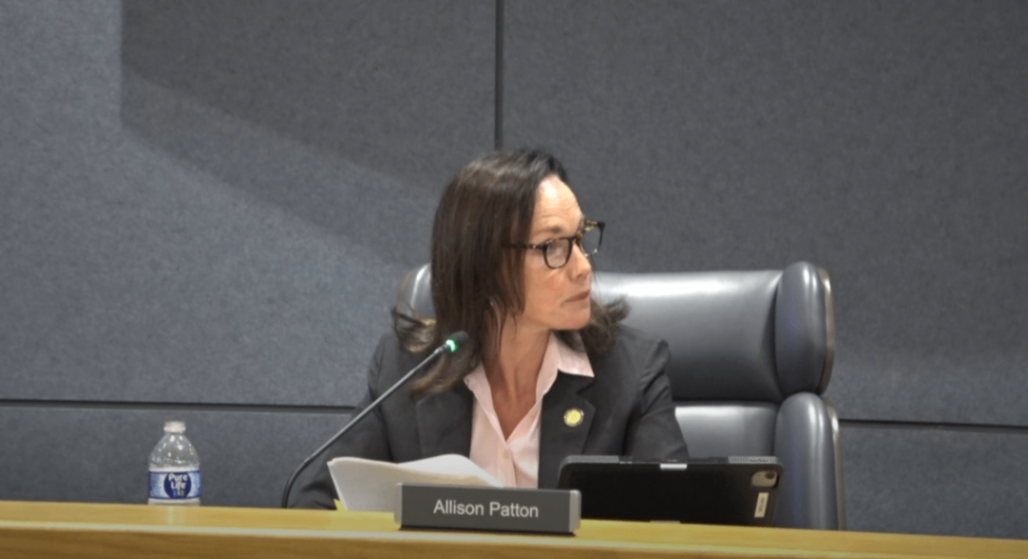
(Photo: Council President Allison Patton calling up Flock protestors to the podium at the June 18 meeting)
Brandy Johnson, who gathered up to 5,500 petition signers against the data center here, began her three-minute speech thanking Council Members Delarin Wiggins, Jennifer Brahier, and Charles Bare for their support against any proposals for a data center.
But her praise quickly shifted to an argument against hidden cameras.
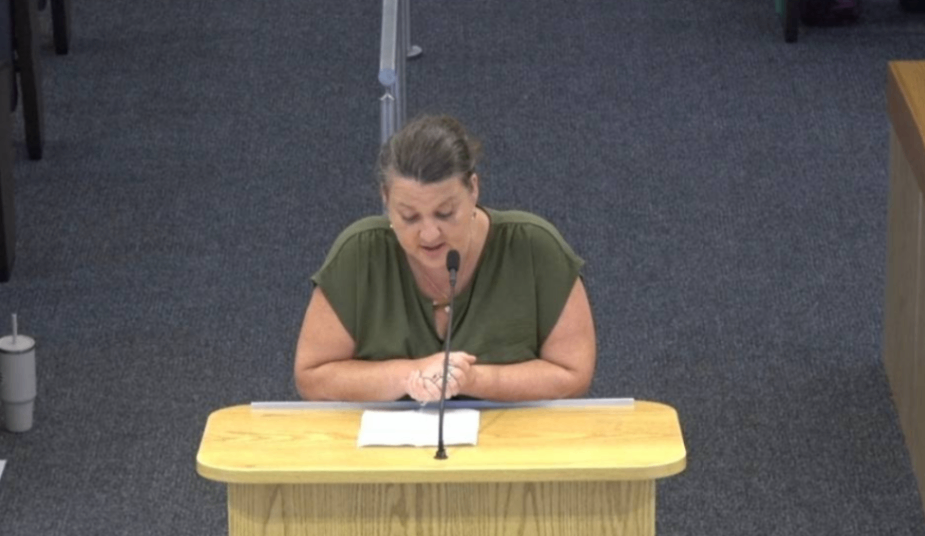
(Photo: Resident Brandy Johns speaks against Flock cameras at the Pensacola City Council Meeting)
“Flock cameras violate Fourth Amendment rights as warrantless mass surveillance,” Johnson said.
Johnson said the cameras also violate the Sixth Amendment by denying cross-examination and the Fourteenth Amendment by shifting the burden of proof to vehicle owners.
Residents' concerns were heightened, specifically regarding the agenda item approving the city's entry into an opioid abatement settlement totaling $1.5 million.
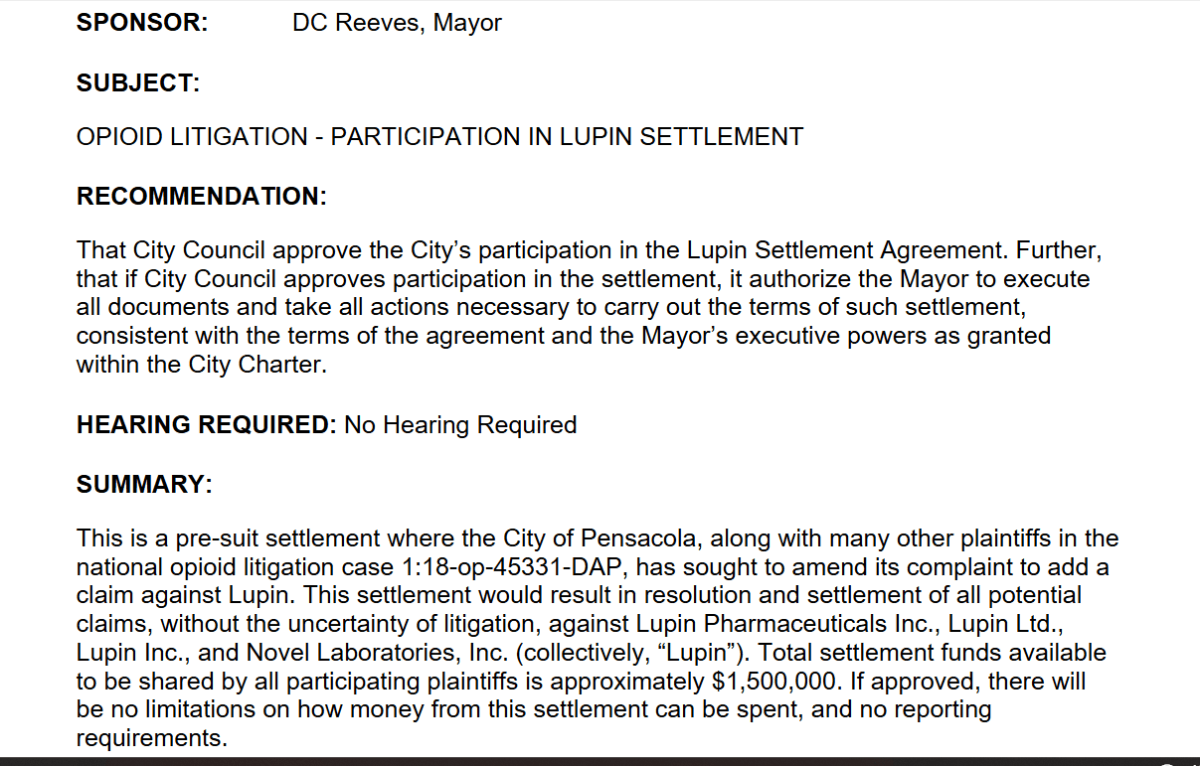
(Photo: Pensacola City Council Agenda summary on $1.5 million dollar opioid settlement)
"We do know with this money there will be no limitations to be spent, so once it is in the General Fund, of course, it will be allocated as appropriate," Deputy City Attorney Kia Goldsmith said.
Francesca Yabrian, a candidate for Florida House District 1, opposed AI data centers and Flock cameras. Yabrian referenced her background in Information Technology and emergency management to make her point.
“This is a violation of people's due process rights,” Yabrian said, warning officials of a potential class-action lawsuit and state legislation aimed at shutting down the surveillance system.
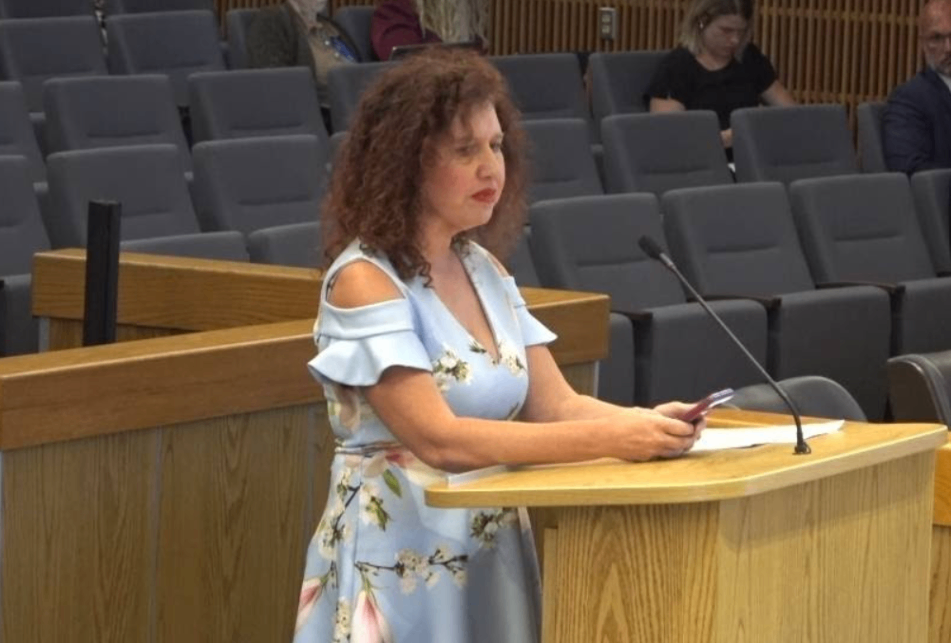
(Photo: Francesca Yabrian, who is running for the Florida House District 1 seat, speaks against Flock, AI data center here)
While Yabrian ended by noting there is rare bipartisan public unity against these surveillance technologies, Brooke Whitehurst said it is "shameful" that opioid abatement funds were used for the camera system.
“It diverted resources from vulnerable populations to an unwanted mass surveillance system,” Whitehurst said.
Whitehurst cited reports from Flock employees and police officers that they had accessed cameras without warrants before calling for immediate termination of the Flock contract.
Girasol Alfonso, representing “Defensa at Gulf Coast”, demanded a ban on AI data centers in Pensacola, linking them to FLOCK cameras. Alfonso said both disproportionately affect low-income and marginalized communities.
Alfonso also raised concerns over the $108,000 from the opioid abatement fund.
“Diverting funds from opioid victims is a scandal that demands immediate contract cancellation,” Alfonso said.
Christy Rosen, co-founder of “If Not Us”, the local chapter of Indivisible, thanked Mayor Reeves for opposing data centers in both the city and county meetings.
Calling data centers a “net negative business," Rosen told officials "citizens are unwilling to sacrifice privacy for a surveillance state."
Rosen said Flock combines data from various sources to create a pervasive surveillance system. Before telling officials to void the local contract, Rosen noted that funds had been diverted from the opioid abatement program to pay for the contract.
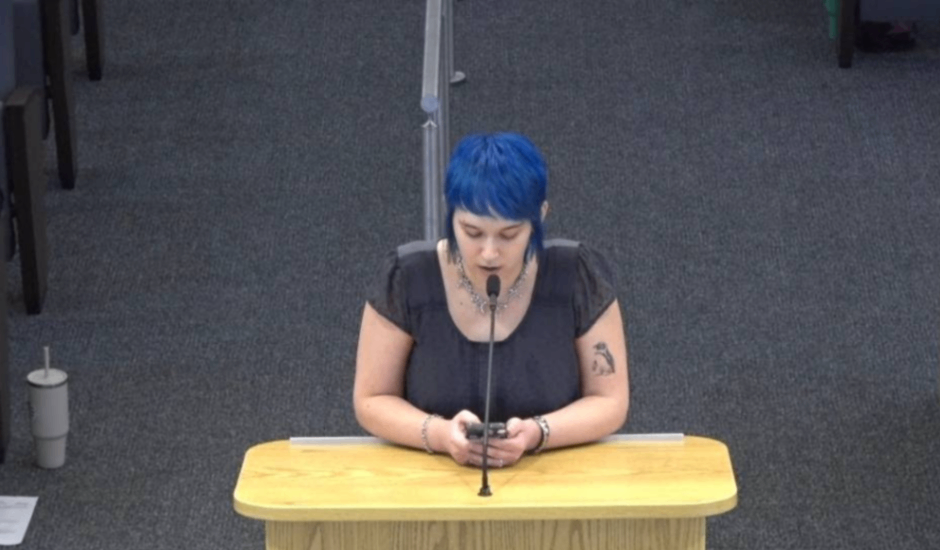
(Photo: Sarah Blackenship tells officials the environmental burden data centers cause to regions they are located)
Sarah Blankenship reported on the Escambia County Board of Commissioners’ decision to vote on a data center ban. Blankenship urged Pensacola to follow suit and thanked Council Member Bare for his efforts.
“Flock doesn’t benefit the people; it benefits those in power,” Blankenship said.
Blankenship said the contract should be ended and cameras removed. Blankenship said supporting FLOCK cameras while opposing local data centers shifts the environmental burden to other communities.
Crystal Partridge referenced broad opposition to AI data centers at the recent county commission meeting. Partridge expressed appreciation for the steps taken to ban them in the city and the county, echoing Blankenship's remarks.
“I think we have the opportunity to be good stewards of our land and good neighbors by decreasing our demand on generative AI,” Partridge said.
Partridge suggested using more local artists for graphic design and advertising. Partridge bridged the data center issue into FLOCK, noting that this could also be addressed by canceling the FLOCK contract.
Partridge said even if funds cannot be recovered, the cameras should be removed.
The council did not comment on Flock cameras Thursday. Councilman Bare’s data center ordinance will return at a future meeting.
While data centers and Flock cameras are different technologies, speakers tied them together as two sides of the same concern: public control over data, privacy, and resources.
Residents argued that both strain the community: data centers through water, power, and environmental impact, and Flock through warrantless surveillance and the use of opioid settlement funds.
Several said opposing local data centers while paying for Flock shifts the burden elsewhere, since the cameras rely on remote data centers to store and process license plate scans.
The OpGov.The news meeting summary shows a common concern among residents about a lack of oversight of Flock cameras. As one speaker put it, the fight is about whether technology serves residents or “those in power.”
Officials did not comment at all on the resident's concerns regarding Flock, but Councilman Bare did inform the public that he was drafting an ordinance banning any data center here.
0
2

Comments