(CHARLOTTE, NC.) — The Metropolitan Public Transportation Authority (MPTA) Board approved several policies advancing its transition to an independent transit agency during its latest meeting on June 24th, while residents urged officials to address ongoing concerns involving bus stop maintenance, transit accessibility, and equity.
The board approved the authority's Transit Rules and Regulations Policy, employee transition and retention policy, committee work plans, and a progress report documenting compliance with state transition requirements under the Pay Act.
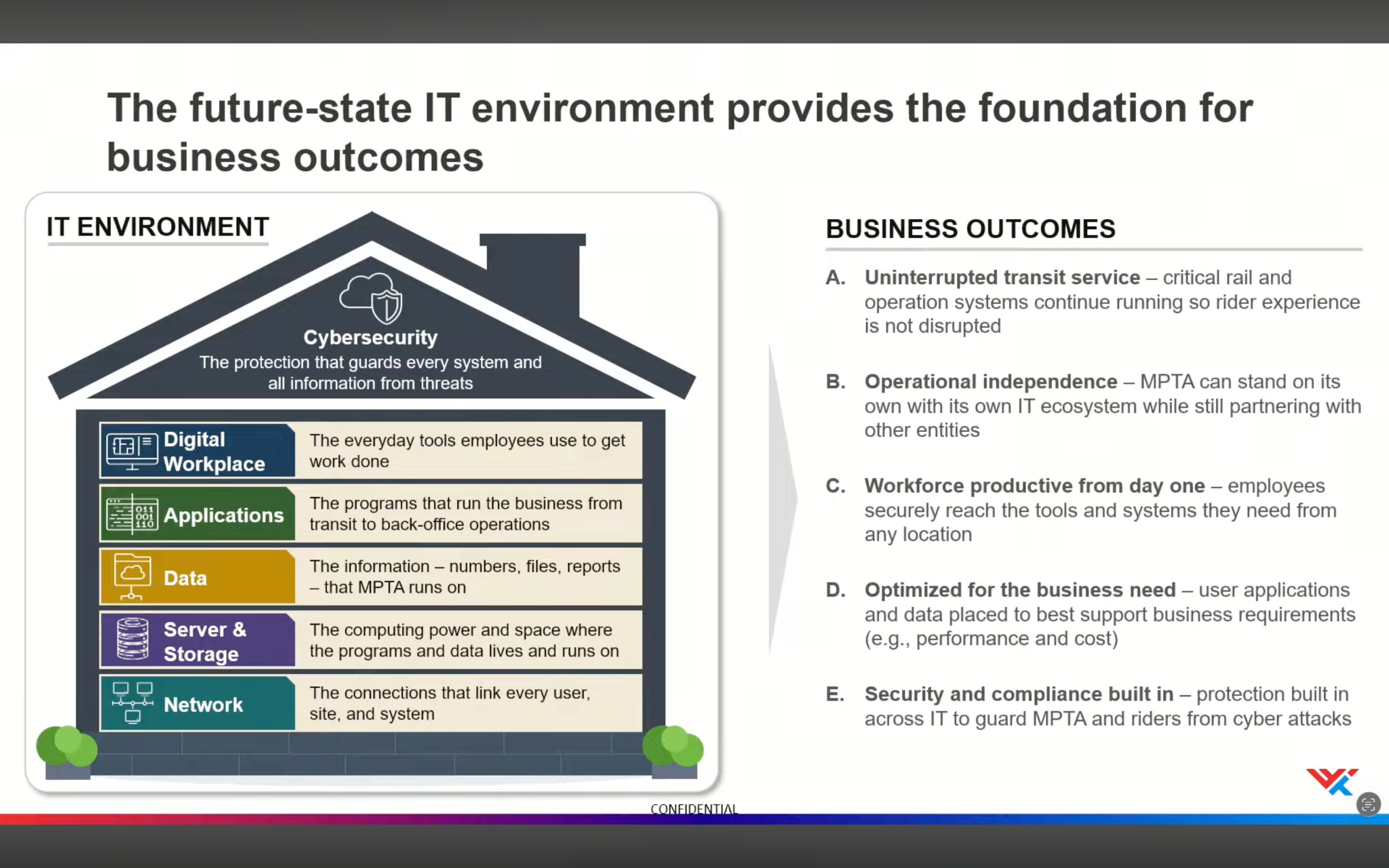
A presentation slide maps out the MPTA's future-state IT environment, demonstrating how upgraded infrastructure layers will drive key business outcomes like operational independence and uninterrupted transit service.
Photo Credit: City of Charlotte/YouTube
Members also received updates on the authority's technology infrastructure, human resources planning, and the ongoing search for its first chief executive officer.
The MPTA was established by the North Carolina General Assembly to oversee Charlotte's regional public transit system as it transitions from operating under the City of Charlotte and the Charlotte Area Transit System (CATS).
Board members have spent recent months adopting the policies, governance structure, and operational framework necessary before the authority assumes full responsibility for transit operations.
The emphasis on building an accountable governance structure mirrors broader conversations surrounding public oversight. In OpGov.News' recent article, "What Happens When Someone Is Finally Watching?," written by Naomi Heinen and co-authored by Angela Underwood, the publication examined how transparent decision-making and accessible government reporting can strengthen public trust.
As MPTA develops its own governing framework, board members continue balancing statutory transition requirements with expectations for accountability and public engagement.
One of the meeting's largest presentations focused on technology infrastructure.
Staff presented an information technology implementation plan estimating approximately $14 million in first-year investments to establish independent systems for finance, communications, cybersecurity, human resources, and transit operations.
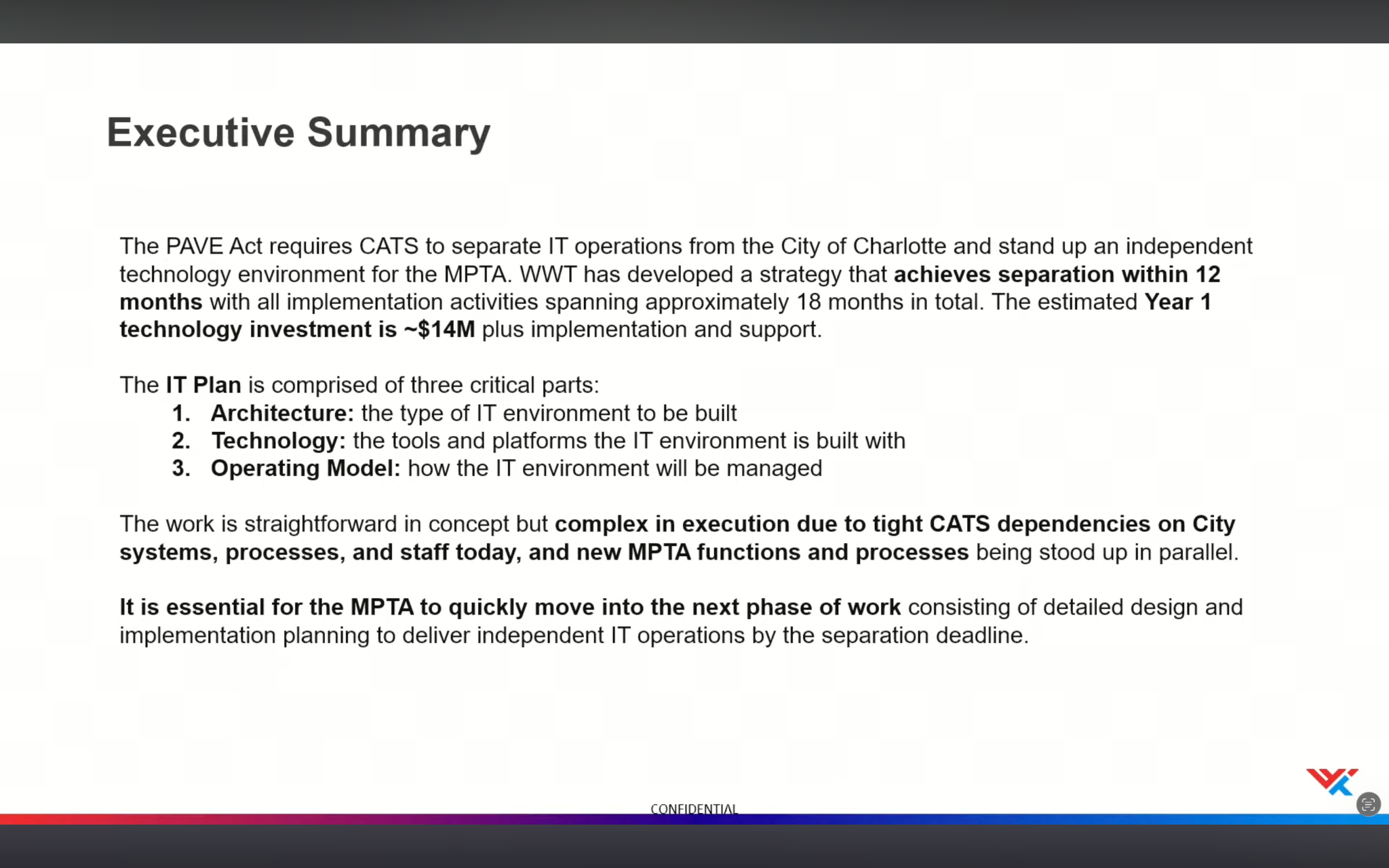
An executive summary highlights the strategy to separate IT operations from the City of Charlotte, estimating a $14 million investment for the first year.
Photo Credit: City of Charlotte/YouTube
Officials said the complete technology buildout is expected to take approximately 18 months.
The board also approved an employee transition and retention policy intended to preserve benefits for employees moving from CATS to MPTA. The policy allows eligible employees to transfer accrued vacation and sick leave while maintaining retirement service credit and years of service.
Board members additionally approved an organizational structure identifying the Chief Executive Officer and General Counsel as the two direct reports to the board.
The CEO search is ongoing and is incorporating stakeholder feedback before recruitment moves forward. Human resources staff also updated board members on employee policies that will govern the new authority, noting that a comprehensive employee handbook is still in development and is expected to be completed by Jan. 1.
The board also approved committee charters and annual work plans outlining responsibilities for finance, governance, safety, and strategic planning. Members voted to formalize MPTA's participation as a voting member of KARPO, appointing Brad Simmons as the authority's representative.
During public comment, residents highlighted operational issues they said continue affecting transit riders.
One speaker criticized what they described as institutional racism within the broader transit system, pointing to a station sign bearing the name of Confederate Gen. Stonewall Jackson in the Brooklyn Village area. The resident also questioned the implementation of fares on the Gold Line, suggesting Charlotte explore alternative funding partnerships similar to fare-free transit systems operating elsewhere.
Another resident urged officials to address overgrown trees obscuring bus stop signs, describing an incident in which a bus operator passed a stop because the sign could not be seen.
The speaker questioned which agency is responsible for maintaining vegetation around transit stops and expressed frustration that routine maintenance concerns persist following recent fare increases.
Beyond the policy approvals, the board adopted MPTA's transition mission statement and decision-making framework, which officials said will guide governance as the authority assumes additional responsibilities.
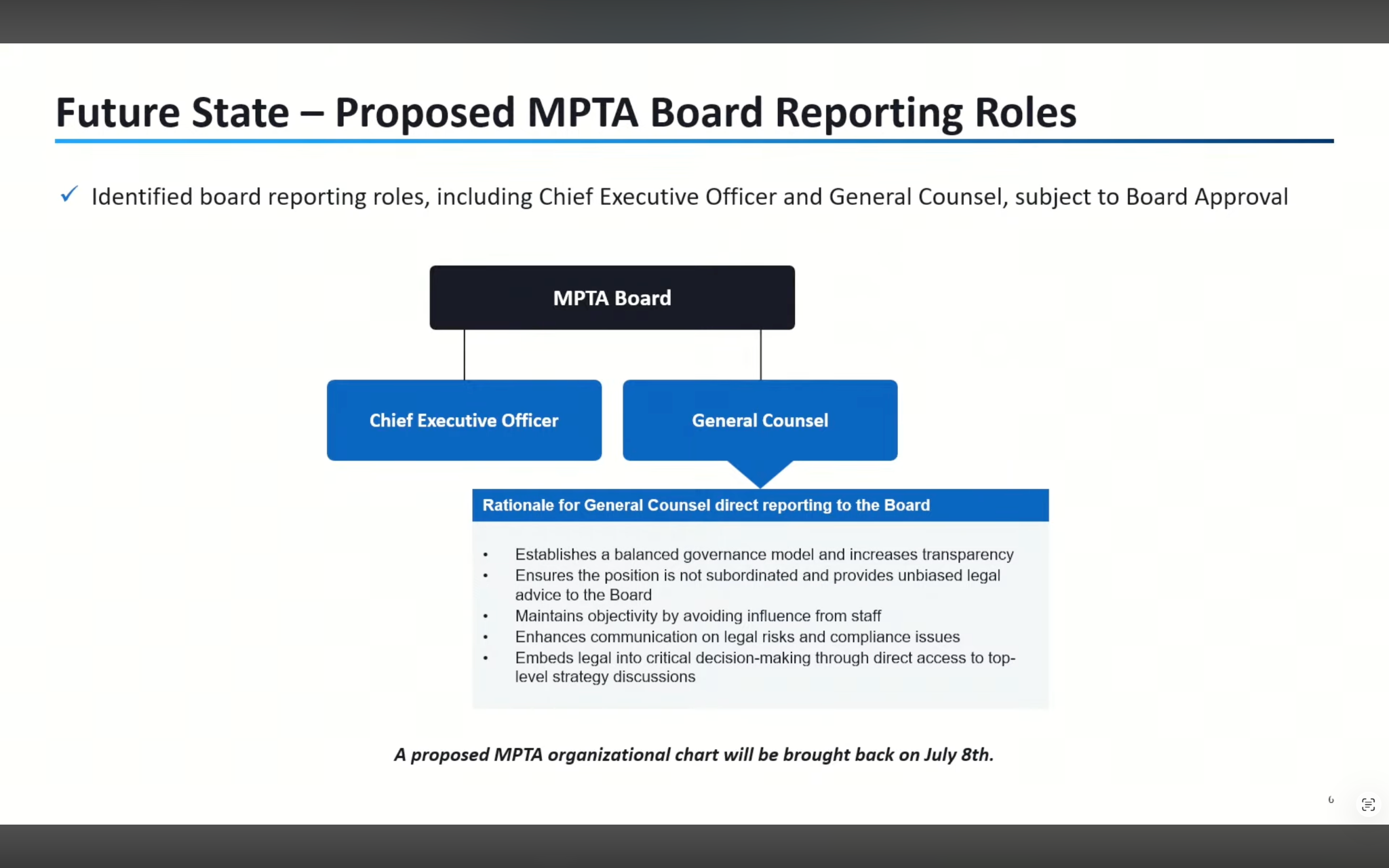
The proposed organizational chart establishes both the Chief Executive Officer and the General Counsel as direct reports to the MPTA Board to ensure independent, balanced governance.
Photo Credit: City of Charlotte/YouTube
Members also voted to replace the board's weekly newsletter with a monthly stakeholder newsletter intended to provide broader community updates throughout the transition process and announced plans for an August retreat to discuss transportation management operations, airport coordination and other long-term priorities.
The challenges discussed during the meeting reflect a broader reality facing public agencies as they move from legislative mandates to day-to-day implementation.
Similar issues were explored in OpGov.News' "Funding Fight Over Proposition 36 Moves to Center Stage as California Debates New Retail Theft Diversion Bill," written by Sarah Denos, which examined how state and local officials continue working through the practical challenges of implementing voter-approved policies while balancing funding, oversight, and public expectations.
Although the policy areas differ, both cases demonstrate how public agencies must translate legislative direction into operational decisions that directly affect residents.
Chair David Howard concluded the meeting by recognizing board members, staff, and partner agencies for meeting statutory transition deadlines, describing the submission of the Pay Act compliance report as another significant milestone in establishing the independent transit authority.
To add to or correct any information in this report, please get in touch with Victoria Osborne at victoria.o@lead4earth.org.
Thumbnail Photo Credit: City of Charlotte/YouTube
0
0

Comments