(OpGov.Global) - A woman lies in a hospital bed after a dog attack. According to her, while recovering from serious injuries, she is asked to complete paperwork billing her $60,000 for injuries caused by someone else’s pet.



Photo Credit: OpGov.News
Most people in her community never hear about her story.
Even though local officials discussed it, the discussion took place inside an hours-long government meetings that few residents would have the time to watch.

This is the gap Open Governance News exists to close.
At OpGov.News, we use artificial intelligence to analyze lengthy government meetings and identify the issues that matter most to local communities. We do not replace reporters. We help them find the stories hidden inside thousands of pages of agendas, recordings, and public records.
The dog attack case in Escambia County demonstrates what that looks like in practice.
After our AI systems flagged the issue, reporter Angela Underwood spent months following the story, interviewing sources, gathering information, and documenting the experiences of victims, personally visiting them as well as helping them fundraise. More than 20,000 readers engaged with the resulting coverage. More victims came forward.
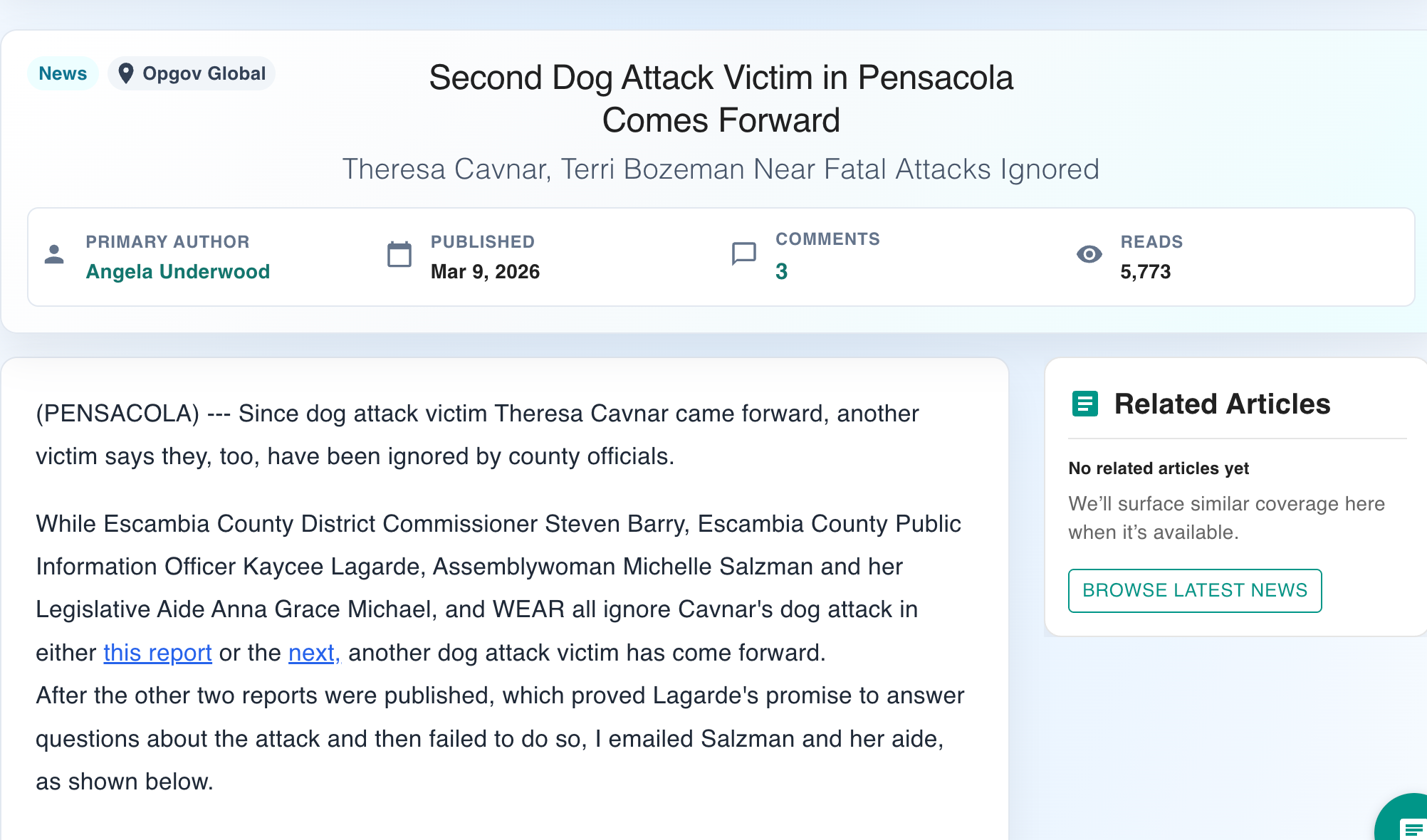
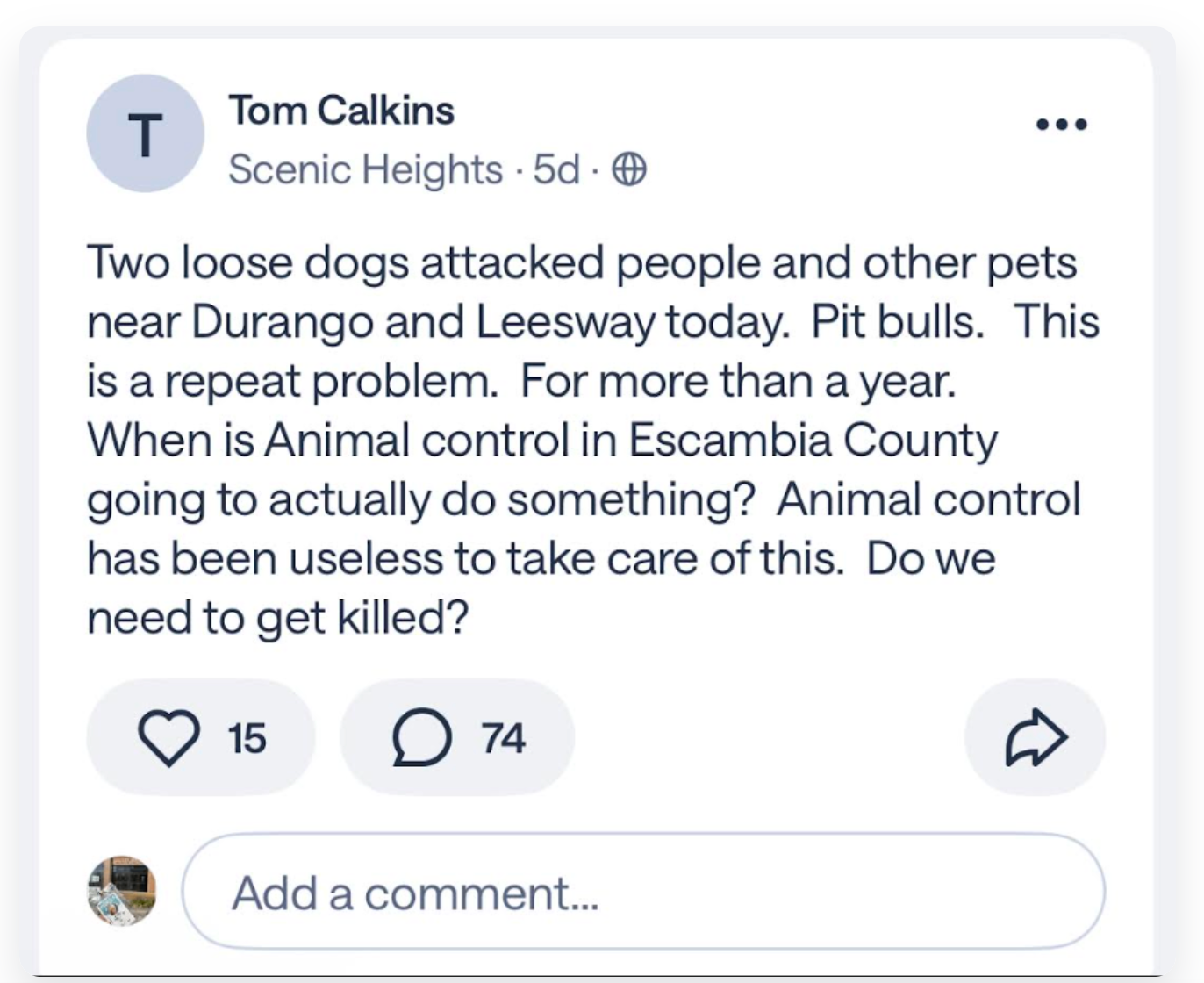
Photo Credit: Opgov.News, NextDoor.
The reporting gave victims a platform to share their experiences. It also brought public attention to the actions of elected officials. One member of the House of Representatives, who had previously been contacted regarding the case without responding, later joined the public discussion on Facebook after seeing the story gain traction online.
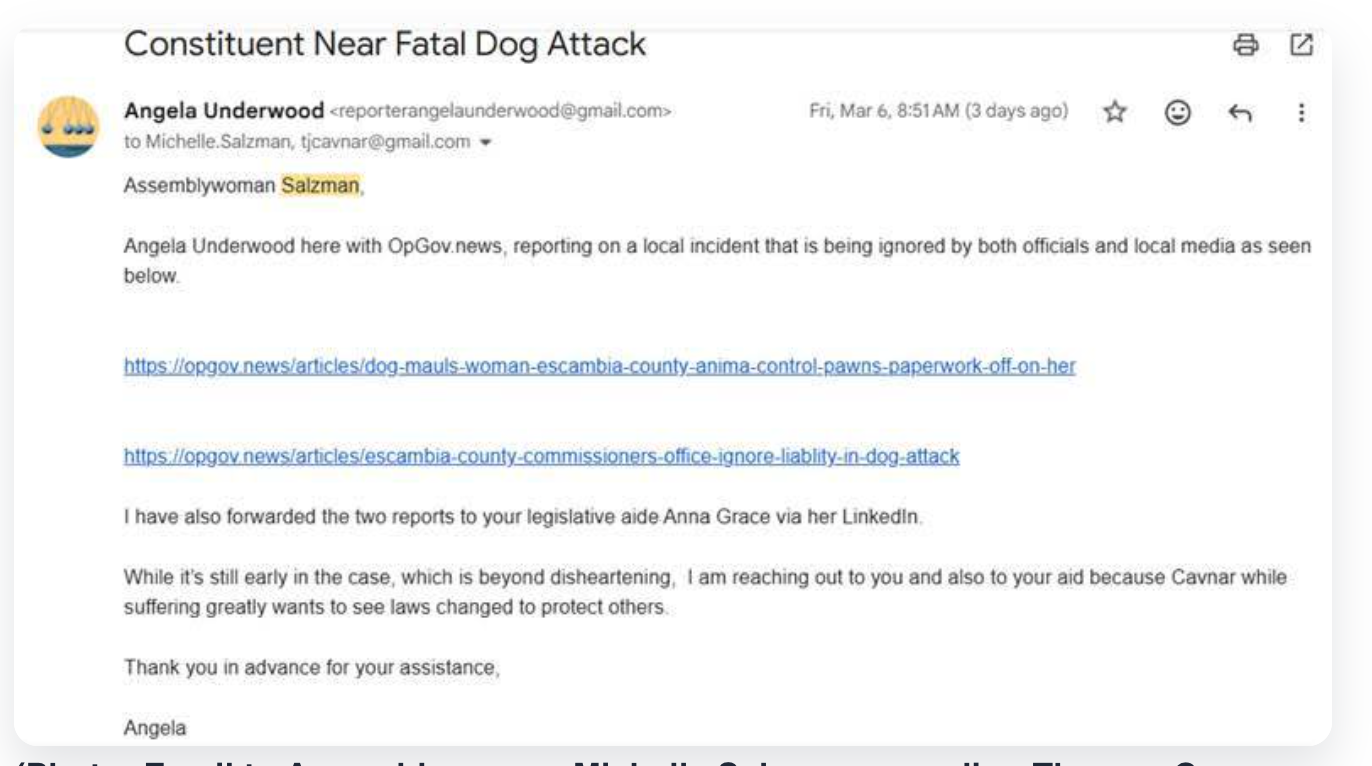
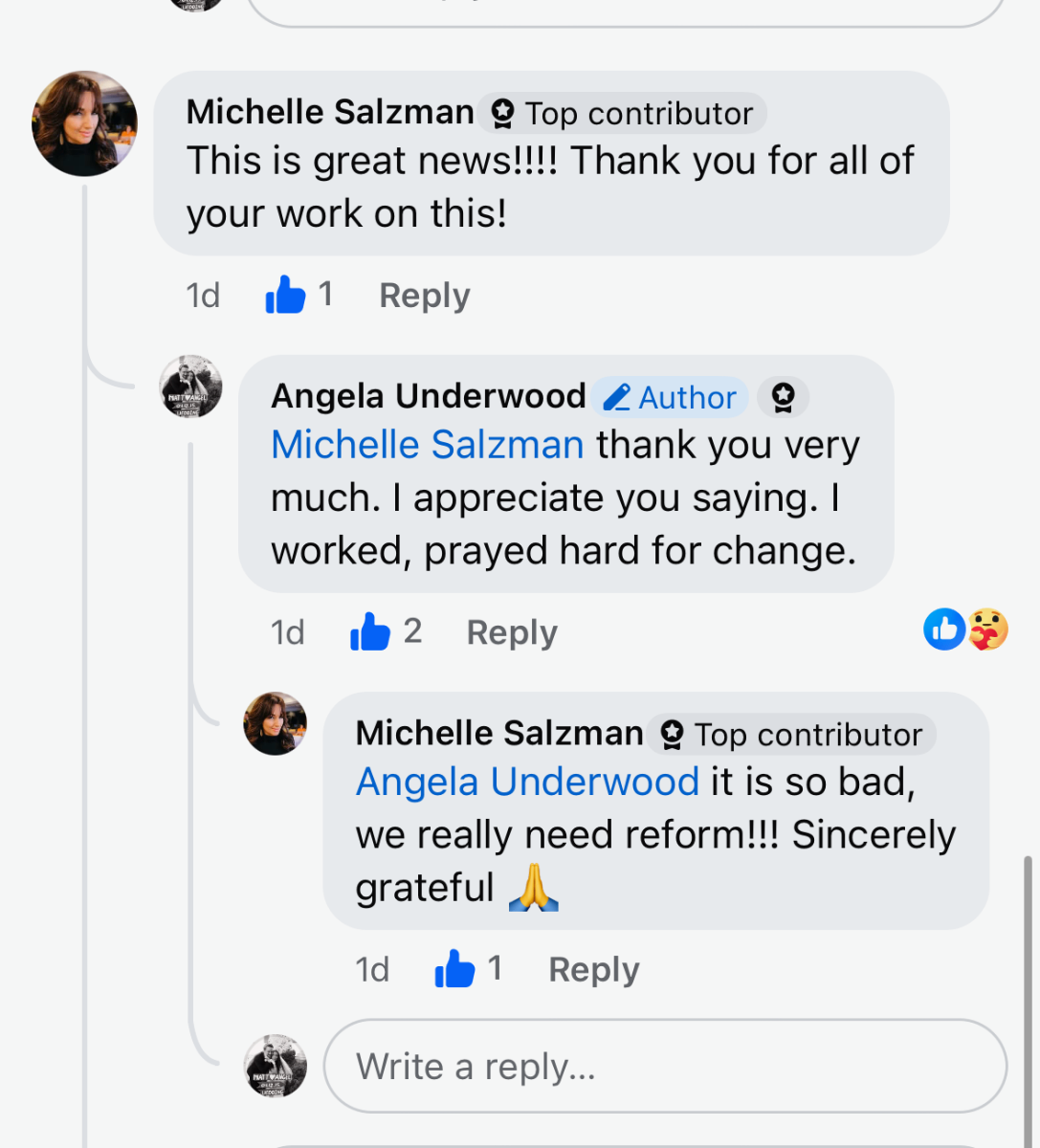
The coverage helped keep attention focused on a public safety issue that might otherwise have faded from view. As public scrutiny increased, local officials advanced a new dangerous dog ordinance and acknowledged the need for expanded animal shelter capacity.
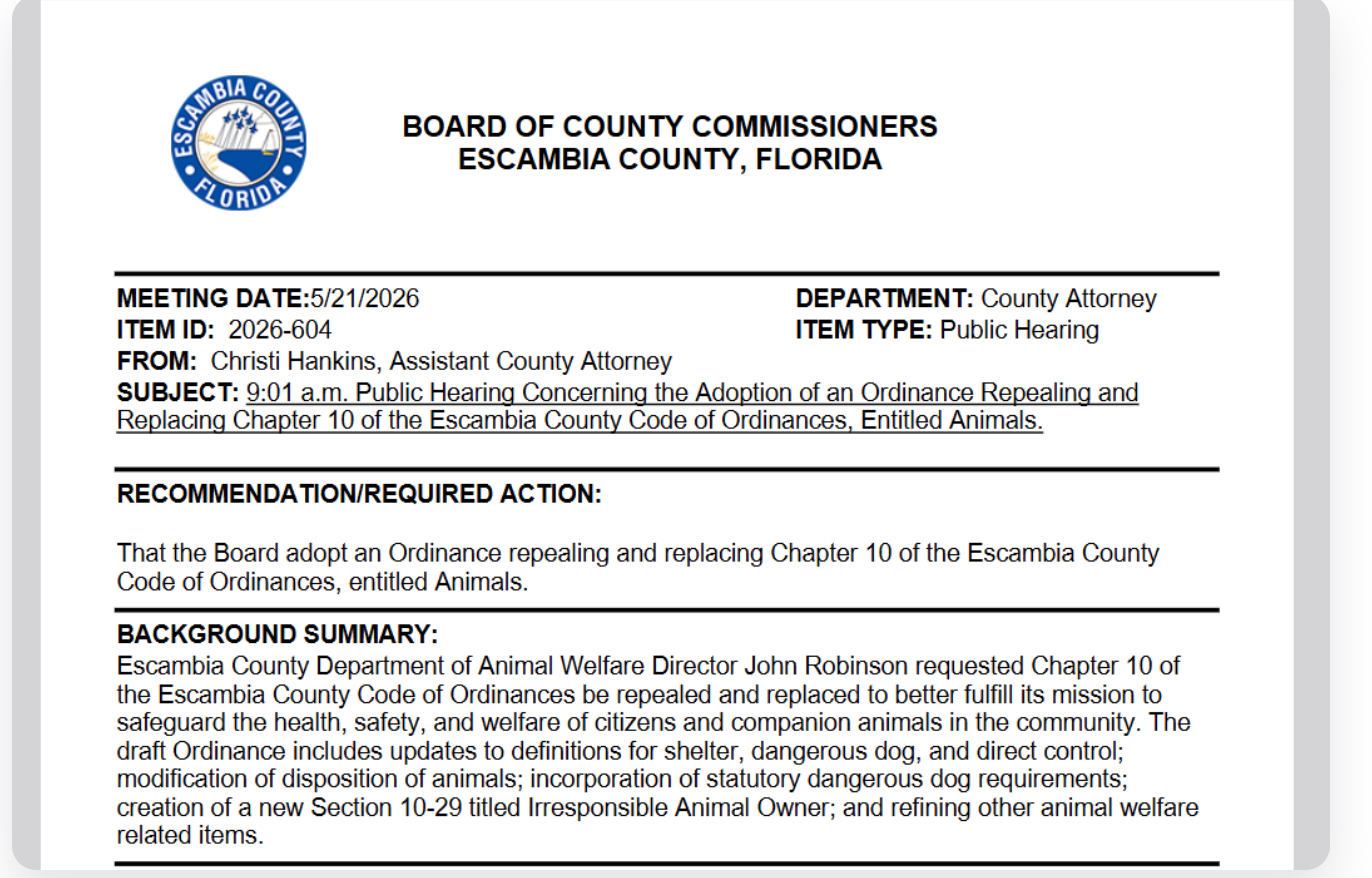
This is what local journalism is supposed to do.
Much of the public conversation about artificial intelligence focuses on jobs that may disappear. We believe there is another possibility: AI can create better conditions for journalism.
Instead of spending six hours watching a government meeting, a reporter can spend six hours interviewing residents, investigating claims, verifying facts, and holding officials accountable.
The technology handles the tedious work of sorting through massive amounts of information, identifying interesting parts and analysing vocal tone and emotion, allowing human journalists to review the correct part of the meeting and report on it.
Participatory democracy depends on an informed public. Yet across the country, local governments conduct thousands of meetings every year with little public attention. The information is technically available, but practically inaccessible. We believe communities deserve better.
Imagine every city council meeting, county commission meeting, and public hearing receiving meaningful public attention instead of being watched by only a handful of people. Imagine residents knowing what their government is doing before decisions are finalized, not after.
That is the future Open Governance News is building.
Our mission is simple: make local government visible, make public information accessible, and help communities pay attention when it matters most.
Because accountability starts when someone is watching.
If you can help, please consider donating to Theresa Cavnar’s GoFundMe.
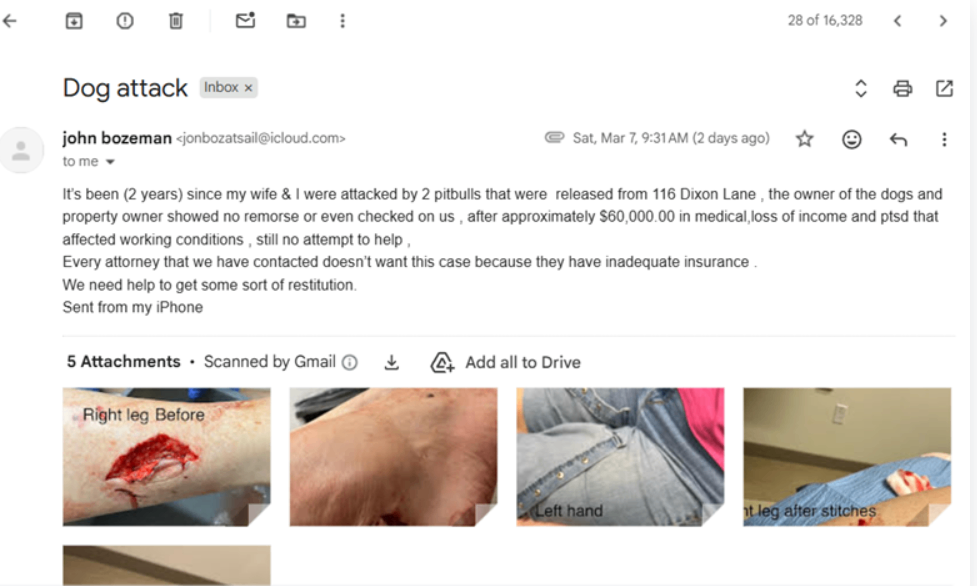
Photo Credit: OpGov.News
0
0

Comments