(OPGOV GLOBAL) – Influenza activity in the United States remained low nationally in late September, but surveillance data showed an increase in positive tests as H1N1 became the dominant influenza strain among viruses that were subtyped, raising questions about how the 2026-27 flu season could develop.
The Centers for Disease Control and Prevention reported that 3.4% of respiratory specimens tested positive for influenza during the week ending September 26. Of 79 influenza-positive specimens identified by public health laboratories, 55 were subtyped. Of those, 53, or 96.4%, were H1N1pdm09, while two, or 3.6%, were H3N2. No influenza B viruses were identified among the public health laboratory specimens that week.
The CDC's surveillance data showed a change from the previous flu season, when H3N2 was the predominant influenza A subtype. The shift has occurred as researchers monitor an unusually early increase in influenza activity in parts of the Northern Hemisphere.
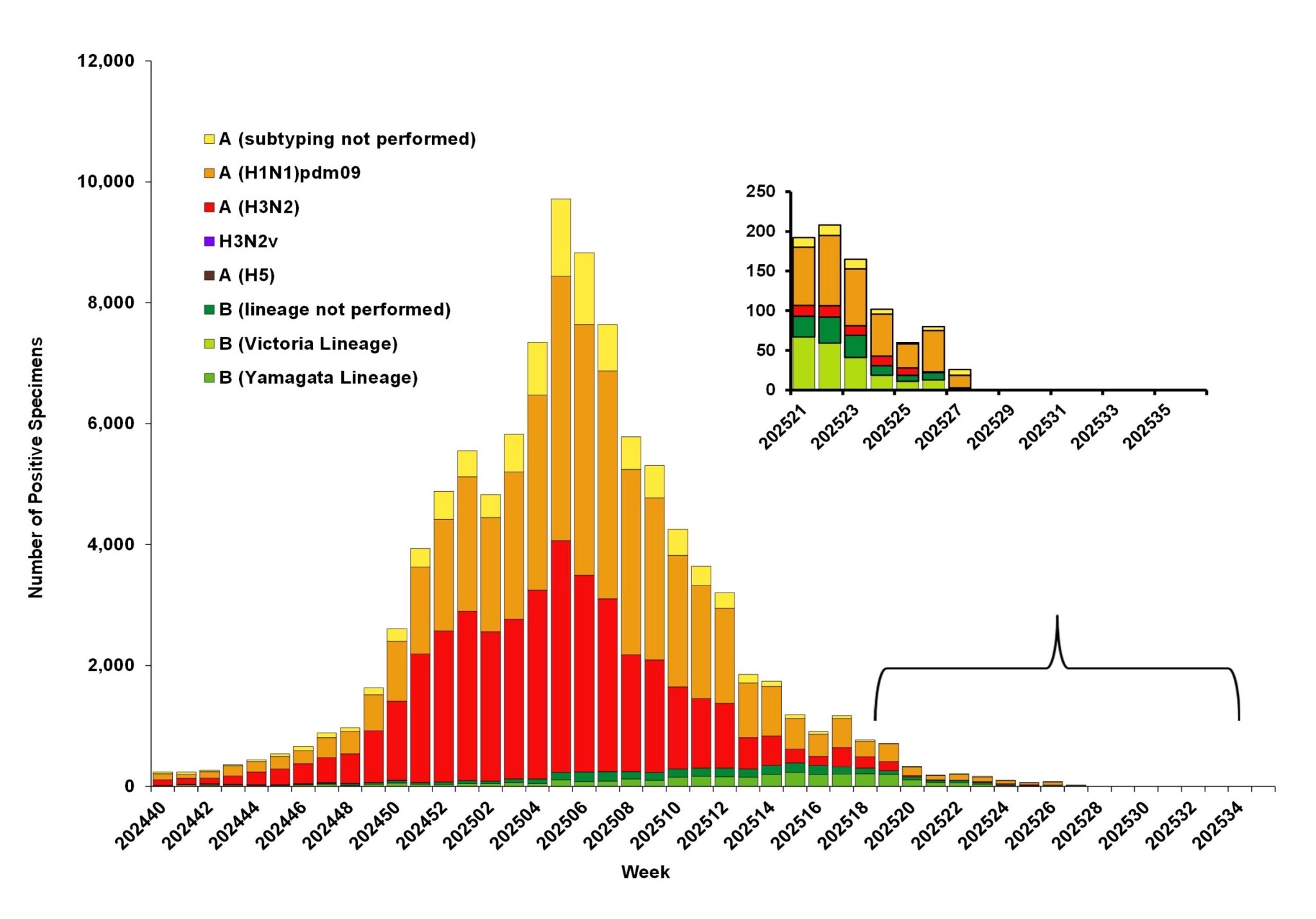
Photo Credit: Centers for Disease Control and Prevention / Influenza Positive Tests Reported to CDC by U.S. Public Health Laboratories, National Summary, 2024-2025 Season / Influenza-positive specimens reported by U.S. public health laboratories rose during the 2024-25 season, with H3N2 and H1N1 accounting for most identified influenza A specimens.
Influenza seasons typically begin at different times from year to year. According to the CDC's 2026-27 influenza season guidance, activity in the United States generally begins increasing in October, with seasons most often reaching their highest levels between December and February. The agency noted that the exact timing varies between seasons.
The current pattern has drawn attention because influenza activity has appeared earlier than expected in some locations. Researchers have been monitoring positive tests in the western United States and other parts of the Northern Hemisphere while examining genetic changes in the viruses circulating during the early part of the season.
Researchers have identified a mutation known as G155E in the hemagglutinin protein of H1N1 viruses as an area of interest. Hemagglutinin is a protein on the surface of influenza viruses that helps the virus enter human cells. Changes to the protein can also affect how the human immune system recognizes influenza viruses.
University of Washington researchers identified the G155E mutation in 13 of 17 H1N1 samples with sufficiently complete genetic sequences from patients tested at hospitals and clinics in the Seattle area. The finding added to ongoing research into whether genetic changes in circulating H1N1 viruses could affect how existing antibodies recognize the virus.
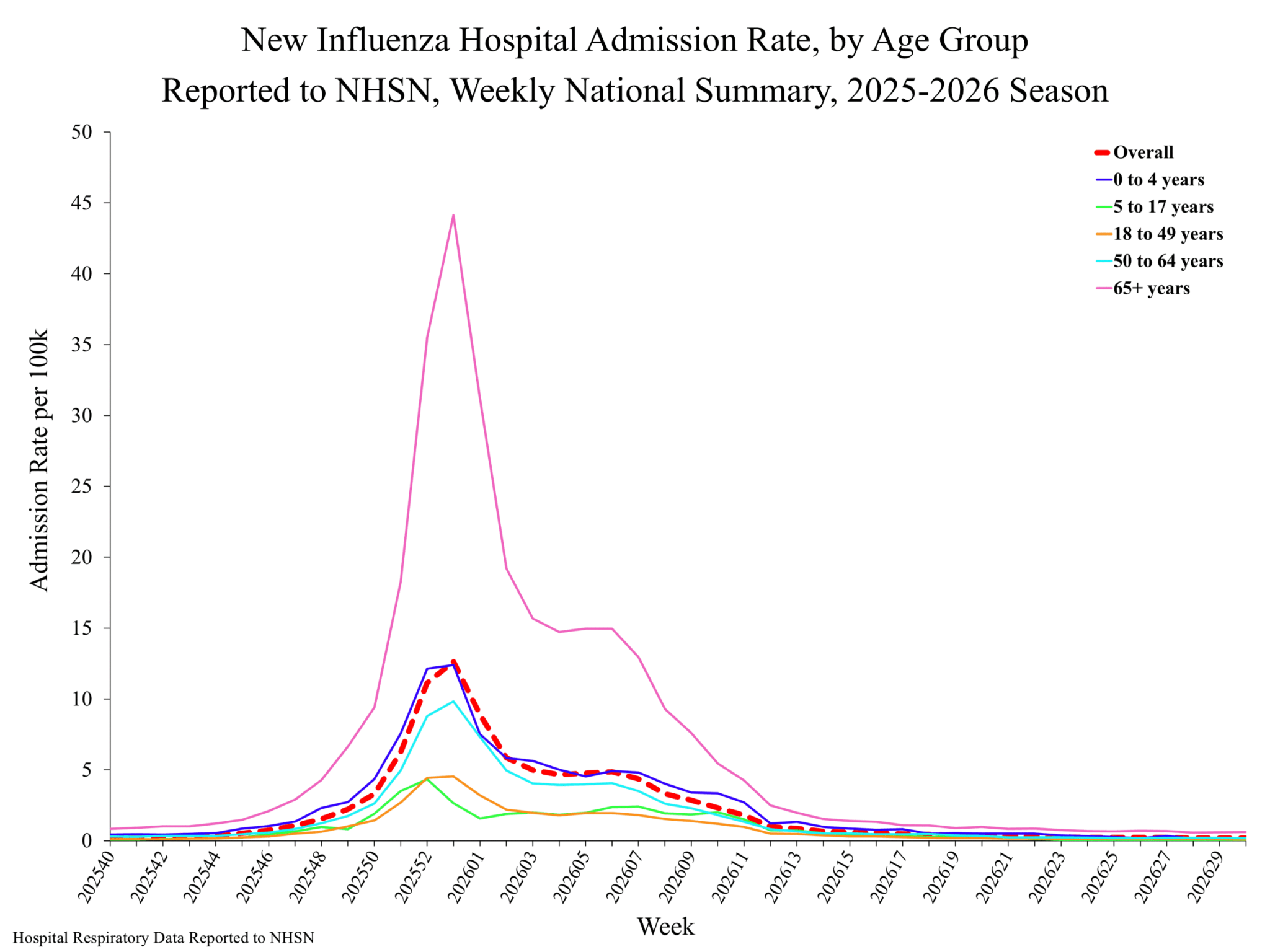
Photo Credit: Centers for Disease Control and Prevention / New Influenza Hospital Admission Rate, by Age Group, Reported to NHSN, Weekly National Summary, 2025-2026 Season / Influenza hospital admission rates during the 2025-26 season were highest among adults ages 65 and older.
Research into influenza immunity has also provided evidence that some recently circulating H1N1 viruses may be less effectively recognized by existing antibodies. A scientific study published in Virus Evolution examined human antibody responses to influenza viruses representing strains circulating in late 2025 and early 2026. The researchers used sequencing-based neutralization testing to measure thousands of interactions between influenza viruses and human blood sera.
The study found that many human sera had lower neutralization titers against the D.3.1.1 subclade of H1N1. The researchers noted that influenza viruses continually acquire mutations in their hemagglutinin proteins, which can reduce the ability of existing antibodies to recognize newer viruses.
A later 2026 influenza neutralization analysis from the Bloom Lab examined influenza viruses circulating during the summer and found that some newer H1N1 viruses carrying mutations including G155E showed reduced neutralization by human sera. The findings were based on laboratory measurements rather than observations of how people responded to infection or vaccination in the general population.
Reduced antibody recognition does not necessarily mean that a virus will cause more severe disease or that existing vaccines will fail to protect against infection. Researchers have emphasized that early-season data come from a relatively small number of infections compared with the volume of testing available later in the season.
The CDC's September surveillance data similarly showed that overall influenza activity remained low nationwide despite the increase in positive tests. During the week ending September 26, clinical laboratories tested more than 33,000 respiratory specimens, with 1,151 testing positive for influenza.
The early predominance of H1N1 also does not establish that the 2026-27 season will be more severe than previous seasons. Influenza activity can change substantially as additional viruses circulate and more people become infected.
The composition of the 2026-27 U.S. influenza vaccines was updated ahead of the season. According to the CDC's 2026-27 vaccine information, all three virus components were changed compared with the previous season. The H1N1 component for both egg-based and cell- or recombinant-based vaccines is an A/Missouri/11/2025 (H1N1)pdm09-like virus.
Flu vaccination remains an important part of seasonal influenza prevention. The CDC states that flu vaccines are available for people ages 6 months and older, with different vaccines approved for different age groups. The agency also notes that antibodies develop after vaccination and that annual vaccination can reduce the risk of influenza illness and serious complications.
OpGov.News previously reported on changes to influenza vaccination with the article, “New mRNA Flu Vaccine Showed Stronger Protection for Adults 50 and Older,” That article examined Moderna's MFLUSIVA, which became the first mRNA-based influenza vaccine approved in the United States and was authorized for adults ages 50 and older.
The emergence of H1N1 early in the current season provides additional context for why researchers continue to monitor changes in influenza viruses and vaccine effectiveness. Influenza viruses can evolve as they spread, making ongoing surveillance important for identifying which strains are circulating and how well existing immunity recognizes them.
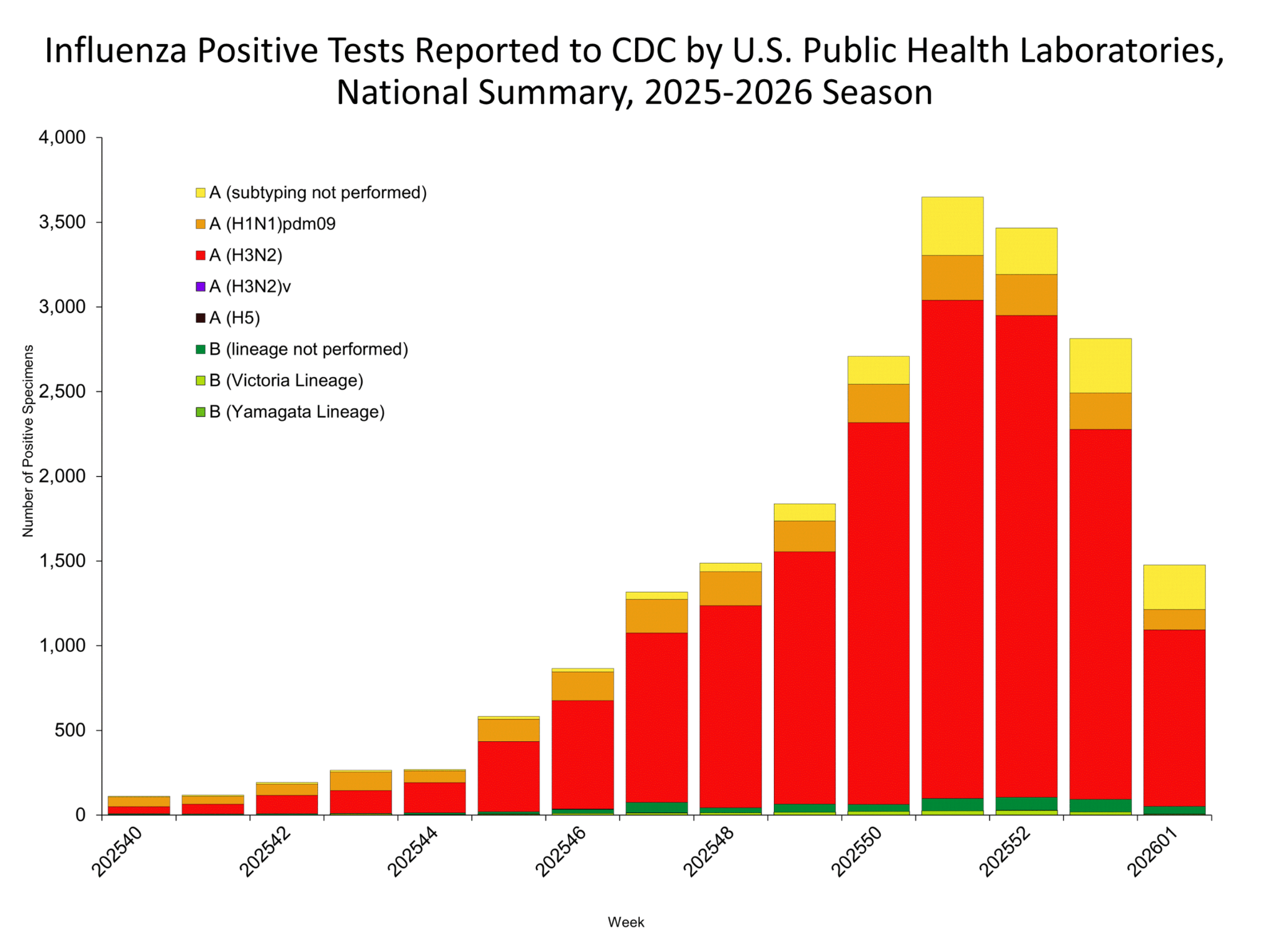
Photo Credit: Centers for Disease Control and Prevention / Influenza Positive Tests Reported to CDC by U.S. Public Health Laboratories, National Summary, 2025-2026 Season / U.S. public health laboratory data show the number of influenza-positive specimens by virus type and subtype during the 2025-26 season.
Influenza can also interact with broader respiratory and environmental health concerns. OpGov.News previously examined another respiratory health issue in “Wildfire Smoke Became a Growing Public Health Concern,” which detailed how fine particulate matter in wildfire smoke can affect respiratory and cardiovascular health.
For now, federal surveillance indicates that the 2026-27 influenza season remains in an early stage in the United States. The high proportion of H1N1 among the small number of subtyped public-health laboratory specimens is a notable shift from the previous season, but additional weeks of surveillance will be needed to determine whether the early increase develops into a widespread or unusually severe flu season.
As researchers continue tracking H1N1 mutations such as G155E, additional genetic sequencing, antibody studies, and epidemiological data will help determine whether the changes have a meaningful effect on population immunity, vaccine protection, or disease patterns.
To add to or correct any information in this report, please contact me at victoria.o@lead4earth.org.
Thumbnail Photo Credit: Centers for Disease Control and Prevention / Influenza Positive Tests Reported to CDC by U.S. Clinical Laboratories, National Summary, 2025-2026 Season / Influenza-positive tests reported by U.S. clinical laboratories increased during the 2025-26 flu season before declining later in the season.
0
0

Comments