(OPGOV GLOBAL) – Wildfire smoke affected communities far from active fires in 2026, exposing people to fine particulate pollution associated with respiratory and cardiovascular health risks, according to IQAir and research from public health organizations.
The smoke traveled hundreds or thousands of miles from wildfire locations, allowing communities outside the immediate area of a fire to experience periods of unhealthy air quality.
IQAir reported that Europe had surpassed 600,000 hectares burned during the 2026 wildfire season, while Canada had recorded about 5,000 wildfires and more than 4 million hectares burned as of September. The IQAir report said the increasing reach of wildfire smoke had created challenges for communities and public health systems.
One of the primary concerns was fine particulate matter, known as PM2.5. These particles were 2.5 micrometers or smaller and could travel deep into the lungs. Some particles could also enter the bloodstream.
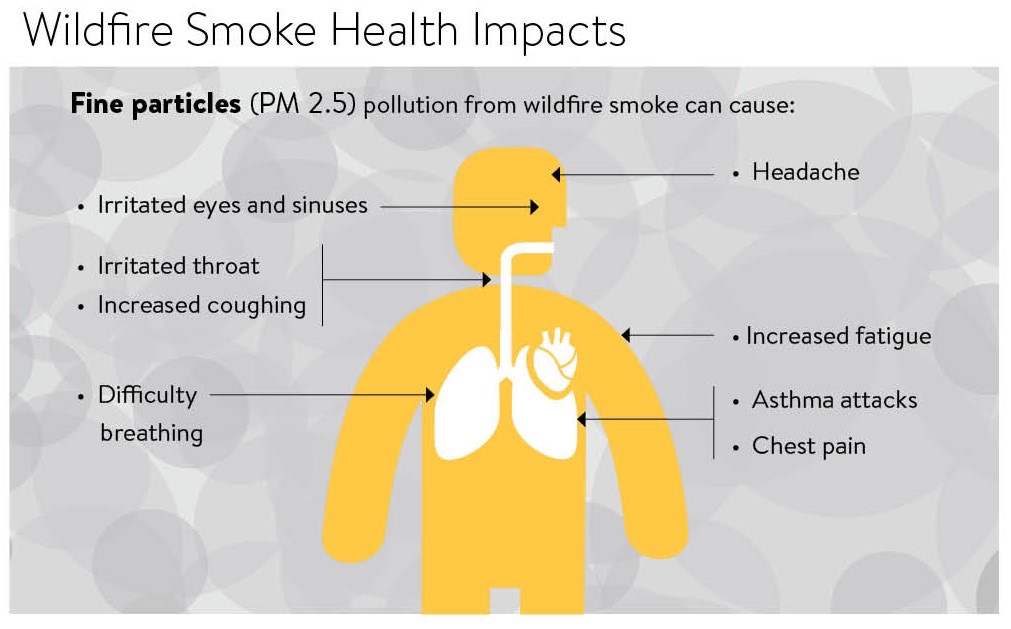
Photo Credit: Website / Bad River Tribe / Fine particulate matter (PM2.5) pollution from wildfire smoke can trigger a wide range of acute health symptoms, from irritation of the eyes and throat to severe asthma attacks.
The World Health Organization (WHO) said wildfire smoke could contain particulate matter, carbon monoxide, nitrogen dioxide, ozone, and other pollutants. Exposure could contribute to respiratory symptoms, asthma attacks, cardiovascular effects, and other health problems.
Wildfire smoke could affect people who were not near an active fire. Smoke could move across state and national borders, meaning communities could experience deteriorating air quality even when the fire itself was hundreds of miles away.
Research into Canada's 2023 wildfire season demonstrated the scale of long-distance smoke exposure. Canada experienced one of its largest wildfire seasons on record that year, with approximately 15 million hectares burned.
A study published in Nature in 2025 examined the health effects of smoke from those fires across North America and Europe. Researchers estimated that 354 million people in the two regions experienced at least one day when Canadian wildfire smoke contributed to PM2.5 concentrations above the World Health Organization's 24-hour guideline.
The researchers estimated that exposure to smoke from the Canadian wildfires was associated with approximately 5,400 acute deaths and 64,300 chronic deaths in North America and Europe. Globally, the study estimated about 82,100 premature deaths associated with chronic exposure to smoke from the fires.
The estimates were based on modeled pollution exposure and established relationships between PM2.5 exposure and mortality. The researchers noted uncertainty in the estimates, meaning the figures did not represent direct counts of individual deaths caused by specific wildfires.
The Canadian fires also affected the United States. Researchers estimated that approximately 267 million people in the United States experienced at least one day when Canadian wildfire smoke contributed substantially to PM2.5 pollution.
The study estimated that approximately 4,100 acute deaths in the United States were associated with exposure to Canadian wildfire smoke during those smoke days.
The health effects of wildfire smoke were also examined over longer periods.
A 2026 study published in GeoHealth examined wildfire-related PM2.5 exposure in Canada between 2013 and 2023. Researchers estimated that more than 80% of Canada's population experienced seasonal exposure to wildfire-related PM2.5 of at least 1 microgram per cubic meter during the period studied.
The researchers estimated that long-term wildfire-related PM2.5 exposure was associated with approximately 1,900 premature deaths per year in Canada and an annual health-related economic burden of about $18 billion.
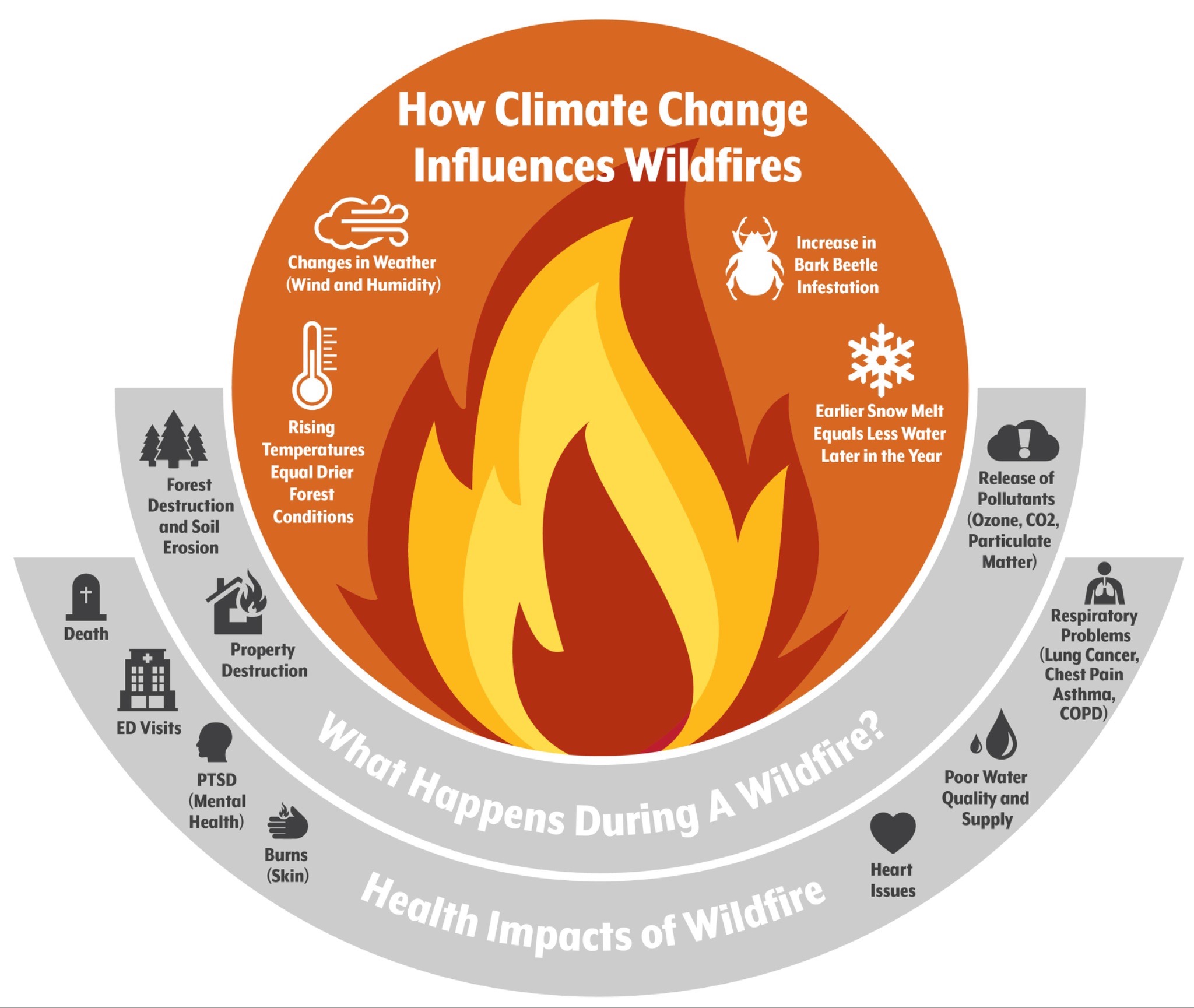
Photo Credit: Website / Colorado Health Institute / Climate change drivers like rising temperatures and insect infestations exacerbate wildfire intensity, creating widespread health and environmental consequences.
The study also found differences between individual wildfire seasons. Estimated premature deaths associated with acute exposure ranged from 49 to 400 per year between 2019 and 2023, while estimates for chronic exposure ranged from 660 to 5,400 deaths per year.
The researchers noted that the estimates contained uncertainty and that individual wildfire seasons could produce different levels of smoke exposure.
OpGov.News previously reported on environmental concerns in “Golden Mussels Found in Lake Del Valle; New Boat Quarantine Takes Effect,” written by OpGov reporter Harika Viswanatham, which examined the detection of golden mussels at Lake Del Valle and new restrictions intended to prevent the invasive species from spreading between waterways.
The article was one example of how environmental conditions could prompt public agencies to introduce measures intended to limit potential risks to communities and natural resources.
OpGov.News also reported on public health concerns in “Baby Food and Formula Recalls Continued Into 2026,” which examined multiple food-safety recalls involving products for infants and young children.
Wildfire smoke presented a different type of environmental health exposure because the source of the pollution could be located far from the people experiencing its effects.
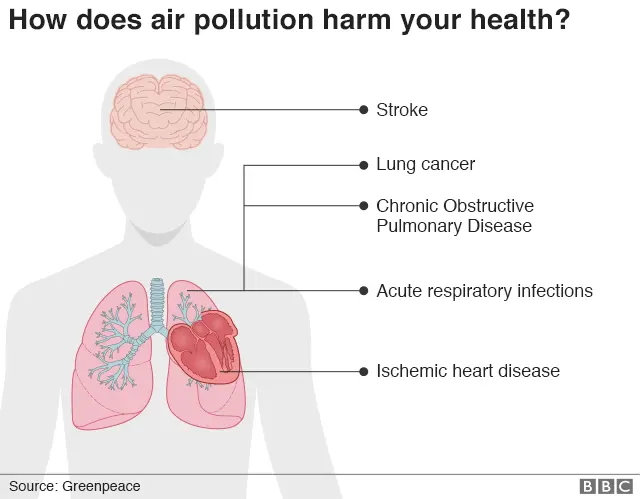
Photo Credit: Website / BBC / Greenpeace / Long-term exposure to fine air pollution harms multiple major organs, increasing the risk of severe cardiovascular and respiratory conditions.
The World Health Organization said children, older adults, pregnant people and people with existing heart or lung conditions could face greater health risks from wildfire smoke. People who worked outdoors could also have greater exposure because they spent more time in areas affected by smoke.
The WHO recommended that communities use air-quality monitoring, early-warning systems, and public communication to help residents respond to wildfire smoke.
Reducing exposure could include limiting strenuous outdoor activity during periods of poor air quality, keeping windows and doors closed when appropriate, and using air filtration systems or cleaner-air spaces.
The organization also recommended that people follow local air-quality advisories and take additional precautions when smoke levels increase.
Wildfire smoke could contain additional pollutants when fires burn buildings, vehicles, or other manufactured materials. The composition of smoke could therefore vary depending on what was burning and the conditions surrounding the fire.
The geographic reach of smoke also created challenges for schools, workplaces, health systems, and local governments. Communities that were not directly threatened by flames could still need to respond to poor air quality.
IQAir's report identified air-quality monitoring, clean-air spaces, filtration systems and preparedness measures as potential components of a broader response to wildfire smoke.
Researchers continued to study the health effects of repeated wildfire smoke exposure. The World Health Organization said additional research was needed to better understand some long-term effects. In contrast, existing research had established links between wildfire smoke exposure and several respiratory and cardiovascular health outcomes.
As wildfire seasons continued across multiple regions, the effects of smoke extended beyond areas where fires were actively burning. Air-quality monitoring and public health communication remained tools used to help residents understand exposure levels and take precautions during periods of elevated pollution.
To add to or correct any information in this report, please contact me at victoria.o@lead4earth.org.
Thumbnail Photo Credit: Website / Sheridan Memorial Hospital / Active wildfires generate dense smoke and fine particulate matter that can travel long distances, posing severe air quality and health risks during wildfire season.
0
0

Comments