(OPGOV GLOBAL) – A federal judge on Oct. 29 blocked the Trump administration from enforcing a rule that would have made it more difficult for some people with serious medical conditions to qualify for exemptions from new Medicaid work requirements.
U.S. District Judge Richard Stearns of the U.S. District Court for the District of Massachusetts ruled that the Centers for Medicare & Medicaid Services (CMS) exceeded its authority by narrowing the definition of who qualifies as “medically frail.” The decision followed a lawsuit filed by 25 states and Washington, D.C., challenging federal guidance that they argued could create additional barriers for medically vulnerable Medicaid recipients.
The court granted the states’ request for summary judgment, vacated the challenged definition and issued a permanent injunction preventing its enforcement. The decision also provided six months for states to address implementation changes related to the ruling.
The ruling does not eliminate the new Medicaid work requirements. Instead, it blocks the administration from applying the disputed medical-frailty standard in the states involved in the lawsuit.
Under the 2025 One Big Beautiful Bill Act, certain adults between ages 19 and 64 who receive Medicaid through expansion coverage will generally need to complete at least 80 hours of qualifying activities each month to maintain eligibility. These activities can include employment, community service, participation in a work program, or enrollment in an educational program at least half-time.
The requirements are scheduled to take effect no later than Jan. 1, 2027, although states may implement them earlier. The federal government outlined the requirements and exemptions in its Medicaid Community Engagement Requirement fact sheet.
The legal dispute centered on how the federal government defined medical frailty. Congress established exemptions for certain people with disabilities, blindness, substance use disorders, disabling mental health conditions, and serious or complex medical conditions.
However, CMS guidance issued in June added another condition: individuals with qualifying medical conditions would also have to demonstrate that their conditions significantly impaired their ability to meet the new work or community engagement requirements.
The states argued that this additional standard went beyond the definition established by Congress and could make it harder for eligible people to receive medical exemptions. Stearns agreed that the federal agency had unlawfully narrowed the statutory definition.
The court's decision cited the potential consequences for people who rely on Medicaid for continued medical treatment. If otherwise eligible individuals lost coverage because of the stricter standard, they could experience interruptions in care. The states also argued that the guidance would require costly changes to their eligibility verification systems.
The decision is particularly relevant to people managing chronic illnesses, disabilities and complex medical conditions. Medicaid provides health coverage to eligible low-income individuals and families, including people who depend on ongoing prescriptions, specialist appointments, behavioral health services and other medical treatment.
North Carolina was among the states that joined the legal challenge. According to the New York Attorney General's Office, the coalition included attorneys general from 25 states and the District of Columbia. The lawsuit was led by California, Massachusetts, and New Jersey, with North Carolina listed among the participating states.
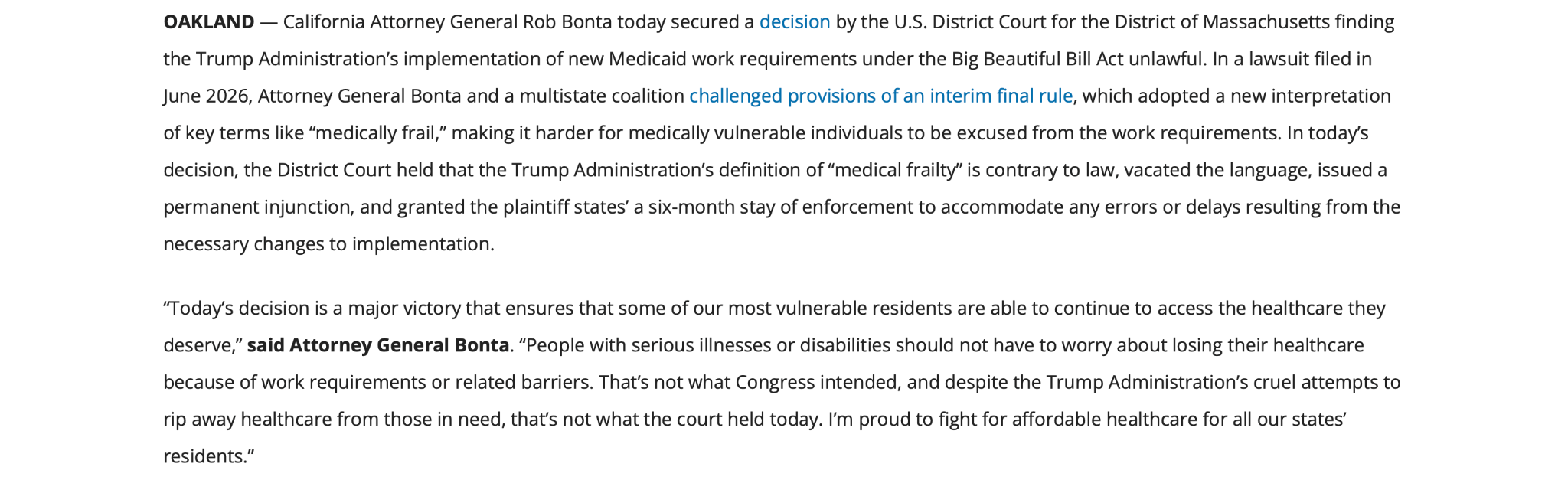
Photo Credit: California Department of Justice / oag.ca.gov / California Attorney General Rob Bonta released a statement detailing the federal court ruling that struck down the administration's narrowed definition of medical frailty.
The ruling does not remove every federal requirement related to medical exemptions. The court upheld other portions of the CMS guidance, including restrictions involving medical documentation more than 12 months old and limits on how often states may accept self-attestation during a continuous enrollment period. Those provisions remain part of the federal implementation framework.
For state agencies, the decision adds another consideration to an already complex implementation process. States must identify which Medicaid beneficiaries are subject to the work requirements, determine who qualifies for exemptions, verify eligibility, and communicate changes to affected individuals.
CMS previously explained that states will be responsible for conducting eligibility checks, providing outreach, and giving beneficiaries an opportunity to demonstrate compliance or establish that an exemption applies. Under the federal framework, individuals who cannot initially demonstrate compliance must receive notice and an opportunity to provide additional information before coverage is denied or terminated. More details are available in the agency's official implementation guidance.
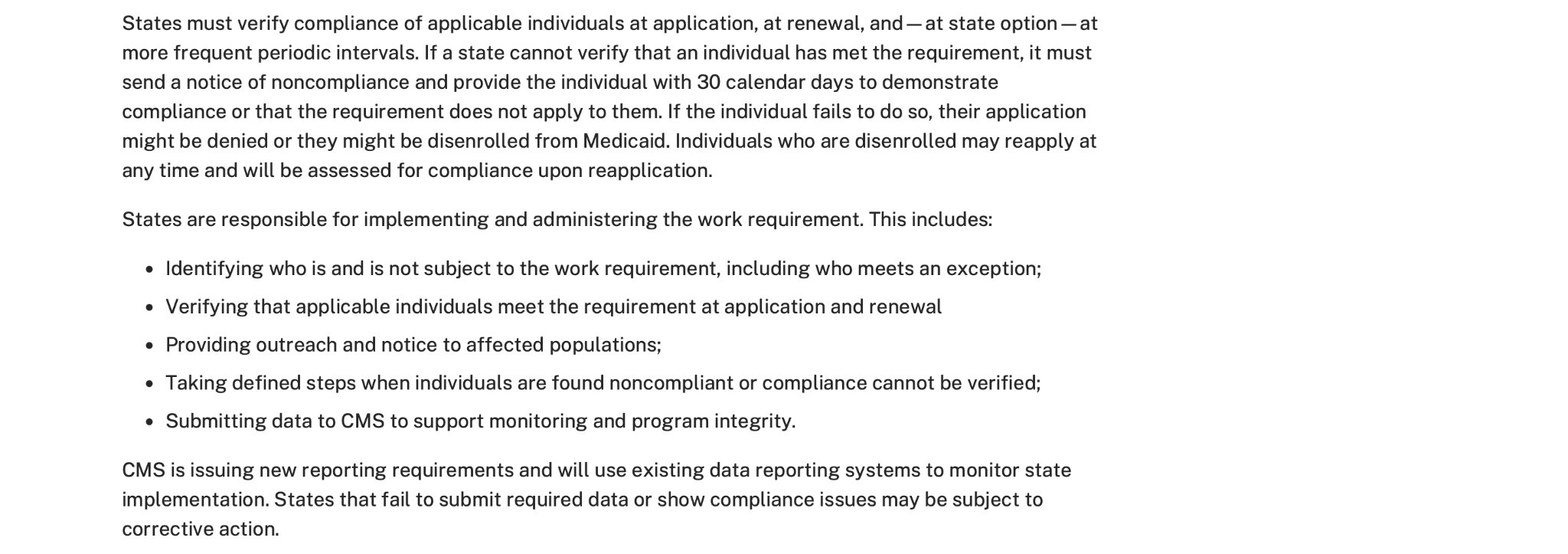
Photo Credit: Centers for Medicare & Medicaid Services / cms.gov / Official guidance from CMS outlines state administrative responsibilities and compliance timelines for Medicaid community engagement requirements.
The decision comes amid broader questions about healthcare affordability, insurance coverage, and access to treatment. OpGov.News previously examined how AI tools are expanding in medical billing as Americans face growing medical debt, highlighting financial challenges patients can encounter when navigating the healthcare system.
The publication also reported on a $6 million Medicare fraud case, examining concerns about healthcare program oversight and protections for beneficiaries.
As the Jan. 1, 2027, implementation deadline approaches, states will need to adjust their Medicaid eligibility procedures to account for the court's decision while continuing preparations for the broader work requirements. The ruling preserves Congress's medical exemptions against the narrower federal definition, but it does not resolve all questions about the future implementation of Medicaid work requirements.
For more information or to share a relevant community health issue, contact victoria.o@lead4earth.org.
Thumbnail Photo Credit: New York State Office of the Attorney General / ag.ny.gov / New York Attorney General Letitia James announced a victory after a federal judge blocked the Trump administration's rule restricting Medicaid medical frailty exemptions.
0
0

Comments