(OPGOV GLOBAL) – The U.S. Food and Drug Administration (FDA) is requiring manufacturers of popular diabetes and weight-loss medications to update their safety labeling following evidence of a potential increased risk of a rare eye condition that can cause sudden and permanent vision loss. The Nov. 9 announcement applies to glucagon-like peptide-1 receptor agonists (GLP-1 RAs), including Ozempic, Wegovy, Mounjaro, and Zepbound.
According to the FDA’s Drug Safety Communication, the condition, known as non-arteritic anterior ischemic optic neuropathy (NAION), occurs when blood flow to the optic nerve is reduced. It can result in sudden, painless vision loss, usually affecting one eye, and may cause permanent blindness. The agency is requiring manufacturers to include information about the potential risk in the Warnings and Precautions section of their medication labeling.
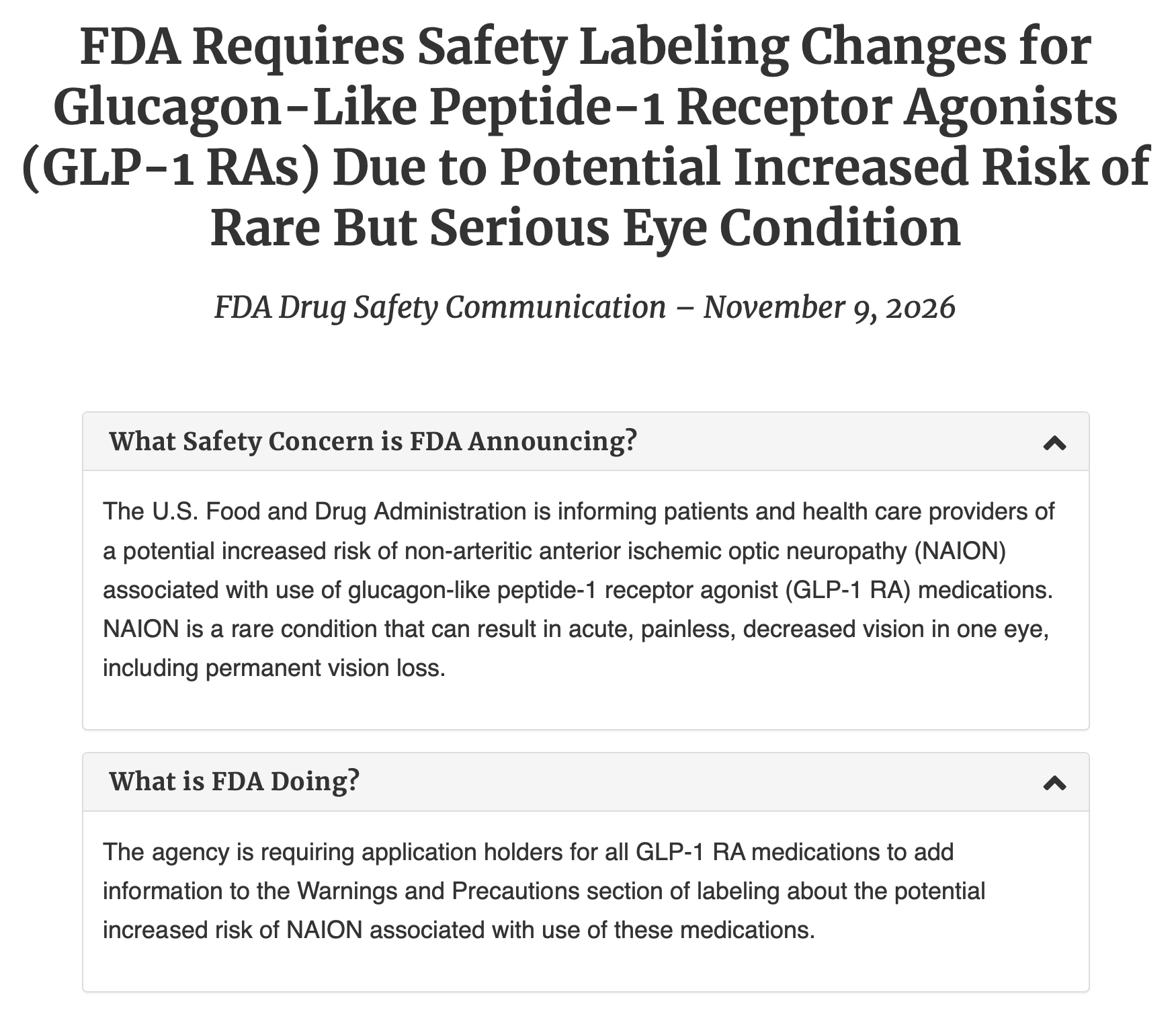
Photo Credit: U.S. Food and Drug Administration (FDA) / https://www.fda.gov/drugs/drug-safety-communications/fda-requires-safety-labeling-changes-glucagon-peptide-1-receptor-agonists-glp-1-ras-due-potential / An official FDA Drug Safety Communication details the agency’s requirement for GLP-1 medication labeling changes to include NAION risk
The decision follows an evaluation of clinical trial data, observational studies, animal research, and postmarketing safety reports. In its analysis of 126 randomized clinical trials including 134,253 participants, the FDA recognized 15 probable NAION cases. Ten occurred among patients receiving GLP-1 medications, compared to five among those who received comparator treatments. The estimated incidence was 6.4 cases per 100,000 person-years among GLP-1 patients, compared to 3.8 cases among comparator groups.
The FDA also examined information through its Sentinel Real-World Evidence Data Enterprise, which evaluates healthcare data to identify potential medication safety concerns. Researchers found no statistically significant increase in NAION risk when comparing GLP-1 medications with SGLT-2 inhibitors. However, an increase of risk was found when GLP-1 medications were compared with DPP-4 inhibitors, with a hazard ratio of 1.43. The agency emphasized that these findings would suggest a potential association, not definitive proof that the medications directly cause the condition.
Concerns regarding NAION in GLP-1 medications is not entirely new. A July 2024 study published in JAMA Ophthalmology, titled Risk of Nonarteritic Anterior Ischemic Optic Neuropathy in Patients Prescribed Semaglutide, examined 16,827 patients and identified a higher observed risk among those who were prescribed semaglutide compared with patients receiving other treatments. Researchers identified 17 cases among patients with Type 2 diabetes prescribed semaglutide, compared with six in the comparison group. Among those patients who are obese or overweight, 20 cases occurred in the semaglutide group compared with three among those receiving alternative medications. Those authors cautioned that additional research was needed to establish causality.
These findings add to growing scrutiny of a medication class that has expanded beyond traditional diabetes treatment into obesity management and other areas of healthcare. Their growing popularity has also prompted discussion about treatment combinations and possible side effects. Related coverage at OpGov.News has examined interest in combining GLP-1 medications with other treatments, including minoxidil, which is commonly used for hair growth. However, potential treatment combinations require independent clinical evidence, and the FDA’s latest warning concerns a separate issue.
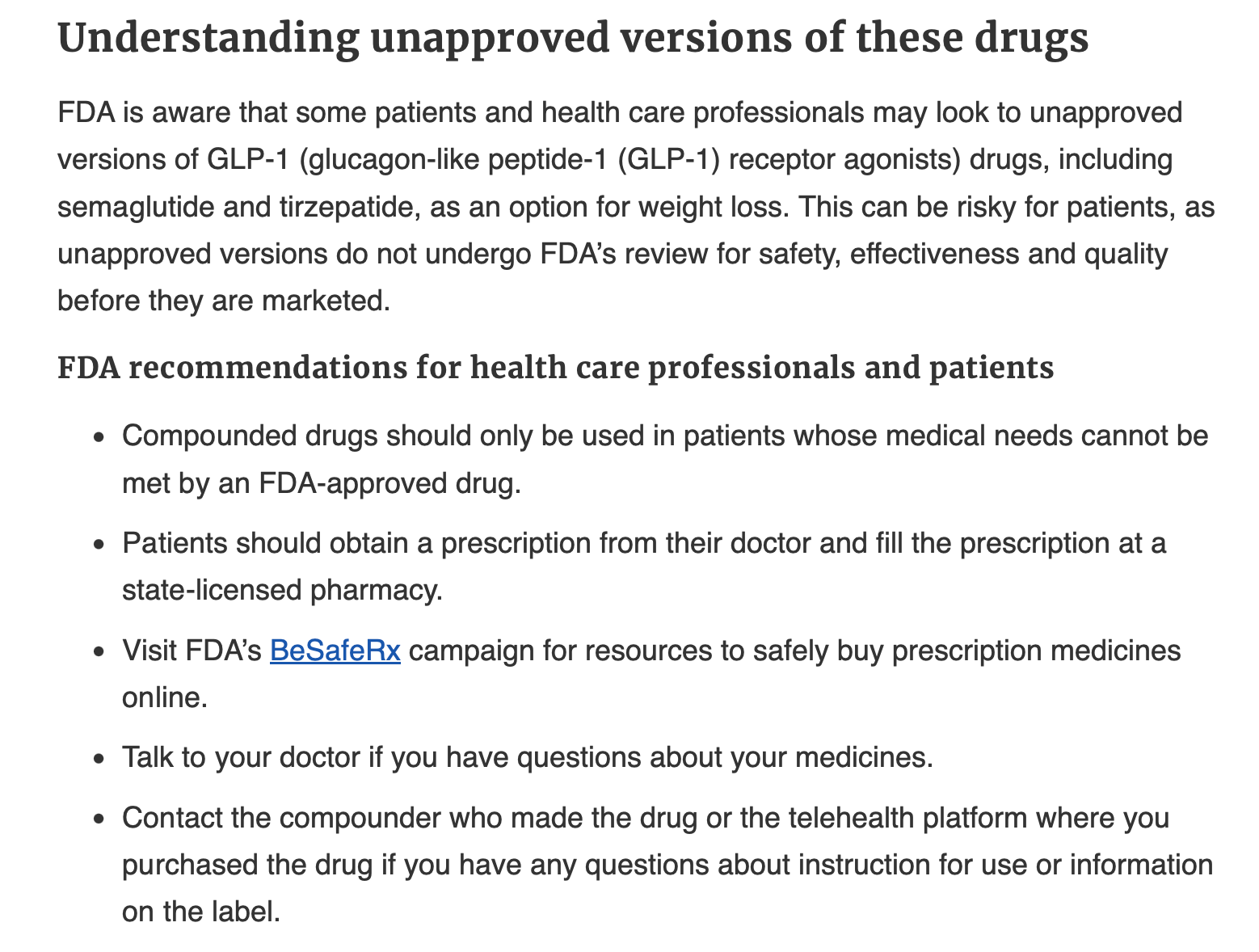
Photo Credit: U.S. Food and Drug Administration (FDA) / https://www.fda.gov/drugs/drug-alerts-and-statements/fdas-concerns-unapproved-glp-1-drugs-used-weight-loss / An informational list outlining the risks associated with the use of unapproved or compounded versions of GLP-1 drugs.
Another development when it comes to GLP-1 medications is the practice of taking smaller or less frequent doses, commonly referred to as microdosing. Patients have discussed the approach as a way to manage medication and reduce side effects. Yet, there is limited scientific evidence demonstrating that doses below approved treatment schedules provide the same long-term benefits established in clinical trials. Previous OpGov.News reporting has explored the trend and concerns regarding microdosing without medical supervision.
The FDA had separately warned about risks associated with unapproved and compounded GLP-1 products, including dosing errors and the use of doses or the schedules that differ from approved labeling. Compounded medications are not reviewed by the agency for safety, effectiveness, or quality before they are marketed. The FDA has also received reports of serious adverse events associated with dosing mistakes, including cases involving patients receiving more medication than intended.
For patients, the latest warning does not mean everyone taking a GLP-1 medication should stop treatment as a result of the emerging data. These drugs can provide additional benefits for people managing Type 2 diabetes and obesity, and treatment decisions should account for both potential benefits and risks. Patients are urged not to adjust their dosages or discontinue prescribed medication without consulting their healthcare provider.
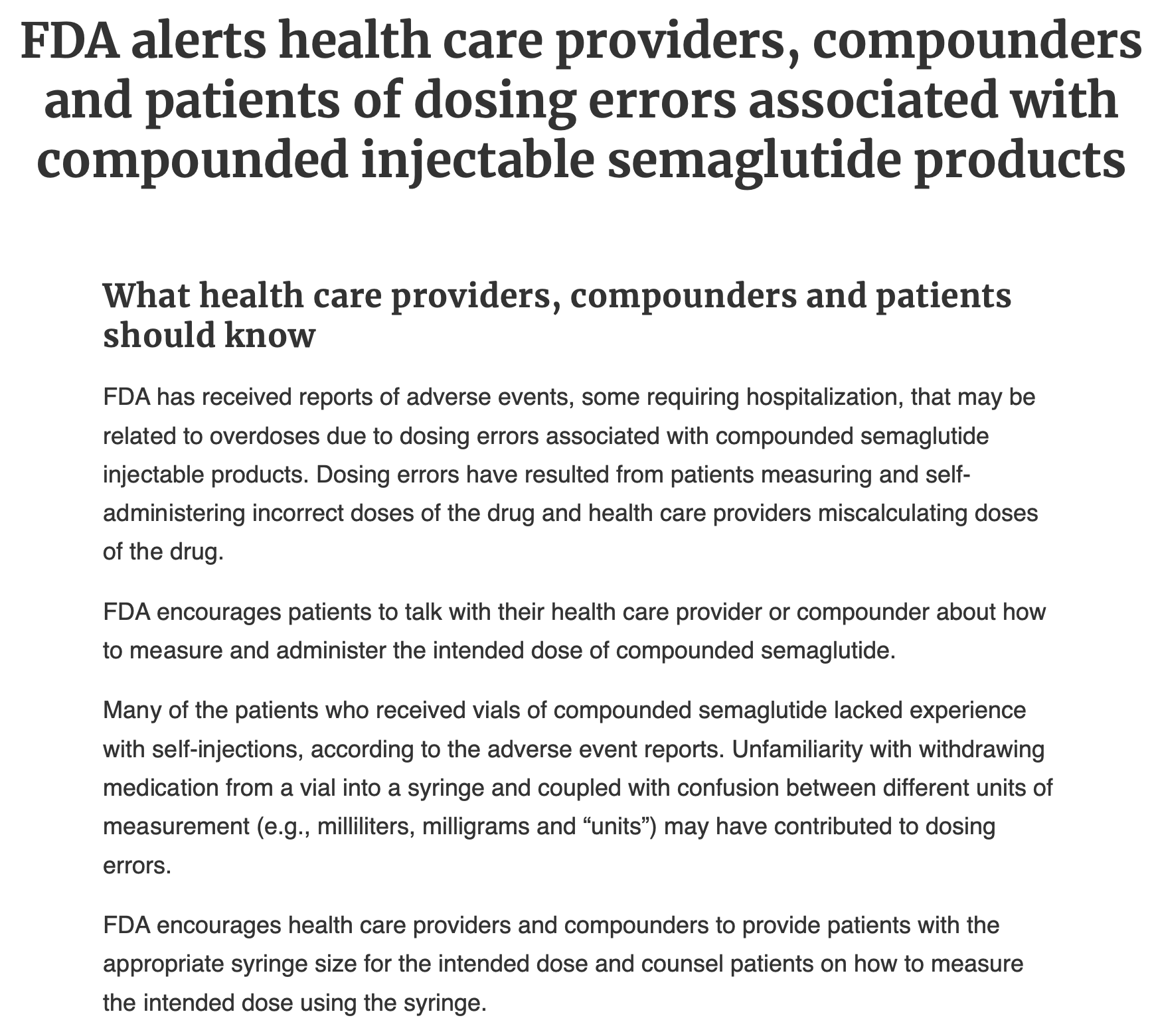
Photo Credit: U.S. Food and Drug Administration (FDA) / https://www.fda.gov/drugs/human-drug-compounding/fda-alerts-health-care-providers-compounders-and-patients-dosing-errors-associated-compounded / An official FDA alert addresses reports of adverse events and dosing errors, including cases of patients receiving more medication than intended
The FDA’s labeling requirement underscores the need and the importance of monitoring emerging safety evidence as the use of GLP-1 medications expands and innovates. Although NAION remains rare, recognizing its symptoms and seeking prompt medical attention may be critical to protecting vision as users. Patients taking these medications should understand the warning, report sudden vision changes immediately, and discuss any concerns with their healthcare team, especially as new data and new scientific studies are being done on GLP-1 and the associated risks.
For now, the challenge will be for both the patients and the manufacturers when it comes to GLP-1 use. With the patients, it will be to keep track of any unusual symptoms and report them to their healthcare provider immediately. And for the manufacturers, it will be to ensure that their products are following FDA guidelines as new safety evidence is found and incorporated into medical labeling and clinical practice while preserving access to treatments with established health benefits.
To add to or correct any information in this report, please get in touch with me at victoria.o@lead4earth.org.
Thumbnail Photo Credit: DrugsControl / https://drugscontrol.org/news-detail.php?newsid=46353 / A graphic illustrates the new FDA requirements for GLP-1 RAs concerning the potential risk of a rare eye condition (NAION)
0
0

Comments