(OPGOV GLOBAL) – The U.S. Food and Drug Administration cleared a blood test that can help doctors determine whether adults experiencing cognitive decline have brain changes associated with Alzheimer’s disease.
The FDA cleared Roche Diagnostics’ Elecsys Phospho-Tau (217P) Plasma, known as Elecsys pTau217, for adults aged 55 and older with signs, symptoms, or complaints of cognitive decline.
The test measures phosphorylated tau 217, or pTau217, a biomarker associated with amyloid pathology in Alzheimer’s disease.
The FDA’s regulatory database lists an August 19 decision date for the test, while Roche announced the clearance on August 24.
The test was developed by Roche Diagnostics in collaboration with Eli Lilly and Company. Roche said Elecsys pTau217 was the first FDA-cleared blood test using a single biomarker to support both “rule-in” and “rule-out” assessments of amyloid pathology in primary and specialty care settings.
The test provides positive, intermediate, or negative results based on the likelihood of amyloid pathology. The results are intended to be considered alongside a patient’s medical history, symptoms, and other diagnostic information.
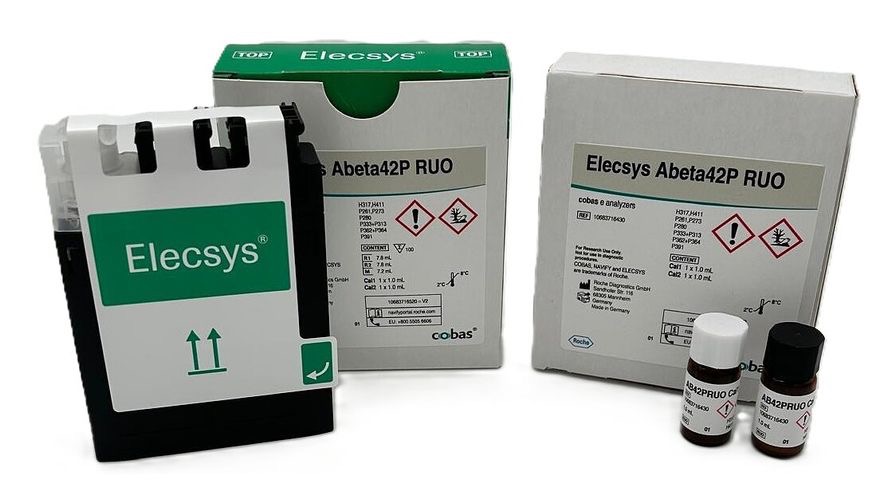
The Elecsys pTau217 blood test measures phosphorylated tau 217, a biomarker associated with amyloid pathology in Alzheimer’s disease.
Photo Credit: Roche Diagnostics/Website
The test provides another option for evaluating patients with cognitive concerns. Traditional methods of assessing amyloid pathology include positron emission tomography (PET) imaging and cerebrospinal fluid testing.
PET imaging can identify amyloid plaques in the brain, while cerebrospinal fluid testing requires a spinal tap to collect a sample. These methods can be costly, invasive, or difficult to access in some settings.
The Elecsys test uses a blood sample and is designed to work with existing laboratory equipment. Roche said the test can run on more than 4,500 cobas laboratory instruments already installed in clinical laboratories across the United States.
The test is not intended to be used by itself to diagnose Alzheimer’s disease.
Roche said results should be considered with other clinical information and diagnostic tools. The test also is not intended to predict whether a person without symptoms will develop dementia or to monitor the effects of Alzheimer’s treatments.
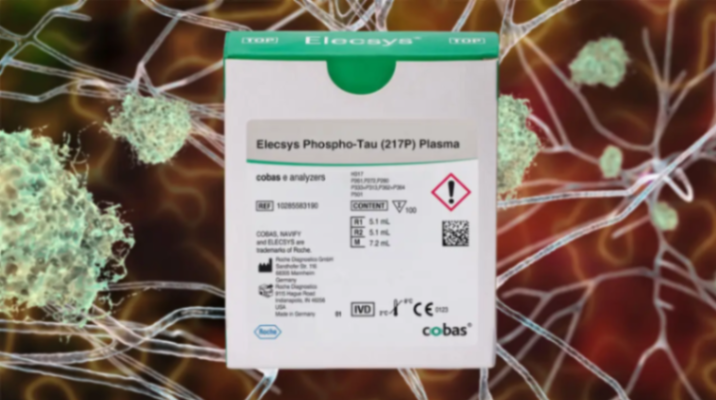
Roche Diagnostics' FDA-cleared Elecsys Phospho-Tau (217P) Plasma blood test measures pTau217 biomarkers to help physicians assess brain changes associated with Alzheimer’s disease in patients experiencing cognitive decline.
Photo Credit: MedPage Today/Website
The FDA clearance followed research evaluating the test in adults aged 55 and older with signs, symptoms, or complaints of cognitive decline. Roche reported that Elecsys pTau217 showed high agreement with amyloid PET imaging.
The Alzheimer’s Association said the clearance was the fourth FDA-cleared blood-based biomarker test for Alzheimer’s disease and the second such clearance during the week of August 24.
The organization said blood-based testing could expand access to Alzheimer’s diagnostic tools for patients experiencing cognitive impairment.
The clearance came as blood-based Alzheimer’s testing continued to expand. The FDA cleared the first blood test used to aid in diagnosing Alzheimer’s disease in 2025.
The development of new medical testing technology comes as health care providers continue to evaluate ways to improve access to diagnostic services. OpGov.News recently reported on “Why Are There So Many Foodborne Illness Cases This Year?”, written by Teri Tracy, which examined challenges within the domestic food supply chain.
Technology also continues to affect health care and other industries. In “New York Surpasses Silicon Valley In Overall Tech Talent,” written by Kristin Hassel, the article examined changes in the concentration of technology workers, with San Francisco continuing to lead in AI talent.
The applications differ, but both developments involve using technology within existing systems and services. The Roche test applies laboratory technology to Alzheimer’s disease assessment while maintaining the role of health care professionals in evaluating patients.
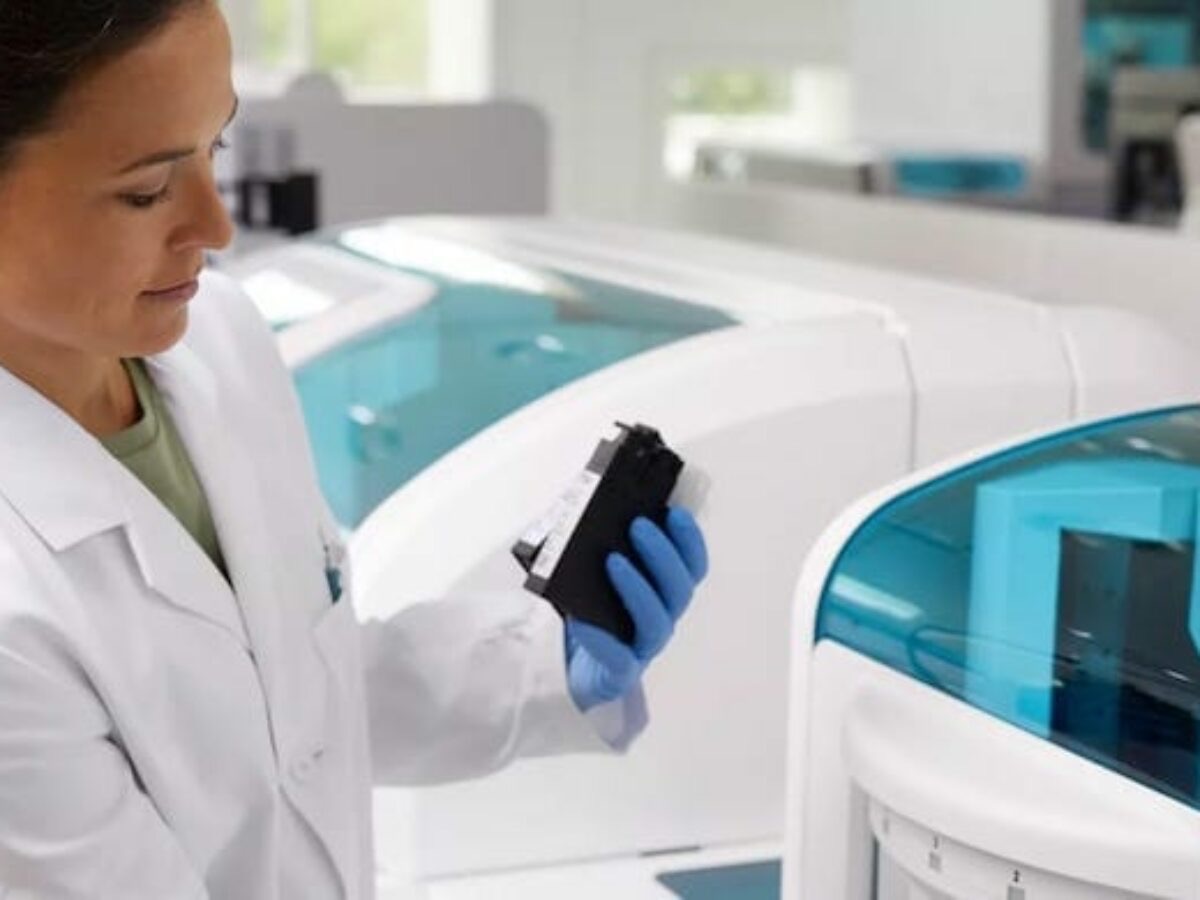
The blood-based test is designed to be used alongside clinical information and other diagnostic findings when evaluating patients with cognitive decline.
Photo Credit: Clinical Lab Products/Website
Labcorp and Quest Diagnostics announced plans to offer the FDA-cleared test through their laboratory networks.
Labcorp said it would offer Elecsys pTau217 following the FDA clearance.
Quest Diagnostics also announced plans to add the test to its portfolio of blood-based Alzheimer’s testing services.
The availability of blood-based testing is also relevant as Alzheimer’s treatments have increased the importance of confirming amyloid pathology in patients being evaluated for therapy.
The new test does not determine whether a patient should receive a specific treatment. Instead, it is intended to help assess whether amyloid pathology is present so physicians can determine appropriate next steps.
The FDA’s clearance gives health care providers another blood-based option for patients experiencing cognitive concerns and a tool that can be incorporated into primary and specialty care settings.
The extent of its use will depend on availability through laboratories, adoption by health care providers, and how physicians incorporate the test into individual patient evaluations.
To add to or correct any information in this report, please contact me at victoria.o@lead4earth.org.
Thumbnail Photo Credit: Psychiatric Times/Website
0
0

Comments