(OPGOV GLOBAL) – Americans are posting all over the internet: they’re scared to eat produce from the grocery store.
In the wake of one foodborne illness outbreak after another this year, reports are flooding in from news outlets across the country covering a massive uptick in farmer’s market sales, especially after the initial cyclospora outbreak contaminating a large percentage of the country’s fresh shredded iceberg lettuce from Taylor Farms.
Countless social media posts echo a fear of store bought produce, citing a lack of trust in the American food supply chain as recalls continue to compound without resolve.
The Food and Drug Administration (FDA) has reported a total number of around 165 recalls this year alone in food and beverages. This may seem like quite a lot, but it’s actually on track for what the country averages in a year.
What’s not on track is that the number of affected individuals per recall is much higher, such as was seen with the 17,000-plus cases of explosive diarrhea making rounds across the country following the most recent outbreaks of cyclosporiasis that affected more individuals than ever recorded historically.
The problem is that while the FDA states it is aware of, and is consistently investigating causes of foodborne illness-related recalls in the U.S., that number isn’t dropping from previous years.
So, while the number of food and beverage recalls isn’t markedly higher this year than in recent years, it is concerning that there have been no immediate results in moving to tighten food restrictions in accordance with the Food Safety Modernization Act (FSMA).
The FDA actually has a number of varying food safety programs, ranging from leafy greens and eggs to seafood. However, these programs face extreme budget cuts that directly affect their efficacy in 2026.
Americans are now seeing the impact of the aforementioned budget cuts playing out in headlines that are making them squirm in the produce aisle.
That’s because last year, The Department of Health and Human Services (HHS) saw a massive reduction in staff: 10,000 full-time jobs were expected to be cut, including roles within the FDA responsible for food safety oversight.
In fact, according to the Doge fact sheet for this restructuring project, the FDA workforce was cut back by a total of 3,500 employees of its estimated 16,000 to 18,000 total employees.
The fact sheet emphasized “a focus on streamlining operations and centralizing administrative functions. This reduction will not affect drug, medical device, or food reviewers, nor will it impact inspectors.”
According to the OPM (Federal Workforce Data) tool, the actual number of FDA employees laid off last year totalled 3,879.
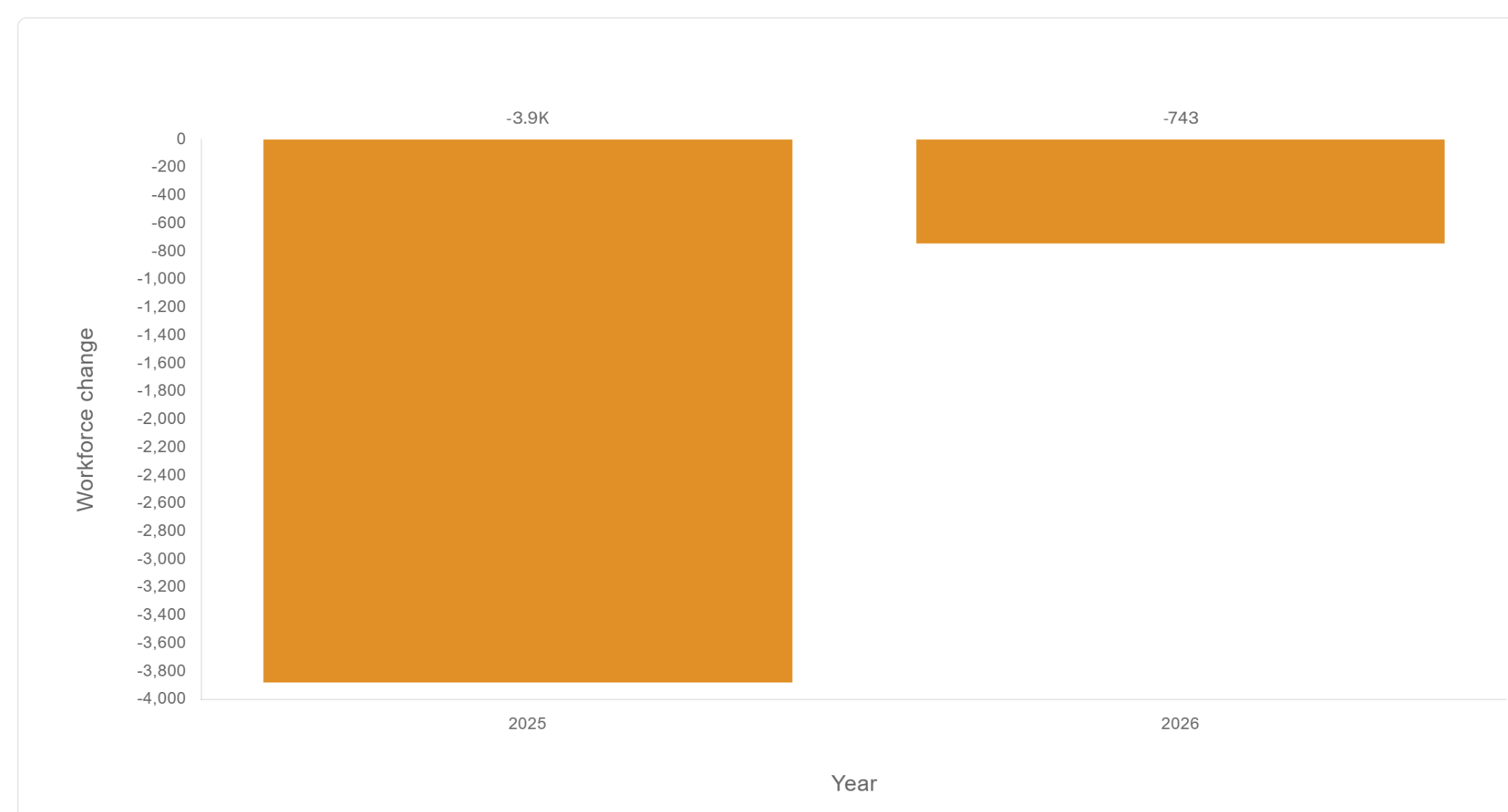
Photo Credit: OPM (Federal Workforce Data Tool)
OpGov.News reached out to the FDA regarding how the budget cuts impact food testing now, and how it will respond to foodborne illnesses in the future to prevent outbreaks mirroring the proportions of the recent cyclosporiasis outbreak.
That was ten days before this article was published; no response has been received.
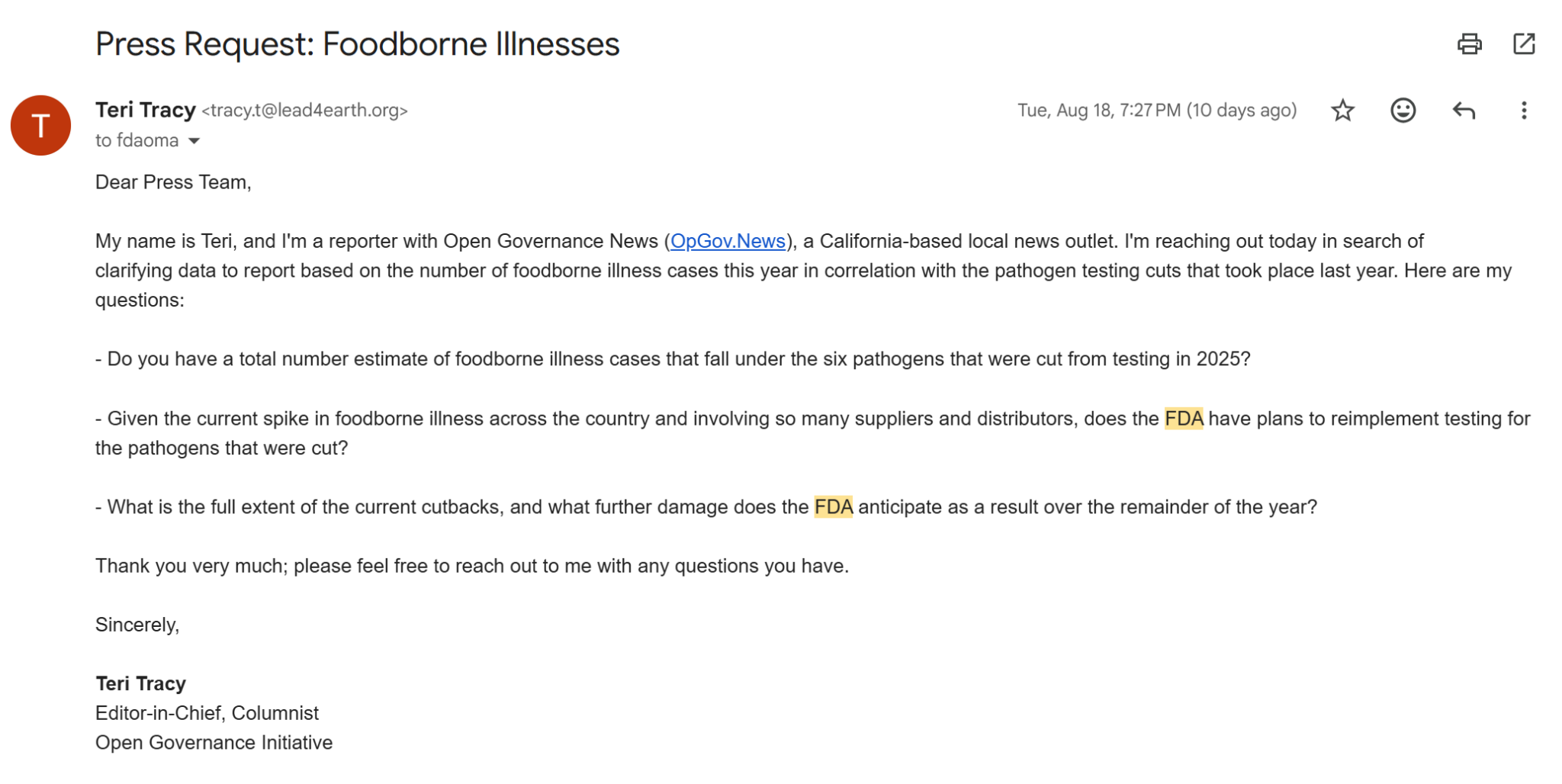
Photo Credit: Gmail / OpGov.News
The FDA’s most recent press update regarding the two ongoing investigations of the recent cyclospora outbreaks says just that: the investigation is still ongoing.
While the infected lettuce is purportedly off the market according to the August 27 FDA update, shoppers are still wary of purchasing fresh produce at the grocery store – and it’s not limited to lettuce.
In July, fresh fruit sales dropped 3.9%, and fresh vegetables dropped 1.7% compared to previous years according to bluebook. Experts largely attribute the steep dip in fresh produce sales to several simultaneous food recalls in the produce market.
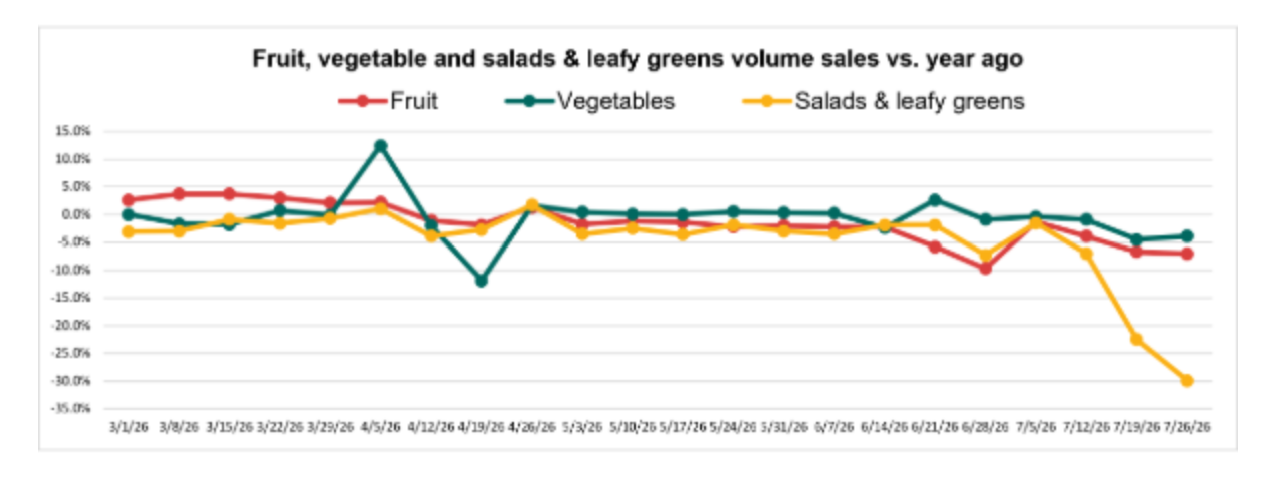
Photo Credit: bluebook
Even Salad-and-Go, an Arizona drive-through chain which served salads, wraps, and refreshing drinks was driven out of business by the outbreaks, unable to sustain itself amid widespread fear of consuming fresh lettuce and other common fresh salad ingredients.
The FDA has a plan to mitigate the loss of a large percentage of its workforce: The Better Regulatory Inspections for Dynamic Government Efficiency (BRIDGE) Project.
Despite cuts, the BRIDGE project is designed to distribute more food safety responsibility to individual state governments.
“By strengthening coordination, improving data sharing, and aligning inspection planning, the project seeks to expand inspection coverage using a scalable, systems-based approach to reduce duplication of effort and make more effective use of limited federal and state resources, while maintaining strong public health protections,” the project overview explains.
However, with each state enforcing its own food safety regulations, the data shared between state and government agencies may not be critiqued under the same guidelines.
This project isn’t here to save the day, however, as its anticipated year of implementation will be 2030.
OpGov.News will continue to monitor the ongoing situation involving the food supply chain.
To add to or correct any information in this report, please contact me at tracy.t@lead4earth.org.
0
0

Comments