(OPGOV GLOBAL) – The U.S. Food and Drug Administration authorized the first standalone robotic device that can draw blood from an adult patient's arm without hands-on operator intervention, allowing a trained phlebotomist to supervise multiple blood draws at the same time.
The FDA authorized Vitestro's Aletta Autonomous Robotic Phlebotomy Device on August 19 for use with adults in outpatient settings. The agency granted marketing authorization through its De Novo pathway, which is used for certain low- to moderate-risk medical devices of a new type.
The authorization came as health care providers continued to rely on trained phlebotomists to collect blood samples. The U.S. Bureau of Labor Statistics projected employment of phlebotomists to grow 6% from 2024 to 2034, with about 18,400 openings expected each year on average during that period.
Aletta was developed by Vitestro, a medical technology company based in Utrecht, Netherlands. The system combines robotics, near-infrared imaging and ultrasound technology to locate a suitable vein and collect blood samples.
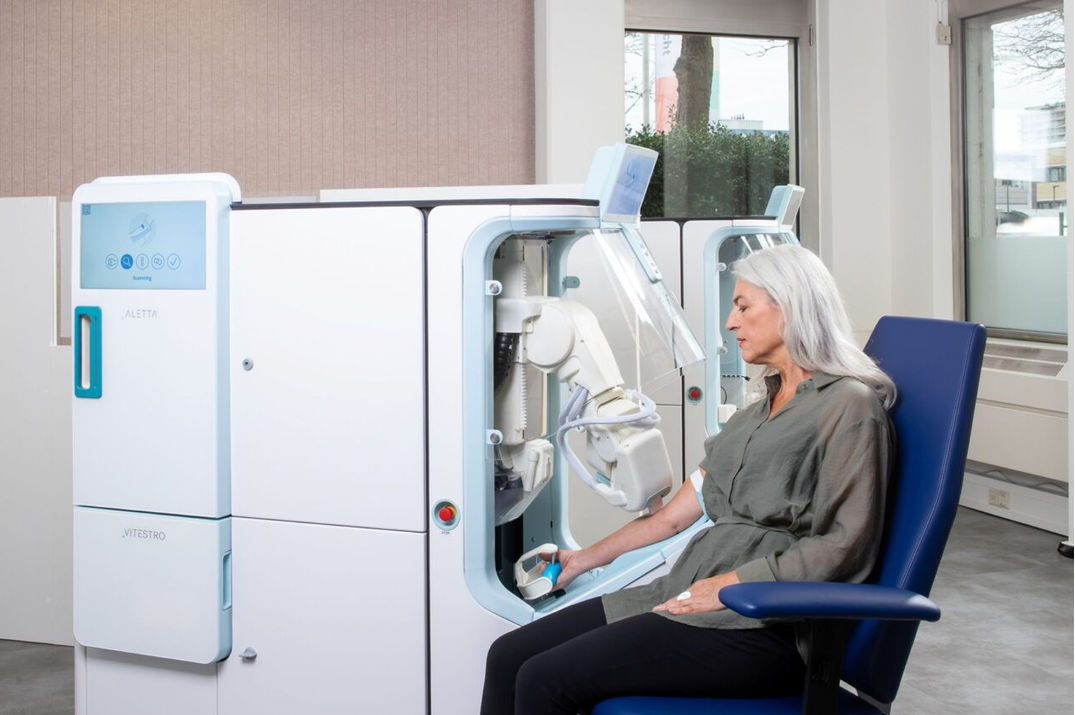
The Aletta device uses near-infrared imaging and ultrasound to locate veins and safely execute automated needle insertion.
Photo Credit: Fierce BiotechVitestro/Website
The device uses near-infrared imaging to locate a suitable vein and Doppler ultrasound to confirm that the selected vessel is a vein rather than an artery. If Aletta cannot locate an appropriate vein, it does not attempt the needle insertion.
After a suitable vein is identified, Aletta can apply a tourniquet, prepare the skin, insert the needle, collect blood into multiple tubes, remove and dispose of the needle, and place a bandage.
A trained phlebotomist remains responsible for overseeing the procedure. The FDA said one phlebotomist can supervise as many as three Aletta devices at the same time.
The supervising worker also verifies that the collection tubes are filled in the correct order and contain enough blood after the procedure.
Aletta includes safety measures designed to stop a procedure when conditions are not appropriate. If a patient moves excessively during the blood draw, the needle automatically detaches, and the procedure stops. Other sensors can pause the process and alert the supervisor if an unsafe condition is detected.
The FDA's authorization followed clinical research examining autonomous robotic phlebotomy.
A peer-reviewed multicenter study published in Clinical Chemistry in April evaluated an autonomous robotic phlebotomy device at outpatient phlebotomy sites in the Netherlands.
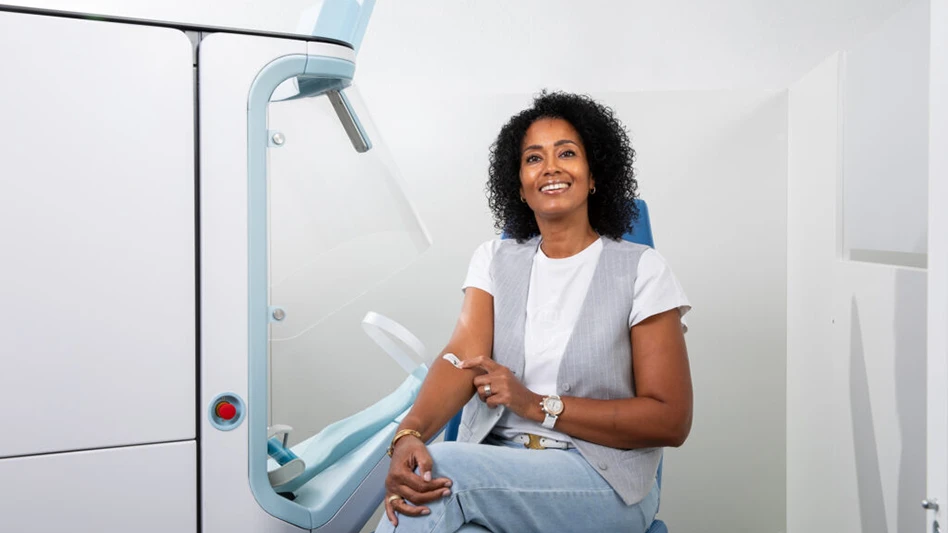
A patient displays a bandage applied automatically after a successful blood draw using the Aletta system.
Photo Credit: Today’s Medical Developments/Vitestro/Website
The study examined the device's performance, safety, and patient experience during routine blood collection.
The researchers evaluated the device's ability to locate veins, perform venipuncture, and collect blood samples while trained health care personnel supervised the procedures.
Vitestro reported a 94.5% first-stick success rate from its A.D.O.P.T. clinical trial. The company also reported that 90% of patients experienced pain that was less than or similar to a manual blood draw, while mild adverse events occurred in 0.6% of patients.
Those figures came from Vitestro's reporting of the clinical trial and are separate from the FDA's regulatory findings.
The FDA said its authorization was supported by clinical data showing that Aletta achieved successful blood-draw rates comparable to or better than trained human phlebotomists when the device proceeded with a needle stick.
The data included patients with varying health conditions, skin tones, and self-reported difficulty accessing veins. The agency said device-related adverse events were uncommon and mild.
The introduction of autonomous blood collection does not eliminate the need for phlebotomists.
The Bureau of Labor Statistics reported that phlebotomists held about 139,700 jobs in 2024. Employment was projected to reach about 147,500 by 2034, an increase of 7,900 jobs.
The agency also projected about 18,400 openings each year, many resulting from workers leaving the occupation or retiring.
Phlebotomists also identify patients, label blood samples, maintain equipment, and help patients who may be anxious about having blood drawn.
Aletta is designed to automate the blood collection process while keeping a trained professional involved in supervision.
The use of automated technology in health care comes as other institutions also expand their use of automated systems.
OpGov.News recently reported on the use of Flock license-plate reader cameras in San Ramon, California.
In “San Ramon Has most number of Flock Cameras,” reporter Pratik Patil examined the city's use of Flock cameras and the technology's presence in the community.
A separate article by Yashi Sharma, “Two Arrested After Armed Robbery at San Ramon Apartment Complex,” reported on a case in which police used Flock camera technology to help identify a vehicle connected to an armed robbery investigation.
The applications are different, but both examples involve technology being used to support institutional operations. Aletta applies automation to a routine medical procedure while keeping a trained worker responsible for oversight.
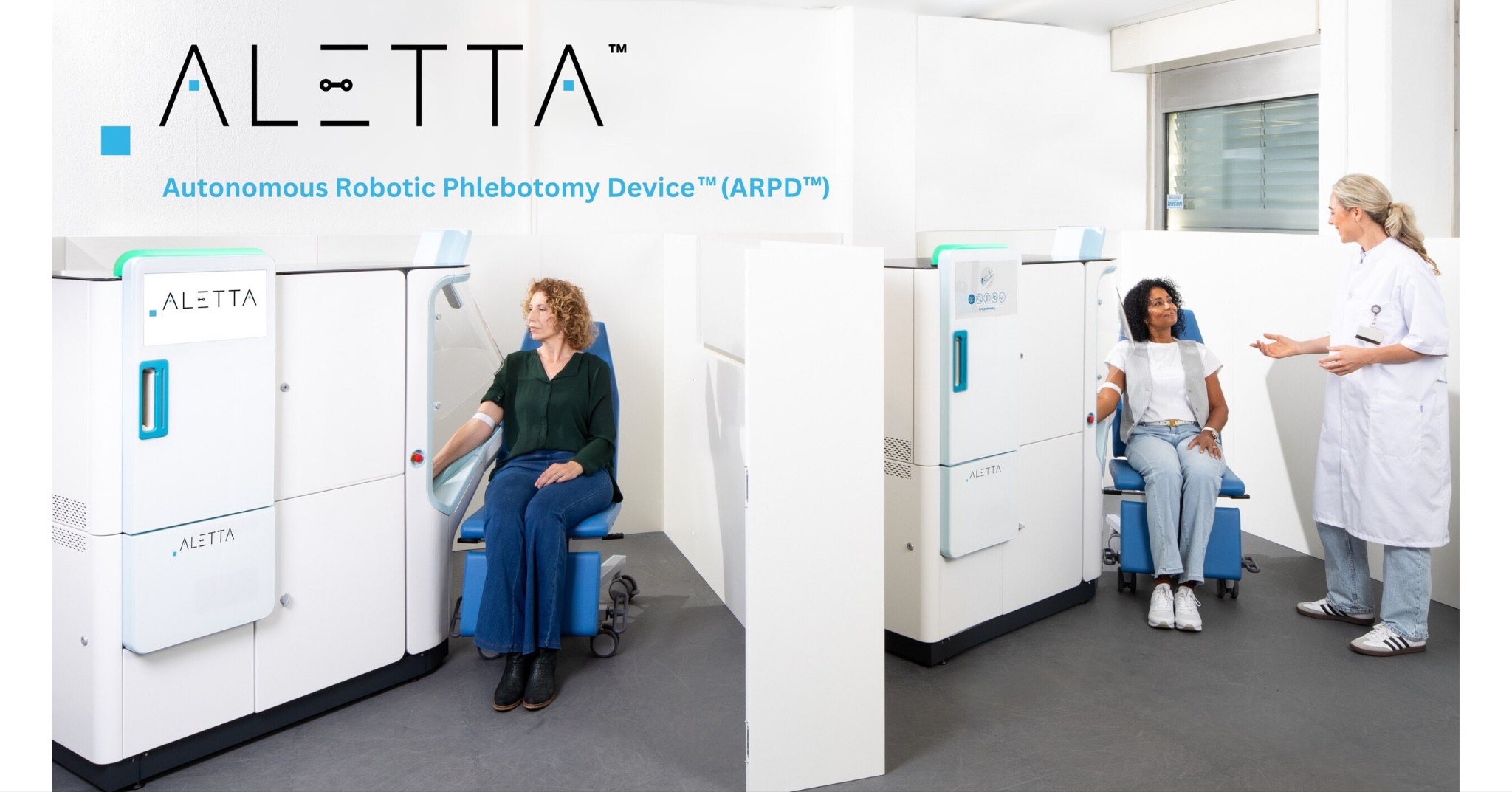
Vitestro's Aletta system is designed to integrate into outpatient clinical workflows while maintaining oversight from qualified medical staff.
Photo Credit: PR Newswire/Vitestro/Website
Vitestro received FDA De Novo authorization for Aletta on August 19. The company said the authorization would support its plans to enter the U.S. market.
The FDA's authorization established a new device classification and included special controls covering areas such as labeling, performance testing, and clinical testing.
For health care providers, the technology could allow a trained phlebotomist to supervise several blood-draw stations instead of performing each collection manually.
The extent of Aletta's use in the United States will depend on adoption by health care organizations and laboratories following the FDA authorization.
The technology does not remove human supervision from the process. Instead, it allows the phlebotomist to supervise an automated system and respond when intervention is needed.
To add to or correct any information in this report, please contact me at victoria.o@lead4earth.org.
Thumbnail: MedTech World/Vitestro/Website
0
0

Comments