(CHARLOTTE, NC.) – The Charlotte City Council debated a proposed youth curfew and the $4 billion I-77 South toll lane project during its August 24 regular meeting, as residents and civic leaders voiced sharply contrasting views on community safety enforcement and regional transit priorities.
The meeting highlighted growing friction between city leadership and community members over policing strategies, transportation costs, surveillance technology, and long-term neighborhood impacts.
While city officials considered targeted enforcement measures to curb juvenile safety concerns, residents urged leaders to address root causes through increased investment in transit, tree canopy preservation, and youth resources.
Police Chief Estella Patterson presented a proposal establishing a 9 p.m. curfew for individuals younger than 17 as a pilot program. The recommendation followed earlier discussions during the council’s August 10 meeting, where members questioned how a broader curfew would be enforced and whether such measures effectively address public safety concerns. No final vote was taken.
Related OpGov.News coverage reported that the proposed ordinance would apply to people younger than 18, with exceptions for activities including work, school, and religious events.
Public comment during the meeting was overwhelmingly critical of a blanket curfew. Resident Alicia Brown urged council members to focus on resources rather than criminalization, warning that an earlier curfew could disproportionately impact Black and Brown children as well as low-income families.
Jamal Snow echoed those concerns, citing city data showing that 30% of juvenile incidents occur after 8 p.m. Snow urged officials to pursue alternatives such as hotspot analysis, youth organization partnerships, a dedicated youth hotline, and family safety technology.
Jamaiah Pitman, a student, noted that an earlier curfew would disrupt young people's jobs, transit access, family obligations, schoolwork, and social activities. Nathan Hoffman of the Center City Safety Task Force supported the pilot, provided it is paired with mentorship, mental health resources, and designated safe spaces.
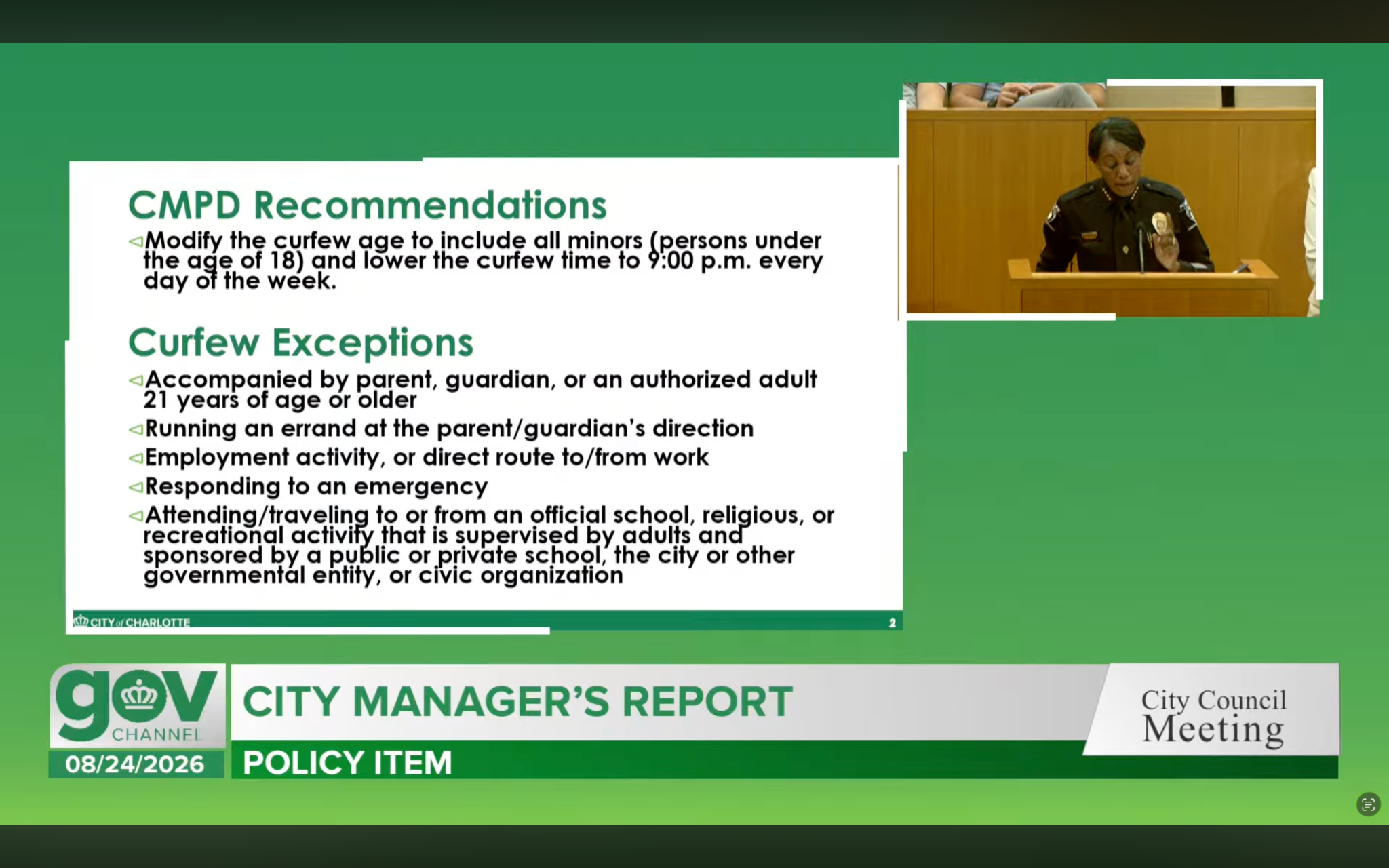
Police Chief Estella Patterson presents the Charlotte-Mecklenburg Police Department's proposed youth curfew recommendations and exceptions during the August 24 meeting.
Photo Credit: City of Charlotte/YouTube
Public reaction during the meeting's livestream reflected similar skepticism toward enforcement solutions.
“This is not a real solution to the traumas of this City/life which directly affects our youth,” wrote viewer @brig4peace in the YouTube live chat, capturing wider community calls for supportive programming over punitive measures.
The council also revisited the controversial $4 billion I-77 South toll lane project. In May, council members voted to pause the project to review its design, environmental impacts, and transit alternatives.
Robert McCutchen of the Charlotte Regional Business Alliance urged the council to reconsider its opposition, pointing to regional congestion and growth.
Resident Sager Rafi supported the project, noting that over 40% of toll revenue would stem from out-of-state drivers.
Property owner JQ Freeman cited a July poll showing 52% public support for moving forward, noting that project delays have harmed property values and complicated refinancing options due to potential condemnation.
Opponents, however, warned that highway expansion further strains established neighborhoods while ignoring mass transit.
Wilmore resident Joseph Williams cautioned that over 35 homes could be impacted, noting previous neighborhood disruption from prior highway projects. Westside resident Damian Smith advocated for increased investment in walking, biking, and transit infrastructure over highway widening.
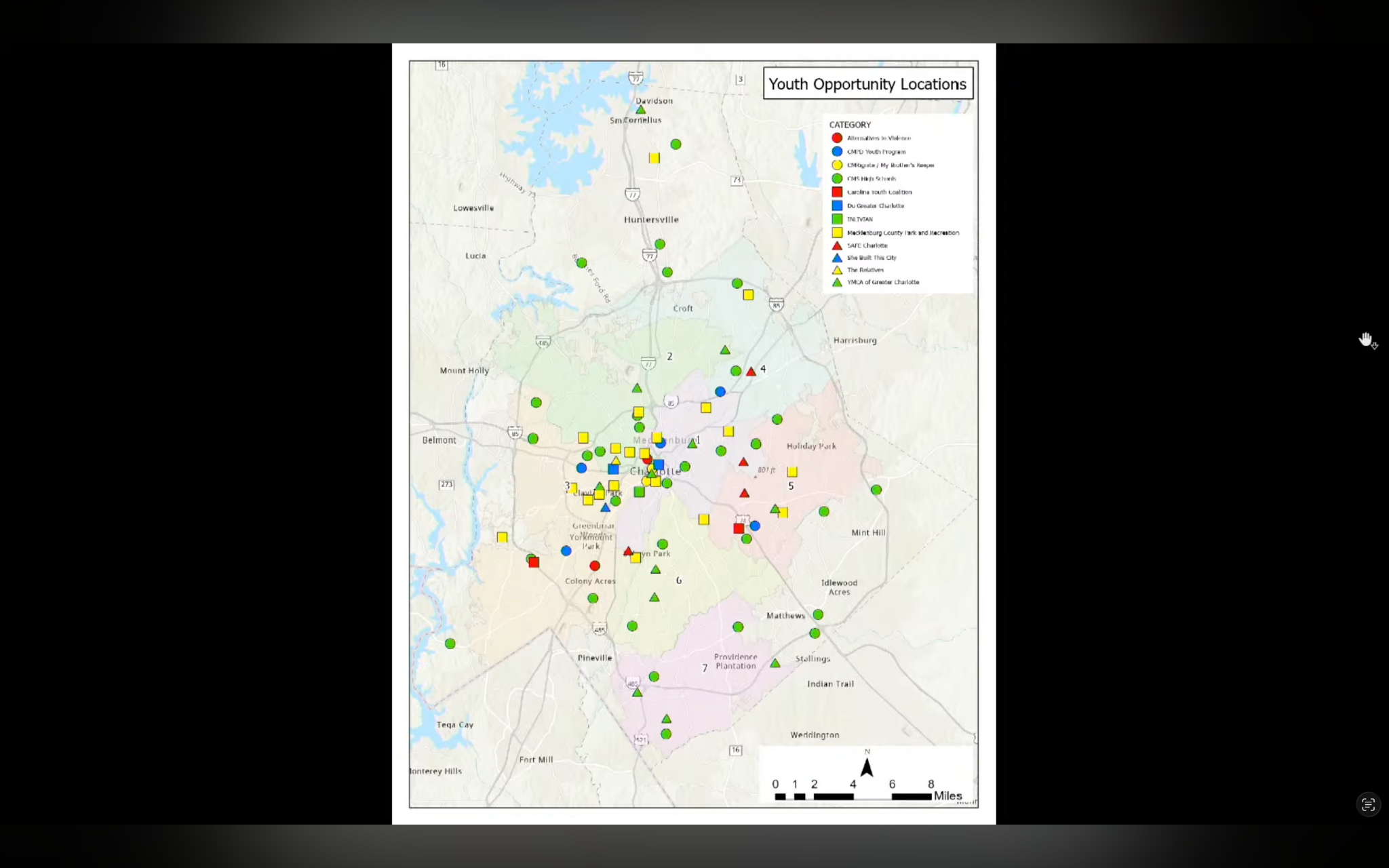
A presentation slide maps out youth opportunity program locations across Mecklenburg County as city leaders consider community-based alternatives to enforcement.
Photo Credit: City of Charlotte/YouTube
Broad resident frustration with rapid infrastructure expansion and municipal planning decisions spilled onto community platforms following the meeting.
“We are all being negatively affected, rates are going up, tree canopy is being destroyed, schools being pushed the max,” wrote Cotswold resident Mary Frances Parker on Nextdoor. “What is the end game?”
In other council business, members approved resolutions closing portions of Pete Brown Road and Weona Avenue. However, Council Member LaWana Mayfield raised procedural concerns and called for separate public hearings and improved public notification protocols.
Council members also passed an amendment prohibiting vehicles from parking on sidewalks under all circumstances, despite concerns raised by Council Members Renee Johnson and Mayfield regarding impacts on denser neighborhoods with limited parking.
Additionally, the council approved an interlocal agreement with Mecklenburg County to fund youth diversion programming.
Council Member Dimple Ajmera commended the initiative, highlighting that the program maintains a non-recidivism rate of over 90%. Other public comments throughout the evening addressed surveillance technology, airport worker working conditions, and predatory towing practices.
Broader context from OpGov.News coverage highlights how these debates mirror ongoing governance challenges across Charlotte. In “Charlotte Moves to Pause $4B I-77 Toll Lane Project,” previous coverage detailed how large-scale transportation investments intersect with displacement concerns and neighborhood impacts.
Similarly, “Charlotte Council Questions Youth Curfew, Federal Grant During August Meeting” examined earlier council skepticism regarding juvenile enforcement, underscoring broader questions about policy efficacy and equitable community support.
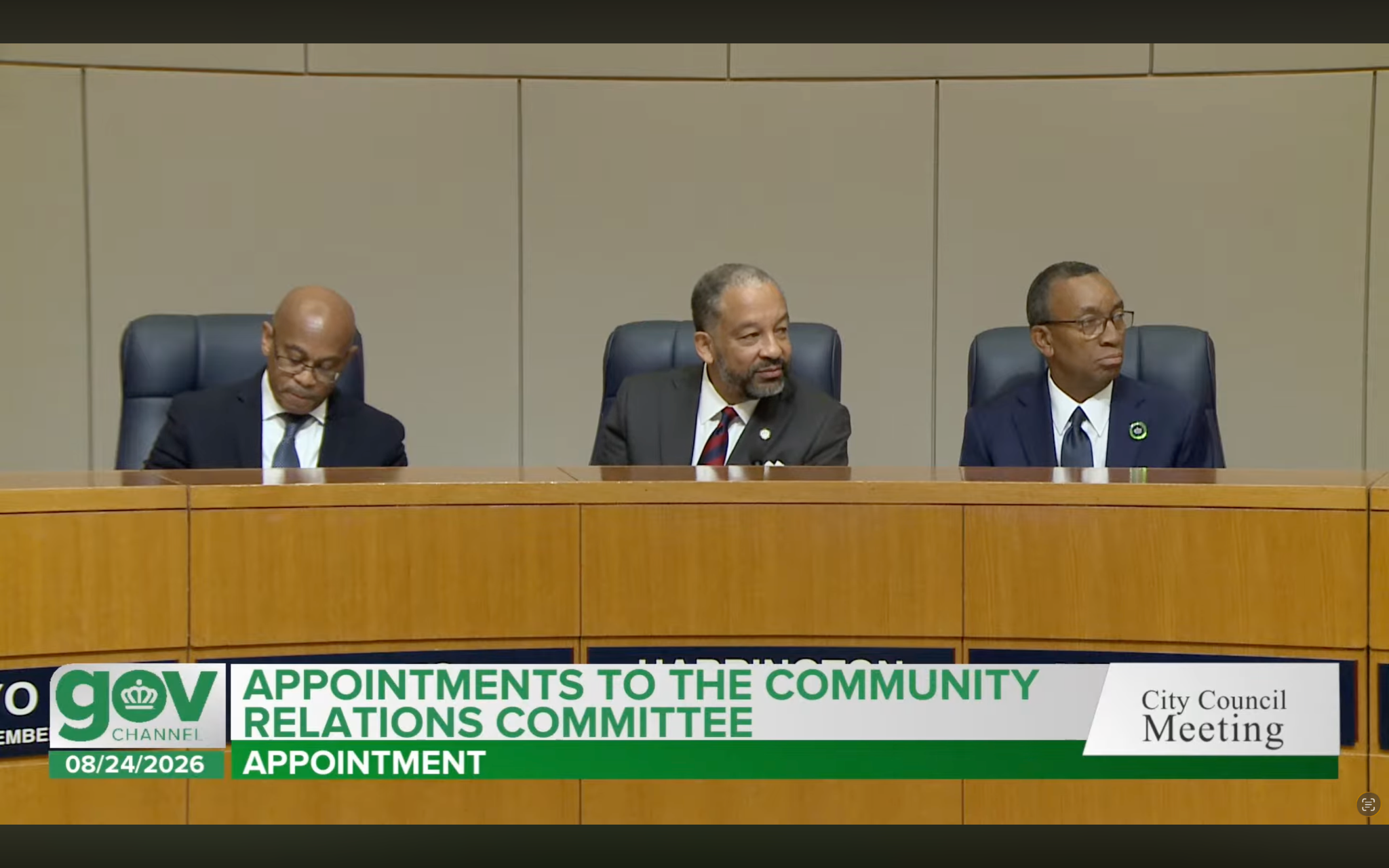
Charlotte City Council members consider appointments and administrative business during the regular session.
Photo Credit: City of Charlotte/YouTube
As Charlotte continues to manage steady growth and public safety concerns, the August 24 meeting underscored the persistent balance council members must strike between immediate infrastructure demands, public safety measures, and long-term community equity.
To add to or correct any information in this report, please contact me at victoria.o@lead4earth.org.
Thumbnail Photo Credit: City of Charlotte/YouTube
0
0

Comments