(CHARLOTTE, NC.) – The Charlotte City Council considered a resolution during its May 11, 2026, business meeting requesting a pause and expanded reevaluation of the Interstate 77 South Express Lanes project.
The meeting, held during the council’s regular business session at the Charlotte-Mecklenburg Government Center, included discussion of a resolution asking the North Carolina Department of Transportation (NCDOT) and Federal Highway Administration (FHWA) to pause procurement activity while an independent review is conducted of design alternatives, traffic modeling, and community impacts.
The meeting record is available here on the OpGov.news site: Charlotte City Council May 11, 2026 Business Meeting.
The Interstate 77 South Express Lanes project proposes adding managed toll lanes along an approximately 11-mile corridor between uptown Charlotte and the South Carolina state line.
The project has been in development for more than a decade through the Charlotte Regional Transportation Planning Organization (CRTPO) and remains structured as a public-private partnership.
Concerns raised during the meeting reflect broader debates occurring in other cities about the scale and consequences of large infrastructure projects. In Atlanta, Ga., reporting by Mia Sims in “Atlanta City Council Proclaims Positive Actions While FIFA Concerns Rise” highlighted tensions between large-scale development initiatives and neighborhood-level impacts tied to long-term infrastructure strain and event-driven planning priorities.
Similar concerns about public participation and influence in decision-making have also been documented in Tallahassee, Fla., where Jason Fearon reported in “Is Your Voice Actually Being Heard In Tallahassee?” that residents questioned whether public comment periods meaningfully shape final policy decisions or merely fulfill procedural requirements.
The Charlotte project remains in the planning and environmental review phase. It would add two express toll lanes in each direction along Interstate 77, along with interchange reconstructions, bridge replacements, and direct connectors designed to improve regional traffic flow.
Transportation research on managed lanes shows mixed outcomes depending on pricing structure, demand shifts, and corridor design. A multi-project benefit-cost analysis of toll-managed lanes in the United States found that results vary significantly across corridors, with travel-time savings and cost-effectiveness differing based on traffic volumes, pricing strategies, and regional travel patterns.
Federal transportation research also notes that highway expansion projects can influence long-term travel behavior. The Federal Highway Administration states that while managed lanes are designed to improve reliability, they still operate within broader demand-response systems where traffic patterns may adjust over time.
During the Charlotte business meeting, council members and participants raised concerns about displacement risks, environmental impacts, and long-term neighborhood stability along the corridor, particularly in historically Black and lower-income communities.
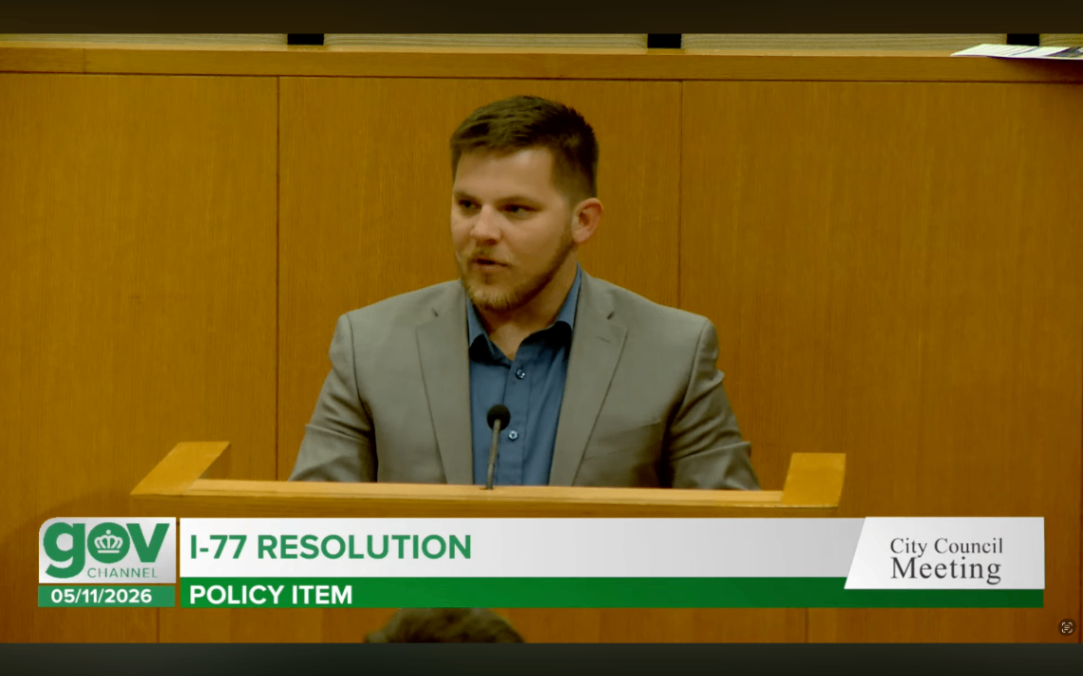
A presenter addresses the Charlotte City Council regarding the community impacts and proposed resolution for the Interstate 77 South Express Lanes project.
(Photo Credit: City of Charlotte/YouTube)
District 6 Councilmember Kimberly Owens said the project reflects unresolved impacts along the corridor.
“I seek acknowledgment of current and historical community harm of the I-77 corridor. I seek to provide acknowledgment of the true costs of this project,” Owens said.
Community discussion also included broader critiques of highway-dependent development patterns and long-term infrastructure planning outcomes in U.S. cities.
The resolution states that transportation investments should be evaluated not only on congestion relief, but also on equity, displacement risk, and neighborhood stability. It calls for expanded alternatives analysis, including multimodal transportation options, updated traffic forecasting, and design modifications such as interchange redesigns and alignment adjustments.
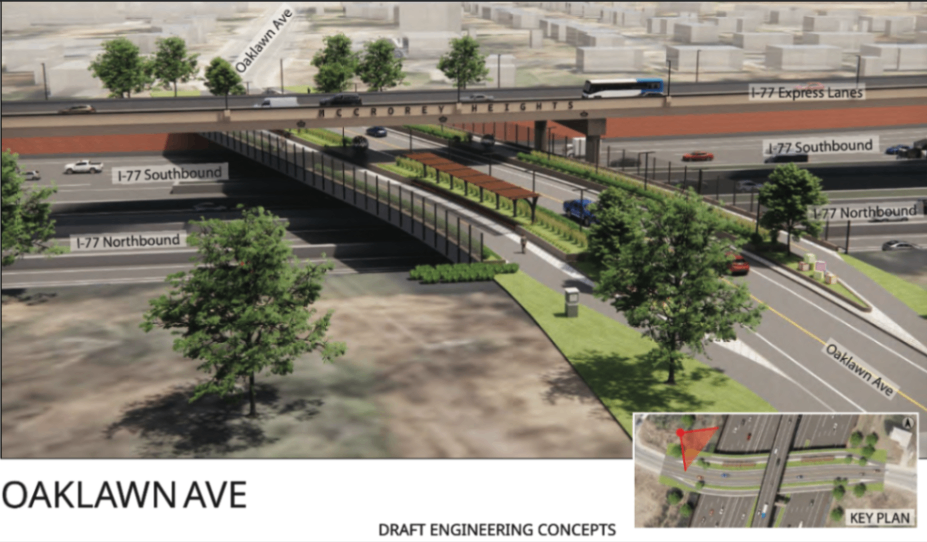
Draft engineering concepts from NCDOT illustrate proposed updates and multimodal infrastructure adjustments along Oaklawn Avenue crossing over I-77.
(Photo Credit: NCDOT/Draft Engineering Concepts to Reconnect the I-77 South Corridor)
The council also requested increased transparency measures, including public dashboards, clearer technical documentation, and expanded community engagement opportunities during future planning phases.
NCDOT has previously said public engagement will continue throughout the environmental review process, including advisory group meetings and public comment opportunities.
The Interstate 77 South Express Lanes project remains in the planning and environmental review phase, with no final construction timeline announced.
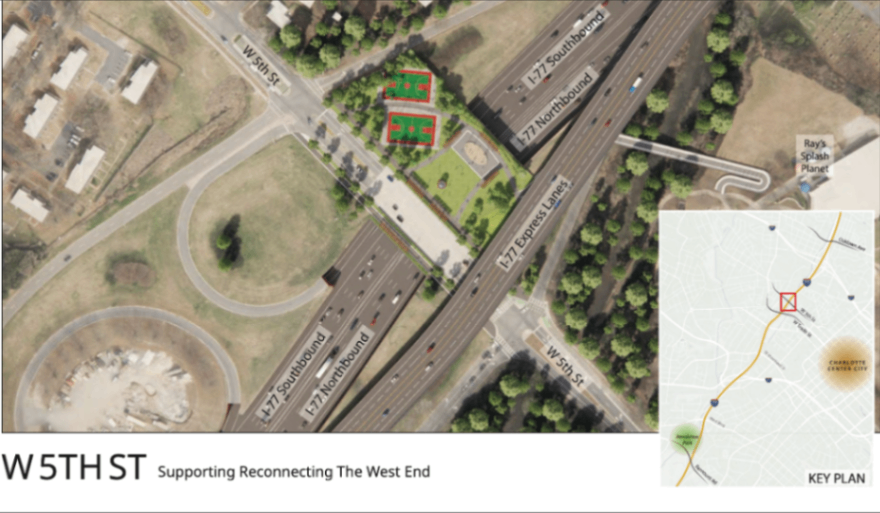
Proposed NCDOT design concepts for West 5th Street aim to support reconnecting Charlotte's Historic West End across the interstate corridor.
(Photo Credit: NCDOT/Draft Engineering Concepts to Reconnect the I-77 South Corridor)
To add to or correct any information in this report, please contact me at victoria.o@lead4earth.org.
(Thumbnail Photo Credit: City of Charlotte/YouTube)
0
0

Comments