(CHARLOTTE, NC.) – The Charlotte City Council meeting on August 10 included debate over proposed youth curfew changes and a federal public safety grant, while council members also advanced $425 million in proposed general obligation bonds for transportation, neighborhood improvements and housing.
The proposed Youth Protection Ordinance would establish a 9 p.m. daily curfew for people younger than 18, with exceptions for activities including work, school, religious events and other circumstances involving a parent or guardian.
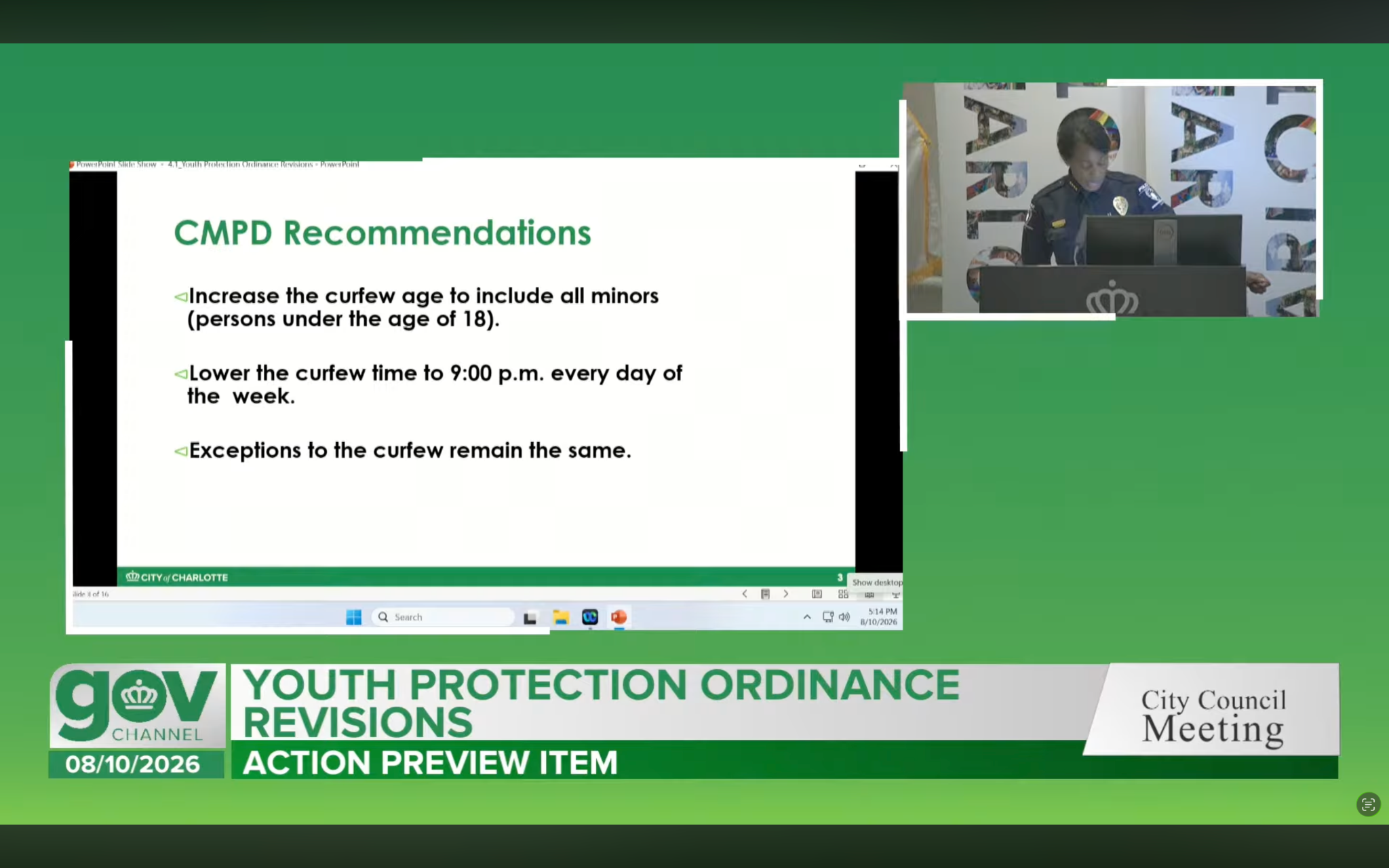
A presentation slide outlines proposed revisions to Charlotte's Youth Protection Ordinance, including expanding the daily 9 p.m. curfew to cover all minors under age 18.
Photo Credit: City of Charlotte/YouTube
The proposal followed a July recommendation from the Public Safety Committee to revise the city's existing youth curfew rules following concerns about large gatherings involving young people.
During Monday's discussion, council members questioned whether expanding the curfew would effectively address public safety concerns and raised questions about how the ordinance would be enforced. Some members also called for greater investment in youth programs and safe spaces.
Public reaction in the city's YouTube livestream chat was mixed, with commenters raising concerns about the potential effects of the proposed ordinance.
“This IS criminalizing youth,” one commenter using the username @Oceanographi wrote during the discussion.
Other commenters supported the council's focus on providing young people with supervised activities and resources.
No final vote was taken on the proposed ordinance.
Council members also expressed concerns about a federal Model Cities Initiative Grant, which could provide as much as $300 million to two to four cities for crime reduction and public safety programs.
The potential grant drew questions about federal oversight, possible connections to immigration enforcement, financial obligations associated with public disorder initiatives, and the expansion of surveillance technology.
Members questioned whether Charlotte could accept the funding without taking on requirements or costs that had not been clearly defined. Several council members indicated they did not support continuing with an application without additional information about the grant's conditions.
The discussion came as other local governments have faced questions about the relationship between local law enforcement and federal immigration enforcement.
OpGov.News previously reported on the “Pensacola Police Department's answers to questions about its 287(g) agreement,” written by OpGov.News reporter Angela Underwood, including concerns surrounding the role of local officers in federal immigration enforcement.
The potential expansion of surveillance technology also became part of the discussion surrounding the Model Cities Initiative. Council members questioned what safeguards would be in place and how federal requirements could affect Charlotte's use of the funding.
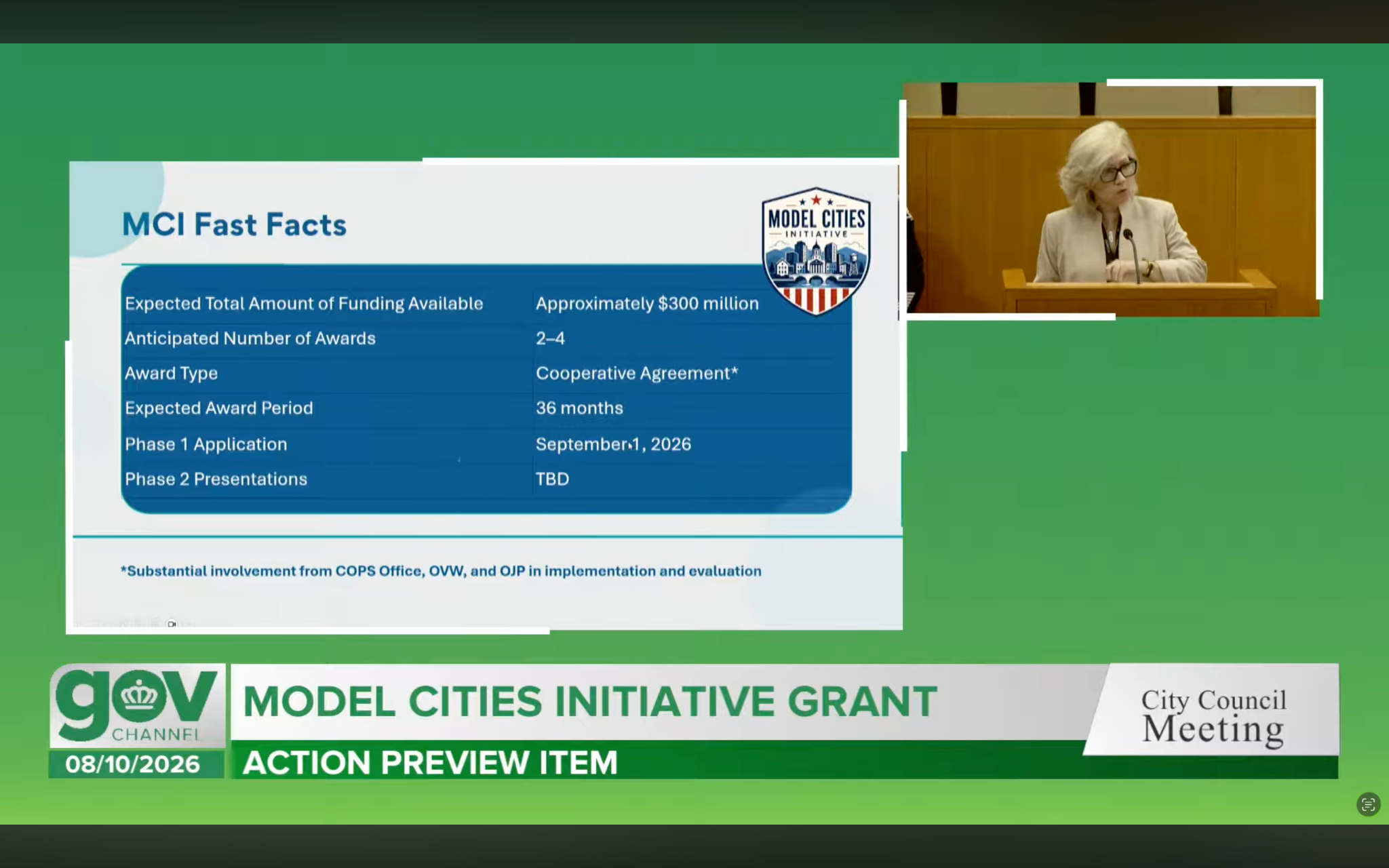
City officials reviewed details of the federal Model Cities Initiative Grant, which offers up to $300 million in competitive funding for local crime reduction initiatives.
Photo Credit: City of Charlotte/YouTube
One commenter using the username @brig4peace wrote, “No more blank checks,” during the discussion.
The council also reviewed proposed changes to the Parking on Sidewalk Ordinance. The revision would remove an existing driveway exception and prohibit parking on sidewalks, with council members discussing pedestrian access, high-density development, and delivery vehicles.
Transportation planning was another focus of the meeting.
Council members approved administrative amendments to the Charlotte Streets Map and Charlotte Streets Manual and referred consideration of adding cumulative impact to transportation studies under the Unified Development Ordinance to the Transportation, Planning and Development Committee.
The discussion reflected concerns about how multiple developments can affect the same roads and intersections over time.
OpGov.News recently examined a similar issue in “Danville is Planning the Housing. Where is the Traffic Plan?” written by OpGov.News journalist Mellissa Martinez, where housing growth raised questions about whether existing transportation planning could account for additional traffic.
The council's discussion also reflected questions that have arisen in other communities when residential development and transportation improvements are considered together.
In Pleasanton, a recent city council meeting focused on a residential project and a proposed developer contribution toward transportation improvements.
OpGov.News reported on the “Pleasanton City Council Discussed Residential Project for Three Hours,” reported by OpGov.News reporter Madison Vinas.
The council also advanced three general obligation bond orders totaling $425 million for the November 3 referendum. The package includes $280 million for transportation, $20 million for neighborhood improvements and $125 million for housing.
Matthew Panick, speaking on behalf of the Charlotte Regional Business Alliance, supported the bond package and said the investments would help address infrastructure, affordable housing, and the needs of Charlotte's growing population.
The council approved additional infrastructure and financing measures, including up to $110 million in stormwater revenue construction-period financing. Contracts were also approved for the WT Harris Boulevard and Grier Road Intersection and Sidewalk project and the Linda Lake/Oakwood Pond Rehabilitation Project.
Public hearings were scheduled for September 28 on proposed historic landmark designations for the Jefferson-First Union Tower and Liddell-McNinch House. Council members discussed potential financial effects of the designations, including deferred property taxes and existing state-law protections.
The meeting also included board and commission appointments and other consent agenda items.
The discussions placed public safety, federal funding and transportation planning among the council's primary areas of scrutiny as Charlotte continues to address growth and infrastructure needs.
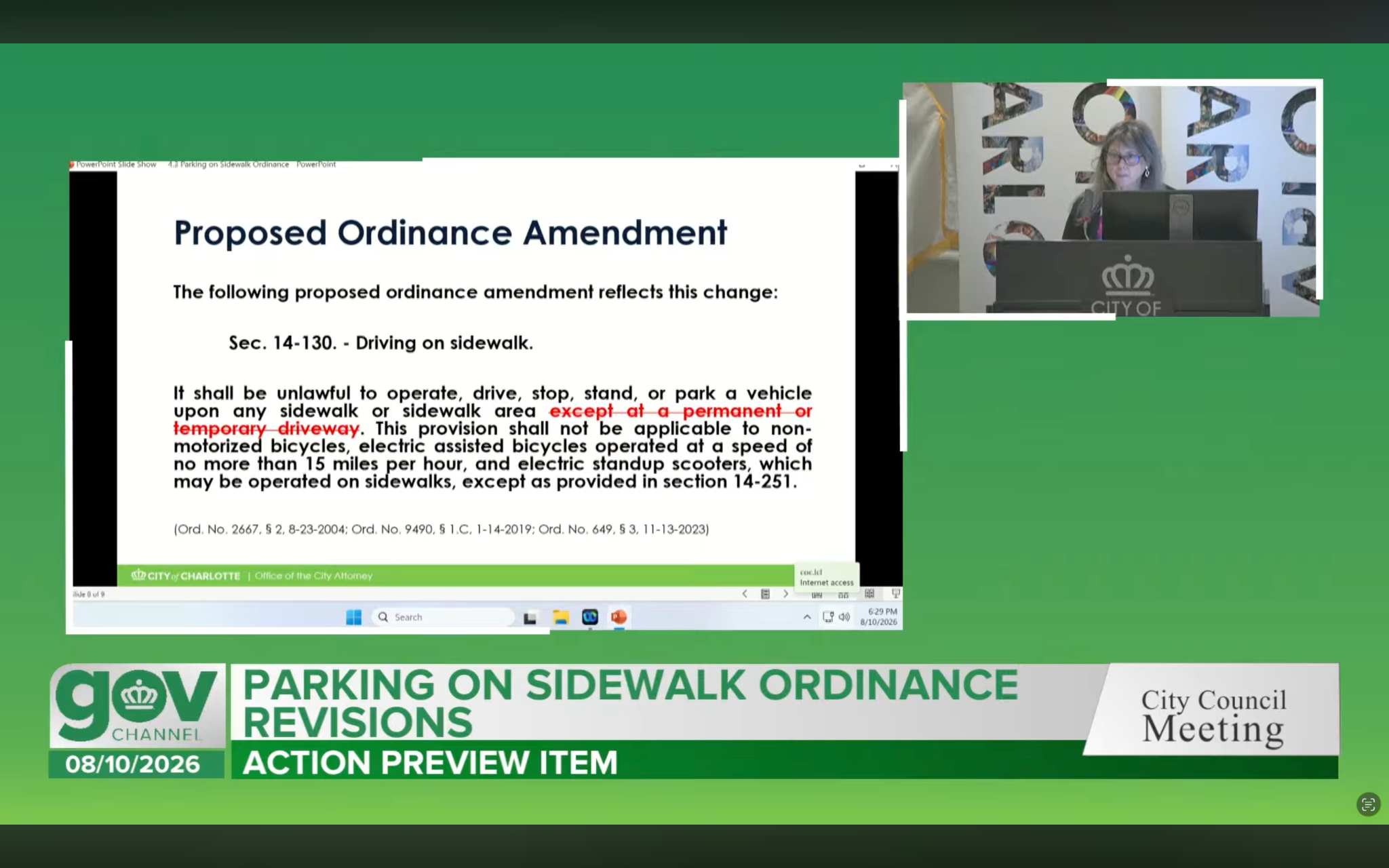
Proposed amendments to Sec. 14-130 of the municipal code would remove driveway exceptions to prohibit vehicles from parking on sidewalks.
Photo Credit: City of Charlotte/YouTube
To add to or correct any information in this report, please contact me at victoria.o@lead4earth.org.
Thumbnail Photo Credit: City of Charlotte/YouTube
0
0

Comments