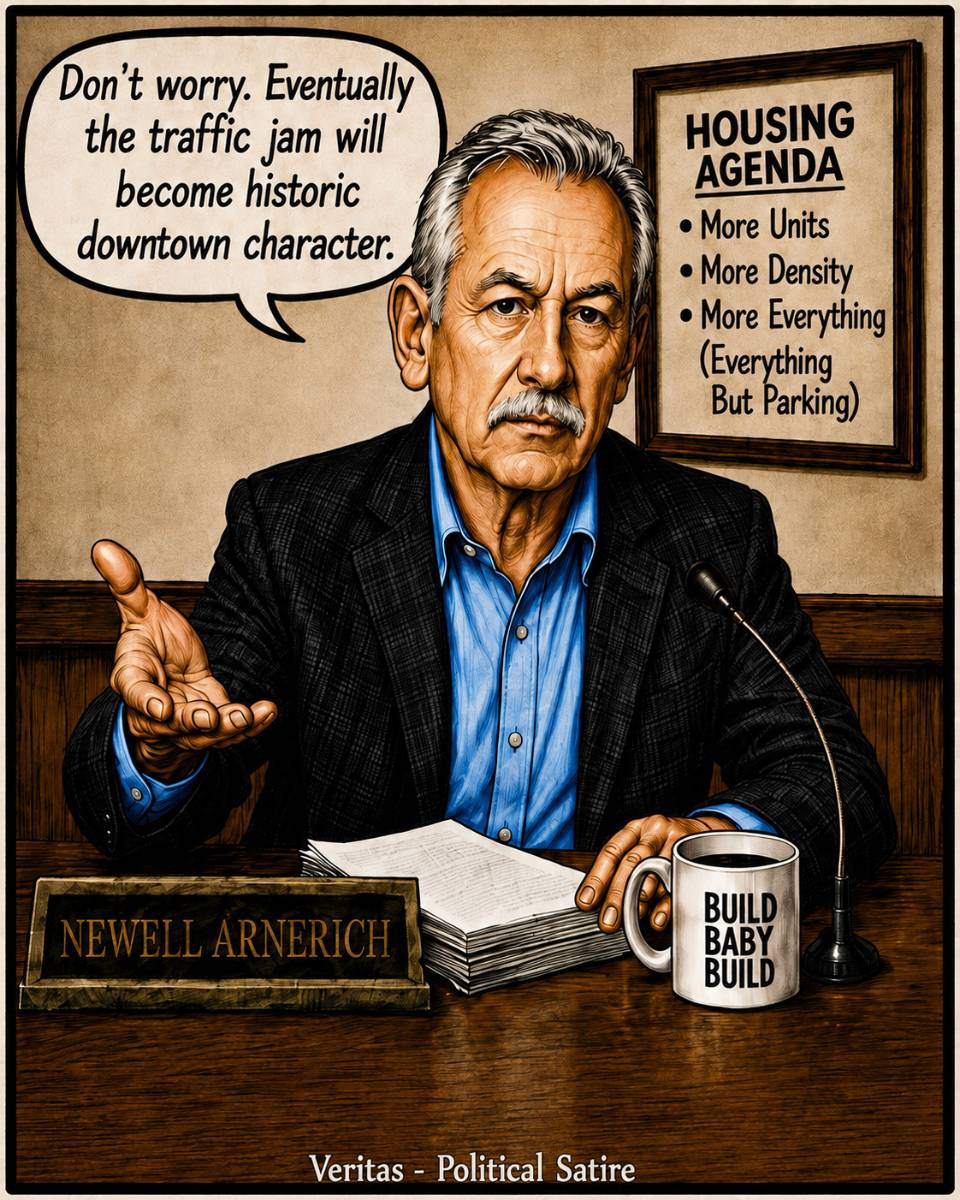
Danville is planning for more housing—and with it more residents, vehicles, deliveries, service calls, visitors and construction traffic. Those trips will arrive. The question is whether the Town has a plan for where they will go and how its streets will safely absorb them.
So where is the traffic plan?
Where is the townwide analysis showing how approved, proposed and reasonably foreseeable development will affect San Ramon Valley Boulevard from Sycamore Valley Road to Hartz Avenue—and then spill into downtown on Hartz Avenue and Railroad Avenue, along with Diablo Road, Camino Tassajara and school routes?
Where are the five- and ten-year forecasts identifying the intersections, signals, crossings and roadway projects that must be improved before the additional traffic arrives?
Sacramento may set many of the housing rules. Danville still owns the traffic and safety consequences.
Credit : Veritas
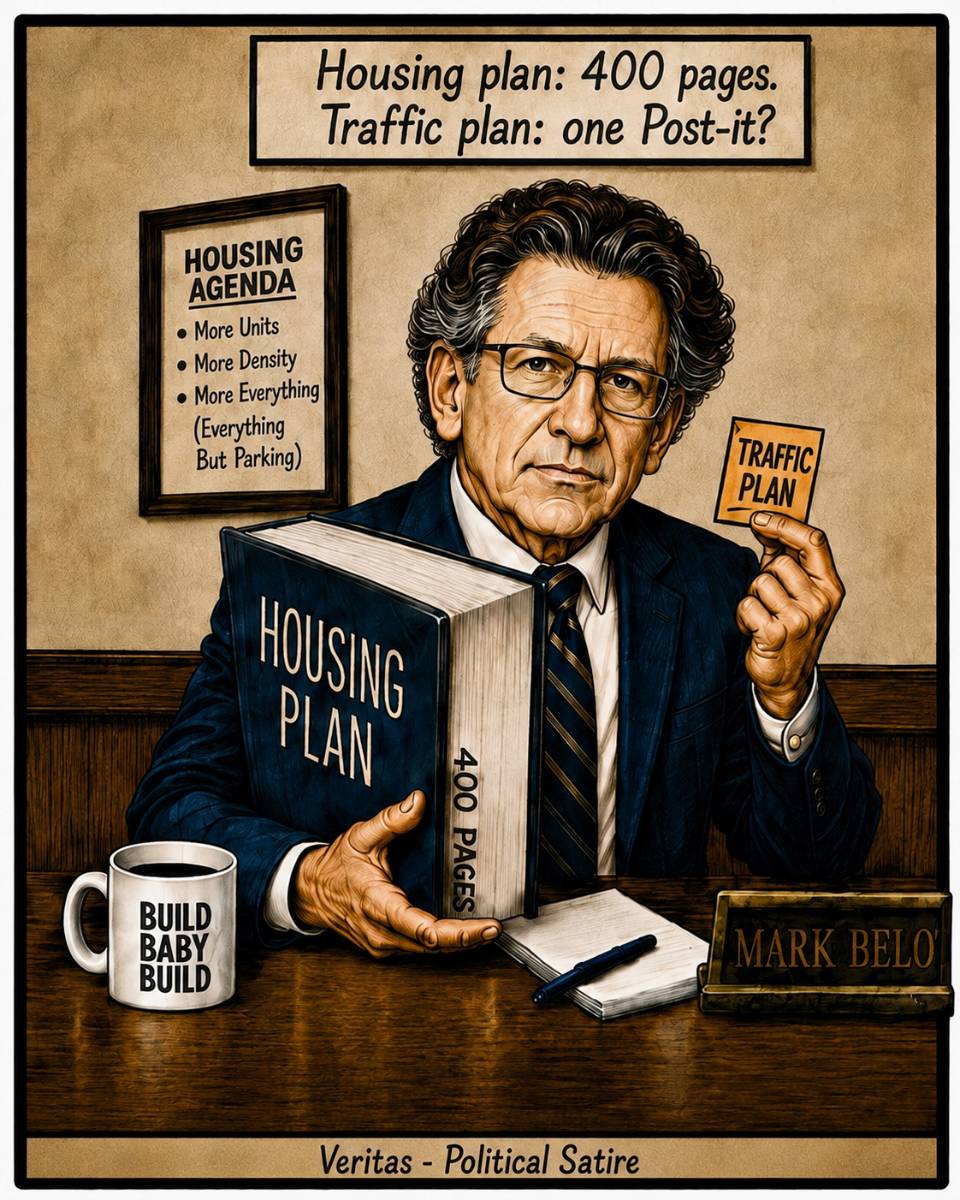
A Housing Plan Is Only Half a Plan
California housing laws have reduced local control, expanded density bonuses and made some projects difficult—or legally impossible—to stop. Danville must comply.
But compliance with housing law does not relieve the Town of responsibility for what follows.
A development does not end at its property line, and its traffic does not stop at the driveway. Residents experience growth cumulatively—at the same intersections, on the same corridors, along the same school routes and in the same parking areas.
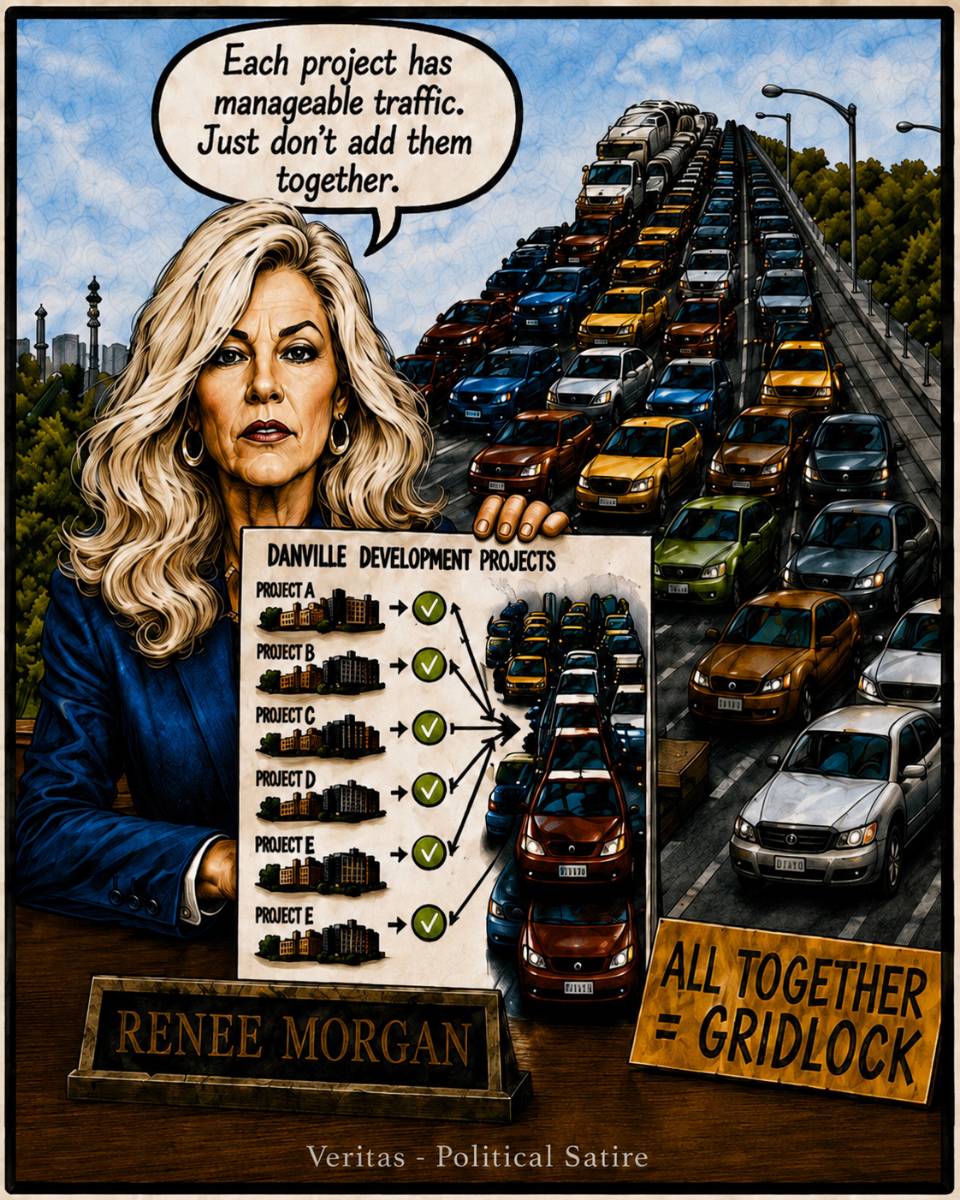
One project may look manageable in isolation. What matters is the combined effect: how many additional daily and peak-hour trips will approved, proposed and reasonably foreseeable projects generate on the same streets and intersections?
More traffic does not automatically mean more collisions. But it does increase exposure: more turning movements across sidewalks and bicycle lanes, more conflicts at crosswalks, more pressure on school routes and more opportunities for congestion to interfere with emergency access.
Credit : Veritas
Stop Planning by Parcel. Start Planning by Corridor.
Traffic does not arrive one parcel at a time. Danville should stop treating isolated project studies as a substitute for a cumulative traffic and safety strategy.
The Town should prepare corridor-wide plans for the places facing the greatest concentrated growth, including downtown, San Ramon Valley Boulevard, Diablo Road, West El Pintado and Camino Tassajara.
For each corridor, residents should see current and projected traffic volumes, expected congestion and safety problems, planned improvements, costs and completion dates.
Credit Veritas
San Ramon Valley Boulevard: Show Us the Plan
Nowhere is the need for cumulative planning clearer than San Ramon Valley Boulevard between Sycamore Valley Road and Hartz Avenue.
Along or immediately adjacent to this corridor are the 200-unit Danville Village Apartments at Town Country Drive, The Lanes at the former Danville Bowl site with 47 townhomes and two attached accessory dwelling units, and 37 condominiums at 600 Hartz Avenue.
Those projects share the same limited street network. Their residents, visitors, deliveries, service vehicles and ride-share trips will mix on the same streets.
The real question is not how each project performs at its own driveway. It is what happens when their traffic is added together on San Ramon Valley Boulevard—and then reaches downtown.
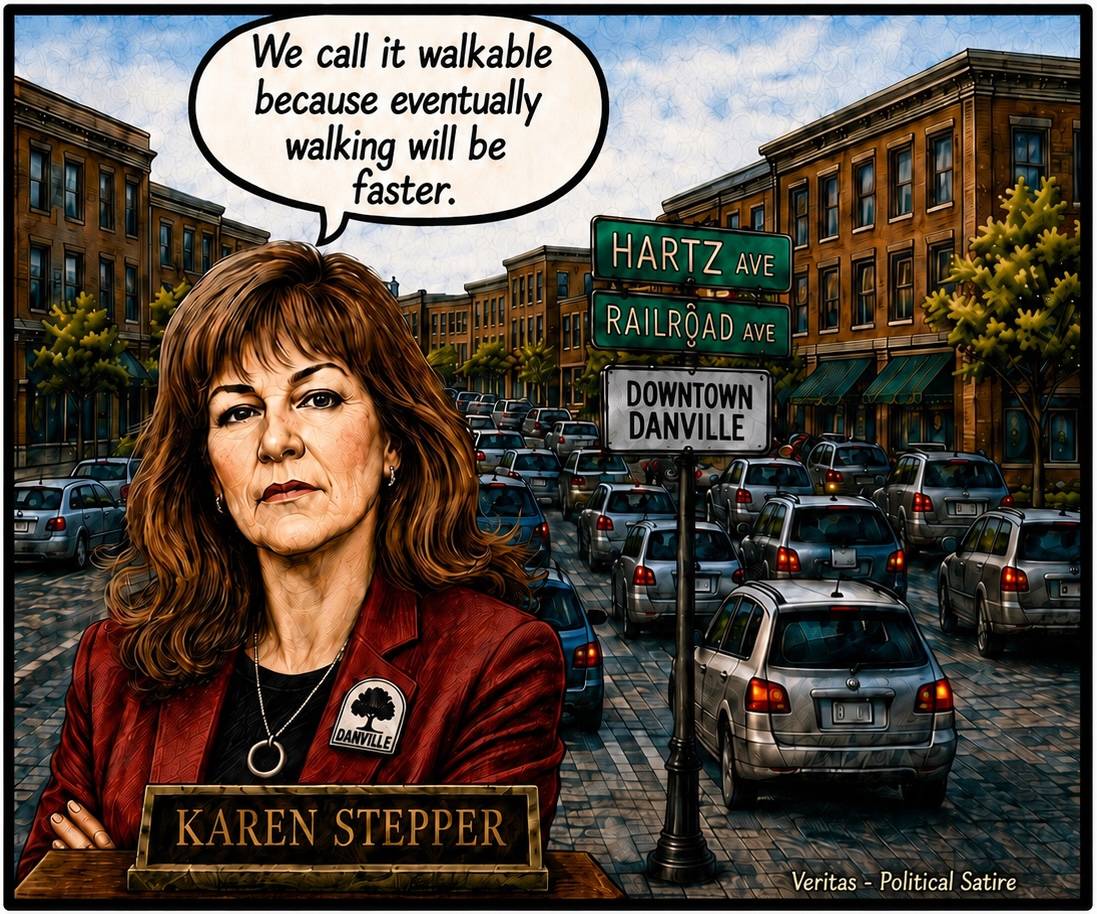
South of downtown, San Ramon Valley Boulevard feeds Hartz Way, Hartz Avenue, Railroad Avenue and the downtown grid. Trips to shops, restaurants, schools, I-680 and neighborhoods to the north make Hartz Avenue and Railroad Avenue essential parts of any cumulative analysis.
Without a corridor-wide plan, added housing traffic risks becoming a downtown traffic mess: more competition for turns, curb space and parking, longer queues, and more conflicts with pedestrians and bicyclists when downtown is already busiest.
The Town should publish the combined numbers: additional daily and peak-hour trips from Danville Village Apartments, The Lanes, 600 Hartz Avenue and other approved or foreseeable projects, where those trips will travel, and what happens when they reach Hartz Avenue, Hartz Way, Railroad Avenue and
connecting intersections.
Paving, striping, signal detection and pedestrian upgrades are useful, but they are not a substitute for a cumulative growth-and-traffic plan showing what the corridor will look like after the housing is occupied.
The public deserves the map, traffic counts, projections, intersection analysis, mitigation projects, costs and completion dates before the added traffic becomes a permanent fact of daily life.
Credit Veritas
What a Real Traffic Plan Should Show
The Town should publish a plain-language Cumulative Housing, Traffic and Public-Safety Plan answering these basic questions:
• How many housing units are approved, proposed, under construction and reasonably foreseeable over the next five and ten years?
• How many additional residents, vehicles, daily trips and peak-hour trips are expected from those projects?
• Which streets, intersections and neighborhoods will carry those trips, including San Ramon Valley Boulevard, Hartz Avenue and Railroad Avenue?
• Which school routes, crosswalks, bicycle facilities and pedestrian areas may face greater exposure or conflict?
• How could congestion affect police, fire, ambulance response and evacuation capacity?
• How will reduced on-site parking affect nearby streets, downtown parking and surrounding neighborhoods?
• What signals, turn lanes, crossings, sidewalks, bicycle improvements or other mitigations are required?
• What will each improvement cost, who will pay for it, when will it be completed and who is accountable if it is delayed?
Those answers should be public, clear and available early enough to inform decisions—not buried in hundreds of pages of technical reports.
Build the Safety Improvements Before the Traffic Arrives
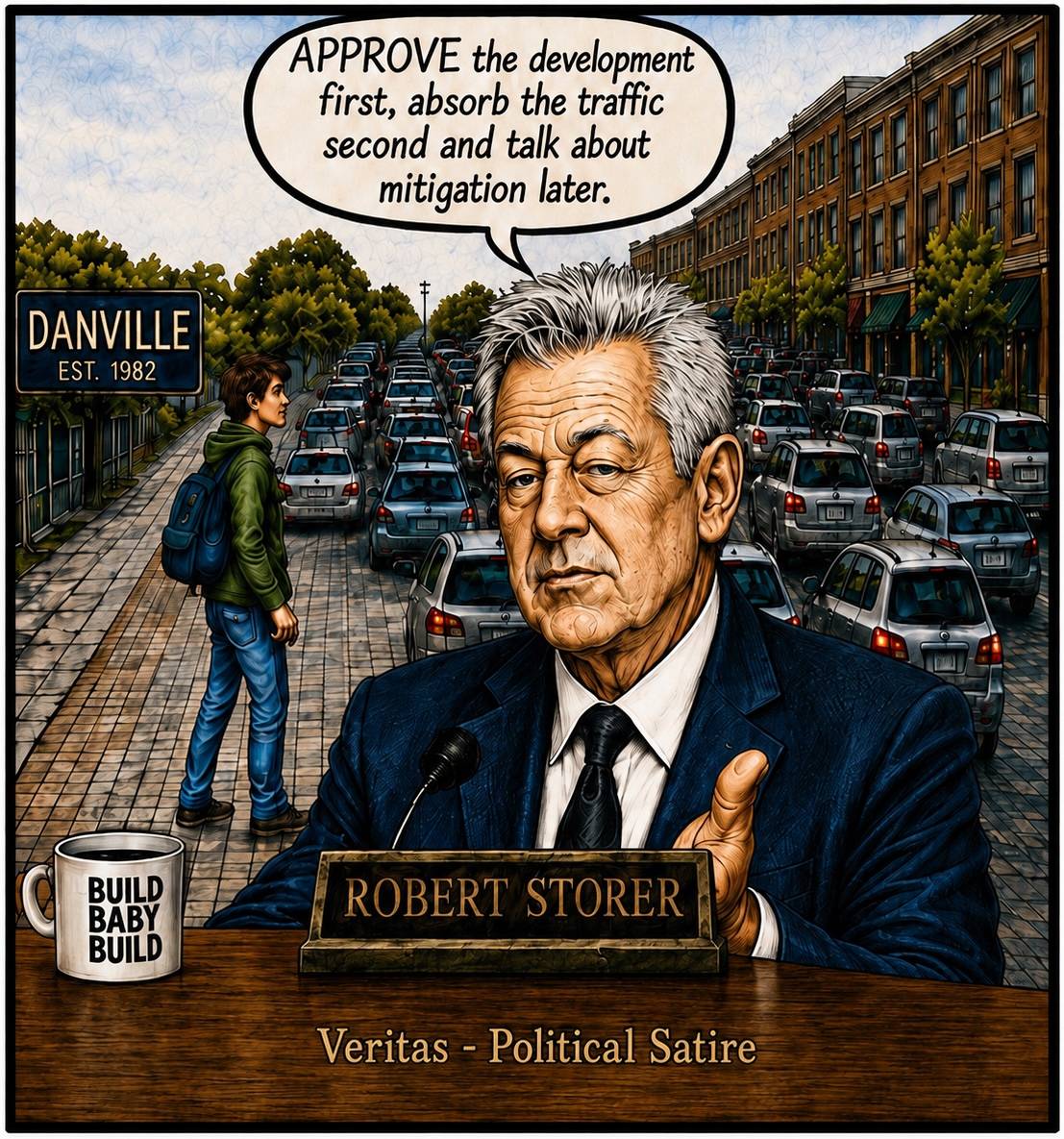
Danville should reverse a familiar sequence: approve the development first, absorb the traffic second and discuss mitigation later.
Credit Veritas
When development creates the need for a signal modification, safer crossing, sidewalk connection, turn-lane improvement or other essential mitigation, the
Town should complete it before occupancy whenever legally and practically possible.
A forecast that identifies a dangerous or failing intersection years in advance but delays the solution until conditions become intolerable is not long-range planning. Forecasting should prevent the crisis, not merely predict it.
Publish Five- and Ten-Year Forecasts
Danville should publish five- and ten-year traffic and safety forecasts, updated annually.
The five-year forecast should show the effects of projects already approved or expected soon. The ten-year forecast should show the cumulative condition of major corridors after anticipated housing and regional growth, including a higher-growth scenario.
For every projected problem, the Town should identify the improvement, cost, funding source, responsible agency, completion date and trigger for earlier action—and put those commitments into the Capital Improvement Program and annual budget.
Sacramento Does Not Run Danville’s Streets
Town Hall cannot answer every concern about growth with one explanation: Sacramento made us do it.
Sacramento does not synchronize Danville’s signals, choose which crossings receive safety upgrades, complete local sidewalks, protect school routes, direct enforcement or decide which corridors receive capital funding.
Nor does it decide whether traffic mitigation is completed before a development opens or years afterward.
Those are local decisions.
Name the Officials. Ask for the Plan.
Every current Council member should answer the same question publicly:
What is your cumulative traffic-management and street-safety plan for the housing Danville has approved and expects to accommodate over the next five and ten years?
That question should be put to Newell Arnerich, Robert Storer, Karen Stepper, Renee Morgan and Mark Belotz alike.
Residents deserve elected officials willing to say what they will do locally, when they will do it, how much it will cost and how the public will know whether it worked.
The same standard should apply to Town Council candidates Denton Carlson and Pratima Sonavne.
Supporting public safety, responsible growth or small-town character is not a traffic-management plan; a governing plan requires priorities, numbers, projects, funding and deadlines.
The Town Should Publish an Annual Scorecard
Every year, Danville should publish a simple development and safety scorecard showing what growth was approved, what traffic was projected, what improvements were promised, what was funded, what was completed and what remains unfinished.
Residents should be able to compare development approvals with infrastructure actually delivered. Delays, rising costs or traffic exceeding forecasts should trigger public reporting and corrective action.
Accountability should not end when a project is approved. That is when the consequences begin.
Danville Is Planning the Housing. Now Plan for the Vehicles.
Some housing growth may be required. Allowing traffic and safety infrastructure to fall behind it is not.
The issue is whether Danville’s leaders have a credible, measurable plan for the traffic and safety consequences that come with growth.
Before the next major housing project, the Town Council should direct staff to publish a five- and ten-year Cumulative Housing, Traffic and Public-Safety Plan for San Ramon Valley Boulevard and downtown, with projected trips, required improvements, funding and completion dates.
Danville has a plan for where new residents will live. It needs an equally serious plan for the trips those residents, visitors, deliveries and services will place on San Ramon Valley Boulevard, Hartz Avenue and Railroad Avenue.
If Danville knows how much growth is coming, it should show residents the traffic plan.
0
0

Comments