(MANTECA, Calif.) -- Ian Osborne, Manteca Police Department Lieutenant, says he doesn’t know why there were 16 instances of an officer typing in “T.B.D” (To be Determined) within the reason field when conducting searches using Flock, despite stating the department audits its searches to ensure accountability.
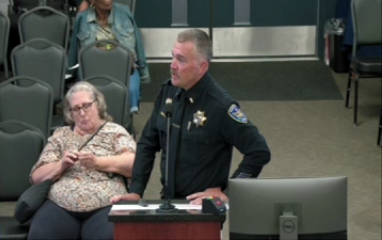
Photo Credit: City of Manteca
OpGov.News spoke with Lieutenant Osborne, asking him questions regarding how they utilize the Flock’s A.L.P.R (Automated License Plate Reader) technology, specifically honing in on the “search-reason field” officers must use justifying their use for logging into Flock’s database. First he explained the system, outlining the 33 different preset options, known as Offense drop-downs, where officers can choose the reasoning for their search, providing legitimate entry into Flock’s search database.
He then outlined the use of an “Other” option officers can use, which is the aforementioned reason field that can be used to manually type in a reason should the preset options prove inadequate. All searches, as Osborne told OpGov.News, are stored indefinitely and audited. An authorized officer can filter through criteria ranging from things like search time, date and reason to pinpoint a specific officer that may need to be identified in the event the Flock system is used inappropriately.
In light of this accountability, OpGov.News asked Osborne about the many "T.B.D" searches the police department typed into the search field and asked what it meant. “ I don’t know," Osborne said. The Lieutenant explained that the officer who typed in the acronym was perhaps missing a case number or other relevant information that was still needed when searching the Flock database.
According to Osborne, he believes this could have been the case, but ultimately doesn’t know the intent behind the officer's use of the acronym. Despite this, a presentation given by Osborne at a council meeting providing an overview of the Manteca Police Department's active auditing measures revealed Lieutenant Osborne is one of the officers who audits the Flock search logs. The presentation, given during a September meeting before the City Council, was done at Mayor Gary Singh’s request.

Photo Credit: FlockSafety.com
So when Mayor Gary Singh asked who performs the audits, Osborne responded, “I do and the rest of command staff have the ability to.” OpGov.News asked Osborne about any additional remedies the department could take to curb the inappropriate misuse of A.L.P.R technology in light of recent controversy and scrutiny the technology has received. “We’re not making any additional safeguards,” he said.
He told OpGov.News that officers should be following the rules, and that the department performs monthly training to ensure officers understand proper A.L.P.R policy. In fact, he noted that officers at the department are currently undergoing this training. Osborne said officers must read the policy and physically sign their name on a piece of paper to show they’re in compliance with said policy.
Given a hypothetical scenario in which an officer did use Flock’s system inappropriately, Osborne did acknowledge that by the time they'd start an investigation, the damage would already have been done. The investigation into Manteca Police Department’s usage of “T.B.D.” in the search-field was initially spearheaded by the EFF (Electronic Frontier Foundation) who mentioned the department in an article.
In their article entitled, “The High Crime of LMAO: How Cops Are Treating Flock’s Surveillance As A Joke”, the EFF conducted their own extensive investigation into Flock’s A.L.P.R technology with regards to the misuse of the system via their search logs used by police departments across the country.
For context, the EFF is a non-profit organization founded in 1990 specializing in defending individual’s civil liberties on the digital platform. So when the EFF had uncovered the Manteca Police Department's use of the phrase “ to be determined” through a public records request, the organization requested a statement from the department to clarify what T.B.D meant.
A spokesperson from the Manteca Police Department did respond, emphasizing that the presence of the acronym should not by itself be read with the implication that illegitimate processes were acted upon when T.B.D was typed in. As a follow-up, the EFF had subsequently requested that the Manteca Police Department confirm if the hundreds of “T.B.D" searches were, in fact, legitimate. The EFF, however, did not receive a response to this.
It is here where OpGov.News called the department when conducting our own investigation into the matter, which is when Osborne responded to the question.
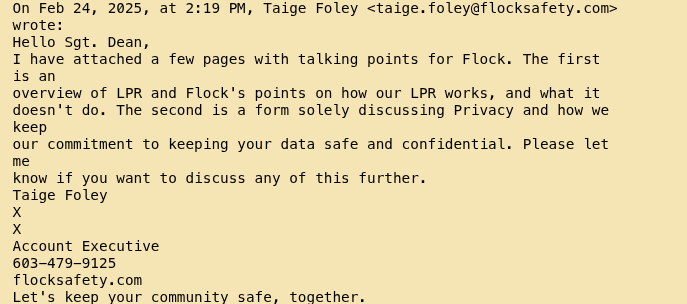
Photo Credit: EFF.org
It's also worth noting that the EFF specified that their investigation unearthed the appearance of hundreds of searches with the acronym while Lieutenant Osborne told OpGov.News the acronym was only used around 16 times. This information was not mentioned during the initial requested overview of Flock presented in early September by the police department before Manteca City Officials. The same presentation also went over what A.L.P.R is exactly and covered “A.L.P.R Rumors vs. Reality”, which intended to debunk myths regarding the technology.
These talking points, according to the EFF's research, are pre-determined, curated talking points given on behalf of Flock to police departments.
Acquired through a public records request, an email from a Flock representative directed a Sergeant Dean to designated talking points focusing on “ an overview of LPR and Flock’s points on how our LPR works and what it doesn’t do” and “...a form solely discussing privacy and how we keep our commitment to keeping your data safe and confidential.”
OpGov.News reached out to the EFF asking if they think the actual vast majority of police departments follow a script they use to pitch to city officials when promoting flock.
Electronic Frontier Foundation Associate Director of State Affairs Rindala Alajaji responded to our question: “Absolutely. Ask a police department or a vendor, and you’ll often hear confident claims of measurable safety gains and bias reduction,”
That’s exactly what OpGov.News did. We went back to ask Lieutenant Osborne if he himself used curated talking points, at any capacity, when speaking before City Council in early September. Osborne explained that he did, in fact, use talking points but did not rely solely on them. When asked where else he gathered his information from, he said he gathered it from his own self-research.
On this point, Alajaji added, “When an agency signs a contract, or even starts a trial deployment, vendors often provide that agency with pre-written press releases, case studies, and talking points that present the tool as a proven success.” Alajaji had also stated as a reminder that police technology is a multi-billion dollar industry, and that sophisticated public relations teams are set up to facilitate swaying public opinion to view their products in a positive light.
But what of the aforementioned Offense Drop-down list officers are required to choose from?
According to Flock, the goal of this update, which primarily only had manual entry, “is to make compliance easier by building simple, built-in product features that support consistent documentation, clearer oversight, and more confident collaboration.” Despite this, recent controversy regarding a San Jose Police Officer who used information gathered from Flock databases to share with a criminal has made recent headlines.
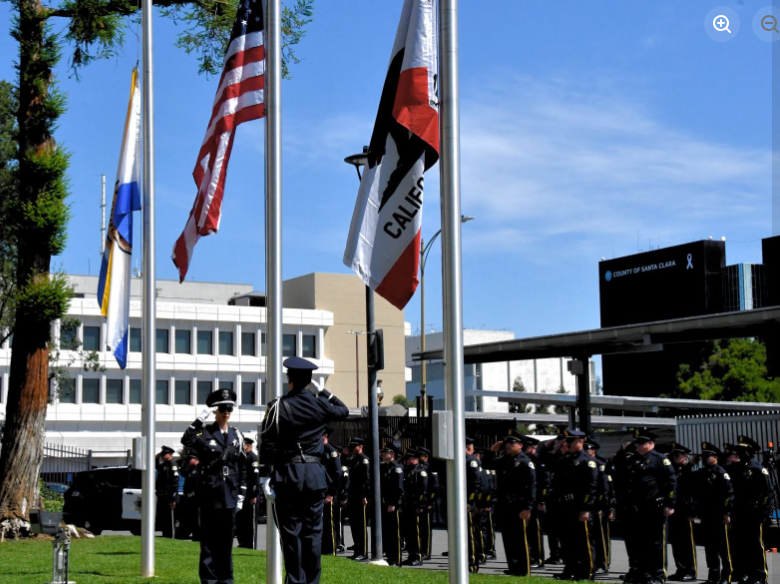
Photo Credit: San Jose Police / Facebook
Chief of Police of the San Jose Police Department Paul Joseph informed OpGov.News that an off-duty officer had used a personal device to gain access to perform unauthorized A.L.P.R. searches with a personal device, all relating to a domestic violence matter.
“The officer located the victim’s vehicle and shared the victim’s vehicle, and shared the location with the suspect, who was a relative to the officer,” Joseph said. The officer was placed on leave, then terminated.
The Chief of Police told OpGov.News that department policy was changed to no longer allow the use of A.L.P.R technology on personal devices, and stated that improper use of this technology could be grounds for termination. OpGov.News asked what they’re currently doing to remedy the situation.
“In addition to the current monthly A.L.P.R audits, the department is testing new smart auditing tools that go even further to flag possible access without a lawful purpose,” Joseph said.
Though the “new smart auditing tools” were never clearly explained, the aforementioned drop-down tool, which was made available December 2025, is an example of new innovations by Flock to make “documentation more consistent and oversight more straightforward.”
Associate Director Alajaji weighed in on this also, explaining to OpGov.News that having a drop-down list only exacerbates the issue.
“Flock Safety claims it has improved its systems by requiring officers to select from a drop-down list of crimes before running a search, but this only makes it easier for officers to hide improper searches behind the veneer of uniformity," he said. This ultimately is a loss for transparency and accountability according to the EFF.
OpGov.News was also told by the director that Flock’s new search system doesn’t actually require any proof at all with regards to the officers' true reason for utilizing the technology. Drop-down lists can potentially hide ulterior motives of an officer's search, which has been seen already in the San Jose Police Department.
If you have any questions, comments or concerns please email me at yikaileau.w@lead4earth.org
0
0

Comments