Photo Credit: Wikimedia Commons / CC0 Bruxton
(PLEASANTON, CA.) - There are already cameras reading your license plate on your way to Trader Joe's — you just haven't been told exactly how many, or where the data goes.
What are Flock Cameras
Flock cameras are ALPRs (automated license plate readers), which capture vehicle and license plate data. They then filter against stolen or wanted vehicle lists and flag any hits to the police. In Pleasanton, that data is automatically deleted after 30 days if not flagged as potential evidence.
It’s simple enough on paper. But the reality is that Pleasanton’s been doing some version of this surveillance for over a decade, and the inner workings are many times messier than just a matter of some photographs.
Pleasanton’s Camera History
Pleasanton Police Department has been running mobile ALPRs since 2012. By 2023, they ran two systems: Vigilant (37 units) and Flock (4 units). Vigilant had data retained for years while Flock only used 30 days, according to the January 24, 2023 PPD Community Advisory Board meeting minutes.
“We’re obviously balancing public safety versus privacy…We are talking about potentially surveilling 120,000 people,” Jack Balch told Pleasanton Weekly. Councilmember Valerie Arkin saw it differently, telling Independent News that the cameras “will not pick up any area where there’s a reasonable expectation of privacy.”
But the debate hasn’t slowed down since then.
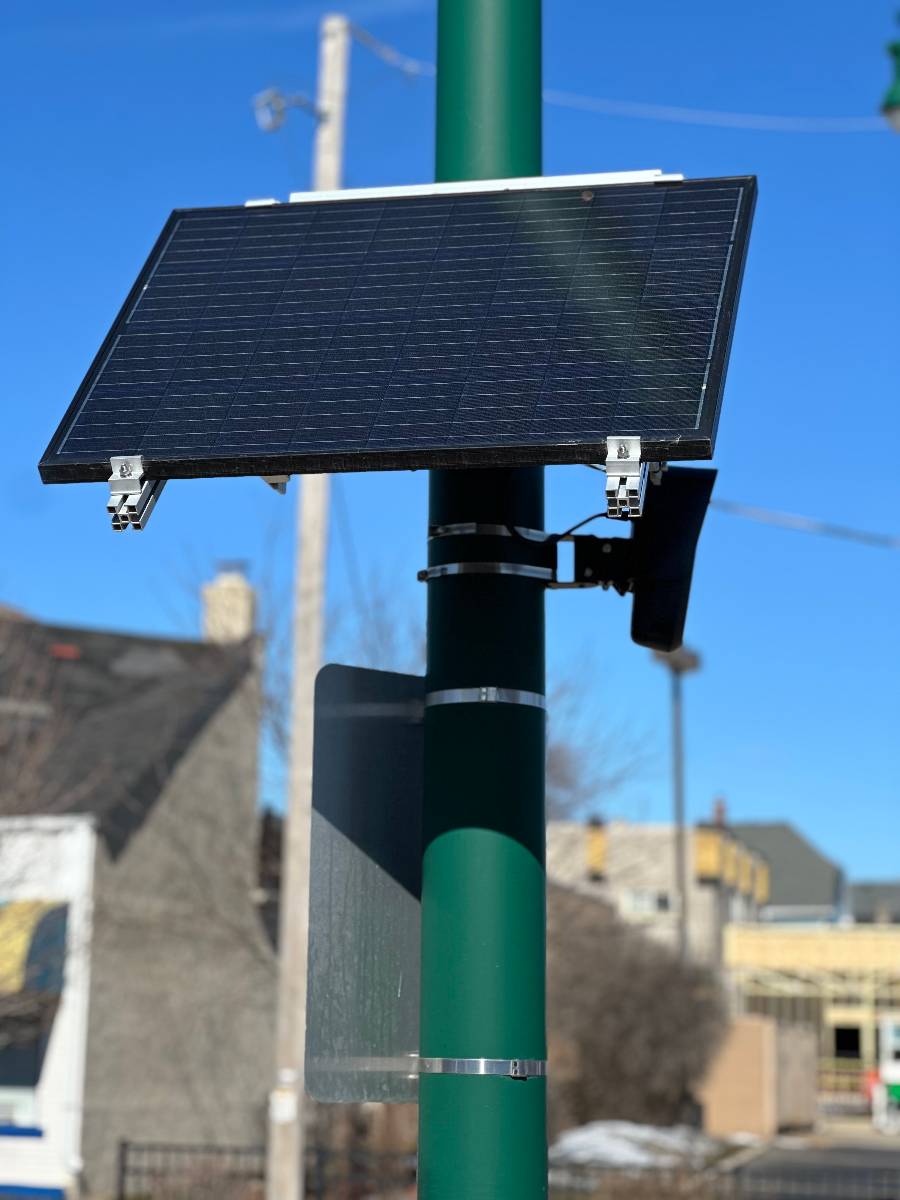
A new Flock ALPR installation got the green light in April 2026 via the Alameda County California Environmental Quality Act (CEQA) filing. The project mounts a Flock camera and solar panel to an existing traffic signal or streetlight pole, causing no ground disturbance or new pole installation.
The Case For
Pleasanton PD hasn’t published its own crime-solving numbers tied to Flock, but other cities have. For example, Cleveland’s police chief told 19News that investigators used Flock to help identify suspects in 25 of the city’s 53 homicides so far in 2026, which is nearly half.
Supporters also push back on the correlation between anti-camera and pro-safety.
Edward Escobar of the Coalition for Community Engagement told the Alameda County board that Flock cameras are an essential tool protecting residents, including immigrants, who are affected by crime, adding "Latino and immigrant families are bearing the brunt of a crime wave that they did not create."
Even Flock has responded to public pressure. The company removed its “distress detection” feature, which was meant to identify human voices in audio.
The Case Against
Retention is a huge issue, since it varies from city to city. While Pleasanton sits at 30 days, some cities can hold footage for two years or more.
However, Flock recently announced on August 13 that it is cutting its default ALPR retention window nationwide from 30 days to seven as a direct response to pressure. Flock’s own blog post says that the change comes after nine years at the 30-day default, especially since over 90% of searches happen within a week.
But there’s a catch worth flagging; a new “Evidence Mode” exception lets police preserve any searched data indefinitely if it's tied to a case number, potentially undercutting the shorter window entirely.
Another issue is simply the scale of this surveillance. Flock’s camera network now processes roughly 20 billion license-plate scans monthly across thousands of law-enforcement agencies nationwide, per NBC news reporting.
The sharpest concern is federal data sharing. Border Patrol has allegedly used Flock data to identify and detain people based on “suspicious” driving histories. Though ICE doesn’t have access to Flock, local agencies outside California have knowingly shared Flock access with ICE despite state law limits.
But this isn’t just a national issue; mistakes have occurred locally too.
Border patrol was mistakenly left on Pleasanton’s Vigilant data-sharing list as a "state agency," a leftover mistake of a 2023 cleanup that was supposed to remove all out-of-state and federal agencies.
On top of that, three Vigilant cameras kept running past the contract's termination date because Motorola never processed the cancellation, staying active until July 8, 2026. And because the Vigilant system didn’t log outside-agency searches, the city has no way of determining whether Border patrol ever accessed Pleasanton data.
Accuracy presents another problem. A Roseville, California police audit found that 71% of Flock alerts flagging a vehicle as stolen or tied to a felony contained a misread license plate across 2023–2024, even though Flock advertises accuracy "in the high 90s."
Besides accuracy and mistakes, how can we understand what this data is being used for? The Electronic Frontier Foundation’s 2025 analysis of over 12 million Flock searches found agencies running queries tied to protests, including the No Kings demonstrations. These types of searches are a long way from the “find the stolen car” searches we were promised.
In some California cities, frustration with Flock has stopped remaining in council chambers. Residents in La Mesa, California smashed Flock cameras weeks after the city council voted to continue them despite majority opposition at the meeting.
So Where Does Pleasanton Fall?
Alameda County’s own saga with Flock is way messier than a “for” or “against.” Here’s a look at the county’s timeline.
In February 2026, supervisors suggested a contract extension. Supervisors voted unanimously to table the extension, despite Supervisor Bas’ warning that expanding the surveillance reach “does have the potential to really be at a greater scale and harm our community.”
By April, the board’s meeting opened with the sheriff’s office admitting 140 unauthorized searches of county Flock data had occurred over the past year. An internal audit later confirmed that two regional intelligence-sharing networks had improperly accessed the system, prompting Sheriff Sanchez to cut off data-sharing with roughly 60% of agencies the office had previously shared with.
The response to this revelation? Supervisors voted 3-2 to extend the contract to July 1 anyway, authorizing an additional $303,600 in payments.
By July, the board went even bigger with a $2.4 million, 18- month extension. This extension expanded the program to include pan-tilt-zoom cameras and drones, not just license plate leaders.
Flock’s response? Simply corporate reassurance.
A company statement said it would “continue working with the county to strengthen the safeguards, audit controls, and oversight that keep this system accountable to the people it serves.”
Meanwhile, in Pleasanton, most of these debates have been happening below residents' radar, a sentiment evident in the Pleasanton Weekly’s letters page dated August 14.
One letter writer, Michael Montgomery asked, "Does your publication have any interest in asking why the Pleasanton Police Department has installed 35 Flock cameras in and around the city. This data is shared nationwide."
Montgomery continued, "Is crime so much a problem in Pleasanton that local authorities feel compelled to install surveillance cameras recording license numbers and faces on everyone within range, and have it stored in a nationwide database that can be accessed by anyone? Do we really trust local, state, and (especially) federal authorities to legally use this information?
Is anybody asking about the Flock cameras?”
What Can You Do?
You don’t have to take either side’s word for it. Pleasanton PD’s ALPR policy and the city’s semiannual audit processes are public record. The city’s own memos are worth reading in full before forming an opinion.
The county-level fight may keep playing out despite what Pleasanton decides on its own, but the upcoming November 3rd election gives residents a more active voice. Julie Testa’s open District 3 seat is contested by Jamie Yee and Reena Gupta, and the mayor’s race is separately contested.
Here’s the bottom line.
The cameras on your way to Trader Joe's aren't going anywhere on their own. What's still undecided is who gets to see what they capture.
For now, that answer keeps changing every few months at the county level, without much input from the people actually driving past the cameras. Pleasanton's next council will have more say over that than most residents realize.
To add to or correct any information in this report, please contact me at harika@lead4earth.org or leave a comment below with your thoughts.
2
0

Comments