(CHARLOTTE, NC.) – The Charlotte City Council unanimously approved redevelopment plans tied to the historic Manor Theatre during its May 18 zoning meeting, advancing a mixed-use project that preserves one of the city’s longest-running independent cinemas while reflecting continued pressure from rapid population growth and housing demand.
The approval of Petition 2026-003 moved forward plans to redevelop the former Eastover theater site into residential and retail space. The decision stood out as one of the few unanimous votes in a meeting otherwise defined by debate over zoning transparency, infrastructure strain and long-term development impacts across Charlotte neighborhoods.
The Manor Theatre originally opened in 1947 and operated for more than 70 years before closing in 2020 during the COVID-19 pandemic.
Council members described it during the meeting as a cultural landmark that played a significant role in Charlotte’s independent film scene.
District 6 council member Kimberly Owens emphasized the theater’s long history in the community.
“The Manor Theater has been in existence for 73 or so years,” Owens said. “It was one of the victims of the pandemic, it was the first and last place to see art house films in Charlotte.”
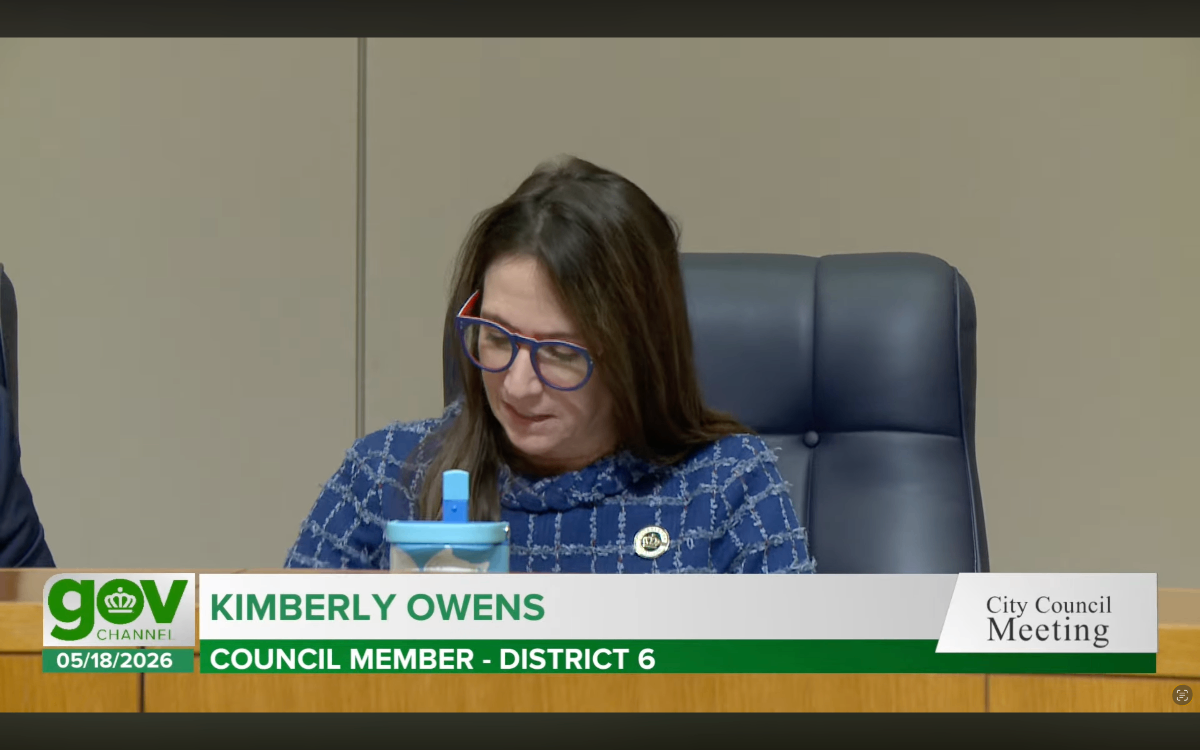
District 6 Council Member Kimberly Owens speaks during the May 18 meeting, reflecting on the theater's 73-year history as a cornerstone of Charlotte's independent film scene.
Photo Credit: City of Charlotte/YouTube
The redevelopment proposal includes approximately 120 to 130 residential units and about 35,000 square feet of retail space. The plan reflects a broader pattern of infill redevelopment in Charlotte’s established neighborhoods, where available land is increasingly limited due to sustained population growth.
The Charlotte metropolitan area has added roughly 120,000 residents since 2020, bringing the total metro population to an estimated 2.4 million.
The city itself has grown by more than 10% over the past five years, reaching nearly 964,000 residents, according to the U.S. Census estimates.
That growth has intensified pressure on redevelopment sites in older neighborhoods like Eastover, where zoning decisions often balance preservation with density. During the same meeting, council members also raised broader concerns about how rezonings are evaluated, particularly under “conventional petition” processes that do not always require detailed site plans.
Some members argued that this limits visibility into future land use, traffic impacts, and school capacity planning.
While those debates shaped much of the meeting, the Manor Theatre project was widely viewed as a lower-conflict example of adaptive reuse, with council members describing it as a rare point of agreement in an otherwise divided zoning discussion.
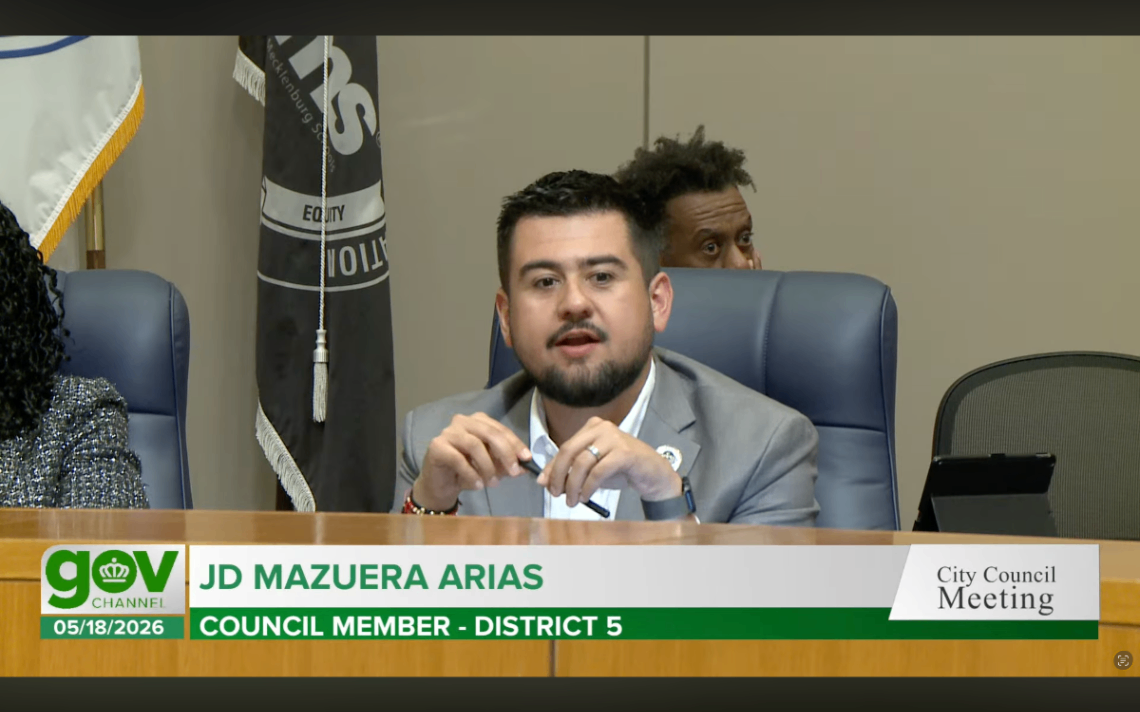
District 5 Council Member JD Mazuera Arias highlights the cultural significance of the venue and its historical role in promoting independent filmmaking.
Photo Credit: City of Charlotte/YouTube
District 5 council member JD Mazuera Arias also highlighted its role in shaping exposure to independent filmmaking and creative media.
“It was a great opportunity to delve into independent movie making,” Arias said.
The theater’s closure during the pandemic reflected broader national declines in independent cinema attendance as streaming platforms accelerated changes in viewing habits. Over the same period, many mid-sized arthouse theaters across the country experienced reduced demand, contributing to long-term structural shifts in the film exhibition industry.
Despite those trends, council members emphasized the Manor Theatre’s continued cultural significance within Charlotte’s arts community and its legacy as a venue for independent and foreign films outside mainstream commercial distribution.
Broader context from OpGov.News coverage of city governance highlights similar tensions between growth and infrastructure planning. In “Charlotte Moves to Pause $4B I-77 Toll Lane Project,” council discussions centered on how large-scale transportation investments intersect with displacement concerns and long-term development impacts, reflecting the same strain between expansion and community impact seen in zoning debates.
Those themes also appear in “City Council Divided Over Growth, Housing at Contentious Zoning Meeting,” which examined internal disagreements over housing density, infrastructure capacity, and the pace of development approvals across Charlotte.
Education capacity was also discussed during the May 18 meeting.
Charlotte-Mecklenburg Schools serves approximately 139,000 students, and while overall enrollment has stabilized in recent years, localized overcrowding continues in high-growth attendance zones, adding another layer of complexity to rezoning decisions.
By the end of the meeting, the Manor Theatre redevelopment remained one of the only unanimous approvals, underscoring a rare moment of consensus in an otherwise divided policy environment.
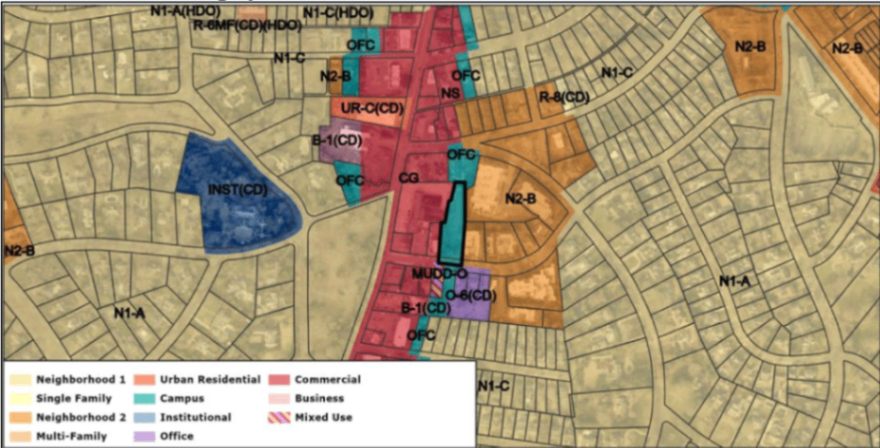
The official City of Charlotte zoning map outlines the specific parcel boundaries designated for the upcoming infill redevelopment project.
Photo Credit: City of Charlotte City Council Zoning Meeting May 18, 2026 Meeting Agenda/2026-003-FSA
As Charlotte continues to expand, projects like the Manor Theatre redevelopment illustrate how the city is increasingly relying on infill development to balance historic preservation with housing demand and long-term growth pressures.
To add to or correct any information in this report, please contact me at victoria.o@lead4earth.org.
Thumbnail Photo Credit: City of Charlotte City Council Zoning Meeting May 18, 2026 Meeting Agenda/2026-003-FSA
0
0

Comments