(CHARLOTTE, NC.) – Charlotte’s Data Center Task Force questioned whether it has enough information and time to develop recommendations before the city’s data center moratorium expires during its Aug. 27 meeting.
Members raised concerns about delayed city research, zoning regulations, public notification and the potential effects of data centers on water, electricity and surrounding communities.
The Charlotte Data Center Task Force meeting included discussion of the city’s initial 75-day research period and a report examining policies used by other municipalities.
Several members said they had not received the research needed to evaluate current practices and develop recommendations.
Robert, a task force member, said the group should review the city’s previous research before beginning additional public engagement. He warned that beginning public sessions with only an introductory briefing could create problems while members and residents lacked access to the city’s more detailed findings.
Robert said proceeding without the research would create a “very bad situation” given residents’ existing concerns about data centers near their homes.
The concerns follow Charlotte City Council’s decision to pause new data center development. “Tax Hike Approved, Data Centers Paused, Stadium Deal Delayed,” previously reported on the council’s decision and the 150-day moratorium.
The task force also examined Charlotte’s Unified Development Ordinance, or UDO, which includes a 2011 definition of a data center. Members questioned whether the existing definition and zoning standards adequately address the size and infrastructure demands of newer hyperscale facilities.
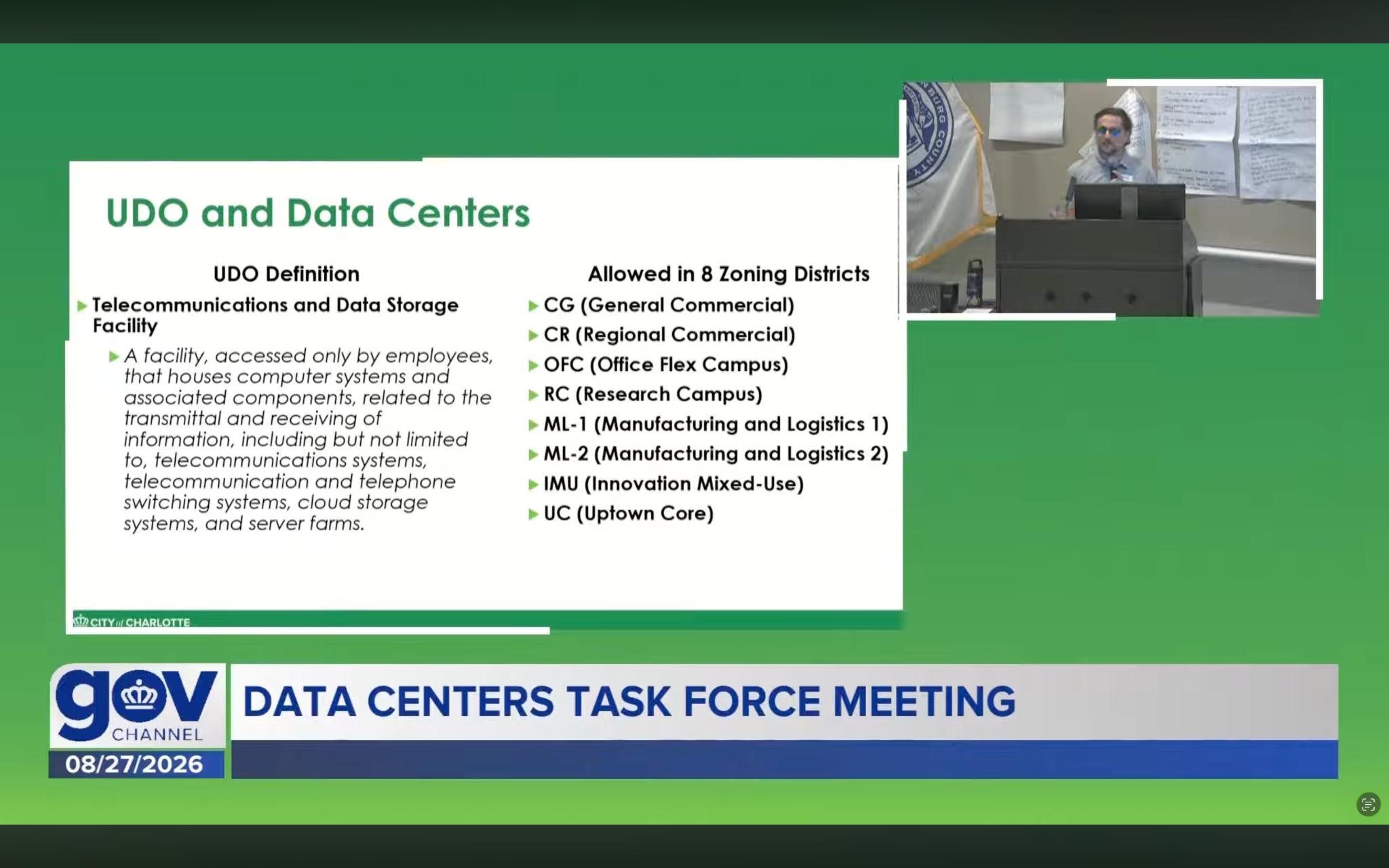
A presentation slide details Charlotte’s current Unified Development Ordinance (UDO) definition for data centers and lists the eight zoning districts where they are permitted.
Photo Credit: City of Charlotte/YouTube
Water and electricity use were major topics during the meeting.
The discussion also covered stormwater management, wastewater, emissions, and noise.
The concerns reflected issues previously raised during Charlotte’s broader data center debate.
“Charlotte’s Data Center Expansion Raises Questions About Energy, Water, and Growth” examined questions surrounding electricity demand, water consumption, land use, and environmental impacts.
Members also questioned whether data center development could affect electricity costs and grid reliability for residents. The task force discussed Duke Energy’s role in providing electricity but acknowledged that the company is independent from the city, limiting Charlotte’s direct authority over its operations.
Noise and setbacks were also discussed. Ron suggested stronger enforcement of noise requirements and the possible use of sound monitors. Tony questioned whether a 50-foot setback would provide enough separation between a hyperscale data center and nearby homes.
Tim Sittema agreed that setbacks should account for the size of a facility rather than apply a single standard to all data centers.
The task force also considered community benefits agreements as a way to establish legally binding commitments between developers and communities. Members discussed conservation requirements, environmental protections, and penalties for noncompliance.
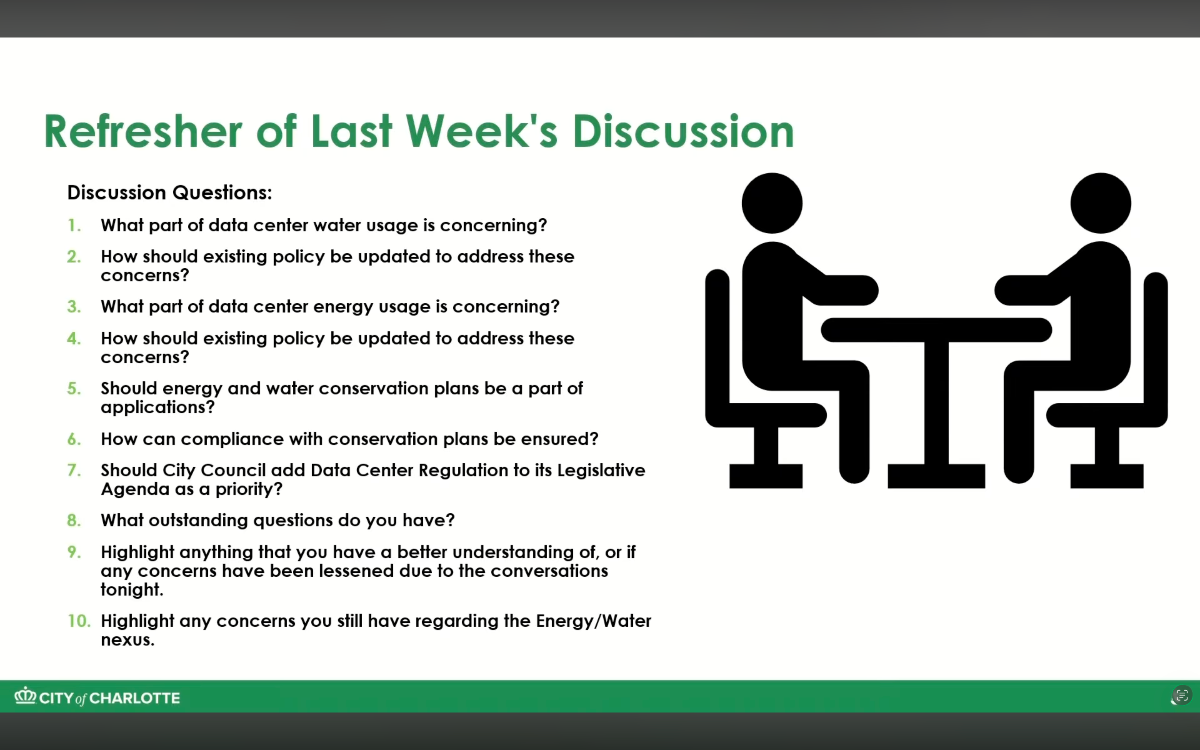
A task force presentation slide outlines key discussion points regarding environmental impacts, energy demand, and potential water conservation mandates for data center applications.
Photo Credit: City of Charlotte/YouTube
Public notification was another concern. Members said residents could have limited opportunities to learn about proposed projects and participate in the development process. Suggestions included extending notification periods and using utility bills to distribute information about proposed developments.
The debate over data center expansion has also intersected with concerns about Charlotte’s historic preservation and rapid growth.
A historic Charlotte building was demolished in a single day in August, clearing the way for expanded data center operations, according to a Charlotte Observer report. The demolition prompted criticism from some members of the public who questioned the city’s development priorities and the loss of historic structures.
One commenter on the report wrote, “I guess the ‘NEW! IMPROVED! Charlotte!’ rolls along. ‘Now with even MORE DATA CENTERS!’ Only the next batch of cookie-cutter apartments could have been worse. Ugh.”
Another commenter responded, “Anything new, bright and shiny has Charlottes name all over it. To H with any history.”
The comments were part of the broader public reaction to the building’s demolition and were not statements made during the Data Center Task Force meeting. They reflect concerns that Charlotte’s rapid growth and data center expansion could come at the expense of historic preservation and established community character.
State law could further limit Charlotte’s ability to change its regulations. Members discussed Session Law 382, which restricts certain changes to the UDO that could create new nonconformities for nonresidential properties.
Because of those restrictions, members identified the rezoning process as one avenue through which communities could negotiate conditions for individual projects.
Some members questioned whether the remaining meetings would provide enough time to develop recommendations. Others suggested extending the moratorium or bringing in outside experts to provide current research and examples of policies used by other municipalities.
Pasha recommended third-party research to help the group identify current best practices. Sittema suggested using an existing policy framework from another city as a starting point rather than developing a new framework from scratch.
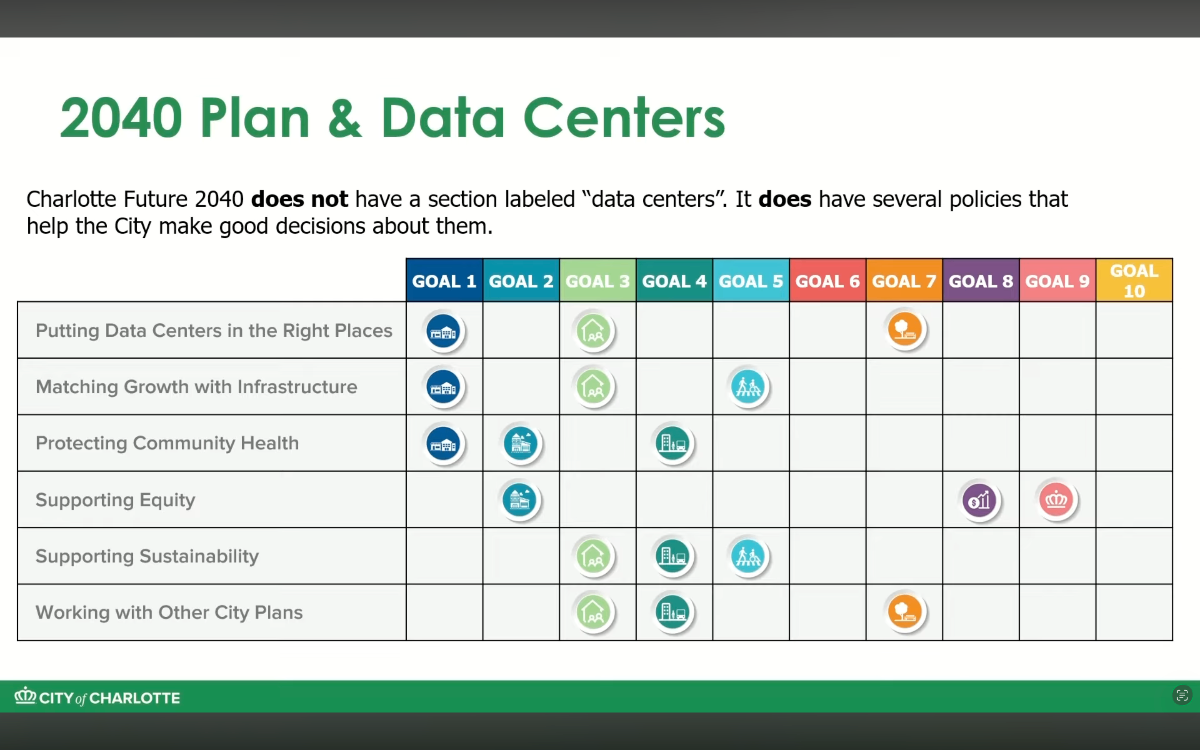
A slide maps potential data center policies against the goals of the Charlotte Future 2040 Comprehensive Plan to evaluate community health, equity, and sustainability impacts.
Photo Credit: City of Charlotte/YouTube
The discussion continued a debate that has already included questions about the economic benefits, infrastructure demands, and community impacts of data center development. “Charlotte Weighs Data Center Moratorium As Industry Experts Debate Jobs, Infrastructure And Community Impact,” previously reported on those competing considerations.
The task force continued its work with members emphasizing the need for additional research and a clearer framework for developing recommendations before the moratorium expires.
To add to or correct any information in this report, please contact me at victoriao@lead4earth.org.
Thumbnail Photo Credit: City of Charlotte/YouTube
0
0

Comments