(OPGOV GLOBAL) – Twenty-five years after the September 11, 2001, terrorist attacks, first responders, recovery workers, and survivors continued to experience physical and mental health conditions associated with exposure to toxic dust, smoke, debris, and the trauma of the attacks.
The Fire Department of the City of New York released a 25-Year Health Impact Report on September 1, detailing health findings from 25 years of medical monitoring, treatment, and research involving FDNY firefighters, emergency medical personnel, officers, civilian employees, retirees, and other members who participated in the World Trade Center rescue and recovery effort.
The report found that 10,562 FDNY members had been certified with at least one 9/11-related physical health condition. Another 4,496 members had been certified with at least one mental health condition, while 4,257 members had a cancer certification.
The report also found that more than 84% of enrolled responders continued to participate in the FDNY World Trade Center Health Program. Among World Trade Center responders diagnosed with cancer, 86% were alive five years after diagnosis, compared with 63% of New York state residents who were not exposed to the World Trade Center and were diagnosed with the same cancers.
The health effects documented among responders and survivors were associated with the conditions created by the collapse of the World Trade Center buildings.
According to the Centers for Disease Control and Prevention, the collapse of the Twin Towers created massive dust clouds containing asbestos, silica, metals, concrete, and glass. Fires at the debris pile and the collapse of 7 World Trade Center also released carcinogenic combustion by-products.
The CDC estimated that about 400,000 people were exposed to toxic contaminants, physical injury risks, and physical and emotional stress during the days, weeks, and months following the attacks. Potentially exposed groups included responders, recovery workers, residents, workers, students, and others in the affected areas.
The National September 11 Memorial & Museum documented the continuing health effects and advocacy efforts that eventually led to federal support for people exposed to the attacks. The museum reported that more than 400,000 people were exposed to the conditions created by the attacks and that the World Trade Center Health Program had approximately 140,000 enrolled members as of March 2024.
The CDC's World Trade Center Health Program has identified more than 350 chemical, physical, and other hazards that may have been present at the disaster sites. Covered conditions include respiratory and digestive disorders, cancers, mental health conditions, and musculoskeletal disorders.
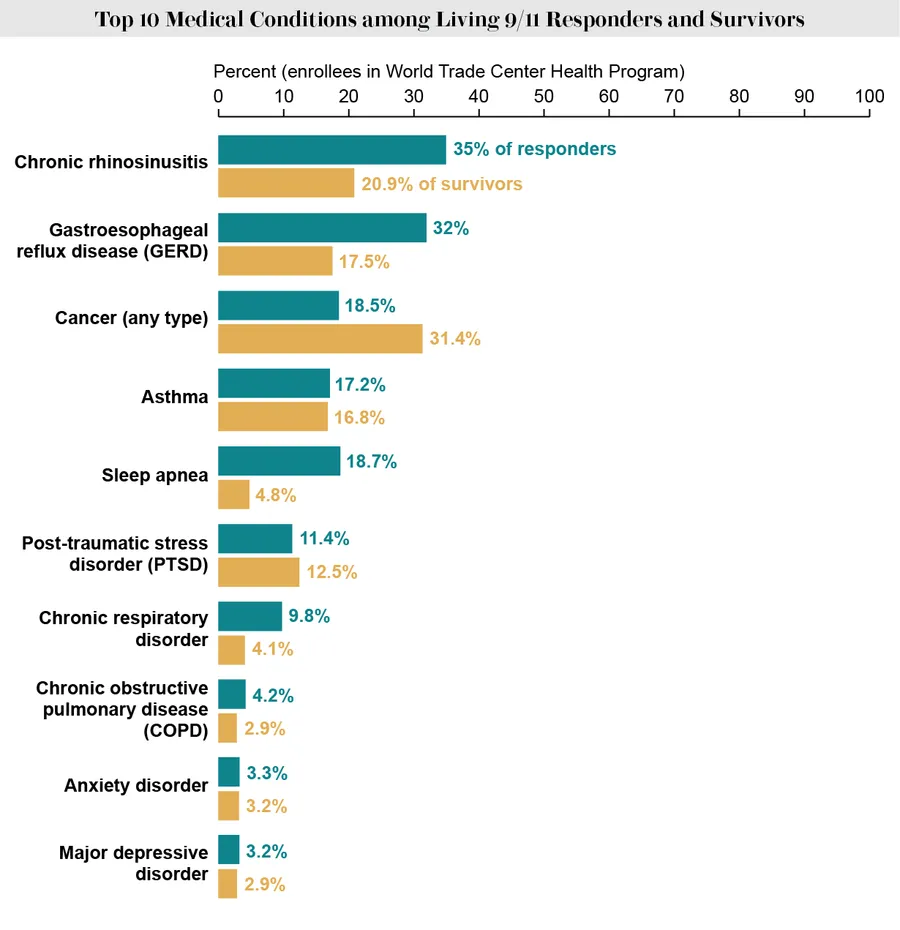
Photo Credit: Scientific American / A percentage breakdown illustrates the most prevalent physical and mental health conditions reported by enrolled 9/11 responders and survivors.
Research has continued to examine those health effects.
A peer-reviewed review of 20 years of World Trade Center Health Program research found that it examined aerodigestive disorders, mental health conditions, musculoskeletal disorders, cancers, and traumatic injuries.
Early research identified what became known as “World Trade Center cough.” Researchers found that the condition occurred in about 8% of people present during the collapse, with symptoms increasing as exposure intensity increased.
Mental health research also identified long-term effects. One study cited in the review found that nearly 20% of general responders had been diagnosed with World Trade Center-related post-traumatic stress disorder. Among responders who had ever been diagnosed, about half continued to have active symptoms 11 to 13 years after exposure.
Occupational and environmental health specialists have also documented long-term health effects.
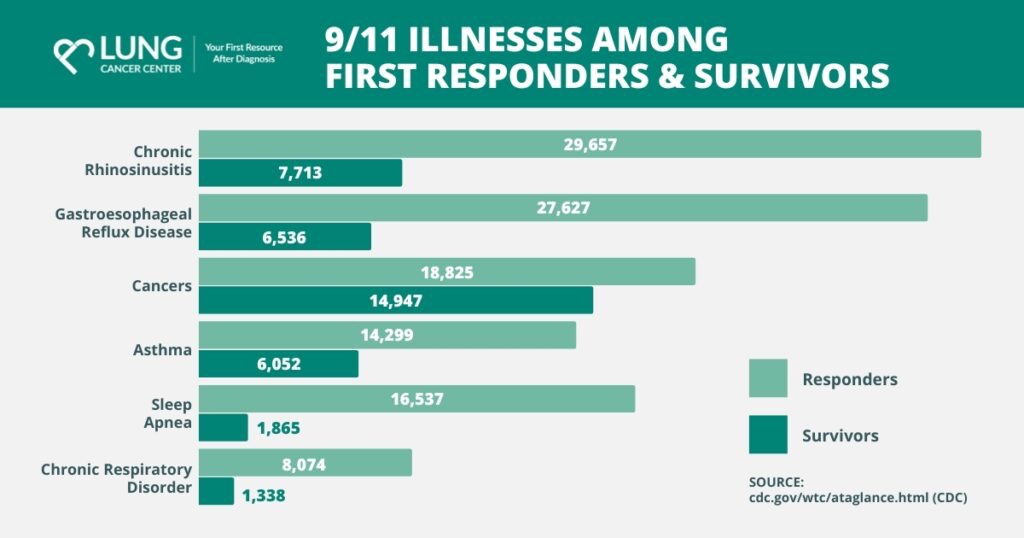
Photo Credit: Lung Cancer Center / CDC data highlights the comparative volume of diagnosed illnesses between first responders and community survivors across major health categories.
In a September 4 reflection, the American Board of Preventive Medicine highlighted the work of Steven Markowitz, MD, DrPH, a former director of the Queens College World Trade Center Health Program.
Markowitz treated first responders and recovery workers experiencing lung disease, asthma, gastroesophageal disease, cancers, and ongoing mental health problems. He also treated more than 400 immigrant day laborers, many of whom were Latino, who had worked cleaning skyscrapers near Ground Zero.
The health effects of environmental exposure remain a concern beyond the World Trade Center site.
OpGov.News recently reported on the West Nile virus activity in Ocean Grove and mosquito-control spraying, in “West Nile Virus in Ocean Grove, Mosquito Control Sprays Insecticide September 4,” written by OpGov.News journalist Angelica Niedermeyer, where local public health concerns led officials to use insecticide to reduce mosquito populations.
The article examined how environmental conditions can create public health risks and prompt local responses. While the circumstances differed from the World Trade Center disaster, both situations involved exposure to environmental hazards and efforts to reduce risks to people living or working in affected areas.
OpGov.News also reported on Charlotte's Data Center Task Force and its questions about research, regulations, and public engagement in “Charlotte Data Center Task Force Questions City Research, Regulations and Public Engagement.” The task force examined whether additional research was needed to understand potential impacts before making recommendations about data center development.
The two local stories illustrate how communities continue to rely on research and monitoring when evaluating potential environmental and health effects.
For people affected by 9/11, that monitoring has continued for decades.
The World Trade Center Health Program was established through the James Zadroga 9/11 Health and Compensation Act of 2010 after years of advocacy from responders, survivors, workers, residents, and health professionals. The program provides medical monitoring and treatment for eligible responders and survivors and supports research into conditions associated with 9/11 exposure.
Research published over the past two decades has also identified areas requiring additional study, including cardiovascular, autoimmune, neurological, and cognitive conditions. Researchers have noted that some potential relationships remain uncertain and require continued investigation.
The FDNY's 2026 report added another 25 years of medical data to that research.
The World Trade Center Health Program is now authorized through 2090, allowing medical monitoring, treatment, and research to continue as the population exposed to the attacks ages.
The latest findings show that the health effects of September 11 did not end when the rescue and recovery operations ended. Medical monitoring and research have continued to identify and treat conditions among people who were exposed to the disaster and its aftermath.
The long-term health response remains part of the broader legacy of September 11, with federal programs, medical providers, and researchers continuing to monitor responders and survivors more than two decades after the attacks.
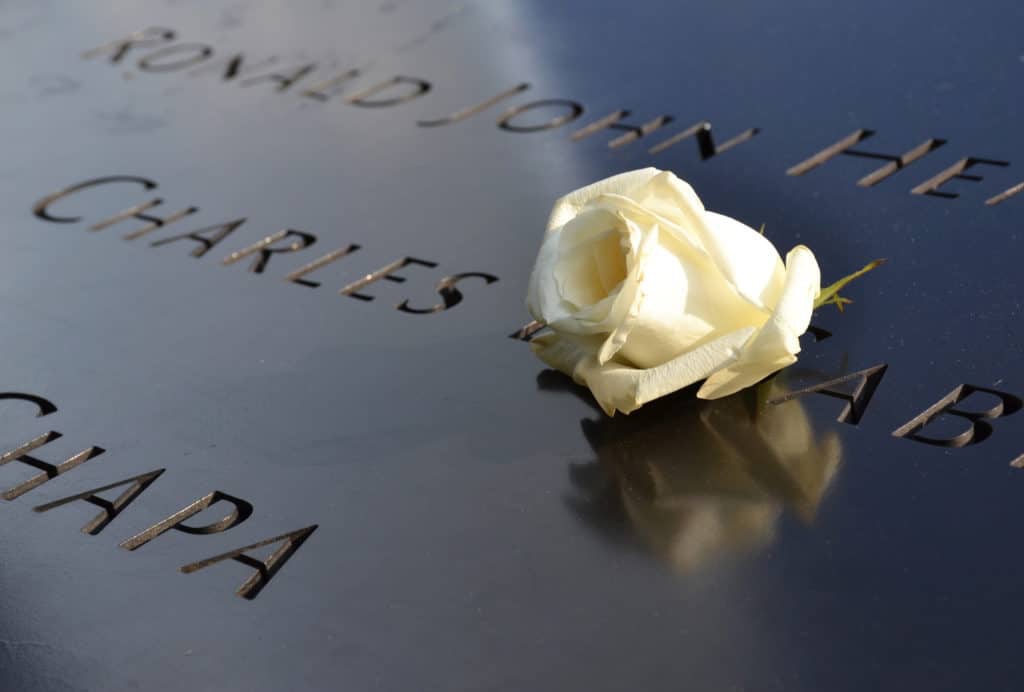
Photo Credit: 9/11 Attorneys/Weisfuse & Weisfuse, LLC / A white rose rests on the engraved names at the National September 11 Memorial, symbolizing the enduring legacy and ongoing health impacts of the disaster.
To add to or correct any information in this report, please get in touch with me at victoria.o@lead4earth.org.
Thumbnail Photo Credit: ABC7/Website
0
0

Comments