(OCEAN GROVE, NJ.) – The Monmouth County Office of Mosquito Control sprayed an insecticide in Ocean Grove due to detection of the West Nile virus (VNS), according to the Monmouth County Board of County Commissioners. The operation occurred on September 4 between 3 and 5 a.m., according to the September 3 press release.
“Monmouth County is continuing to conduct proactive surveillance, constant monitoring and applying precision treatments to reduce the risk of mosquito-borne illnesses for residents and visitors,” Commissioner Director Thomas A. Arnone said.
The treatment area included streets east of Main Street, south of Wesley Lake, west of Ocean Avenue and north of Fletcher Lake and Inskip Avenue, the release said.
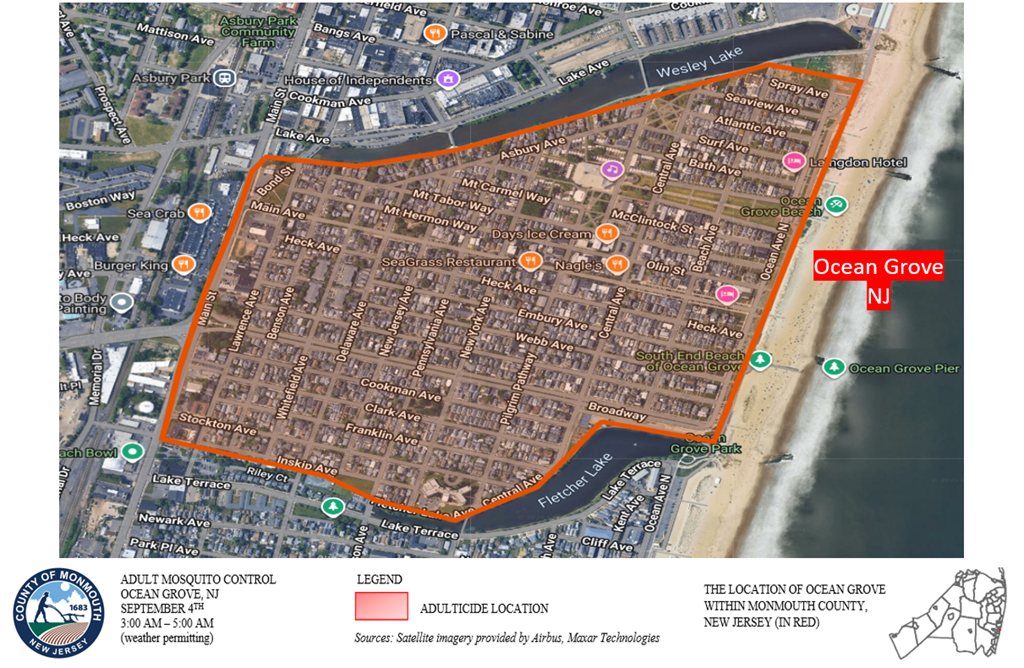
Photo Credit: Monmouth County Website
Duet using Ultra Low Volume (ULV), an effective adulticide against adult mosquitos, was used by the Office of Mosquito Control with sprayers mounted in the bed of a pick-up truck, said the release.
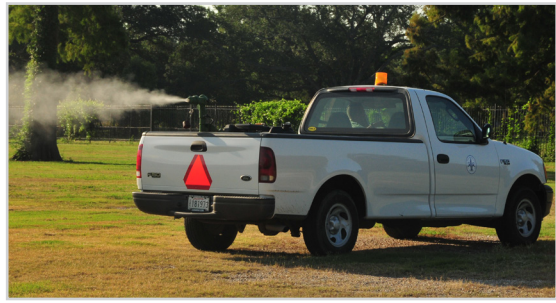
Photo Credit: Ed Freytag, City of New Orleans Mosquito & Termite Control Board / Mosquito control truck spraying insecticide into the air.
“The peak time for West Nile virus activity is mid-July through September,” said Commissioner Susan M. Kiley, liaison to the Department of Health and Human Services.
The WNV produces mild flu-like symptoms that may include fever, headache, body aches and sometimes a rash. There is no specific treatment, so the best way to prevent the disease is to avoid mosquito bites, according to the New Jersey Department of Health (NJDOH) website.
“Protecting public health is a shared responsibility,” Dr. Raynard E. Washington, New Jersey Health Commissioner said in a July press release about mosquitoes. “The best defense against diseases transmitted by mosquitoes is to avoid being bitten in the first place and reducing breeding grounds.”
WNV activity started early this year and has been detected in mosquitoes in 12 counties so far, according to the NJDOH midsummer release. On average, there are 22 human cases of WNV reported each year in the state, said the NJDOH.
“When outdoors, people should use repellents or wear long-sleeve shirts and long pants to avoid mosquito bites,” Kiley said. “Residents can further reduce the presence of mosquitoes by dumping any containers on their property that hold water.”
Residents should use EPA insect repellent, cover up, and avoid bring outside during the peak mosquito hours of dawn and dusk and visit their primary care doctor if experiencing symptoms, according to the NJDOH.
“It’s critical that everyone does their part to control nuisance mosquito populations by taking steps to prevent the pooling of water around their properties that can provide places for mosquitoes to breed,” said Environmental Protection Acting Commissioner Ed Potosnak.
“These steps can go a long way toward reducing localized populations of mosquitoes and will help support the work of county mosquito control agencies and the state’s Mosquito Control Commission to protect the public from mosquito-borne diseases,” Potosnak added.
To schedule an inspector, call the Office of Mosquito Control at 732-542-3630.
“Upon request, the county can provide inspectors who will visit properties to identify standing water sources that support mosquito larvae,” Arnone said. “If larvae are found, the inspectors will treat the water or remove the source.”
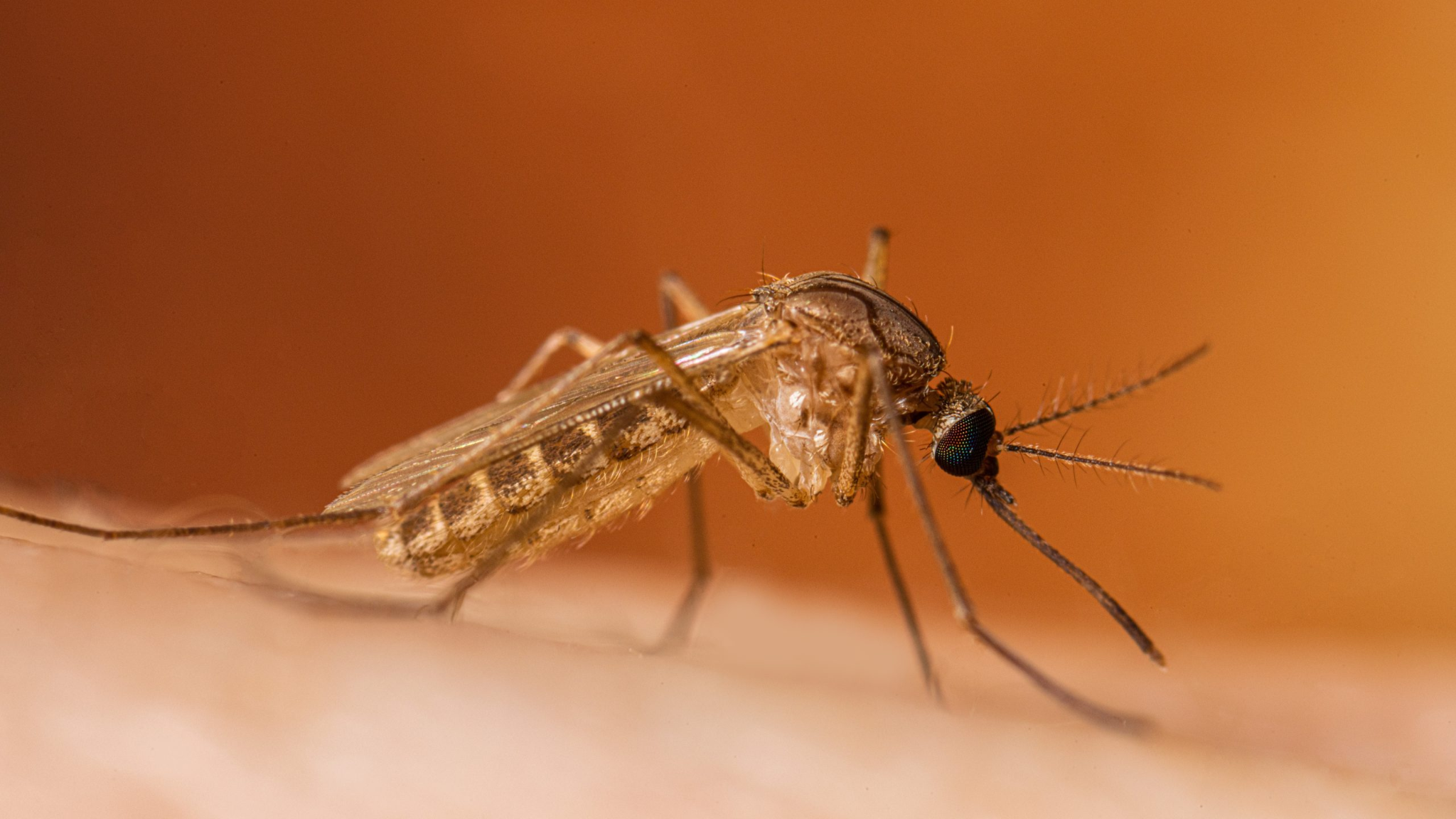
Photo Credit: CDC West Nile Virus website
For more information on mosquito control in Monmouth County, visit here.
For more information on Duet truck treatments, see here.
To add to or correct any information in this report, please get in touch with me at angelica.n@lead4earth.org.
1
0

Comments