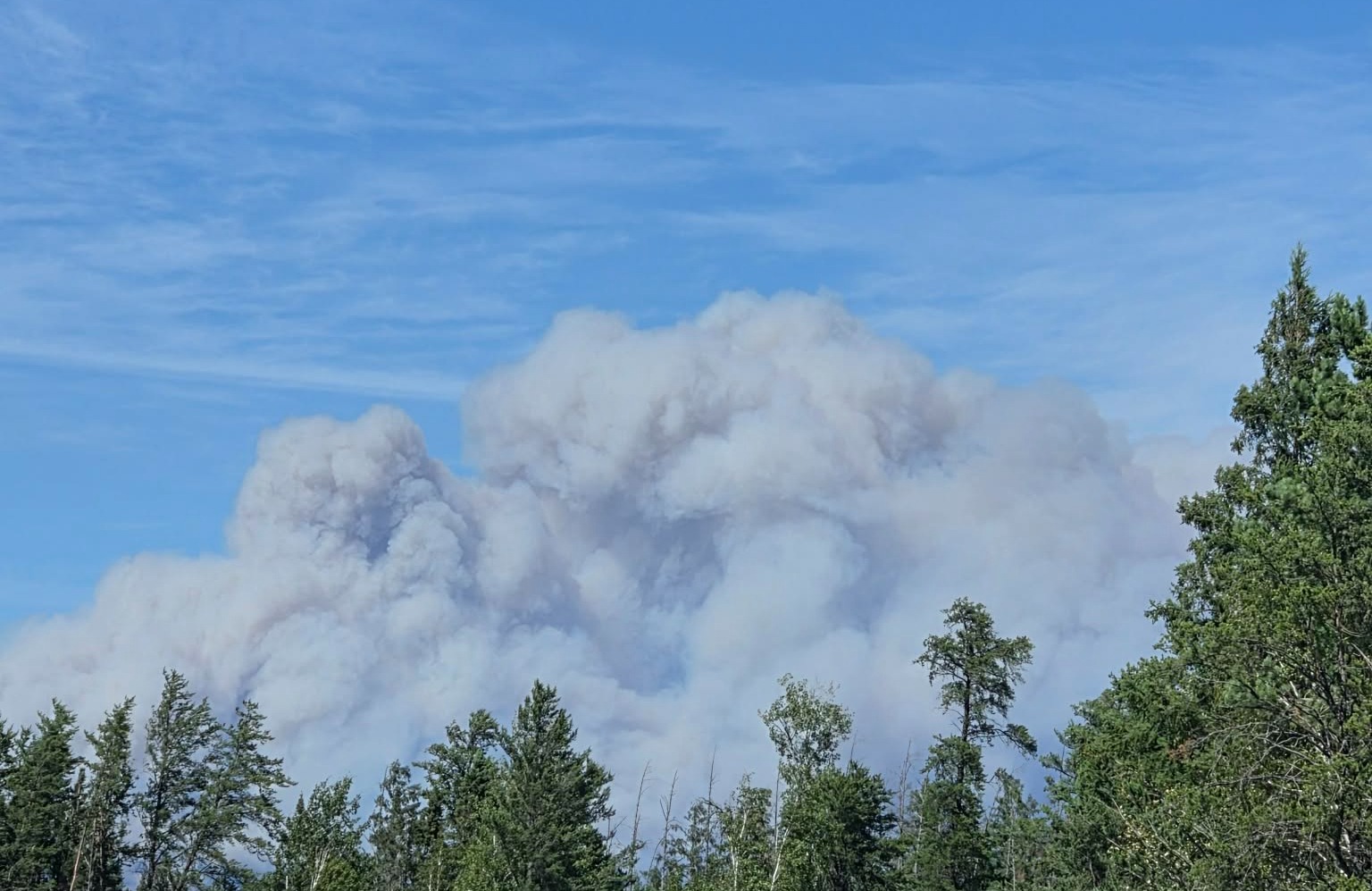
Photo Credit: WE Reservation Wildland Fire Management - Ely, Minnesota Smoke Cloud
(MAHNOMEN, MN.) – Northern Minnesota wildlands near the Canadian border have been burning for over two weeks. Initial reports say lightning from storms is likely the cause, but the extreme heat wave isn’t helping tame the scorch. Fires of this magnitude require groups of professionals trained in how to handle them. The White Earth (WE) Wildland Firefighters are some of those professionals, and they’ve been getting the job done since 1986.
WE Nation's fire program works alongside the Minnesota DNR and Bureau of Indian Affairs (BIA). Having grown up in this area, I knew there was plenty of wildland to protect on White Earth; what I didn’t know is just how far the WE Wildland Firefighters' reach extends. To get more information, I met with Engine Boss Jeremy Londo on July 23 for an interview.
Londo confirmed that, aside from Minnesota, this year has seen the team helping to put out fires near the borders of Canada and Mexico; they’ve also assisted on fires in Oklahoma, Colorado, Washington, and Arizona. The team has been going nonstop since January, rotating their crew out every two weeks until their services are no longer required or they get called back to protect Minnesota wildlands. In previous years, the crew helped with fires in California and South Dakota.
“Just last week, we had people on the borders of Mexico and Canada at the same time. The guys on the border of Mexico just left the area yesterday to come back home,” Londo said.
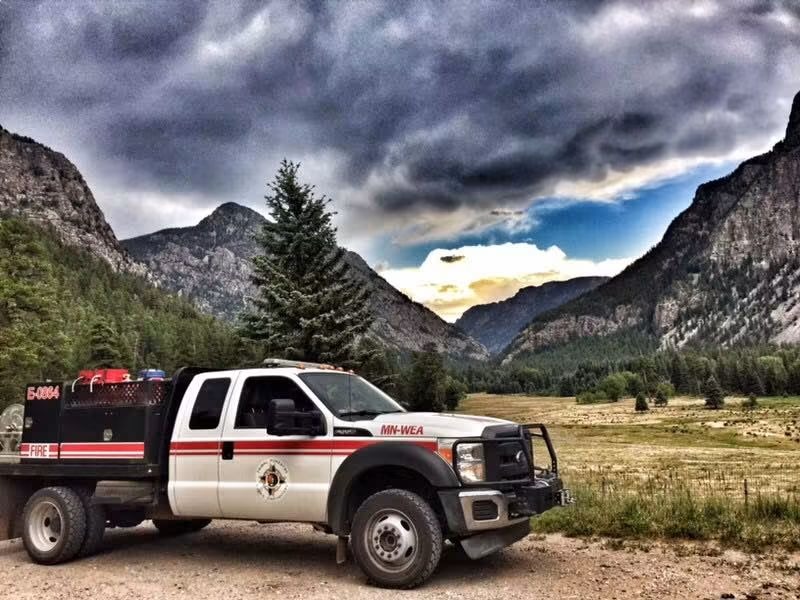
Photo Credit: Facebook/ WE Reservation Wildland Fire Management
He went on to emphasize that the only reason the team was able to assist with fires on the Mexico border was that the fires in Northern Minnesota didn’t exist when they were sent. Londo himself is part of the WE team that headed out July 26 to relieve teammates who had been on the fires for the past two weeks.
“Right now, (some of) our folks are in Grand Portage,” Londo said, “I’m going to leave to go Sunday with a crew; we need to keep going there. We’re just gonna swap out, you know, so Grand Portage doesn’t have to go looking for a whole different crew.”
He further stated that since White Earth Nation's fire program is one of the largest in the state, they have the resources and professionals to swap crews and regularly continue on fire assignments when other Wildland Fire crews can’t. During my research, I found that the White Earth Nation, Leech Lake Band of Ojibwe, and Red Lake Nation have the largest tribal fire programs in Minnesota.
WE has 12 full-time crew members and ten call-outs (emergency on-call crew). The administrative level is also fully staffed, consisting of squad bosses, task force leaders, and trainers. Wildland Firefighters complete at least 32 hours of in-person and online training, though many put in 40 or more. Next, they undergo one of three fitness assessments: arduous, moderate, or light, depending on what position they want on the team. To travel out of state and assist with wildland fires across the nation, they must pass the arduous test, which is nothing to sneeze at.
Trainees are required to walk three miles completely equipped with anything they would have to wear on a real wildland fire call – and they have to do it in less than 45 minutes. Londo did mention that the requirements for state and specific tribal fire programs may vary, so passing the DNR’s tests doesn’t always mean you’ll pass those put forth by tribal fire programs.
“I'm proud of my crew, man. I want everyone to know what these guys are out there kicking butt all over the United States, you know. They're pure professionals; it’s not like these areas have to call us back; they want to.” Londo said, “These guys sacrifice a lot; they're not just representing their family, they're representing their agency, tribe, and state.”
The ability to travel to assist with fires in other states is a big deal for the crew. Minnesota doesn’t have a year-round fire season, so the Wildland Firefighters for WE Nation assist with fire assignments outside the state. Crew members regularly assist in Oklahoma, Washington, and Arizona each year, and have assisted on or worked on fires in California and Colorado.
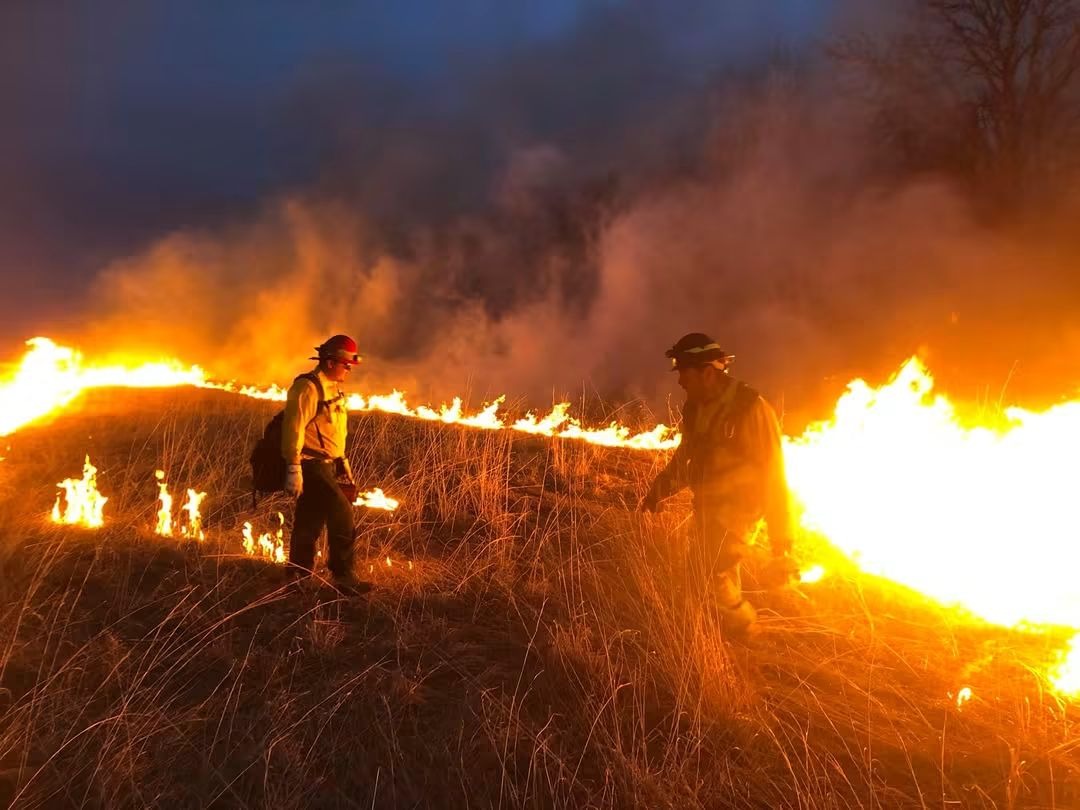
Photo Credit: Facebook / WE Reservation Wildland Fire Management
WE Wildland Firefighters are experts at prescribed fire, a form of wildland management that helps maintain healthy ecosystems in woodland areas. A prescription is made that includes safety precautions, fire staff participation, weather considerations, and an estimation of whether the crew can meet burn objectives.
Still, the WE Wildland Firefighters do more than fight fires. The crew educates, trains, mentors, and encourages new generations of Wildland Firefighters. Training takes place in the winter at the White Earth Community Tribal College for anyone who wants to become a wildland firefighter. WE’s crew has been called out for missing persons, hurricane relief, and ground/water rescues.
Yet, they never forget where they come from or to help those in their own community. The team promotes fire safety by holding presentations at area schools and delivering wood left over from wildland and forestry management efforts (at no cost) to tribal members for use in spirit fires. Londo says the spirit fire wood service, which started small, has taken root.
“We have wood left over from some of your forest management projects, and we just started delivering it; it caught traction, and now it’s a pretty big service we offer.”
Spirit fires are kept burning continuously for four days and four nights to guide a deceased loved one's journey into the afterlife, and are tended by a family member around the clock regardless of the weather.
All the additional training, fire safety awareness, and community outreach are available, despite still tending anywhere from 80 to 100 wildfires on White Earth Reservation each year and assisting on fires nationwide when needed. The team knows what they’re doing, and they want to educate and help wherever they’re needed. Having a good working relationship with the neighboring tribes and communities doesn’t hurt either.
The wildland fires continue to burn throughout the Superior National Forest, but most of the large fires are now at least over 30% contained. Luckily, Wildland Firefighters are there to continue fighting the flames, one acre at a time, until the job is done.
To add to or correct any information in this report, please contact me at kristin.h@lead4earth.org.
0
2

Comments