(AUBURN, Calif.) – The Auburn City Council is moving closer to authorizing the regulated sale of recreational cannabis within city limits. While the ordinance could bring in new tax revenue, it raises questions about Auburn's economic future.
Discussed by the council since at least January 2024, and delayed for environmental review in March, the ordinance is moving into a new stage. According to Interim City Manager Lindsay, “proposed regulations [are] scheduled for the Planning Commission on October 6.”
City Manager Lindsay says the ordinance allows for “a limited number of cannabis retail businesses…in designated areas” of the city.
In 2025, Economic Development Director Jonathan Wright delved deeper, saying the ordinance allows for one retail license, with population-based increases at intervals of 7,500 residents. The council later modified the threshold to 8,500. Auburn currently has about 13,330 residents.
City Manager Lindsay said the ordinance would “establish a responsible local regulatory framework for an industry that is increasingly prevalent in our community while capturing some of the economic activity.” A Facebook post from the city reiterated this, “The reality is, cannabis is already here…[but] none of the local tax revenue” makes it to Auburn.
The potential revenue generated by the ordinance is unknown, with Director Wright saying last October that “staff cannot estimate the exact financial impact until further direction is provided and negotiations with prospective operators occur.” In August 2025, he presented estimates using nearby cities such as Grass Valley and Nevada City for comparison.
In Grass Valley, the city predicted $200,000 in cannabis-related revenues for the 2024-2025 fiscal year. Director Wright said this number was a “conservative estimate,” but that “if you took our largest tax providers…the Grass Valley [figure] would be at the low end of the top ten.” The $760,000 figure budgeted by Nevada City would be at the top of that list.
Still, some are hesitant. On October 13, 2025, Council Member Alice Dowdin Calvillo said, “this is not going to be the cash cow that some may think it’s going to be.”
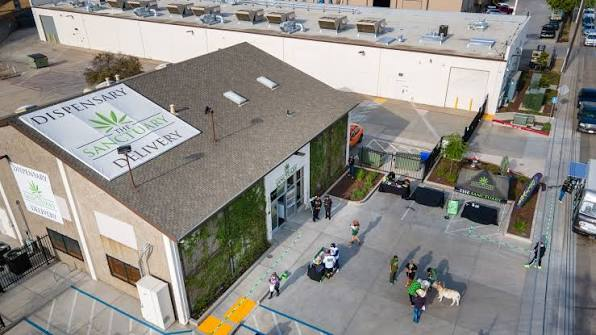
Photo Credit: The Sanctuary Sacramento / Facebook / The Sanctuary, a cannabis dispensary in Sacramento.
Beyond finances, several indicators show support for the ordinance within the community. This includes the 2025 report from Director Wright, which said that data from “two workshops” and “an online survey” shows that “between 83% and 88%” of the 221 participants were in favor of the ordinance.
Independent interviews and polling conducted by OpGov.News also found support.
“I don’t care,” if Auburn has a dispensary, Charles told OpGov.News. He said that the ordinance should continue and downtown was probably a good location for it.
Jeff stated that “Freedom” was important to him. He said that if people choose to use cannabis, “they should smoke the shit out of it.”
When asked how they thought the ordinance would impact local business, both felt it would lead to growth. Jeff said a dispensary near a restaurant, for example, is “like having a Taco Bell next to a bar.”
An OpGov.News poll on Nextdoor also found support for the ordinance. Of 240 participants, 60% (145) were in favor of regulated recreational cannabis sales in Auburn. The poll was not scientific or representative of the city as a whole.
Not everyone supports the ordinance. During public comment at the September 14 council meeting, Patty Slackett expressed concerns about the economic state of downtown businesses, saying that in the “last two weeks,” three had closed. “It’s quite frankly very depressing to be in downtown,” she said, noting that blight had “become very visible.”
But concerns about vacant buildings in the city are nothing new. On March 23, Director Wright said, “vacant commercial buildings do cause issues within our community.” He also said he remembered talking about the issue in the council chambers years earlier.
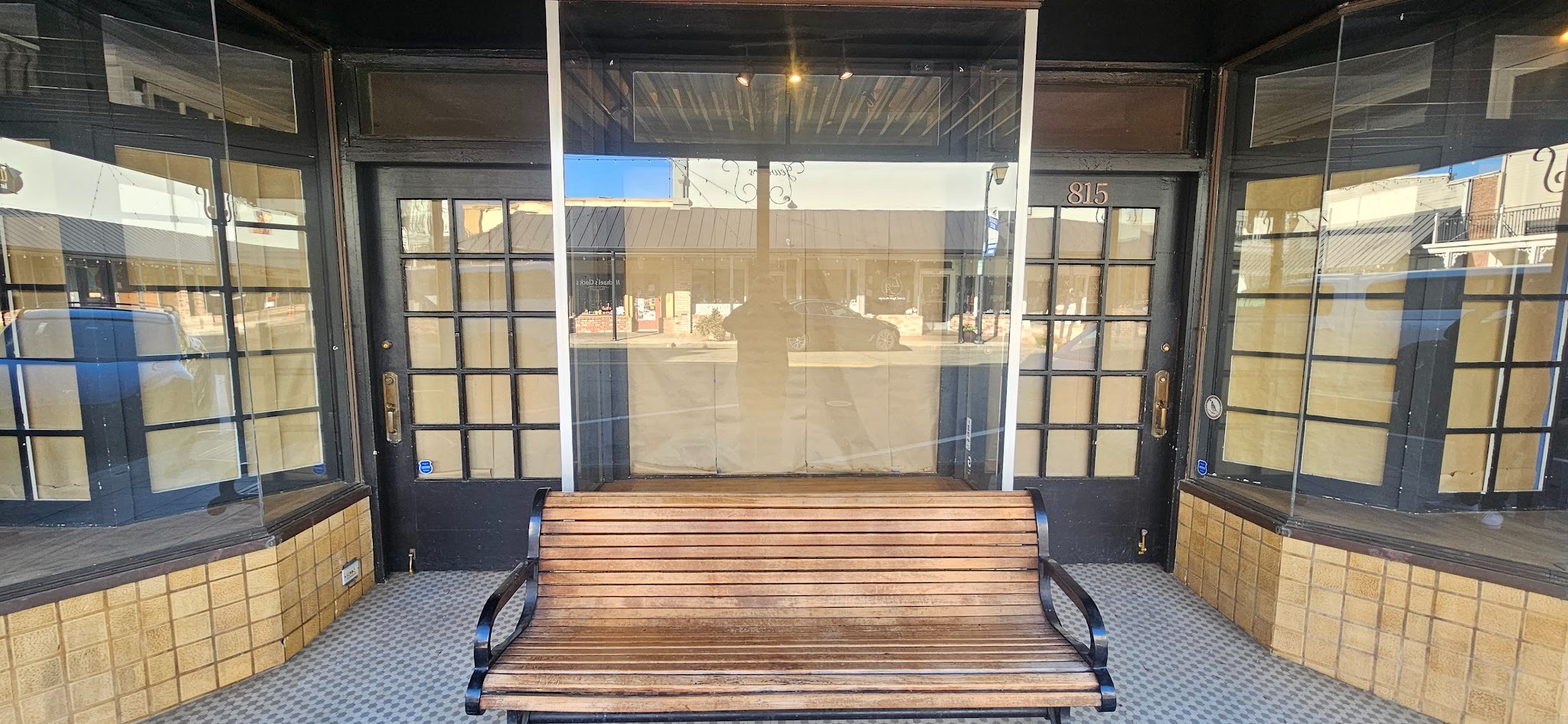
Photo Credit: Robert MacMahon / This closed business at 815 Lincoln Road in Downtown Auburn is one of many in the area.
With economic development as a backdrop, Slackett said she understands the financial benefits of cannabis retailers to the city, but “hope[s] that Auburn is considering what we want people to come to Auburn for…a cannabis store is not the thing that’s going to keep people around to shop.”
The “boarded up buildings” described by Patty Slackett may not be reopened by the cannabis ordinance, but the ordinance is one of several economic development efforts that the city is pursuing to improve the local economy.
To add to or correct any information in this report, please contact me at robert.m@lead4earth.org or leave a comment below with your thoughts.
Cover Photo Credit: (CC) Rick Obst / Wikimedia Commons / Mary Jane's Marijuana Shop in Eugene, Oregon.
0
0

Comments