(AUBURN, Calif.) – Although the election count continues in Placer County, it appears that over eight-thousand voters in the City of Auburn made history on November 3, by electing an all-woman city council. This is the first such instance since the city was incorporated in 1888.
But all things considered, the results of last week's election have shown, in large, a continuation of the political status quo in the city.
As reported by OpGov.News, Mayor Kelley Davis, who was running for re-election has led the council race for its entirety. Davis has continuously been followed by Bridget Powers, Stephanie McKenzie, and political newcomer Erik Robb, in that order.
On November 10, the Placer County Election Office informed OpGov.News that there are a total of 9,944 registered voters in Auburn. As of that same date, a total of 8,040 votes had been counted for the council race, amounting to approximately 80% of registered voters in the city.
Ballot results indicate that Davis, Powers, and McKenzie each have approximately 29 percent of the vote, with the remaining votes divided between Erik Robb (12.54%) and write-in candidates (0.49%).
With less than a 2,000 vote discrepancy between registered voters and uncounted (or uncast) votes, and the consistent leadership board pattern of Davis, Powers, McKenzie, and Robb, it is likely that the outcome of the race has already been determined.
Though there were three seats in the council up for public vote, the only apparent change brought by the election is that Stephanie McKenzie is poised to take the seat of Council Member Sandra Amara, who did not seek re-election.
While the Auburn City Council has faced scrutiny from the community in recent months concerning topics like Flock cameras and years'-long blight in Downtown Auburn, almost 60% of counted votes went to Mayor Davis and Council Member Powers, both incumbents.
Percentages aside, all five seats of the council had been held by women since August, with the appointment of Bridget Powers as Interim Council Member. Powers is serving the remaining term of former Council Member Mike Holmes, who died in July, and whose term was up this year.
In-so-much, while the appointment of Powers marked the first all-female council in city history, the election last week marks something perhaps more important than official appointments: the first council elected by the people that is entitely composed of women.
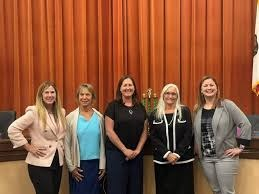
Photo Credit: The City of Auburn / The current, and first-ever all-woman city council in August 2026. (Left to Right: Alice Dowdin Calvillo, Sandra Amara, Kelley Davis, Bridget Powers, Rachel Raddel-Harris).
But gender aside, three-quarters of council candidates were already established local officials, and one-half were already serving on the Auburn City Council.
Mayor Davis has served on the council since 2024 and as mayor since December 2025. Beyond her role as interim council member, Powers is also a former Auburn mayor and council member. McKenzie previously served as a member of the Marysville City Council from 2016 until 2020.
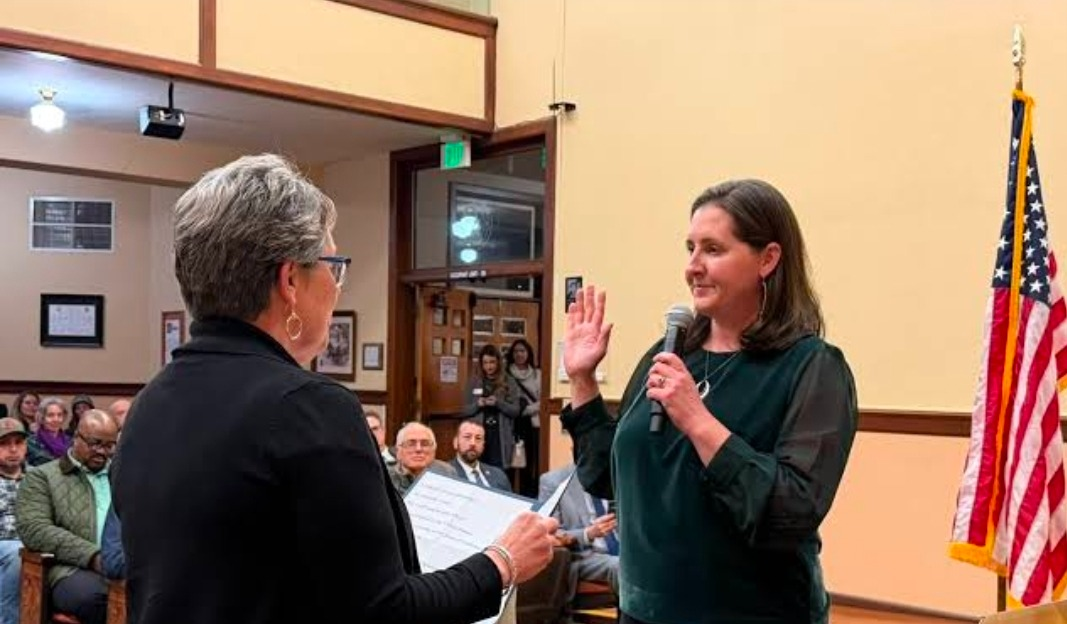
Photo Credit: Facebook / Alice Dowdin Calvillo / Kelley Davis being sworn in as mayor in December 2025.
Thus, while this election has been historic in its achievements for gender equality, politically speaking, the results of the race were nothing new.
In Auburn, the council race was not technically uncontested, but rather under-contested, with the ballot containing one candidate more than open council seats would allow. In other words, all but one candidate was virtually guaranteed to win.
Even with such a minimal number of options available, official results indicate that 6,498 votes in Auburn were “Under Votes.” In other words, a sizable majority of Auburn voters selected one or two candidates, when the ballot allowed for up to three choices.
While gender equality and equal representation are a critical measure of a healthy and functional democracy, they are not the only measure.
Thus, although celebration is perhaps in order for the first elected all-woman council in Auburn's history, it seems that the council race did not provide the most fundamental tenant of democracy: choice.
To add to or correct any information in this report, please contact me at robert.m@lead4earth.org or leave a comment below with your thoughts.
0
0

Comments