(SAN FRANCISCO, Calif.) — On November 17, 2026 the Board of Supervisors unanimously voted to extend the current 45-day ban until September 2027, increasing the moratorium by 10.5 months.
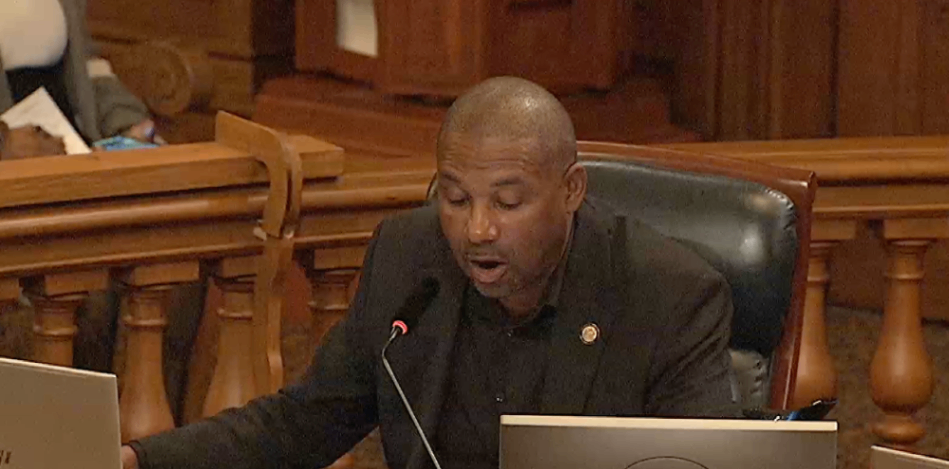
Photo Credit: SFGovTV / Supervisor Shamann Walton from District 10 presents the Planning Department’s findings to the San Francisco Board of Supervisors.
A preliminary report from the Planning Department, presented at the Land Use Committee meeting on November 16, has found sufficient evidence that further research and fine-tuning of regulations are needed before the moratorium can be lifted. Evidence shows that data centres may compete with housing electrification by using water supplies and producing contaminated wastewater, thereby reducing regional and localised air quality. They also cause excessive noise generation from mechanical equipment and cooling systems, including both persistent tunnel noise and intermittent generator noise.
Supervisor Shamann Walton spoke on behalf of the Planning Department to the San Francisco Board of Supervisors to report their findings.
The Planning committee also concluded that there is uncertainty in the characteristics, scale and nature of future facilities and cumulative demands such development could place on infrastructure systems.
“The city lacks a complete inventory of existing facilities and does not know the exact total water demand of operating data centers,” said Shaman.
“The report identifies five active district notices of violation involving 200 Paul Avenue, including permit violations and operating limit exceedances,” said Shaman, highlighting how communities already carrying disproportionate environmental burdens often become default data center locations.
Paul Rogers, a landscape architect, spoke out at the meeting and said that the concentration of data centers along Paul Avenue was harmful, and despite being unable to pin down exact numbers, the noise generation was measured at “80DB, a level capable of causing hearing loss and contributing to mental illness.” He also highlighted that they were located directly adjacent to schools, parks and residential homes.
The report also noted that primary regulatory framework for data centers was adopted more than two decades ago, before the emergence of large-scale cloud computing and artificial intelligence usage.
“I think it’s important that we identify the power load and we identify the separate categories for these high load consumers so that a community with an area median income of $35-55,000 is not subsidising a facility of this energy capacity,” said Dr. William Dixon, cofounder of Capacity Health AI. He references the capacity of the Paul Avenue data center as being at least 72MW, with his belief that it could be up to 150MW.
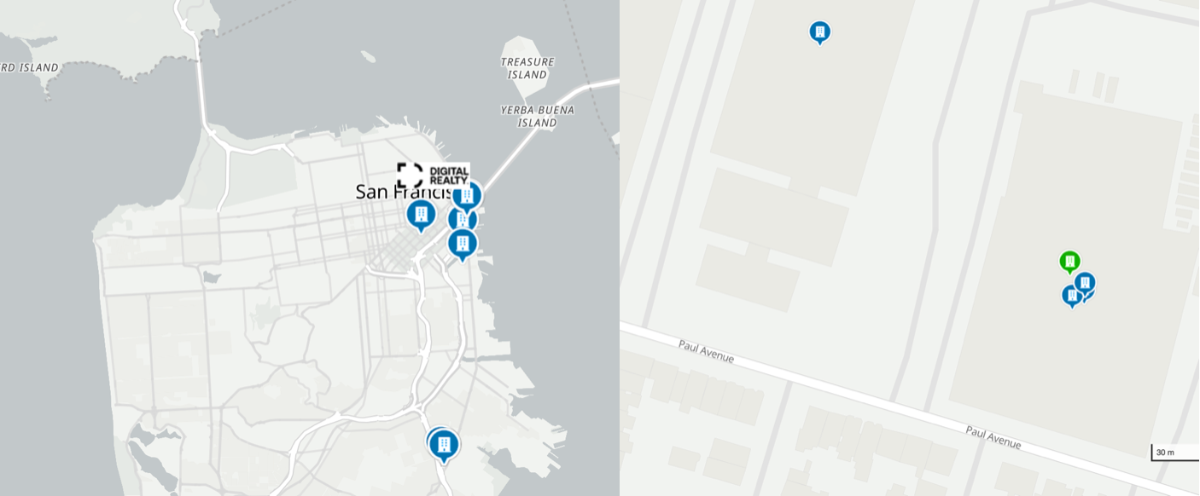
Photo Credit: Data Center Map, showing the locations of data centers in San Francisco. According to Data Center Map, San Francisco currently has 13 data centers, five of them on Paul Avenue in Bayview-Hunters Point.
They noted that additional analysis may be needed to determine whether existing definitions, review criteria and reporting requirements fully capture the characteristics of new facility types. They also noted that while data centers are subject to extensive regulation, oversight is distributed across multiple agencies and levels of government, and understanding how these processes interact may require some additional coordination and analysis.
Thirdly, some aspects of the existing regulatory framework may warrant further study, including how current regulations apply to evolving facility types, how data center-related uses are distinguished from accessory computing functions within larger developments and how existing regulations would apply in areas governed by specialised planning frameworks.
Finally, said Walton, there remains “substantial uncertainty” regarding the scale, timing and characteristics of any future data center development that could occur in San Francisco. Given these uncertainties, it may be premature to conclude whether additional local regulations would be warranted or what form they would take.
“Significant questions remain unanswered… the city needs to evaluate whether data centers belong in San Francisco at all,” said Shamann, noting that other cities have adopted prohibitions and that San Francisco may need to consider a permanent ban.
To add to or correct any information in this report, please contact me at naomi.h@lead4earth.org or leave a comment below with your thoughts.
0
0

Comments