(SAN DIEGO) – The San Diego City Council approved a $6.4 billion budget for the next fiscal year on Jun. 23. The vote was unanimous. During the meeting, residents warned the city about a looming housing emergency that could leave over 1,600 people homeless by the end of the year.
The council approved a law that lets city leaders spend money on departments and projects for fiscal year 2027. The measure also included taxes for garbage services and zoo maintenance.
Finance Director Ben Battaglia explained what the law does.
"It defines the legal level at which the Mayor and the CFO are authorized to control operational and capital project expenditures," Battaglia said.
Battaglia said the law also includes administrative adjustments. The city will transfer unused federal housing funds and close an outdated garbage fund.
The city also approved a property tax to maintain the San Diego Zoo. The tax generates about $22.8 million through a half-cent tax on every $100 of property value. Voters approved this tax years ago, and it continues each year.
Councilmember Stephen Whitburn said voter-approved money must be used only for what voters intended.
"[Whenever] voters pass a property tax for a specific purpose, the funds have to be used for that purpose and only that purpose," Whitburn said.
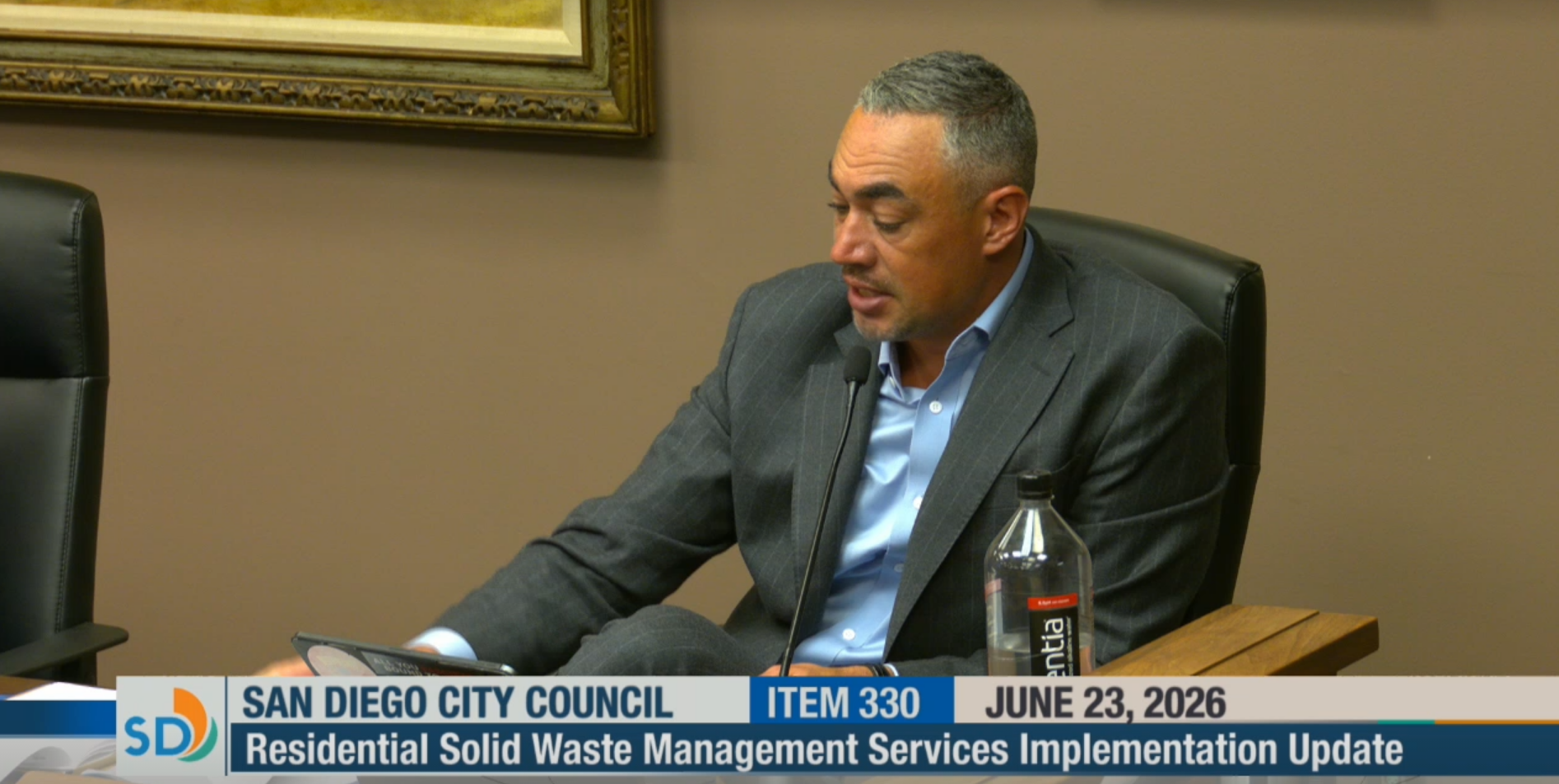
Photo Credit: City of San Diego
Councilmember Raul Rivera discussed how scaling back services has larger consequences for the city.
"I think there was a perception that recycling was nice to have, but it served a greater purpose that has significant environmental and economic impacts for the city over the long term," Whitburn said.
The discussion came as the city moves forward with changes to waste management services. Beginning Jul. 1, reduced trash collection fees will apply to city customers, but the changes will also affect future services, including weekly recycling collection and bulky item pickup.
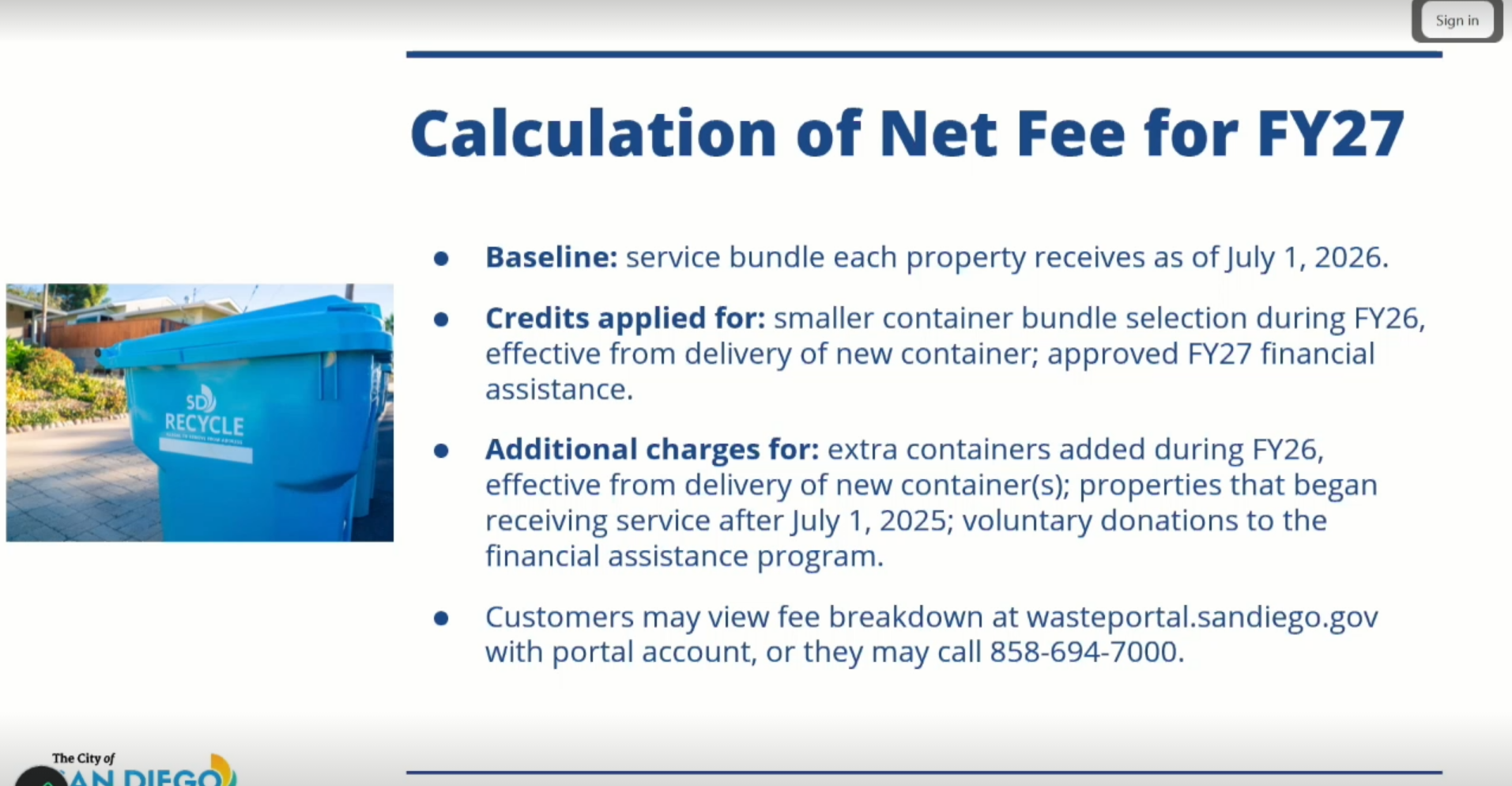
Photo Credit: The City of San Diego
The city faces a long-term money problem. According to the city's Independent Budget Analyst, San Diego can collect $1.71 billion in taxes, but the legal limit is $7.03 billion.
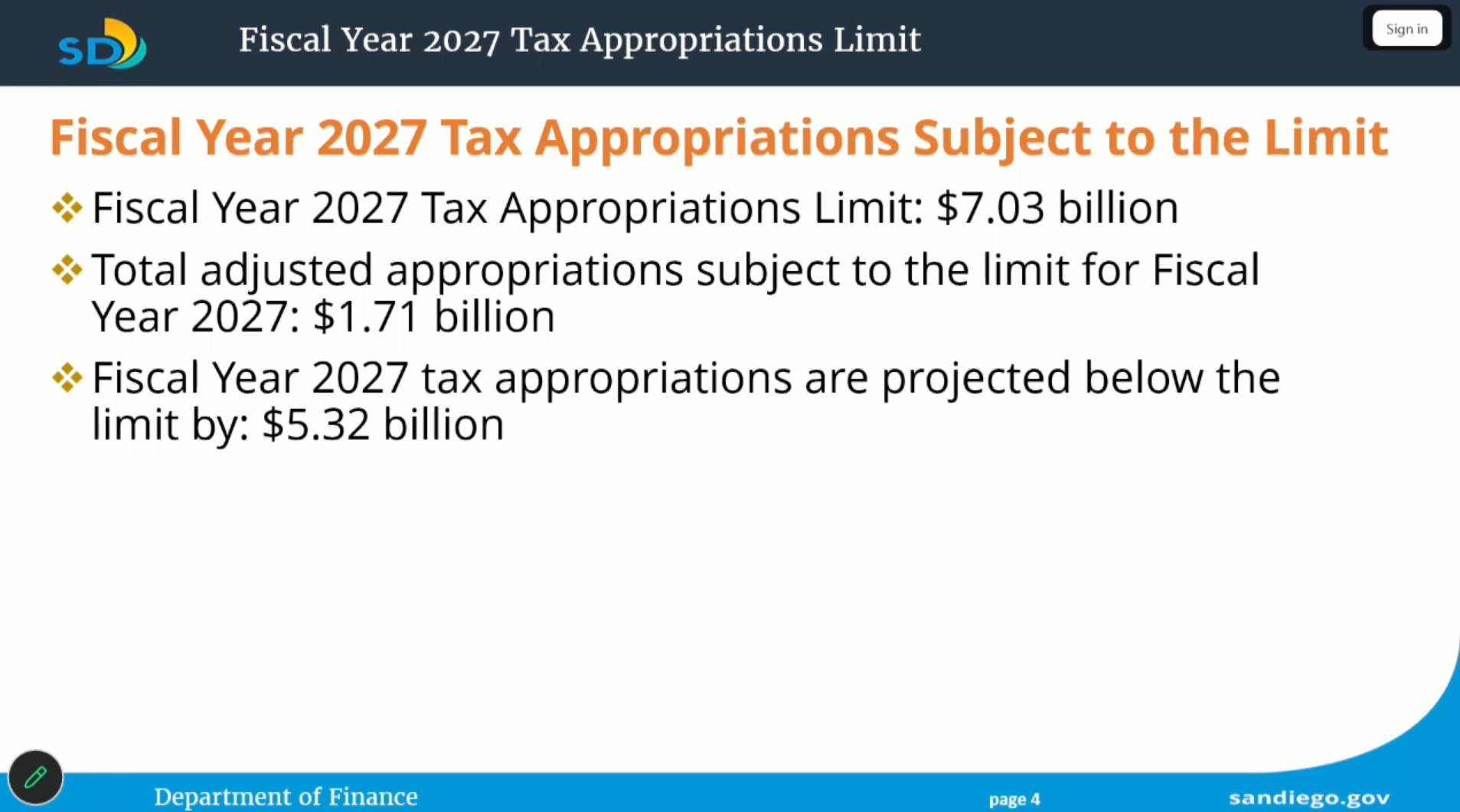
Photo Credit: City of San Diego
The analyst explained the gap.
"The $5.3 billion difference illustrate[s] that if the city's tax revenues simply kept pace since 1980 with growth in income, property values and population, the city would be collecting roughly four times the tax revenue that it does," the analyst said.
Councilmember Raul Rivera said the city needs to fix how it saves money and manages reserves to avoid future problems.
"It mostly starts to be a big budgeting problem if you have a lot of accounts with a negative fund balance," Rivera said.
The biggest concern during public comment was housing. Natalie Raskin told the council that over 1,600 people will lose rental assistance payments by Nov. 30.
"When the San Diego Housing Commission stops paying the rent subsidy, you will no longer be a CHC participant. There will be over 1600 people, a lot of them with children, that will be unhoused," Raskin said.
John Elliott criticized how the city spends money on homelessness programs. He said the people making decisions don't have real experience being homeless themselves.
"The lived experience that was mentioned is not what we would define as lived experience, which is somebody who has experienced homelessness within the last five to ten years," Elliott said.
Elliott also said the city spent money on surveillance cameras instead of helping people experiencing homelessness.
"That means we traded critically needed resources for our most suffering people to fund Flock, and that is completely unacceptable," Elliott said.
Other speakers raised concerns about government surveillance and police accountability. Anthony Ralphs thanked council members who voted against Flock surveillance technology and called for greater oversight.
"I'm concerned about police misuse of surveillance technology and the lack of accountability," Ralphs said.
The council unanimously approved the budget measures. While most of the agenda was procedural, public testimony showed frustration about housing stability, government transparency, and how the city spends limited money.
If you have any questions or comments about this article, message me at jenny.r@lead4earth.org.
0
0

Comments