(OPGOV GLOBAL) – Artificial intelligence was increasingly promoted as a way to address health care shortages in rural communities, but patients and researchers continued to question whether the technology could deliver on those promises without stronger infrastructure, local testing and safeguards.
Rural communities faced longstanding barriers to health care, including shortages of physicians and specialists, geographic isolation and limited medical infrastructure. AI-powered tools and telemedicine could help providers diagnose conditions, monitor patients remotely and connect people with specialists who may otherwise be difficult to reach.
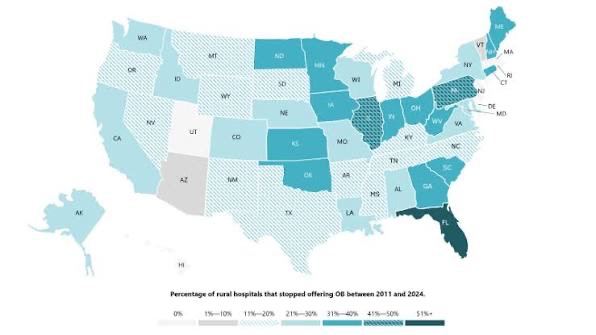
A map of the United States illustrates the growing loss of essential medical services across rural hospitals nationwide.
Photo Credit: Chartis/Website
However, recent research suggested that the benefits of AI in rural health care were not guaranteed.
A systematic review published in Healthcare in February 2025 examined research on the use of AI and telemedicine in rural communities. The review found that the technologies could improve diagnostic capabilities, support earlier detection of disease, and allow patients to receive consultations and follow-up care without traveling long distances.
The researchers also identified significant barriers, including limited broadband access, digital literacy gaps, privacy concerns, high implementation costs, and shortages of trained health care professionals. Evidence about whether the technology consistently improved clinical outcomes, patient satisfaction, and efficiency also remained limited.
The findings reflected a larger challenge facing rural health systems: The communities that could potentially benefit most from new technology may also have fewer resources available to implement it.
A 2026 study published in the Journal of the American Medical Informatics Association examined the state of AI research specifically in rural U.S. health care. Researchers identified only 26 studies that met their inclusion criteria after reviewing research published through April 29, 2025.
Fourteen of those studies examined predictive AI models, while 12 focused on data or research infrastructure. None examined generative AI models that had been trained, evaluated, or deployed in a rural setting.
The researchers also found that half of the studies identified a lack of data and analytic resources as a limitation. They concluded that research had not adequately established how AI systems could be reliably validated, deployed, and maintained in rural settings.
That distinction was important because AI models developed in large urban medical centers may not perform the same way when used in rural communities.
Patient populations and clinical practices can differ between locations. Rural communities may also have demographic, environmental, and health factors that are not sufficiently represented in data used to train an AI system.
Researchers warned that transferring a model developed in one setting to another could result in changes in its accuracy or reliability.
The issue was particularly relevant for rural hospitals and clinics that may not have the staff or technical resources necessary to retrain, evaluate, or continuously monitor an AI system.
The National Rural Health Association also identified infrastructure, workforce, and trust as major issues in its policy recommendations for AI in rural health care.
The organization said AI tools should not be viewed as substitutes for clinical judgment. Instead, they should function as decision-support systems within larger clinical and regulatory frameworks, with clear human oversight and responsibility.
The association also noted that rural residents could be hesitant to trust AI systems when the reasoning behind an algorithm was difficult to understand. Concerns about automation, surveillance, job displacement, and limited digital literacy could also affect whether communities accepted the technology.
Community involvement could therefore become an important part of AI implementation.
The National Rural Health Association recommended that rural communities participate in the development and evaluation of AI systems rather than having technologies designed elsewhere introduced without local input. It also called for rural-specific research, better data resources and programs that would help health care workers understand how to use AI.
The potential applications were broad.
AI could support remote patient monitoring, clinical decision-making, chronic disease management and early identification of patients whose conditions were deteriorating. It could also assist with administrative tasks such as documentation and clinical summaries, potentially reducing some of the workload placed on rural providers.
The National Rural Health Association identified radiology, dermatology and ophthalmology as areas where AI tools had shown potential, including applications involving skin cancer and diabetic retinopathy detection.

Funding disparities between urban medical centers and rural clinics create steep financial barriers to adopting advanced AI technologies.
Photo Credit: The Cornell Medicine Review/Website, Waverly Shi/Website
AI-enhanced telehealth could also help rural patients connect with specialists without requiring them to travel to larger medical centers. The 2025 systematic review found that combining AI with telemedicine could provide real-time decision support during virtual consultations and help expand access to specialized services.
But those applications depended on reliable technology.
Broadband access remained a basic requirement for many AI-enabled health services. The National Rural Health Association said reliable connectivity was necessary for telemedicine, real-time diagnostics, and cloud-based analytics, while many rural communities remained under-connected.
Rural facilities could also face outdated computer systems and limited IT support.
Without those foundations, simply providing an AI tool would not necessarily improve access to care.
The World Health Organization has similarly emphasized that AI in health care should be developed and adopted with safety, equity, governance and evidence in mind. WHO said AI was already being used in areas including diagnosis, clinical care, drug development, disease surveillance and health system management, but warned that technological advances should not become another source of health inequity.
WHO has called for governance structures and evidence-based standards to guide AI adoption and has developed guidance addressing ethical and regulatory issues surrounding health-related AI.
The concerns surrounding AI also extend beyond rural health care.
OpGov.News previously examined proposed AI use in mental health care in “Kaiser Permanente Proposes Use of AI for Mental Healthcare,” written by OpGov journalist Naomi Heinen, where health care workers and community members raised concerns about replacing human interaction and clinical judgment with automated systems.
Other OpGov.News coverage has examined the infrastructure required to support the rapid expansion of AI. “Charlotte’s Data Center Expansion Raises Questions About Energy, Water, and Growth,” explored how increasing demand for AI and cloud computing was creating new pressure on energy, water and other infrastructure.
For rural health care, infrastructure concerns extend beyond the availability of medical technology itself.
The National Rural Health Association said AI adoption would require investments in broadband, hardware, software, workforce training and cybersecurity. It recommended additional training for rural clinicians and IT workers, as well as research specifically designed for rural populations.
The organization also called for more representative data.
AI systems trained primarily on non-rural populations may fail to account for health conditions and circumstances more common in rural communities. The association recommended investments in de-identified rural health data and inclusive datasets that could be used to develop and evaluate AI systems.
Financial and legal questions also remained.
Rural providers may have fewer resources to absorb the cost of implementing new technology, while unclear reimbursement policies and liability standards could make adoption more difficult.
The National Rural Health Association recommended policies addressing reimbursement for AI-supported services, including remote monitoring, predictive analytics, and diagnostic support.
Those issues could influence whether AI becomes a practical tool for rural providers or remains concentrated in larger health systems with greater financial and technical resources.
The research did not suggest that rural communities should reject AI.
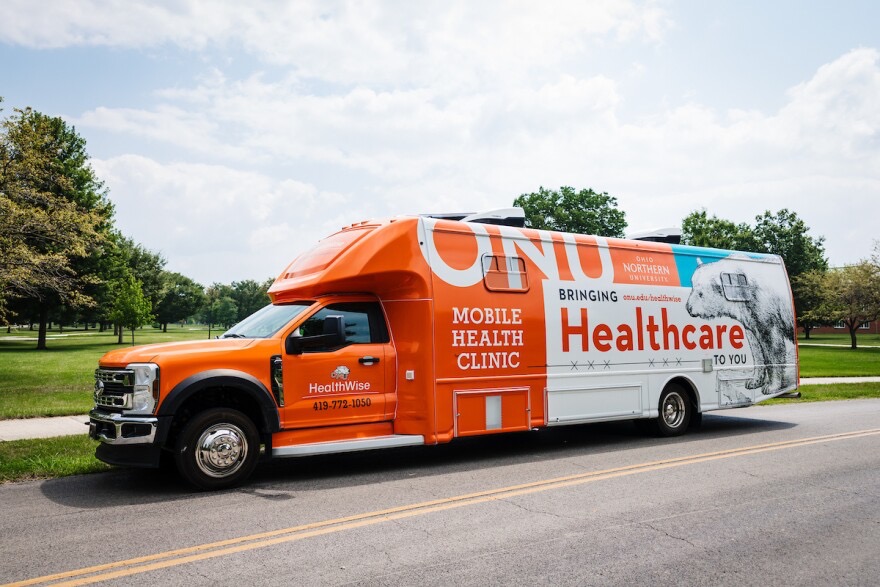
Mobile health clinics offer a practical model for extending medical services into rural communities facing digital and infrastructural divides.
Photo Credit: The Statehouse News Bureau/Website
Instead, it pointed to the need for more evidence about how the technology works in rural settings and whether it improves care for the people it is intended to serve.
The 2026 JAMIA review found that research had largely remained focused on developing AI models rather than studying how those systems could be implemented and sustained in rural health care. Researchers said there were clear gaps in understanding how to validate and maintain AI systems in rural settings.
The National Rural Health Association similarly said rural communities should be included in national AI strategies from the beginning rather than treated as an afterthought. Its recommendations included rural-specific pilot programs, workforce training, stronger data safeguards and community participation in AI development.
For rural patients, the debate therefore extends beyond whether AI can diagnose a disease or connect them with a specialist.
The larger question is whether the technology can be introduced without creating another divide between communities with access to advanced health care tools and those without it.
AI could provide rural clinicians with additional resources, help patients receive specialized care closer to home, and reduce some administrative burdens.
But researchers and rural health organizations have emphasized that those benefits depend on reliable infrastructure, representative data, trained workers, human oversight, and community trust.
As investment in health care AI continues, those factors could determine whether the technology becomes a meaningful tool for rural health care or another innovation that reaches rural communities after the systems needed to support it are already in place.
To add to or correct any information in this report, please contact me at victoria.o@lead4earth.org.
Thumbnail Photo Credit: In These Times/Website
0
0

Comments