(ROSEVILLE, Calif.) – As constituents across California begin to cast mail in ballots for the upcoming Nov. 3 elections, Roseville residents find themselves considering a city proposition. The bill facing Roseville is Measure A: Council Compensation Adjustment and Inflation Limitation. Current wages received by local city council members was last voted on in 2000. 26 years later, residents must now decide city council compensation should increase alongside its expanding responsibilities.

Photo Credit: City of Roseville / The Roseville Council Chambers where biweekly meetings are held.
What is Measure A?
Measure A proposes an increase in council compensation from the current $600 dollars a month to $2,550, accommodating annual increases reflected by an inflation at or below 5%. The raise initially appears drastic yet $2,550 reflects the amount set by the State for general law cities with populations similar to Roseville. As the measure stands, there would be no adjustment to welfare benefits, which do not include medical, dental, or vision care. The inclusion of the measure on the Nov. 3 ballot reflects the City’s Charter requirement that compensation must be publicly voted on.
Why now?
The city of Roseville has laid out statistics highlighting the reasoning behind the timely consideration over councilmember compensation.
When the $600 per month rate was approved, Roseville’s population had only just exceeded the 75,000 margin. A published fact sheet on Measure A shows the current city population now stands at 165,592, more than double what it was in 2000. Growing size indicates the expanding service the city council is tasked with upholding.
Mutually reflective of increased council obligations is the city’s current annual budget of nearly 1 billion dollars, nearly four times what it was 26 years ago. Adjusted for inflation, the increased fiscal requirements for optimal city functioning again indicates the complex work required for optimal city functioning.
Accruing to a yearly total 117,000 dollars, the proposed compensation would only require 0.13 percent of Roseville’s annual city budget.
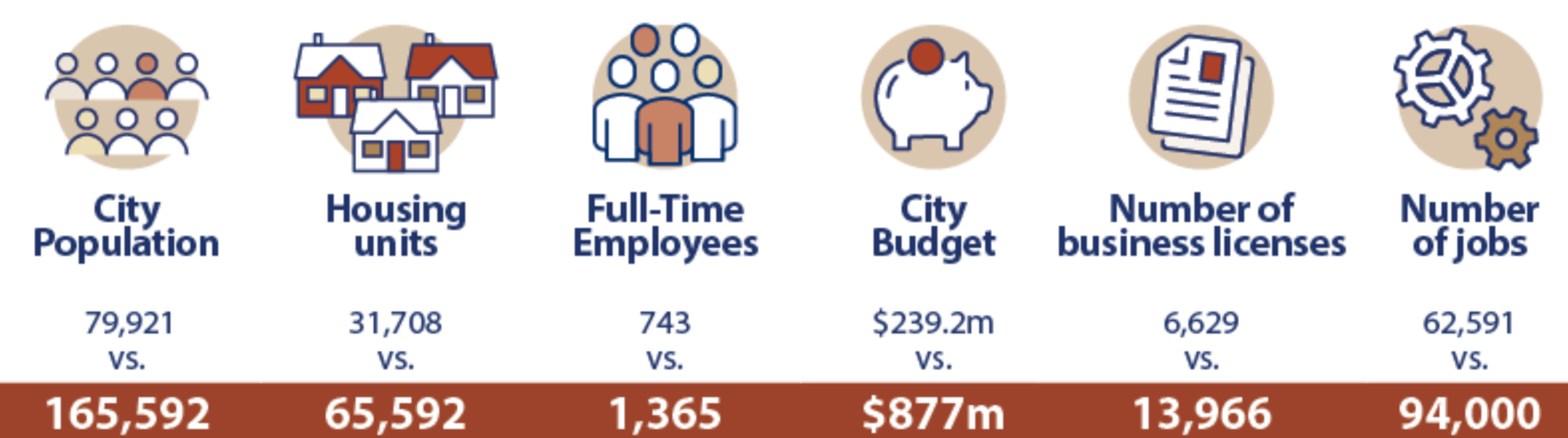
Photo Credit: City of Roseville / Graphic depicting Roseville’s changes (2000 vs. 2026)
In 2020 the Roseville Charter Review Commission had made a recommendation that a compensation increase be placed on the ballot, however, the council chose not to address the issue at that time.
OpGov.News spoke to Erin Dunlay, Public Affairs and Communications Manager for Roseville, who shared another impact which delayed consideration on the issue.
“The 2020 recommendation came during the beginning of the COVID-19 pandemic,” Dunlay explained. “Due to the unprecedented times and economic uncertainty, the Council did not feel it was appropriate to place a compensation increase on the ballot.
Beginning in March 2024, Roseville city council began holding meeting discussions on the issue. This fall, the measure was finally placed on the ballot. It should be noted that of the four out of five officials who voted for its inclusion, two council members are currently up for reelection and two others will term out within the next two years.
What are the arguments surrounding it?
Arguments for and against Measure A have been largely forwarded by former leadership representatives of the city.
Richard Roccucci, former Roseville Mayor from 1982 to 1984, has championed the opposition against Measure A. Roccucci believes economic concerns have, and continue to be, a reason for delaying adjustment to council pay. In his argument, Roccucci notes the measure should alternatively be included in the 2030 Charter review recommendations. He also shared particular dissatisfaction at the potential alignment of the city towards the proposed automatic annual increases other general law municipalities follow.
“Why this stand-alone charter amendment at this time?” Roccucci argues. “Do you want to surrender your rights as a charter city to state standards for general law cities?”
Other cases against the ballot proposition heavily revolve around dissatisfaction with the recent council leadership. Trevor Robinson-Wong, a local Parks and Recreation employee and Roseville resident, offered his reason for opposing the measure during the Oct. 7 Roseville city council meeting. Noting acknowledgement for public servants remaining underpaid, Wong expressed disbelief that the proposition reflects appropriate action regarding underrepresentation.
“[V]oters should consider this question before casting their vote for Measure A: Do you believe this council has done their job so well recently that they deserve a raise of this magnitude?” Wong queried. “Send the city a message and vote ‘No’ on Measure A.”
Wong also spoke at the latest Oct. 21 council meeting and offered a similar message for Roseville voters. Noting his last chance to comment before the Nov. 3 election, Wong again urged the city’s residents to “vote ‘No.’”
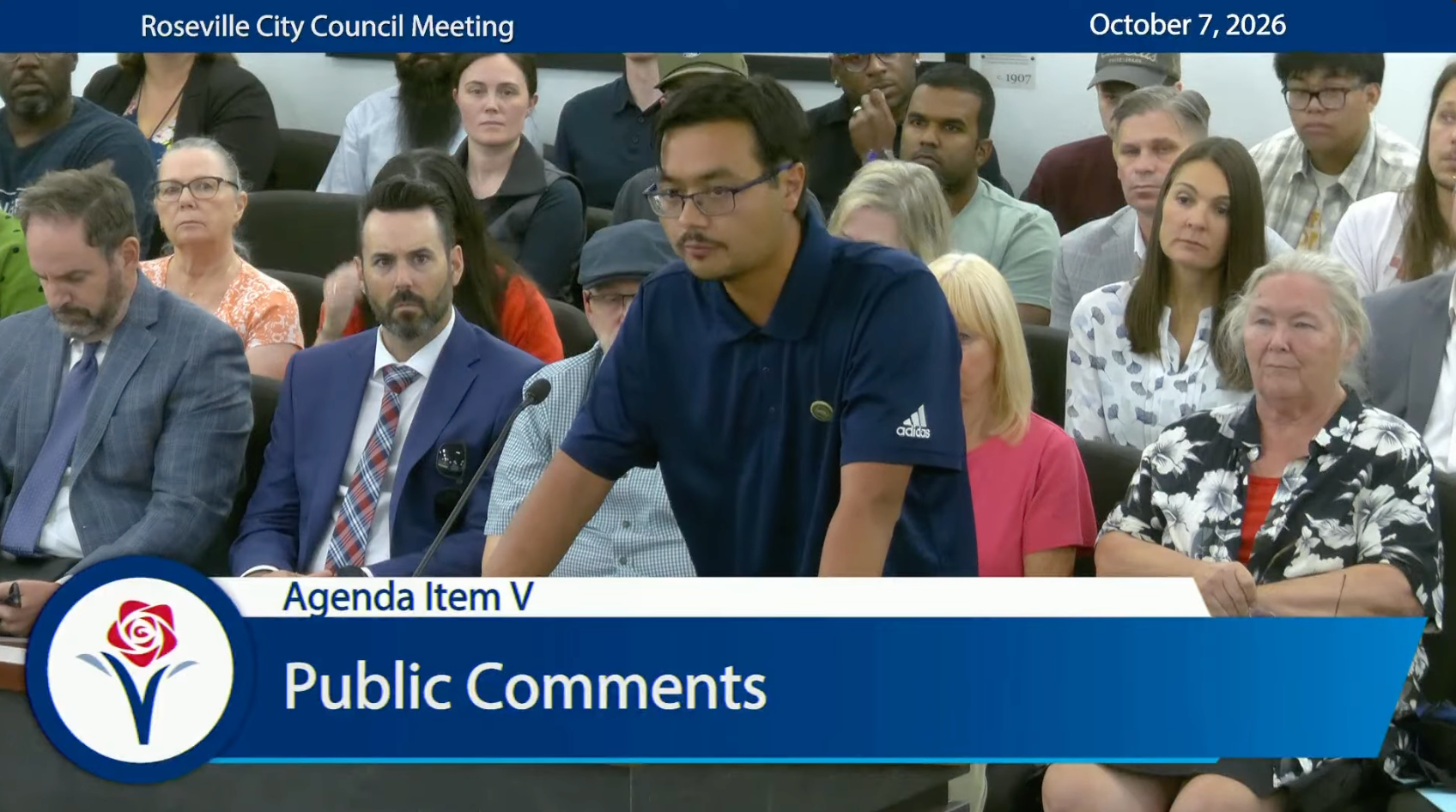
Photo Credit: City of Roseville / Youtube / Trevor Robinson-Wong shared his stance against Measure at the Oct. 7 city council meeting
Alternatively, the proposition has been forwarded by Carol Garcia, Roseville Mayor from 2014 to 2016. Supported by Ananda Rochita, Roseville’s Chamber of Commerce President and CEO, as well as David Breninger, former President of Sun City Roseville, the argument in favor rebuts the views of Roccucci and Wong by emphasizing the measure’s necessity in providing broader representation on a council tasked with increasingly demanding responsibilities.
“Unlike many cities that outsource electric, water, wastewater, fire, parks, transit, libraries, and housing services, Roseville operates these in-house,” Garcia, Rochita, and Brenginger argue.
“Updating Council compensation helps ensure working professionals, parents, and community members from more backgrounds can realistically consider serving Roseville, easing the financial strain public service requires.”
Ken Dell, city resident since 1998, advocated for the measure back at a city council meeting held on Aug. 19.
“I have seen [the city’s] growth and expansion and I understand that having strong leadership takes a lot of work,” Dell said. “I find that Measure A would be a good thing for city council members.”
Regardless of stance on the issue, decisions taken by Roseville residents remain highly reflective of sentiment on recent council leadership.
OpGov.News spoke to Rosanna Harmon, Roseville resident and anti-Flock sympathizer, who shared how she sees the council’s inaction to community consistent concerns over LPR technology as another factor impacting voter decisions on Measure A and the council member elections this Nov. 3.
“If you’re not going to engage or respond, that’s a no [on Measure A],” Harmon said. “We need people on the council who are going to listen.”
Whether or not a more receptive council will result from increased compensation, or whether it’s an undue economic strain remains the contention between both arguments surrounding Measure A.
Despite differences, constituents on either side emphasize mutual concern over Roseville’s welfare, be it through economic or Charter city considerations or desire for expansive community representation.
For Roseville residents who have completed their ballots and Measure A decision, Placer County offers information on where to find its 29 official drop box locations. Website information also includes addresses for Roseville’s voting centers, which open Oct. 24 or 31st and close Nov. 3.
If you’d like to add or correct anything in this report, feel free to reach out to me or leave a comment below. Submit Roseville tips and story ideas to Piper Aweeka at piper.a@lead4earth.org.
0
0

Comments