(PLEASANTON, CA.) – The Pleasanton Planning Commission met on May 27 to discuss whether to approve the construction of a residential building on the corner of Old Bernal Avenue and Augustine Street.
City staff opened the meeting by covering the details of the project and their recommendation on whether to approve it based on these details.
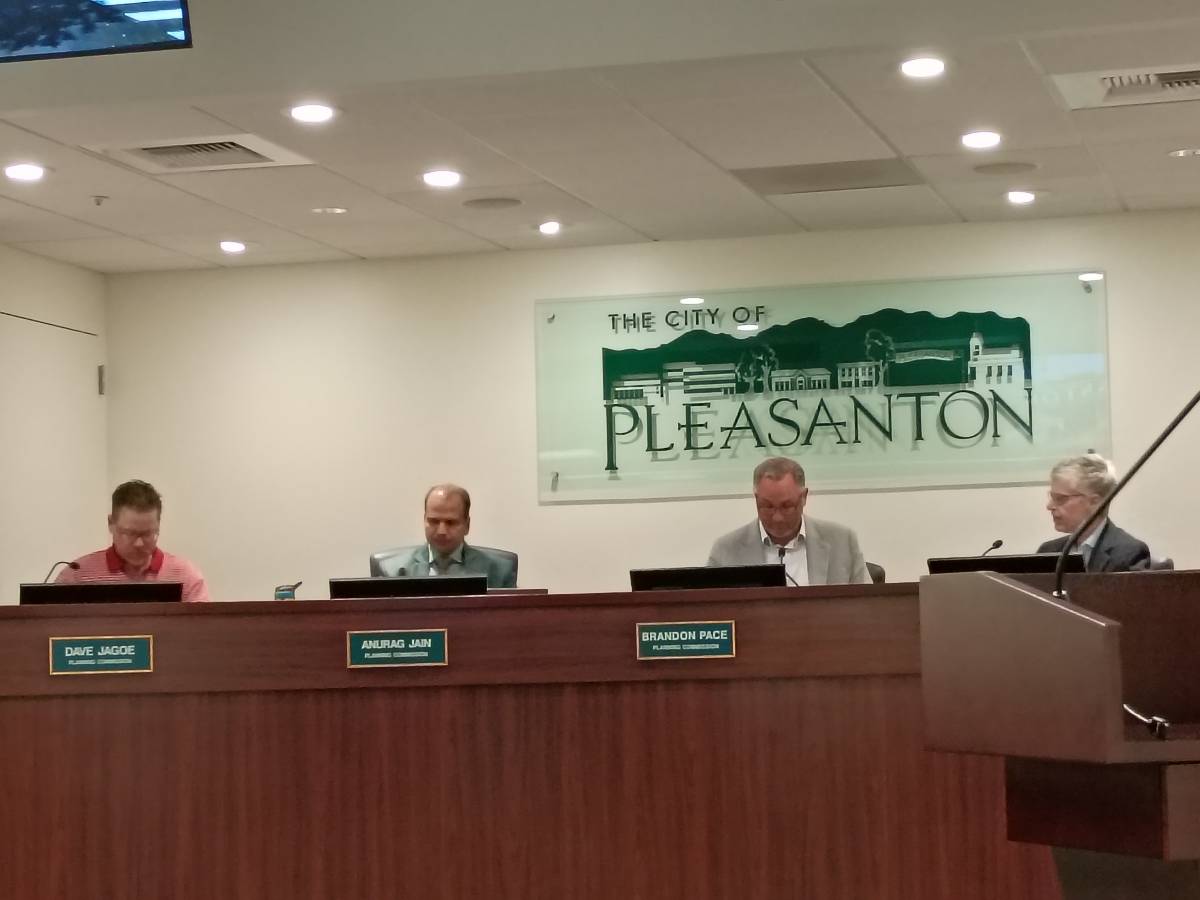
Photo Credit: Madison Vinas
The proposed project was one three-story, 34-foot high building that featured four residential units.
In order to proceed with this project, the applicant, a long time resident of Pleasanton, would have to receive a certificate to demolish the existing 5,160 commercial office building.
The property would also have to be rezoned from Mixed Use- Transitional (MUT) to Planned Unit Development-Mixed Use- Transitional.
After this short review of the project’s details, however, city staff reveals that the planned design and usage of the building is inconsistent with many standards and policies of Pleasanton and the state.
According to Pleasanton’s Downtown Specific Plan (DSP), the area that the project is in is intended to be used for both commercial and residential purposes, not purely residential.
Additionally, the current MUT zoning of the site limits structures to two stories at 30 feet tall.
The DSP also has requirements regarding the appearance of buildings in this area. For example, the primary entrance must face the street, and the building must include traditional downtown features like porches.
But these, too, are absent from the proposed project.
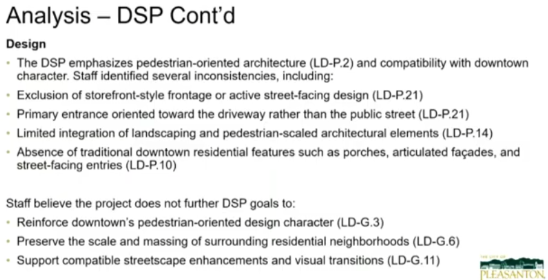
Photo Credit: YouTube / City of Pleasanton Public Meetings
City staff further clarifies that the site’s general plan imposes another requirement that the project does not meet.
“The minimum [residential unit] requirement for this site to be compliant [with the general plan] would be 10 units.”
Based on the many violations reviewed above, city staff recommended that the commission deny this project.
Recommended for and eventually granted approval, however, was a project in this city to construct three new wells as a way of combating harmful chemicals in the existing wells.
Following the presentation, city staff had no questions, and so they opened public comment.
Stepping up to the podium first was the applicant, who first claimed that he and his team had been collaborating with the Pleasanton planning department for a while at the time of speaking.
“[These things were] always disclosed to the planning department, [... and] it was always contemplated that this would not be exactly conforming to what the [land] use is.”
Continuing this claim that the team had been working closely with the planning department, the applicant made a second claim that the planning department was the one who suggested the project include four residential units.
He also explained that the planning department told them to remove the ground-floor office space they planned to construct in order to fulfill the requirement of including commercial space.
“It's a little bit disingenuous to list all those things as if we're a bunch of idiots who don't know what the rules are,” says the applicant. “These [plans] were a function of two years' worth of collaboration with the planning department. And the way that it's presented is as if we are trying to not comply.”
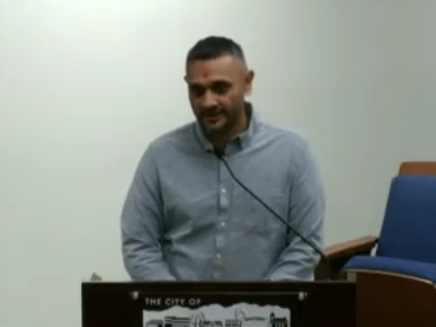
Photo Credit: YouTube / City of Pleasanton Public Meetings
But the commission and city staff were not the only ones who had their doubts about this project.
Pleasanton Resident Cara Valdez, for example, spoke during public comment to call for transparency in what this residential space was to be used for.
During a conversation with opgov.news before the meeting, Valdez explained that the plans for the project seemed to be appropriate for supportive or affordable housing.
Other cities, such as Livermore, CA., have seen some tension around the topic of affordable housing.
Clarifying that she had no objections to this type of housing, Valdez stated that she simply wanted to know what kind of residents were expected to live there.
During the applicant’s response time, he explained that the building was meant to house his multi-generational family.
Following public comment, the commission spent the remaining time further questioning the details of the project.
Ultimately, the commission only received answers that strengthened the idea that this project is non-conforming to many different policies and requirements.
Due to this, the commission voted to deny the approval of this project with three commissioners for denial and only one opposed.
To add or correct any information in this report, please contact me at madison.v@lead4earth.org.
0
0

Comments