(PLEASANTON, CA.) – The bulk of this week's meeting is centered around the Regional Groundwater Facilities Improvement Project.
In Sep. 2022, wells 5, 6, and 8 were put out of operation due to the levels of a harmful chemical group called polyfluoroalkyl substances (PFAS) exceeding government limits.
In order to make up for the water supply lost by the closing of these three wells, Pleasanton seeks locations to open new wells. The three locations they settled on were Del Prado, Tennis, and Hansen park.
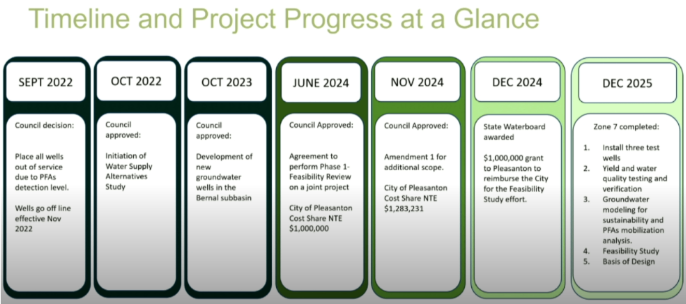
Photo Credit: pleasantonca.portal.civicclerk.com
After selecting the new locations for and drilling the wells, Pleasanton moved forward in partnership with Zone 7 in order to test the functionality and water quality of these wells. Taking these things into account, Utility Planning Manager Todd Yamello presents a feasibility study to the city council.
According to Yamello, proceeding with the overall project is feasible, all three wells meet PFAS level requirements, and the most optimal and preferred plan for moving forward would be to commit to opening wells at Tennis and Hansen park.
Council member concerns mostly revolve around PFAS and other harmful substances that could potentially contaminate the wells.
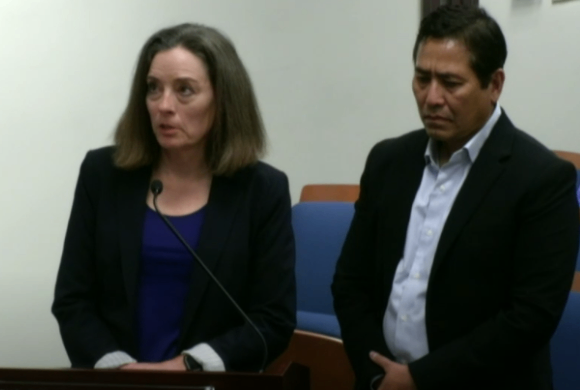
Photo Credit: pleasantonca.portal.civicclerk.com
Zone 7 General Manager Colleen Winey reassures the council multiple times that PFAS contamination has been thoroughly tested for and meets city requirements.
“We already have chemicals at that site and we have all of the necessary chemical containment facilities, emergency procedures, [and] spill containment procedures,” she states, “[...] safety would be number one and we’d make sure that we’ve followed all required safety practices.”
The city council concludes this item by expressing their appreciation for Zone 7 partnering with Pleasanton in the construction and testing of these wells. However, the item was purely informational, meaning further discussion and voting on the topic will take place in a separate meeting.
The next item in the meeting is a proposal to raise Pleasanton’s Transient Occupancy Tax (TOT) from 8% to 12% over the next two years.
The TOT, also known as the hotel tax, is a tax paid by people staying in hotels. According to city staff, Pleasanton currently has one of the lowest TOTs in the area.
Additionally, raising the TOT from 8% to 12% would not affect customer bookings, as they do not compare TOT rates between cities. They only compare the booking rates, which is the first number customers see when booking hotel rooms; the TOT comes after.
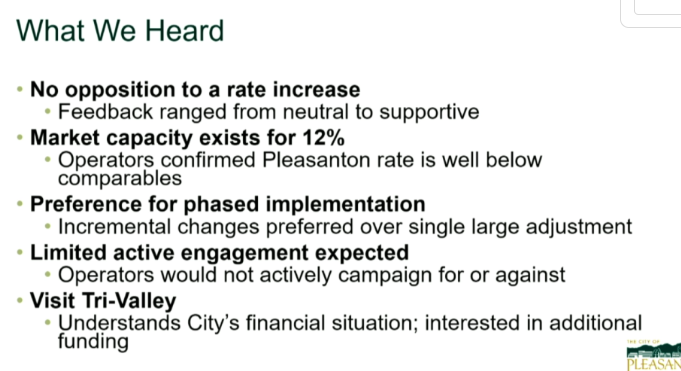
Photo Credit: pleasantonca.portal.civicclerk.com
City staff asserts that moving forward with the tax increase would also help remedy some of Pleasanton’s ongoing annual structural budget deficit.
When Council member Jeff Nibert questions why city staff recommends a gradual increase, the city staff answers by taking into account the neutral opinions from hotel owners.
“[We] think this was a way for us to collaborate with our hotel partners acknowledging that there is a financial need in the city. We want to be supportive of the rate of change that was acceptable to the hotel industry and that's why we arrived at the two percent in year one and another two percent at the following year approach”
This discussion ends not in the entire passing of the tax raising, but city staff is permitted to begin drafting the ballot language for this matter. Further discussion and voting will take place at a later date.
A number of Pleasanton residents speak about their own personal concerns during the meeting as well.
Brian Jenkins, a veteran of a foreign war, expresses his deep concern over Immigrations and Custom Enforcement (ICE) coming to Pleasanton. He poses a question to the council: What is the Pleasanton police department doing to prepare for the arrival of ICE and to protect its citizens?
Concerns regarding ICE have been prevalent also in the neighboring city of Dublin, CA. and California’s capital, Sacramento, CA.
Both Jan Coleman Knight and Julian Song step up to the podium in order to express their discontent regarding the suspension of the Civics Art Commission’s meetings, as their meetings have been suspended since April 2025.
If you have any questions, please email me at madison.v@lead4earth.org or comment below.
0
0

Comments