(PENSACOLA) --- The Pensacola Planning Board is protecting public input in right-of-way (ROW) vacations.
At the May 12 meeting, members rejected streamlining ROW vacations directly to the Pensacola City Council, stressing the importance of public input and Planning Board transparency.
The ROW vacation, which sounds complicated, involves determining whether a portion of land not needed for travel or utility use can be returned to property owners.
While many ROW vacations are not large, Chair Paul Ritz made it clear some are as large as 60 by 120 feet, "the size of other people's piece of property."
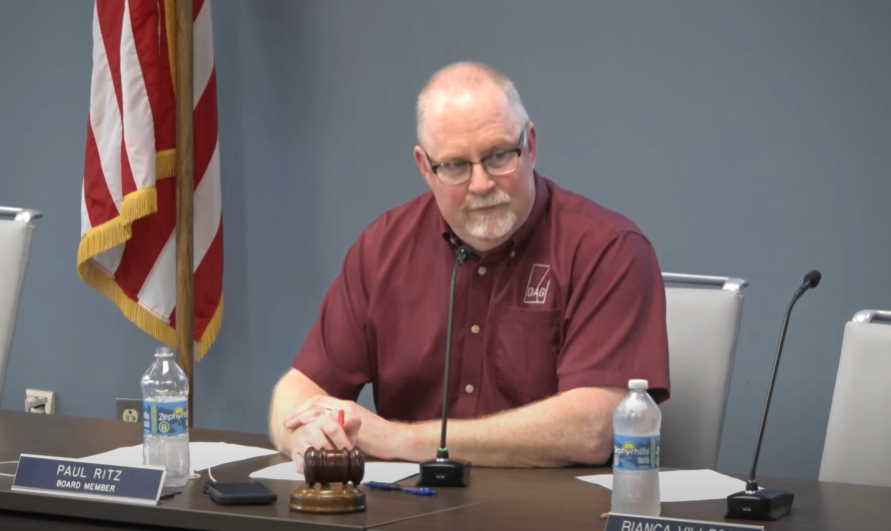
(Photo: Chair Paul Ritz shares transparency concerns regarding public input on right-of-way vacations)
"I would suggest that in those cases, citizens should be afforded the opportunity to talk about that in an open forum prior to the city council," Ritz said.
The reason size matters to Ritz is that if one blocks a length vacated and offered to a property owner, it puts the property on the tax roll and benefits the government. In contrast, others say the government benefits from citizens releasing their property.
"My point is just transparency," Ritz said, adding that a size threshold may be the answer.
Experience proves transparency matters.
"We've been through this several times, seen some citizens take issue with the giving away of property," Ritz said. "Sometimes I just think they like to have opportunities to voice their opinion."
Board member Danny Grundhoefer agrees.
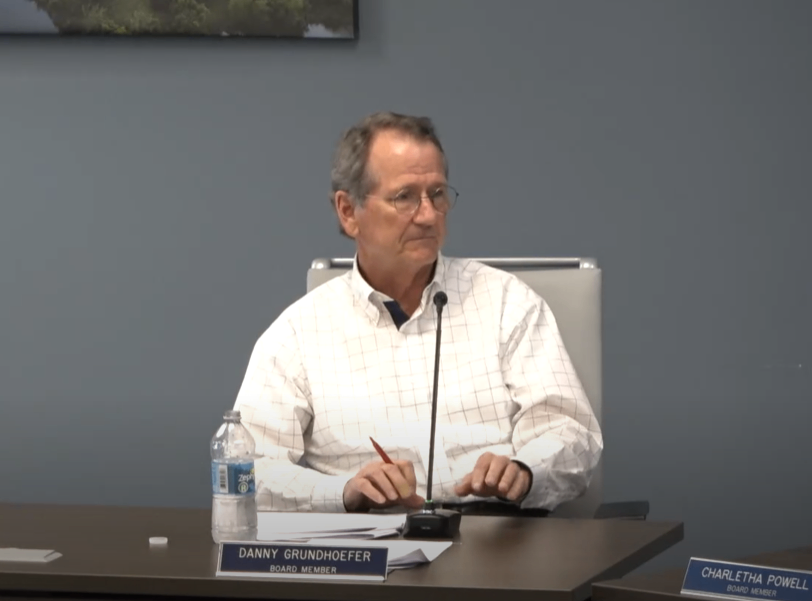
(Photo: Planning Board Member Danny Grundhoefer echoes public input concerns on right-of-way vacations)
"I echo what you were saying about public input for any proper city property that's going to be deemed to or going to be transferred to private ownership," Groundwater said. "And I feel like the public should be involved in that."
Ritz resolved ROW vacations, discussed them again before reaching consensus, and then took a vote.
The Land Development Code (LDC) Phase Two update was discussed at length during the two-hour-long meeting, with the board noting three hot topics: lot grading, missing middle housing, and building height, all intended to balance development with community impact.
After much discussion, lot grading, which includes stamped civil engineering designs and as-builts, now requires that 5% of the lot size, or 400 sq ft of the "disturbed area," whichever is smaller, be met.
To prevent monolithic building structures, the language of missing middle housing was reduced during the meeting, now allowing townhouses in medium-density districts from "up to four units" to "up to two units."
In the middle housing discussion, Accessory Dwelling Units (ADUs), a recent topic among the Affordable Housing Advisory Committee, were brought up but deferred for public workshop.
Resident Colin Gold challenged the board on steep roofs.
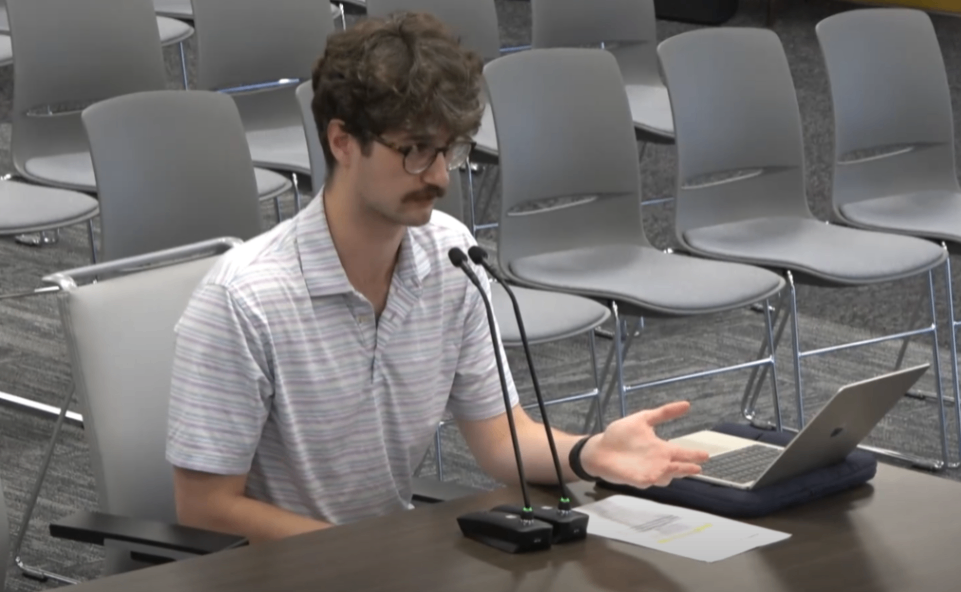
(Photo: Chris Gold challenges Planning Board members on building height, living space affordability)
"I feel like it is another little cut that cuts down on the ability for homebuilders and people who want to add more area into our community, and it would reduce their ability to do that," Gold said.
His concern is directly related to living costs.
"I would be living on one of those half floors or half spaces, and it is more affordable for me because of that, so my concern is for other people in the community who won't have the ability to be in those kinds of spaces because of rules like this," Gold said.
As far as aesthetics, Gold suggests a slope restriction might be more appropriate than a rule that effectively limits both steepness and height.
No final action was taken on any discussions; board members approved moving the matters forward before making a motion to pass to the city council.
1
0

Comments