(OPGOV GLOBAL) – North Carolina health officials reported a seasonal increase in cyclosporiasis cases as the Centers for Disease Control and Prevention (CDC) continued investigating a multistate rise in the foodborne illness without identifying a single contaminated food source.
The North Carolina Department of Health and Human Services (NCDHHS) said the increase reflected the state's typical summer pattern for cyclosporiasis, an intestinal illness caused by the parasite Cyclospora cayetanensis.
While state officials encouraged residents to take precautions when handling fresh produce, the advisory also came as the CDC, U.S. Food and Drug Administration (FDA), and state health departments worked to determine whether reported illnesses across the country were connected.
Unlike many foodborne outbreaks that can be traced to one recalled product, investigators had not identified a single food item responsible for the increase in cyclosporiasis cases.
According to the CDC, the ongoing investigation may involve multiple contamination events or unrelated exposures, making it more difficult to determine whether illnesses originated from one source or several. Without a confirmed source, federal officials had not issued a nationwide food recall.
The investigation also presented unique challenges because cyclosporiasis symptoms often do not appear until about one week after a person consumes contaminated food or water. By the time patients become sick, investigators said, many people struggle to remember exactly what they ate, and suspected food products are frequently no longer available for testing.
Cyclosporiasis is caused by the microscopic parasite Cyclospora cayetanensis, which spreads through contaminated food or water. According to NCDHHS, the illness is not commonly spread directly from person to person because the parasite must mature outside the human body before it becomes infectious.

A highly magnified microscopic view showing the distinct structure of Cyclospora cayetanensis oocysts.
Photo Credit: CDC
Historically, Cyclospora outbreaks have been associated with fresh produce, including cilantro, basil, leafy greens, berries, and other fruits and vegetables that are often consumed raw.
However, the FDA said investigators had not confirmed a specific produce item responsible for the current increase in reported illnesses.
According to Wake County Public Health, common symptoms include watery diarrhea, stomach cramps, nausea, bloating, fatigue, loss of appetite, weight loss, and low-grade fever. While some people recover without complications, untreated infections can last for several weeks or return after symptoms temporarily improve.
The illness can also place vulnerable populations, including older adults and individuals with weakened immune systems, at greater risk of complications related to dehydration.
Wake County health officials encouraged residents to continue eating fresh fruits and vegetables while following recommended food safety practices. Officials advised consumers to wash produce thoroughly under clean, running water before eating, cutting, or cooking it, even if it will later be peeled.
They also recommended washing hands before preparing food, separating produce from raw meat, and refrigerating perishable foods promptly.
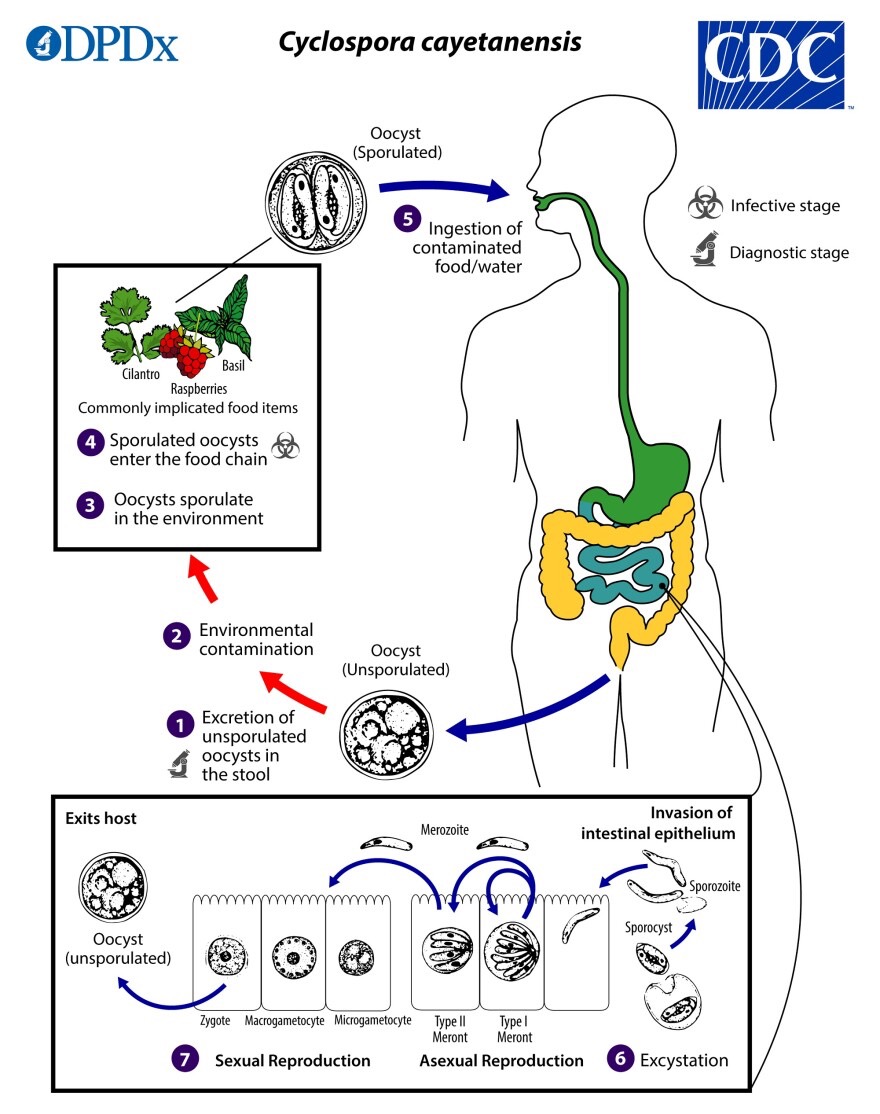
The official CDC life cycle diagram illustrates how Cyclospora cayetanensis moves from environmental contamination to human ingestion.
Photo Credit: Public Radio East
The current investigation has also highlighted the complexity of foodborne disease surveillance in the United States.
Unlike bacterial illnesses that can often be genetically linked through laboratory testing, identifying the source of Cyclospora infections frequently depends on patient interviews, purchase histories, and traceback investigations conducted by federal and state agencies.
Because fresh produce has a relatively short shelf life and symptoms may take days to develop, investigators often face significant delays before enough information becomes available to identify common exposures among patients.
Similar concerns surrounding the growing number of cyclosporiasis cases were examined in a previous OpGov.News health coverage, including "How Dangerous is Cyclosporiasis, and Is There an Outbreak Near You?" by Jason Fearon. That report explored the broader nationwide increase in cases and the challenges public health officials faced while investigating potential sources of contamination.
Broader public health policy affecting patients has also been covered by OpGov.News. In "States Find Bipartisan Agreement on Medical Debt Reforms as Millions of Americans Face Financial Strain," examined how states have sought to reduce financial barriers to medical care, an issue that can affect patients requiring treatment or hospitalization for severe foodborne illnesses.
According to NCDHHS, individuals experiencing prolonged diarrhea or other persistent gastrointestinal symptoms should contact a healthcare provider. Diagnosis requires specialized laboratory testing, and most infections can be successfully treated with the antibiotic trimethoprim-sulfamethoxazole (TMP-SMX).
Federal and state health officials said the investigation remained ongoing as additional illnesses continued to be reviewed.
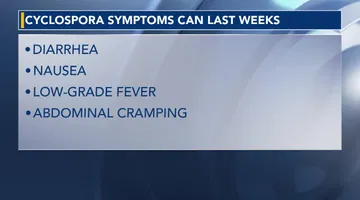
A local news graphic outlines the primary symptoms associated with Cyclospora infections, noting they can persist for several weeks.
Photo Credit: WRAL
Until investigators determine whether reported cases share a common source, public health agencies said practicing proper food safety and seeking medical care for persistent symptoms remain the best ways to reduce the risk of serious illness.
To add to or correct any information in this report, please contact me at victoria.o@lead4earth.org.
Thumbnail Photo Credit: ABC News
0
0

Comments