(Tallahassee, FL.) - A sudden spike in cyclosporiasis has spread across 17 states in the past few months.
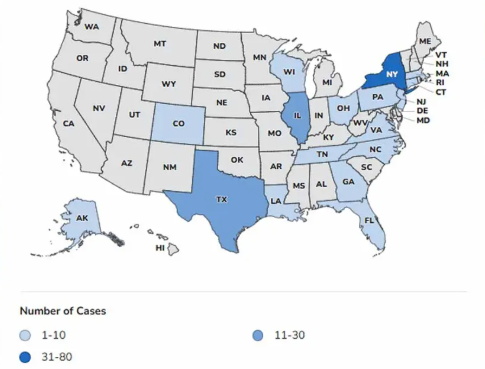
Photo Credit: FOX News
Cyclospora cayetanensis, the parasite responsible for the outbreak, is not new to America.
The disease is not traditionally contagious (human-to-human transmission), and the parasite is exclusively transmitted through contaminated feces. Trace amounts of stool have infected food and even pool water as the outbreak continues. cyclosporiasis is explicitly spread from stool to mouth, making transmission relatively rare.
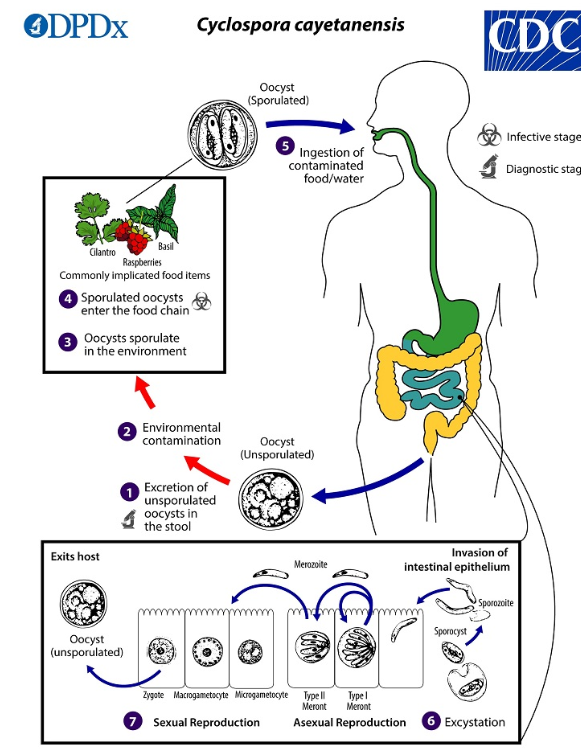
Photo Credit: Centers for Disease Control CDC
Florida has confirmed 46 cases within the past several months, with hundreds of infected people across the U.S. So far, the Centers for Disease Control (CDC) has confirmed 145 domestic cases, or patients verified to have acquired the illness in America. States have reported hundreds of infected patients, with over 700 cases in Michigan.
The disease has been reported in several Florida counties, including Alachua County, Polk County, and Miami-Dade.
Cyclosporiasis was first identified in 1977 and remained unnamed until the 1990’s, and was followed by a subsequent outbreak in North America. Unlike other well-known pathogens, cyclosporiasis is a single-celled parasite, leaving little room for evolution. According to the CDC, the spike in cases can be traced back to humid climates and an increase in imported produce.
Fresh-cut herbs like cilantro and fresh produce like raspberries and sugar snap peas are foods that have been suspected of transmitting the parasite in the past due to difficulty cleaning the parasite from the surface.
Cyclospora cayetanensis can survive on surfaces for months at a time, but needs time to mature. Only after approximately two weeks in a humid environment outside of a host can the parasite sporulate, or become infective.
Not only can the parasite survive for a prolonged time on surfaces, but the germ is also incredibly difficult to sanitize against. Chemicals such as chlorine, used to clean pools and drinking water, are largely ineffective against cyclospora. The cell can adhere to surfaces, and water is inefficient at washing it away.
Heat is the only reliable method of protection against the parasite, meaning fully boiling or cooking your produce may be necessary. The disease is resistant to low temperatures sustained by most at-home freezers, limiting protective options for consumers.
The most common symptom of cyclosporiasis is consistent diarrhea, which can cause other gastrointestinal symptoms. Fatigue, weight loss, and fevers are also reported as accompanying symptoms.
While the disease may go away by itself in healthy individuals, it can take between four and six weeks of extremely unpleasant symptoms before your body can naturally rid itself of the parasite.
Medical experts also stress hydration. Not only can the summer months become extremely humid, but cyclosporiasis alone can quickly drain victims of fluids, increasing the apparent danger.
Luckily, there are no reported deaths in America. Although it is possible to beat the disease without treatment, it is strongly recommended to seek medical attention if you believe you have contracted cyclosporiasis.
There are medical treatment options, but these should only be used as a last resort when the body's natural defenses are inadequate for fighting off infection.
If you have any questions or updates, please reach out to me at jason.f@lead4earth.org. Stay informed and be safe.
0
1

Comments