(CHARLOTTE, NC.) – Housing affordability, workforce opportunities, and childcare costs were among the top concerns raised during a June 2 special town hall meeting hosted by Charlotte City Council Member Kimberly Owens, where residents and city officials discussed challenges facing young people and families across the city.
Charlotte, which has a population of more than 964,000 residents, according to the U.S. Census Bureau QuickFacts data, continues to face rapid growth pressures tied to housing demand, infrastructure capacity, and affordability challenges.
Concerns about city spending priorities reflected issues raised in other Charlotte discussions. Earlier this week, OpGov.news reported "Balancing the Badge and the Budget" that residents and officials debated how municipal resources should be allocated among public safety, infrastructure, and community services.
The meeting brought together representatives from Charlotte-Mecklenburg Schools, city housing and workforce departments, and residents who raised concerns about rising costs, limited housing access, and uneven economic opportunity.
Housing affordability remained the central focus throughout the discussion.
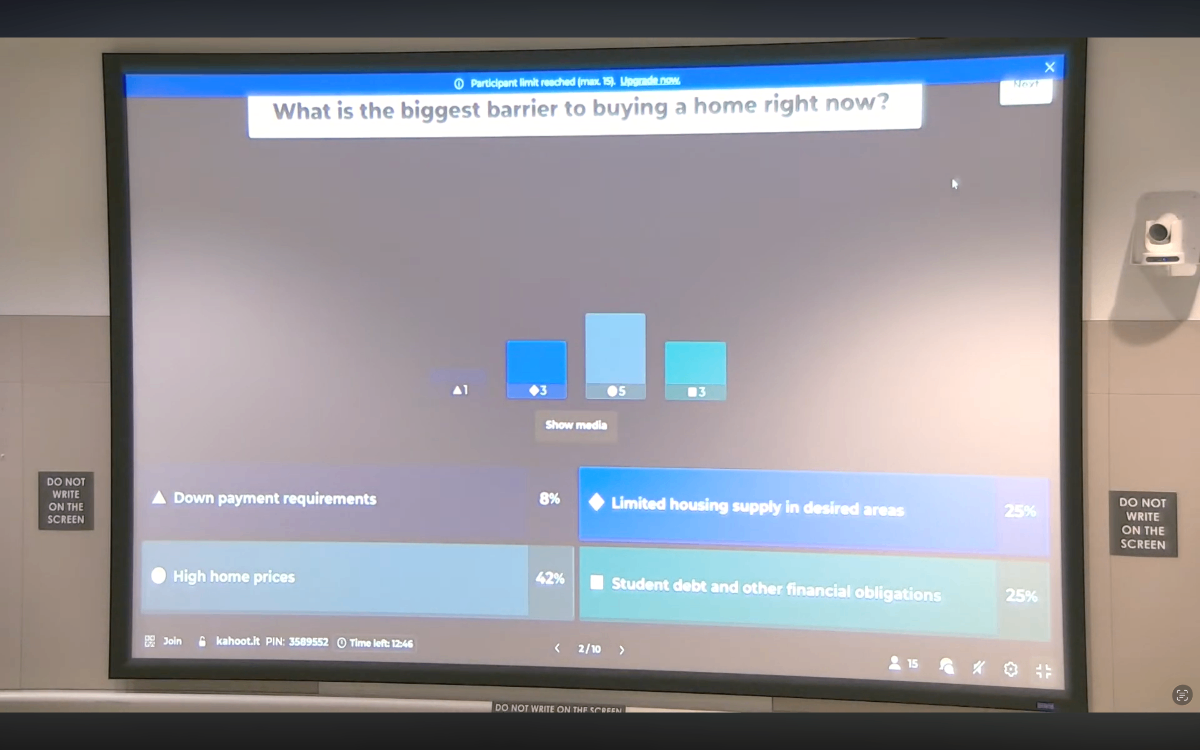
An interactive audience poll conducted during the session reveals that high home prices are perceived as the single largest barrier to buying a home in Charlotte.
Photo Credit: City of Charlotte/YouTube
City officials highlighted investments through the Charlotte Housing Trust Fund, which received approximately $125 million in funding. The allocation falls short of earlier proposals closer to $200 million, but officials said it will still support affordable housing development and homeownership initiatives across the city.
Discussions also included long-term housing supply strategies such as multifamily developments, single-family housing expansion, and accessory dwelling units, commonly referred to as ADUs.
Residents expressed concern that affordability challenges continue to affect seniors, veterans, and first-time homebuyers, particularly in high-demand neighborhoods where prices have increased faster than wages. Officials promoted assistance programs such as House Charlotte, which provides eligible buyers between $30,000 and $80,000 for down payments and closing costs.
Additional support is available through the North Carolina Housing Finance Agency’s Community Partners Loan Pool.
The discussion of housing affordability echoed debates taking place in other communities. In Pensacola, Fla., Angela Underwood reported in "Affordable Housing Committee Brings Back Accessory Dwelling Units" that local officials were revisiting accessory dwelling unit policies as part of broader efforts to expand housing options and address affordability concerns.
Childcare affordability was another major issue raised during the meeting.
State-level estimates show childcare costs remain a significant burden for families. According to Child Care Cost Finder, annual infant care in Charlotte exceeds $14,000, or more than $1,100 per month on average, depending on provider type and availability.
Some speakers suggested shifting additional funding toward expanding childcare supply rather than solely subsidizing costs, in order to increase available slots for working families.
Workforce development programs were also highlighted.
The Office of Youth Opportunities reported serving more than 2,000 young people through career development and engagement initiatives, along with more than 400 internship placements.
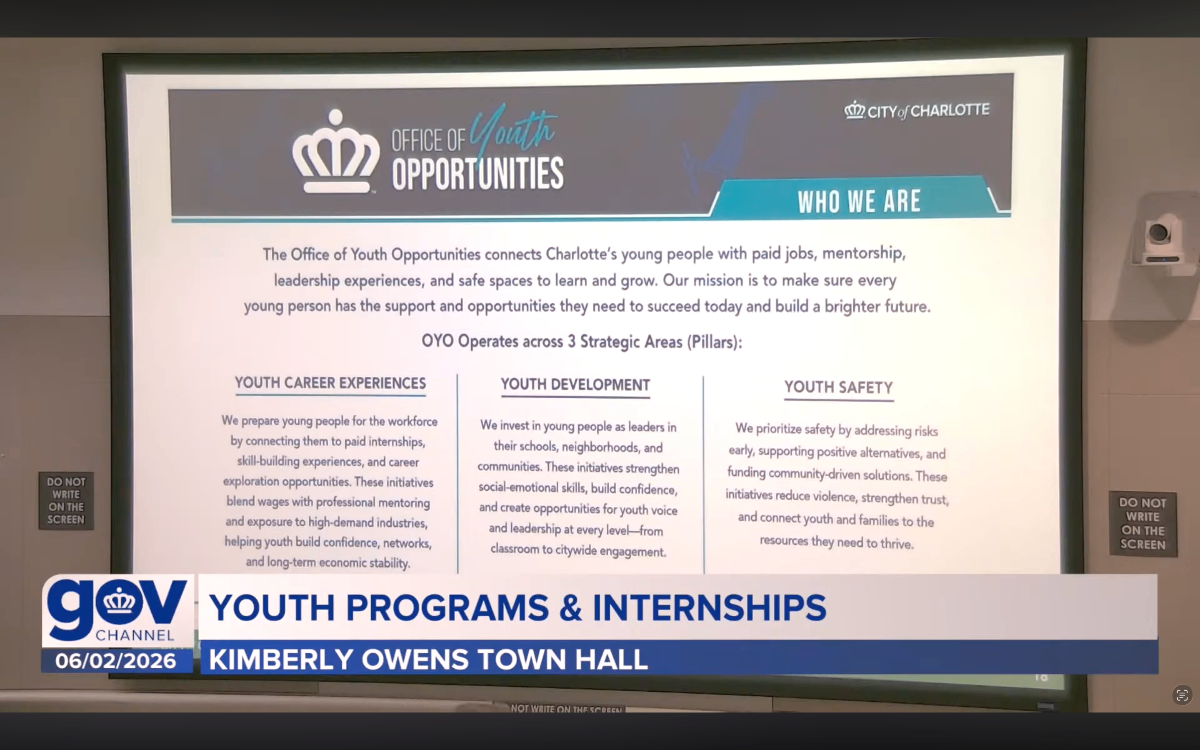
A presentation slide outlines the organizational identity and strategic pillars driving Charlotte's Office of Youth Opportunities.
Photo Credit: City of Charlotte/YouTube
Residents questioned whether outreach efforts are effectively reaching vulnerable populations and whether data collection could improve program access.
The Office of Workforce Development outlined apprenticeship programs and an Education to Employment initiative designed to connect Charlotte-Mecklenburg Schools graduates with job opportunities and reduce barriers linked to professional networks.
Education outcomes were also reviewed during the session.
Charlotte-Mecklenburg Schools officials reported that 89% of schools met or exceeded academic growth expectations in the most recent school year, while 31 schools were removed from North Carolina’s list of low-performing schools, according to North Carolina Department of Public Instruction accountability data and CMS reporting. Discussion also touched on classroom technology use, infrastructure needs, and socioeconomic disparities affecting student performance.
Transportation and civic engagement rounded out the conversation.
An audience poll conducted during the meeting identified higher wages, affordable housing, and equal investment across neighborhoods as residents’ top priorities. Participants also expressed support for expanded public transit options, including light rail, as well as safer infrastructure for pedestrians and cyclists.
The meeting concluded with concerns about civic participation after residents cited historically low turnout in municipal elections.
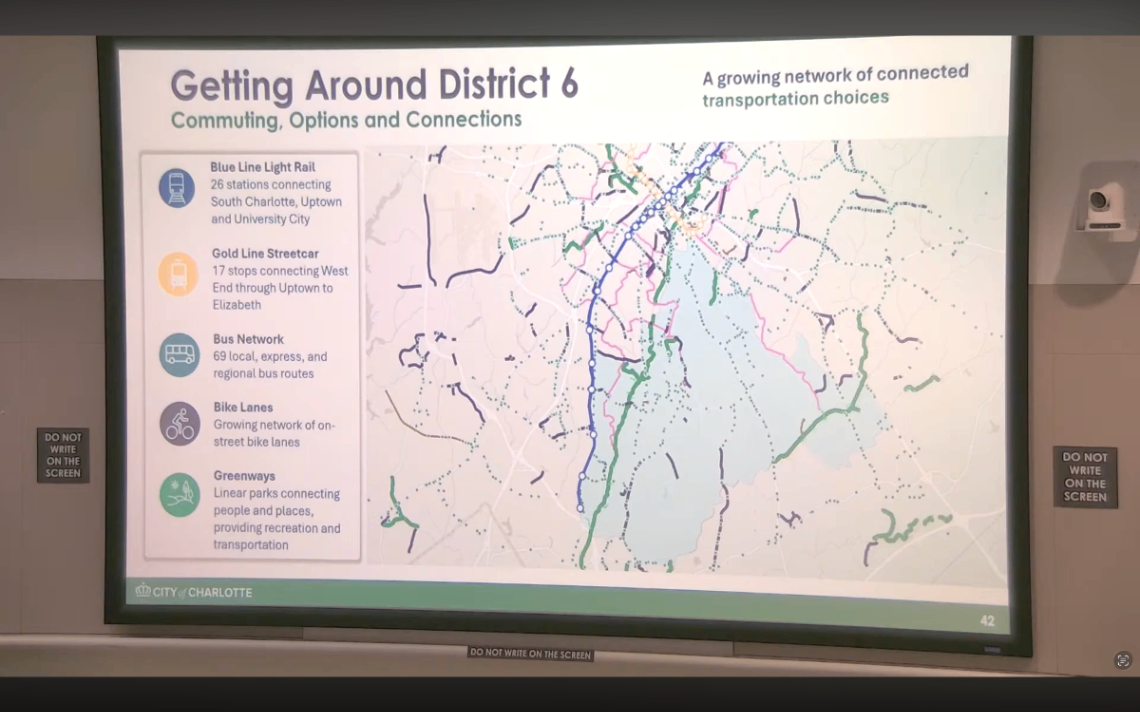
A transit map displayed at the town hall details the existing and proposed commuting network options connecting District 6.
Photo Credit: City of Charlotte/YouTube
City officials encouraged continued engagement but acknowledged ongoing challenges in increasing participation in local government decision-making.
To add to or correct any information in this report, please contact me at victoria.o@lead4earth.org.
Thumbnail Photo Credit: City of Charlotte/YouTube
0
0

Comments