(CHARLOTTE, NC.) – The Charlotte City Council approved a 10% pay increase for both police and fire departments during its FY2027 budget workshop, while advancing a series of funding reallocations, staffing additions, and policy adjustments that reflected ongoing debates over fiscal priorities and long-term planning.
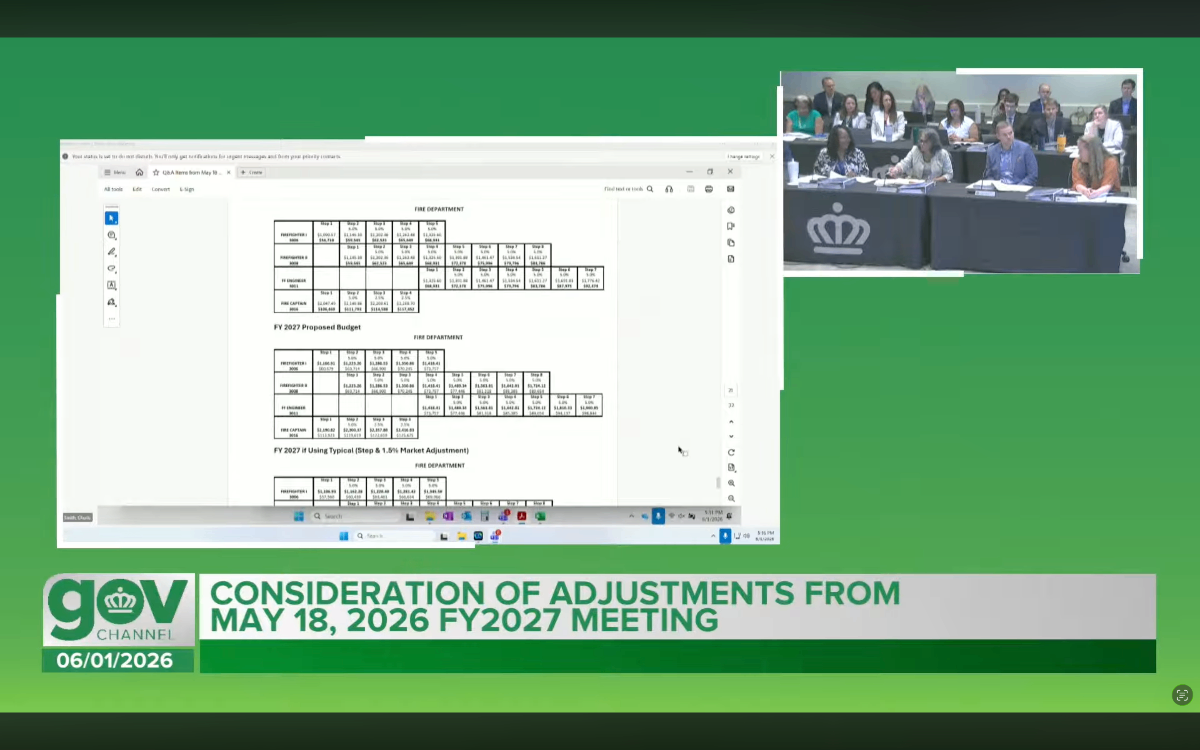
Proposed pay scales and adjustments for the fire department are displayed during discussions regarding public safety compensation parity.
Photo Credit: City of Charlotte/YouTube
The decision to achieve pay parity between police and fire compensation was one of the most significant outcomes of the meeting, which took place during the FY2027 City Council budget workshop. The increase was funded through reductions to proposed public safety technology investments and a decrease in the fire department’s overtime budget.
Councilmembers considered multiple compensation proposals before approving the final 10% parity increase.
Earlier motions for a 7% across-the-board increase and a 9% public safety increase failed, while a proposal for a uniform hourly worker increase was withdrawn.
Several members raised concerns about whether reallocating funds from technology and overtime budgets could create operational strain within public safety departments.
The compensation decision aligns with broader fiscal planning outlined in Charlotte’s proposed FY2027 budget, which includes investments in public safety, infrastructure, and mobility while maintaining a balanced operating framework supported by a multi-billion-dollar budget plan.
Financial partnerships were another major point of discussion.
Council members reviewed recommendations from the Financial Partners Committee and approved a substitute motion that upheld funding for seven organizations while directing one group, “For The Struggle,” to apply through a competitive Community Development Block Grant (CDBG) process rather than receiving direct allocation.
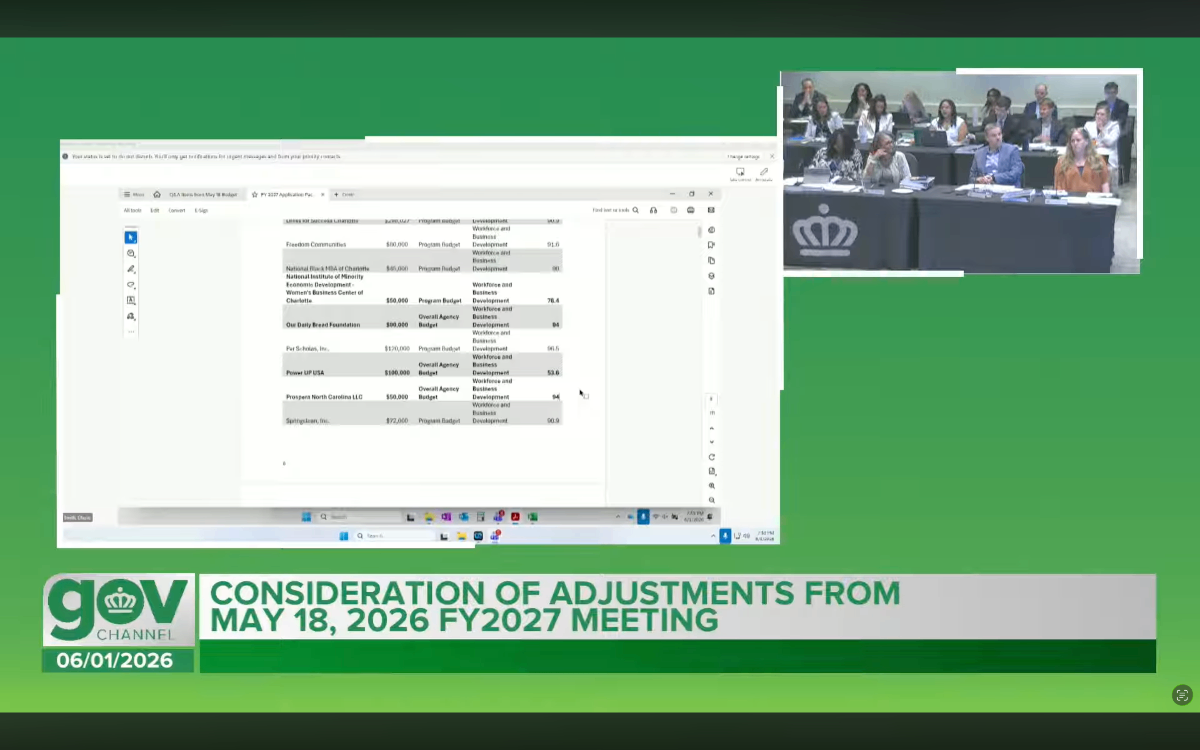
The council reviews grant recommendations and budget evaluations for community-focused financial partner organizations.
Photo Credit: City of Charlotte/YouTube
Procedural concerns over funding allocation mirrored issues raised in other municipal reporting, including in “City Council Forum Decorum Broken,” by Angela Underwood, where councilmembers navigated disputes over process consistency and public accountability during public meetings in Pensacola, Fla.
Later in the workshop, the council approved funding for a new International Relations Manager position within Community Relations, along with an additional administrative officer and operational support.
These roles will be housed in the Economic Development department. Councilmembers also approved a $300,000 transportation modeling partnership with the University of North Carolina at Charlotte, with milestone reporting requirements and future oversight.
That transportation initiative reflects broader mobility planning efforts included in the city’s FY2027 budget process, which prioritizes long-term infrastructure planning and regional transportation modeling to support continued population and economic growth.
Development and planning pressures discussed during the workshop also align with broader regional governance challenges, including coverage in “Fremont City Council Further Brainstorms Additions To Downtown And Solutions To Challenges,” by Madison Vinas, where officials similarly weighed structured planning processes against competing project-level demands in Fremont, Calif.
Additional policy actions included a referral to modify the city’s Modified Duty Positions policy, extending the maximum assignment length from five to 10 years, and a separate referral to explore expanded use of hospitality tax revenue for general fund expenses currently supported by other funding sources.
Housing policy remained another key focus as the council voted to maintain the Housing Trust Fund bond at $125 million, rejecting proposals to increase it to $150 million or $200 million due to concerns about potential property tax impacts. Council members also approved adjustments to animal care and control fees, including increases in adoption and spay/neuter fees expected to generate approximately $95,000 in additional revenue.
Infrastructure discussions included updates on the planned replacement of a $10 million helicopter hangar due to airport expansion. Officials noted the facility’s frequent use in public safety operations. The council also reviewed transportation modeling efforts tied to the UNC Charlotte partnership.
Throughout the workshop, councilmembers emphasized competing priorities between fiscal restraint, public service needs, and long-term capital planning.
While multiple initiatives were approved, discussions repeatedly returned to concerns about cumulative fiscal impact and the absence of a unified long-term budgeting framework.
Mayor Vi Lyles and Councilmember Victoria Watlington participated in deliberations throughout the session.
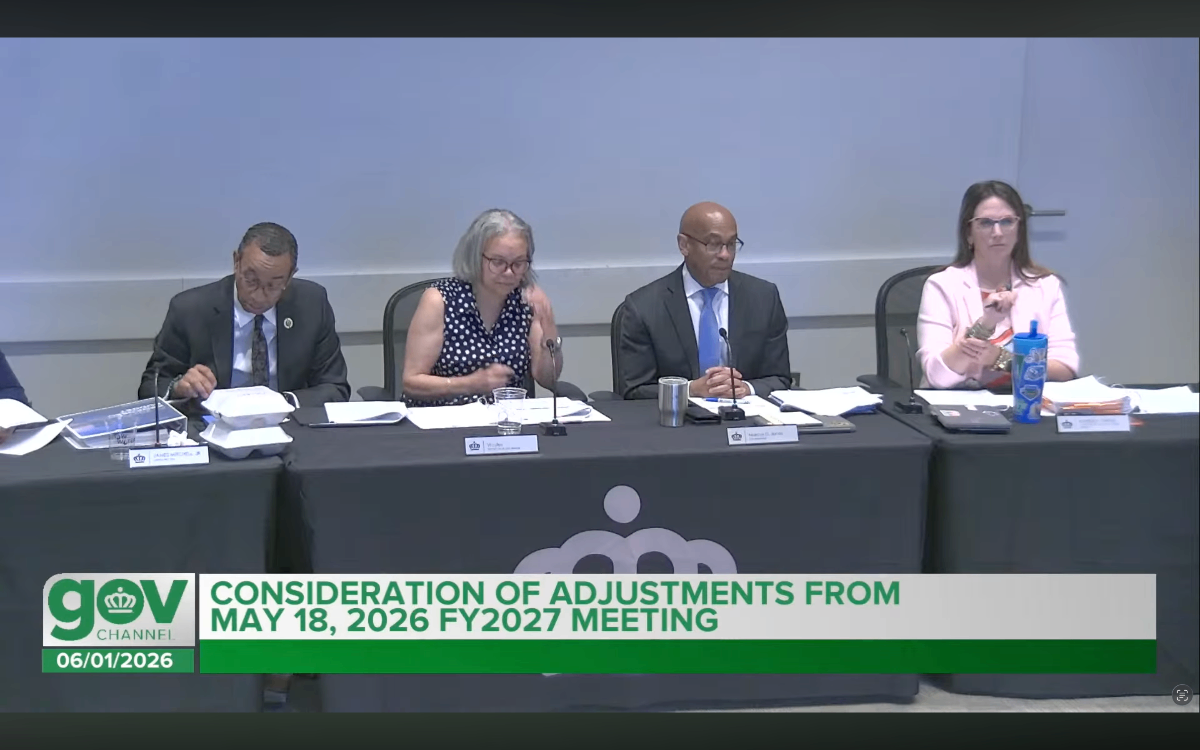
Mayor Vi Lyles and city leadership carefully review fiscal proposals and policy amendments during the workshop.
Photo Credit: City of Charlotte/YouTube
The FY2027 budget workshop ultimately advanced several initiatives while maintaining housing investment levels and adjusting funding streams across departments.
To add to or correct any information in this report, please contact me at victoria.o@lead4earth.org.
Thumbnail Photo Credit: City of Charlotte/YouTube
0
0

Comments