(FREMONT, CA.) – On May 19, Fremont’s city council met to discuss and receive an update on the development of their downtown area.
This discussion allowed the council to brainstorm additions to their downtown area as well as solutions to challenges mentioned in a presentation given by city staff just before, which is covered in a separate article.
Opening up the conversation, Councilmember Teresa Keng inquired specifically about the recent developments of the Fremont Hub.
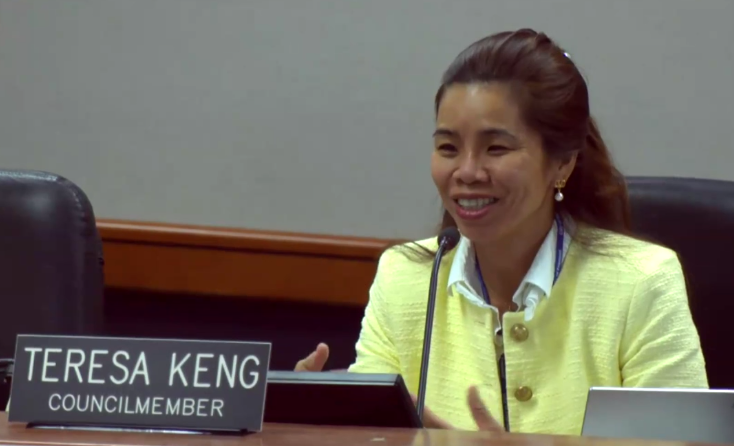
Photo Credit: https://fremontca.viebit.com/watch?hash=0a0o46177ECa6z0w
The Fremont Hub is an outdoor shopping district with various stores and restaurants.
Economic Developer Director Donovan Lazaro reported that while this shopping center received the entitlements, or the right to develop this area, new development is stalled due to the current economic conditions.
This type of roadblock became a recurring issue as other projects were brought up throughout the meeting.
Lazaro added that the current owner of the Fremont Hub, Kimco, expressed that the best thing the city can do to further develop the Fremont Hub would be to focus its efforts on and ensure the success of the Gateway Shopping Center.
This project, also owned by Kimco, is currently searching for financing with construction set to begin next year.
San Ramon, CA., is also set to redevelop one of its shopping centers after a three-year delay due to legal reasons.
Many other projects, including many along Capitol Avenue, which is the main street of Fremont’s downtown, are currently halted due to poor economic conditions.
These conditions have led to other problems, such as developers leveraging state law to get out of building what Fremont considers crucial commercial spaces, as doing so makes their projects less costly.
Mayor Raj Salwan attempted to address this challenge by asking how the city might allow these commercial spaces to be built using its local zoning or legal framework.
Community Development Director Joel Pullen pointed out that the local zoning and legal framework not only allows but requires full ground-floor commercial spaces in these projects.
Unfortunately for Fremont, state law offers developers a way out of this requirement.
“Developers routinely use things called waivers and concessions to take away the most costly parts of the project in order to show that they’re able to move forward more cost-effectively.”
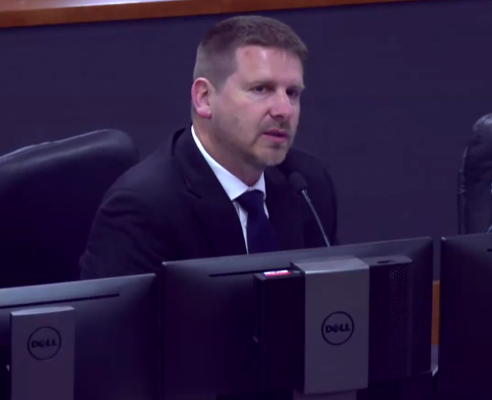
Photo Credit: https://fremontca.viebit.com/watch?hash=0a0o46177ECa6z0w
He also mentions that having commercial versus residential space is typically a loss for developers, which explains why so many use state law to opt out of building them.
Residential is favored over commercial spaces for other reasons as well. Such is seen in San Ramon, CA., where a recently sold shopping center will likely be redeveloped into housing.
Salwan then inquired whether the city may somehow incentivize the construction of commercial spaces.
Pullen cited the following possibilities in response:
Providing additional development capacity
Relieving developers of other development standards
Adjusting impact fees through fee programs
Following the council’s discussion, Fremont resident Vipin Sharma approached the podium during public comment to share his ideas and vision for Fremont’s downtown.
According to Sharma, one of Fremont’s strengths is its diverse population.
He believes that the city should leverage this by reflecting its diversity and offering cultural food, events, and activities daily in its downtown area.
“Downtown Fremont should build its identity based on Fremont’s strength, which is its diversity,” he says.
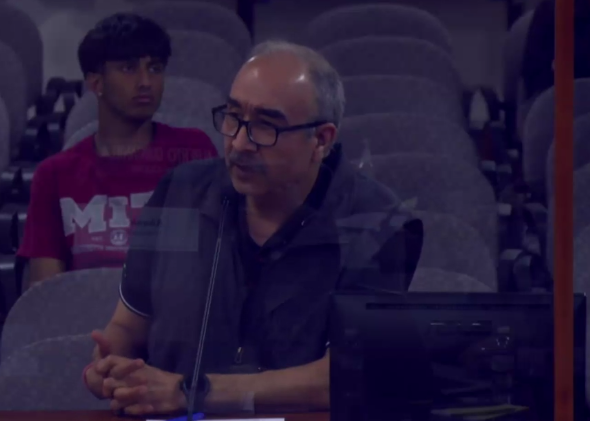
Photo Credit: https://fremontca.viebit.com/watch?hash=0a0o46177ECa6z0w
He supported his suggestion further by mentioning that residents are currently informed about downtown events through a calendar.
If someone misses an event, they would no longer have a reason to visit downtown.
If they know there are different foods and cultural activities offered on a daily basis, however, residents would know there is something to do or experience without having to check a calendar, he reasoned.
Later, during the final stretch of the meeting, council members shared their final comments on these matters.
Council member Yajing Zhang brought up the calendar previously mentioned by Sharma, claiming that it is inefficient and should be replaced.
In its stead, she suggests that the city offer a mobile alert of the events happening downtown.
One such event residents could be alerted for was suggested by Council member Kathy Kimberlin.
Citing her experience in hearing that residents desire more events aimed toward middle and high school students, she suggested that they have high school programs such as band perform in the downtown area.
To add or correct any information in this report, please contact me at madison.v@lead4earth.org.
0
0

Comments