(ESCAMBIA COUNTY, FL.) – The superfund site at 3910 North Palafox Street, known by locals as "Mount Dioxin", was once home to the Escambia Wood Treating Company (ETC) and was one of Florida’s longest-running Superfund cleanups. The facility was established in 1941, treating wood with creosote.
Starting in 1963, pentachlorophenol (PCP) was also used. After 1970, PCP was the only preservative used. The 26-acre facility treated utility poles, pilings, and lumber. Waste was dumped into unlined pits on site. No manufacturing happened after October 1982. The company then abandoned the property due to bankruptcy in February 1991.
In June 1990, contamination found under the nearby Agrico Chemical superfund site was traced back to ETC. In April 1991, the EPA began testing the ETC property. Testing found very high levels of PCP in the soil. Samples ranged from 88 mg to 320,000 mg. Other chemicals found included creosote, dioxin, benzene, lead, and arsenic. PCP was also found in groundwater. Dioxin in soil was measured at 544,000 times the safe exposure level. PCP was found as deep as 14 feet.
The EPA also found 55-gallon drums leaking asbestos around old boilers and leaking transformers from the treatment facility. Using emergency Superfund authority, the EPA began digging in 1991. The goal was to remove contaminated soil quickly. By November 1992, crews had excavated about 260,000 cubic yards of soil contaminated with PCP, creosote, and dioxin. The cost reached about $5 million.
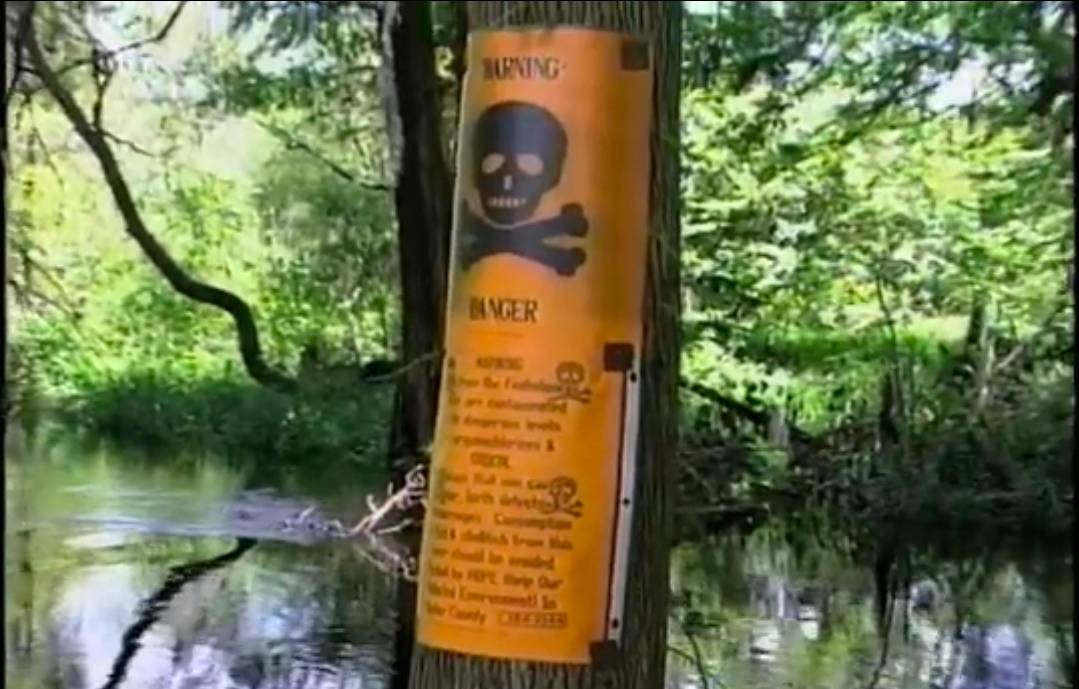
Photo Credit: Southern Voices for Change YouTube
Because treating all that soil would have cost an estimated $43 million, the EPA piled the soil on site and covered it with a vinyl tarp. The pile became known as "Mount Dioxin." The pile was about 30 feet tall. Security was limited, and children were later found playing on it. Residents reported dust and odors during excavation. Many locals reported health problems, including skin rashes, headaches, dizziness, and breathing issues.
In 1993, Margaret Williams, a community member who lived on the old ETC property, founded CATE, Citizens Against Toxic Exposure. CATE was instrumental in the fight the community fought for the relocation and superfund declaration for ETC. The EPA added the Escambia Wood Treating Company site to the Superfund National Priorities List in December 1994.
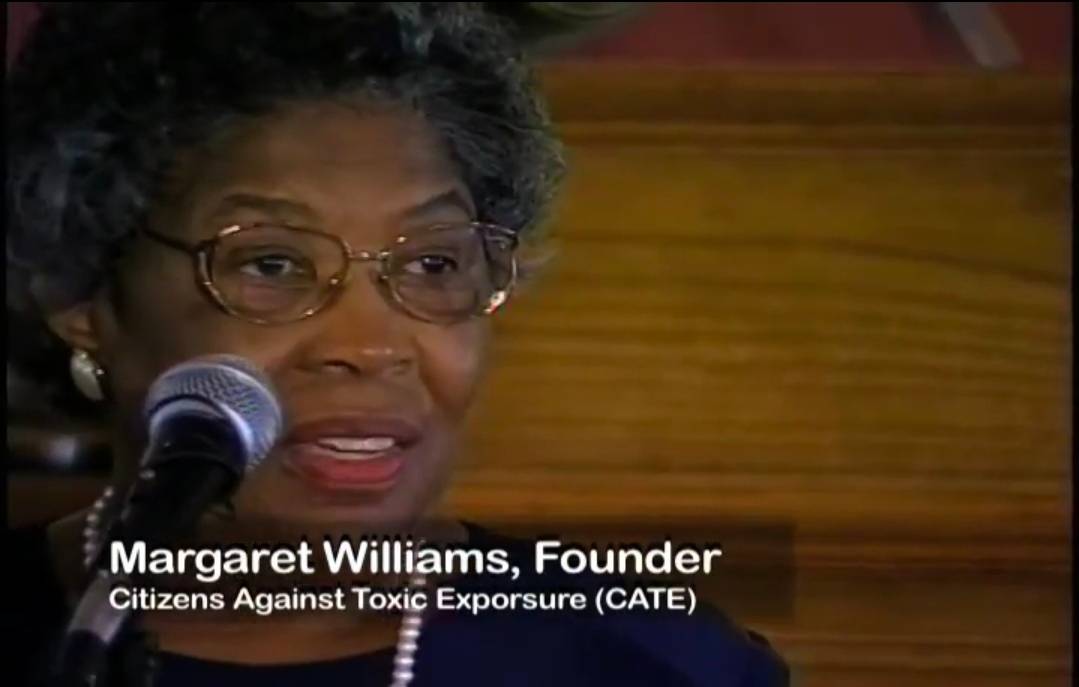
Photo Credit: Southern Voices for Change YouTube
In 1996, Lois Gibbs, the leader of the fight for relocation from Love Canal, the first Superfund Site, came to speak and apply pressure for Escambia Wood to be classified a Superfund. A couple of months later, the EPA agreed to spend $25.5 million to relocate residents in neighborhoods bordering the site. The relocation included 158 homes and 200 apartment units.
At the time, it was the third-largest environmental relocation in U.S. history. Only Love Canal, NY and Times Beach, MO were larger.
EPA officials later acknowledged it was a mistake to dig up the soil and leave it on site for years. Soil cleanup was completed in 2010. The EPA and the Florida Department of Environmental Protection led the work with input from local government and residents.
About 70 acres of the site are now considered cleaned up and ready for reuse. Groundwater is monitored and treated to keep contamination from spreading. The EPA checks the site every five years to make sure everything is still contained. Parts of the site have a cap with 6 feet of clean fill. Building is allowed, but excavation below 4 feet is restricted.
Local leaders have planned the site for industrial and commercial use since 2000. The area is zoned for industrial and commercial development. Utilities are in place. The site is near a railroad, 1.4 miles from I-110, within five miles of the Port of Pensacola, the airport, and I-10.
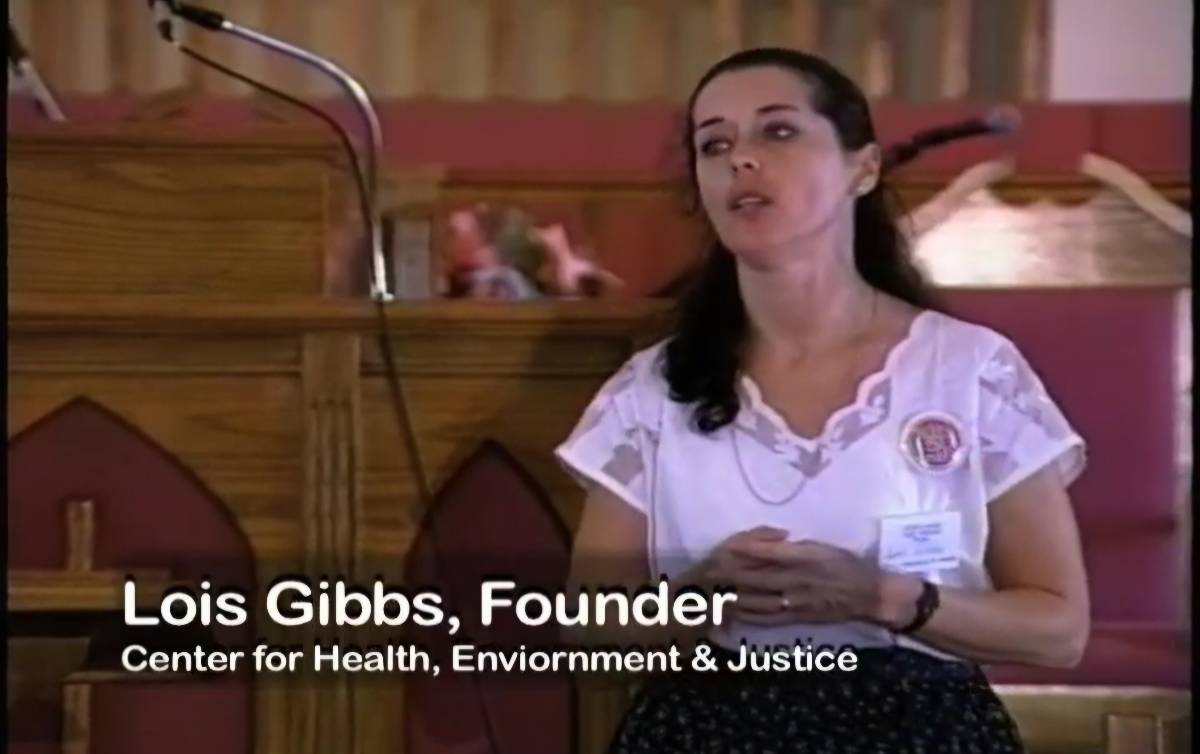
Photo Credit: Southern Voices for Change YouTube
About 60 acres outside the capped area are ready for commercial or industrial use with no residential component. Roughly 16 acres are privately owned and tax-delinquent. The goal is to turn a former contaminated site into jobs and business growth for Escambia County.
To add to any information in this report or to share a tip, please contact me at pepper.w@lead4earth.org
0
5

Comments