(FREMONT, CA.) – Fremont’s Charter Advisory Committee continues to review the different things the committee could recommend to change if Fremont becomes a charter city during their meeting on Apr. 13.
The main topic city staff delves into during this meeting is compensation for the mayor and city council members.
Before city staff commences with this new information, however, Committee member Dharminder Dewan briefly answers the questions posed in this committee’s past meeting on Apr. 6, as he was absent from that meeting as well as the one on Mar. 30.
These questions were intended to spark discussion on which form of government committee members prefer, if they wish to change hiring and voting authority, and whether or not they are in favor of becoming a charter city.
Dewan sides with the majority in terms of preferred form of government, expressing his interest in a council-manager charter city with no changes to voting authority but potential changes to hiring authority.
Becoming a charter city, he reasons, would give the city more power to tailor their laws and practices to better suit the specific needs of its people.
“[It] gives more local control to the city in terms of what we can do, we can enhance our structure [... or] expedite stuff.”
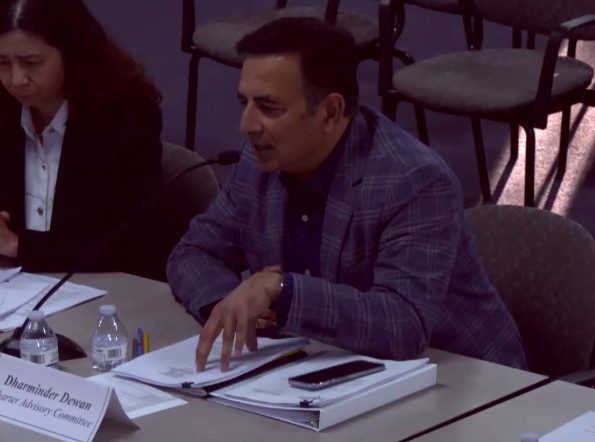
Photo Credit: https://fremontca.viebit.com/watch?hash=U5WVZnmq4jPsoAqF / Dharminder Dewan
After recording Dewan’s answer, city staff gives their presentation on Fremont’s current compensation structure and the laws of California that govern this structure.
Currently, Fremont’s mayor is compensated $60,949 annually, while council members are compensated $36,694 annually.
Both positions receive a monthly benefit of $455 that goes toward health and life insurance premiums. This benefit is not regulated by state law and can therefore be altered without changing Fremont’s current structure.
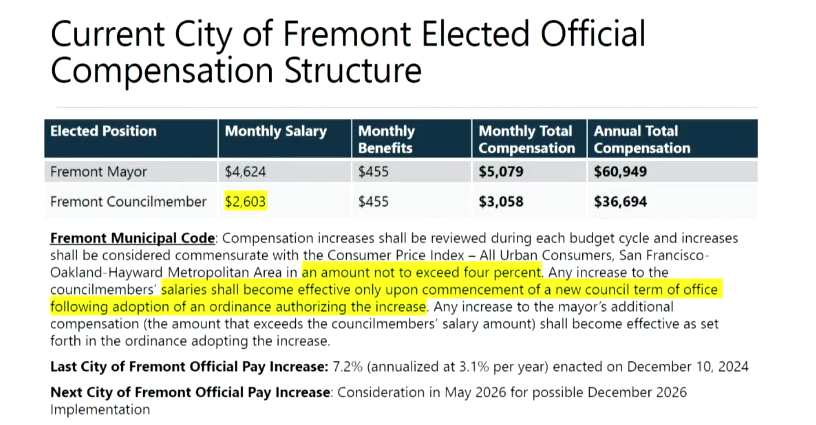
Photo Credit: https://fremontca.viebit.com/watch?hash=U5WVZnmq4jPsoAqF
These salaries follow the guidelines provided by California’s laws.
These state that council members’ salaries cannot be increased by an amount equal to 5% of each calendar year since their salary was last officially adjusted or an amount equal to inflation since Jan. 1, 2024. The latter is based on the California Consumer Price Index.
This presentation also covers the merits and downsides of having a full-time mayor as opposed to the current part-time mayor of Fremont.
“[The] advantages of compensating a mayor [... at] the rate of full time [...] include that full time pay may align better with community expectations, [it] may broaden the pool of potential candidates and [...] allow them to focus more of their time on the work of the elected body,” explains Assistant City Manager Christina Briggs.
She also explains some of the disadvantages, such as the increased pay causing potential candidates to hold office for the money rather than good governance, and limiting the types of candidates who wish to hold office while working an additional job.
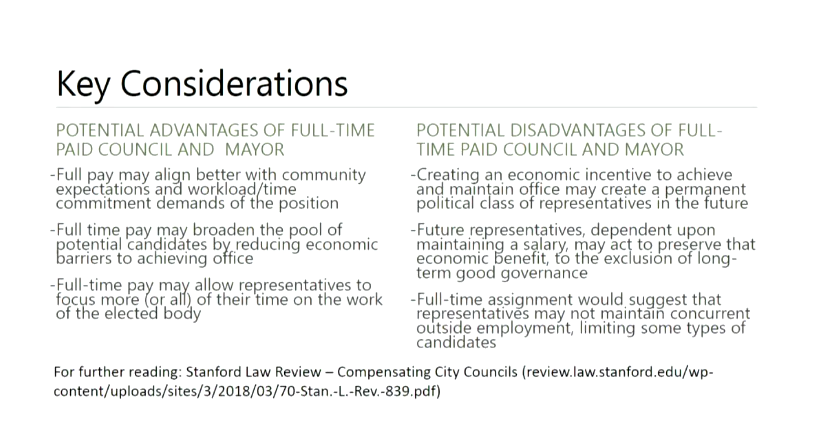
Photo Credit: https://fremontca.viebit.com/watch?hash=U5WVZnmq4jPsoAqF
Briggs goes on to share a survey conducted by city staff on charter cities with full-time and part-time mayors and how much they are compensated.
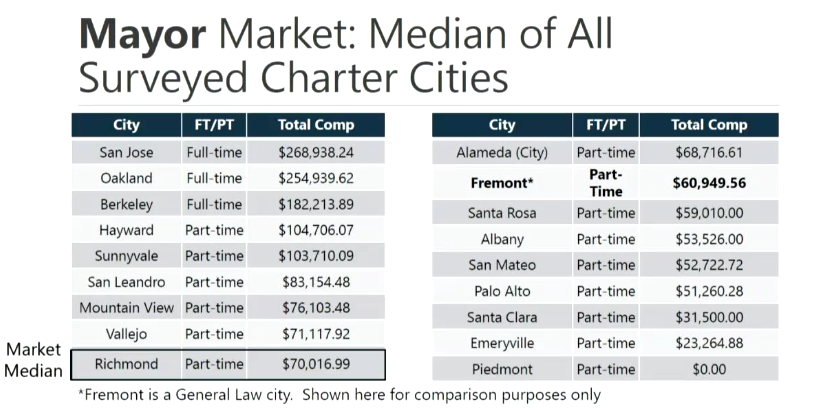
Photo Credit: https://fremontca.viebit.com/watch?hash=U5WVZnmq4jPsoAqF
Following the presentation, the committee is primarily focused on whether to make Fremont’s mayor full-time.
Some discussion reiterating previously mentioned advantages of a full-time mayor and confusion around how their pay would be calculated follows, but no major developments on this topic nor concise calculations regarding a full-time mayor’s salary arise.
If you have any questions, please email me at madison.v@lead4earth.org or comment below.
0
0

Comments