(TALLAHASSEE, FL.) -- With state legislatures finally completing the state budget, several new bills will be introduced. House Bill 1443 creates a statewide Parkinson’s registry, which can significantly contribute to research efforts.
The bill will go into effect on Jul. 1 and mandates physicians and healthcare professionals who diagnose Parkinson’s to report symptoms and performance metrics to a database.
The Parkinson’s Disease Registry will be used in the University of South Florida (USF) Health Parkinson’s Disease and Movement Disorders Center.
USF Health has earned millions in state funds directly for its work on Parkinson’s disease. USF was responsible for clinical trials of subcutaneous infusion, or a continuous under-the-skin medication, rather than pills.

Photo Credit: From USF Health
The new Parkinson’s Registry will remain exclusive to USF Health and never become public information.
House Bill 1445 was signed as a companion bill to 1443 and protects healthcare workers and patients. The bill explicitly ensures the registry is exempt from becoming public. Sunshine Laws demand that all information generated by a state institution be subject to public record, and would have otherwise allowed HIPAA-protected medical information to be released.
Together, the bills will allow complete and safe documenting for Parkinson’s across the state to help improve research efforts.
According to the University of Florida, Florida has the highest concentration of Parkinson’s patients across America, with just under 80,000 cases.
The registry will help researchers identify patterns and hope to create preventative measures.
Other Florida schools, such as Florida International University (FIU) and Florida State University (FSU), have also made influential discoveries in disease research in recent years.
FIU researchers discovered a protein called DRP1 is linked to Alzheimer's. DRP1 is a protein tasked with dividing mitochondria in the cell. In 2024, FIU researchers discovered the protein can become overactive and, in turn, destroy the mitochondria. Without energy provided by mitochondria, brain cells can become inflamed and experience cell death.
FIU later patented CTS2444-32, an experimental chemical compound with hopes of preventing DRP1 from becoming overactive. FIU made their research public in March and is hoping to begin clinical trials in the next year.
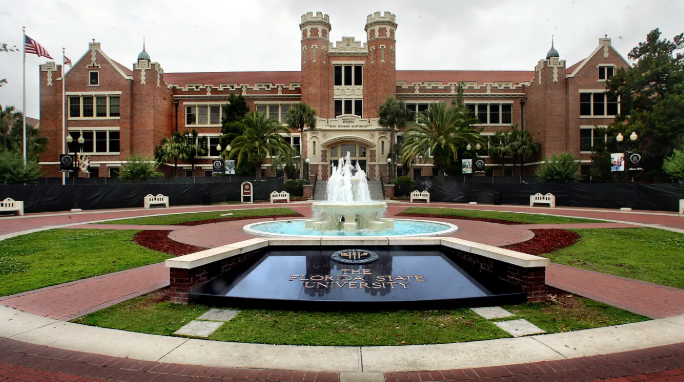
Photo Credit: From Florida State University
FSU has contributed to research outside of curing the disease. FSU researchers have looked for predecessors to Parkinson's and found loneliness can increase a person’s chances of Parkinson’s by 37%. Specifically, researchers found that prolonged feelings of loneliness can cause inflammation throughout the body, particularly in the brain, weakening the body’s immune response to the disease.
Research has also shown that loneliness can cause the body to remain in a constant state of stress, further increasing a person's chances of contracting a brain disease.
FSU’s Motor Speech Lab has also been involved, building an ultrasound device in hopes of helping to slow the vocal degradation associated with Parkinson’s.
Dysarthria describes the loss of vocal control that affects most Parkinson’s patients. The device can be placed under a patient's chin and allows both the speaker and listeners to see what is deficient in their speaking habits. The goal is for patients to identify and retrain their tongue, mouth, and jaw to improve speech.
If you have any questions or concerns please comment, and email me at jason.f@lead4earth.org.
0
0

Comments