(OPGOV GLOBAL) – The U.S. Food and Drug Administration said July 20 that a laboratory test initially indicating the presence of Cyclospora in a sample of shredded iceberg lettuce from Taylor Farms de Mexico was determined to be a false positive, but officials said the corrected result does not change the agency's ongoing multistate outbreak investigation or its recommendation that consumers avoid recalled products.
The FDA issued the clarification after laboratory experts re-reviewed a lettuce sample collected during enhanced import screening at the Southern Border.
According to the agency, the original laboratory finding did not represent true amplification of Cyclospora cayetanensis and should instead be considered a false positive. FDA officials said Taylor Farms was notified of the corrected result on July 19.
In an official company statement, Taylor Fresh Foods noted that federal officials informed them of the error, emphasizing that, "at this moment, FDA has not identified a single positive product test result for Cyclospora."
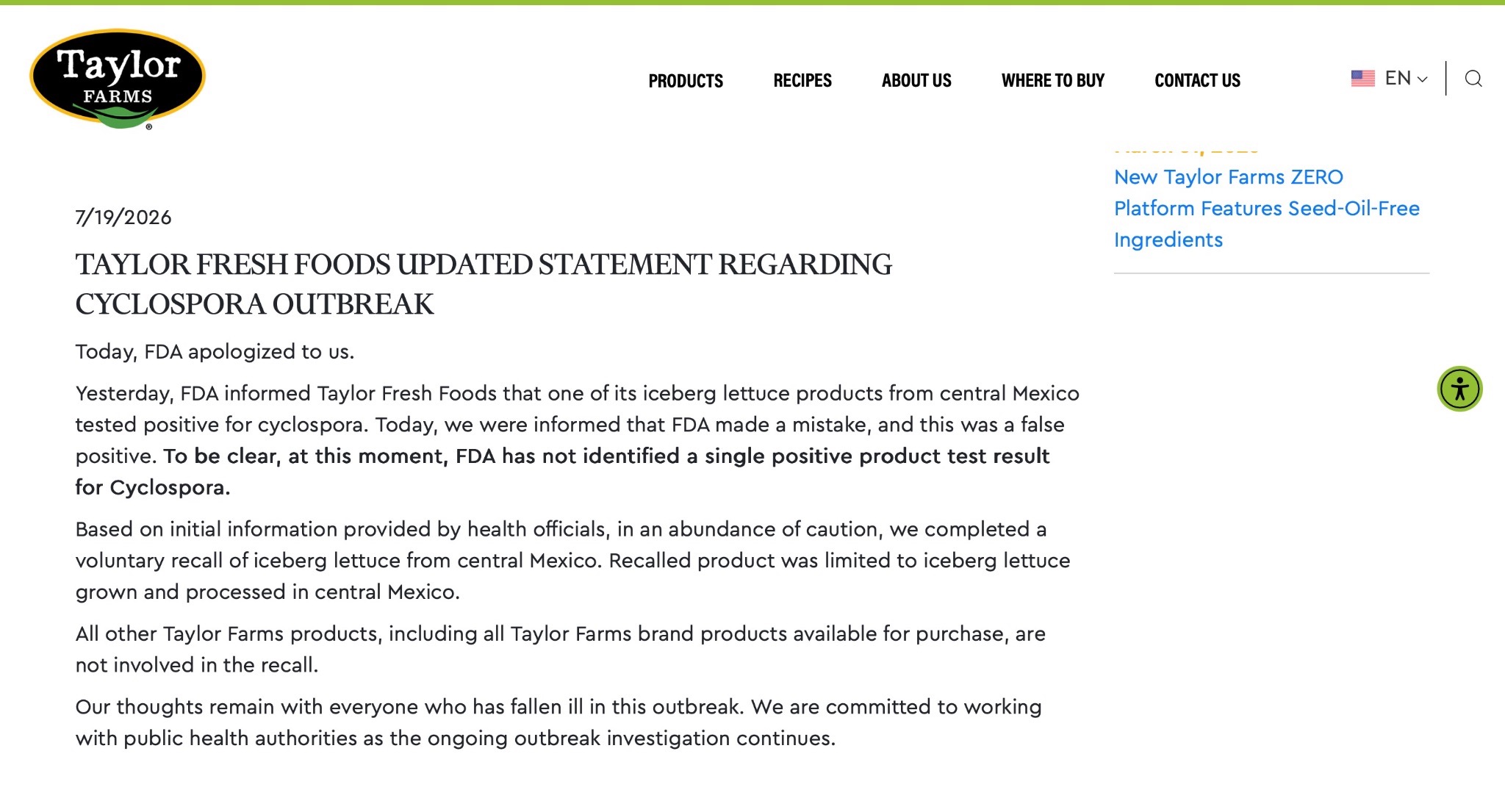
Taylor Fresh Foods released an official statement updating the public on the false-positive result while reiterating their commitment to cooperating with health authorities.
Photo Credit: Taylor Farms
The company added that it currently has experts on site in central Mexico investigating potential sources of contamination while continuing to cooperate fully with public health authorities.
Despite the revised laboratory finding, the agency said its traceback investigation and epidemiological evidence continue to identify shredded iceberg lettuce produced at Taylor Farms facilities in central Mexico as the likely source of the outbreak.
In a statement posted on the FDA's official X account, the agency said the false-positive laboratory result "does not change the basis for FDA's ongoing outbreak investigation or the overwhelming epidemiological data supporting the current voluntary recall by Taylor Farms."
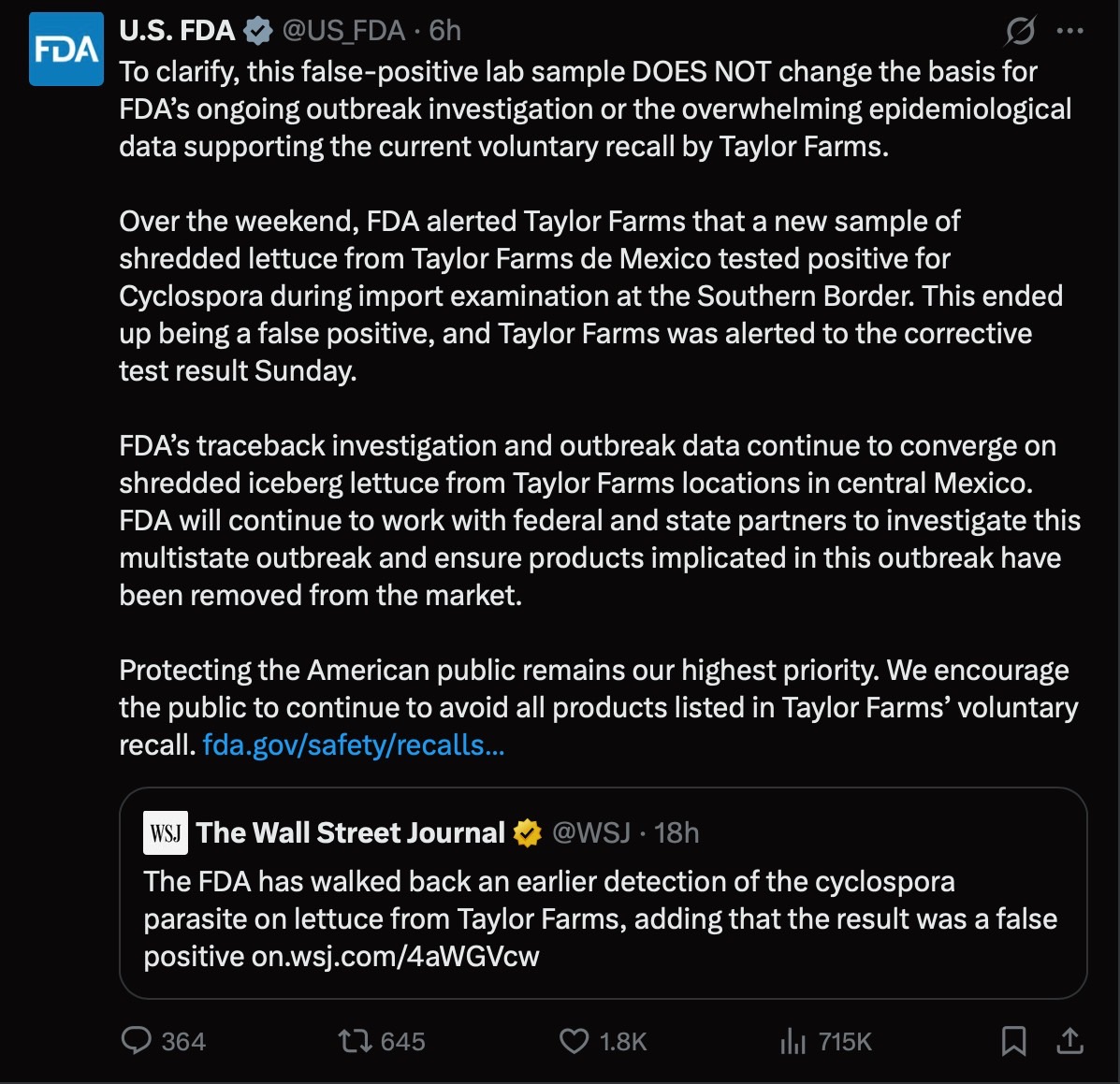
The U.S. Food and Drug Administration clarified on social media that a false-positive laboratory result does not alter the epidemiological evidence driving the ongoing recall.
Photo Credit: U.S. Food and Drug Administration/@US_FDA
The FDA said investigators continue working with federal and state partners to identify the source of contamination and ensure products linked to the outbreak have been removed from the marketplace.
Officials also confirmed that, as of July 19, there are no confirmed positive product samples for Cyclospora, although additional product testing remains ongoing.
Taylor Farms de Mexico announced a voluntary recall July 17 after the FDA's traceback investigation identified the company as the common supplier of shredded iceberg lettuce served at Taco Bell restaurants associated with illnesses in five states.
The recall includes Marketside-brand iceberg lettuce and salad products sold at Walmart stores, as well as additional shredded lettuce distributed to restaurants and other foodservice customers.
The FDA continues to advise consumers not to eat recalled lettuce products and recommends retailers and restaurants stop selling or serving affected products. Consumers who purchased recalled items should dispose of them or return them to the place of purchase for a refund. The agency also recommends thoroughly cleaning and sanitizing surfaces or containers that may have come into contact with the recalled lettuce to reduce the risk of cross-contamination.
According to the FDA's outbreak investigation report, the investigation includes illnesses reported in Indiana, Kentucky, Michigan, Ohio and West Virginia. Federal investigators said 1,644 confirmed illnesses linked to Taco Bell exposures had been identified, resulting in 94 hospitalizations. No deaths have been reported. Officials cautioned that additional products, retailers, or distribution channels could be identified as the investigation continues.
Public health agencies across the country regularly track infectious disease threats and issue advisories to protect communities. In a separate public health alert, health officials expanded contact tracing following infectious disease reports, as detailed in the “Oregon Health Authority Identifies 3 New Locations With Potential Measles Exposure,” reported by OpGov.news journalist Rory Holbrook, coverage on health monitoring efforts.
Cyclospora cayetanensis is a microscopic parasite that causes cyclosporiasis, an intestinal illness spread through contaminated food or water. Symptoms often include prolonged diarrhea, loss of appetite, nausea, stomach cramps, bloating, fatigue, and weight loss. They begin about one week after exposure and may persist for several weeks if left untreated.
Because the parasite is difficult to detect in food products, public health investigators frequently rely on patient interviews, epidemiological trends, and supply-chain traceback information in addition to laboratory testing.
As federal and state agencies coordinate on food safety and public health responses, access to essential healthcare services remains a critical focus for community well-being. Changes in state and federal health funding continue to shape patient care access, as discussed in “Medicaid Coverage Is Coming Back to Planned Parenthood - But Not Everywhere,” written by OpGov.news journalist Teri Tracy, which addresses shifting healthcare policy and provider availability.
Taylor Farms stated that it completed the recall "out of an abundance of caution" after being notified by federal health officials of the potential link to the outbreak. The company re-emphasized in its outbreak statement update that no Taylor Farms-branded retail products are included in the recall and that it has stopped sourcing iceberg lettuce grown in central Mexico for the remainder of the growing season.
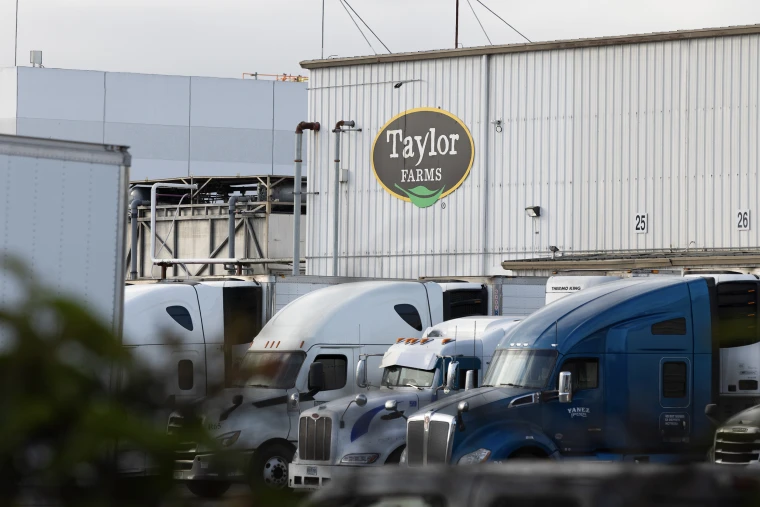
Refrigerated semi-trucks line up at a Taylor Farms facility as the company halts iceberg lettuce sourcing from central Mexico for the remainder of the season.
Photo Credit: NBC News
Although the FDA acknowledged the laboratory error, the agency emphasized that the corrected test result does not alter its scientific assessment of the outbreak.
Officials said the recall remains in effect because epidemiological evidence and traceback data continue to support the investigation's findings, and consumers should continue following recall guidance until the investigation is complete.
Thumbnail Photo Credit: TMZ
1
0

Comments