(PENSACOLA, F.L.) --- Escambia County Commissioner Steve Stroberger’s defense of the full Constitution in light of Flock license plate readers and property rights preceded the agenda items at the August 7 meeting.
Commissioner Steve Stroberger told the public and the board that he wrote the remarks after hearing public comments from Margaret Hostetter and Jacob Rockwell.
The commissioner said the oath to support the Constitution didn’t come with exceptions and “didn’t say defend the amendments you agree with and ignore the ones that are inconvenient.”
Stroberger said he supports the First Amendment “whether I agree with someone or not,” adding that “even hate speech is protected.” The Supreme Court affirmed in Matal v. Tam (in 2017) that the First Amendment protects speech some find offensive.
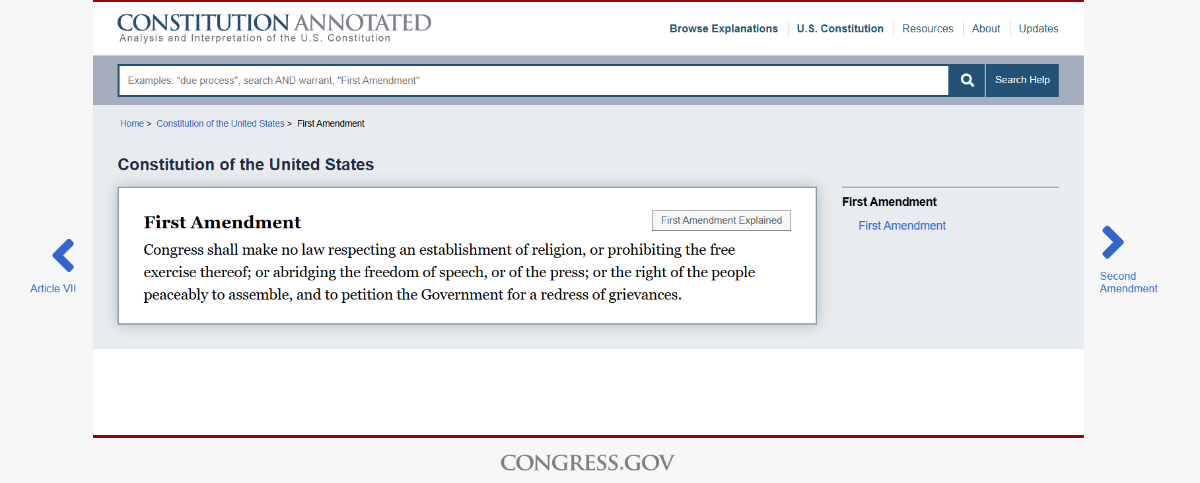
(Photo: Constitution Annotated website)
He said he also supports the Second Amendment “whether someone owns a firearm or chooses not to own one,” and the Fourth Amendment “because every American has the right to be secure against unreasonable government intrusion.”
The Fourth Amendment issue Stroberger raised centers on how Flock cameras work. Flock cameras record every vehicle that passes, capturing the license plate, vehicle details, location, and time.
Legal scholars and civil liberties groups argue that creates a Fourth Amendment problem. In Carpenter v. United States, the Supreme Court ruled that police need a warrant to access long-term historical location data from cell phone providers because it reveals “the whole of a person’s physical movements.”
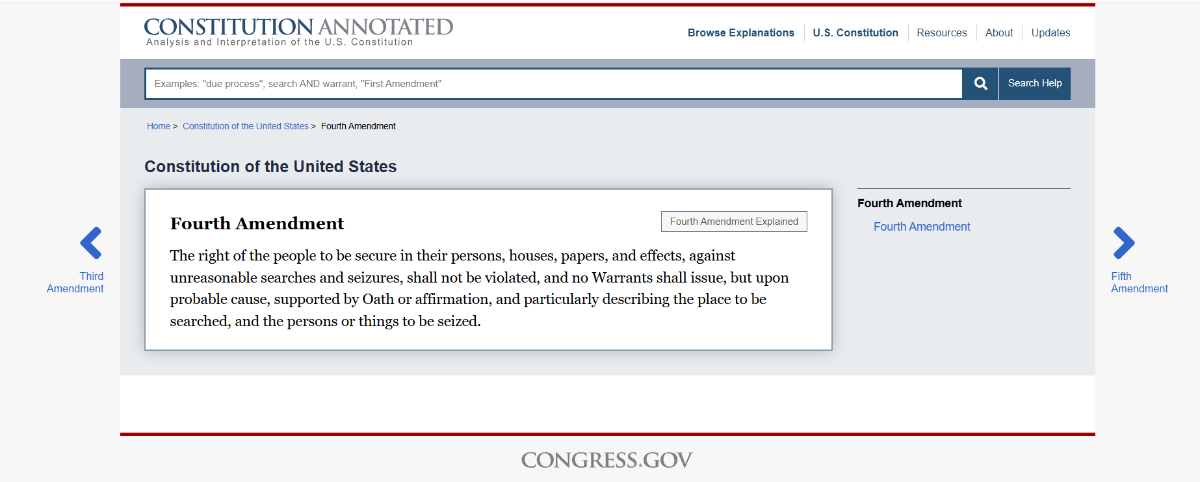
(Photo: Constitution Annotated website)
The American Civil Liberties Union has applied that same logic to license plate readers, arguing that a network of cameras can build a detailed map of where a person goes to work, worship, or protest, without a warrant.
That legal theory is being tested in federal court, in United States v. Chatrie. A district court found that a geofence warrant was a Fourth Amendment search. The Fourth Circuit reviewed the case in 2023 and sent it back to the district court to determine whether police acted in good faith when using the data.
While Chatrie involved Google location data and not Flock cameras, the underlying question is the same: when does passive collection of location history become a search that requires a warrant?
Stroberger pointed to that principle without naming the case. “The American standard is that government should have a reason before it intrudes on your privacy, not that citizens must prove they deserve privacy,” he said. He warned that “a government powerful enough to monitor everyone is powerful enough to abuse everyone.”
Stroberger said the Constitution “is not a buffet where we pick the rights we like and ignore the rest.”
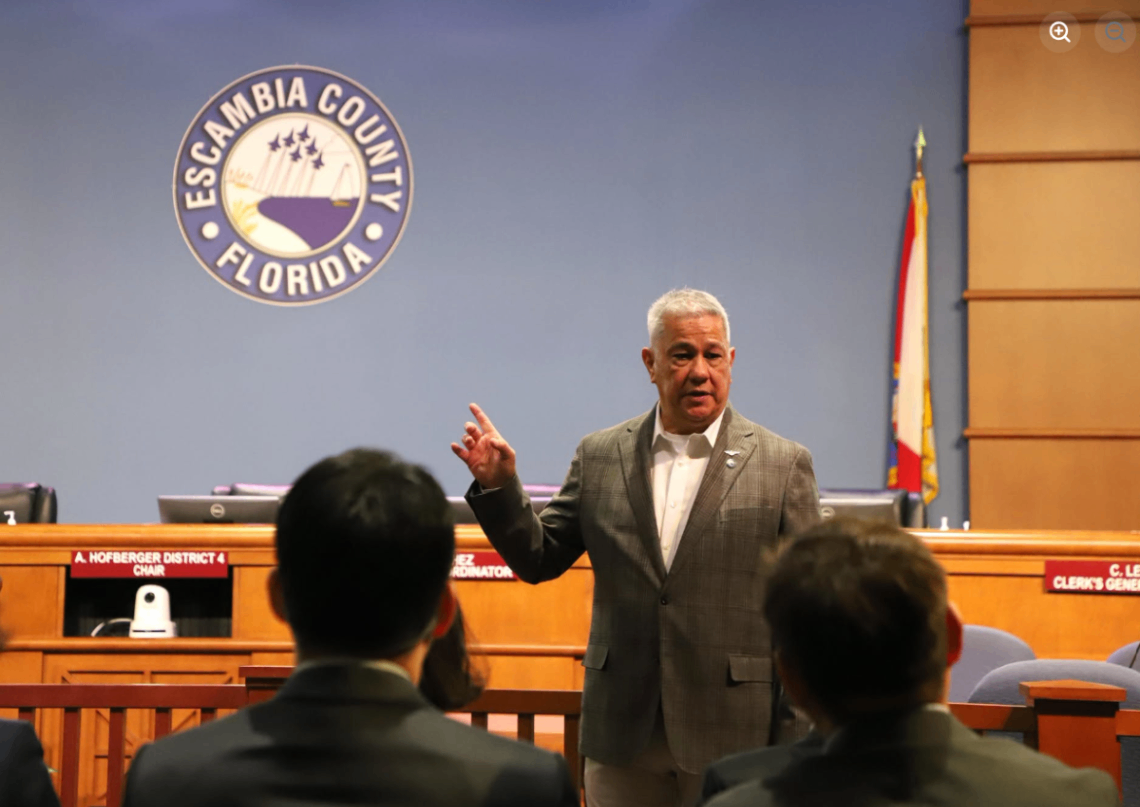
(Photo: Escambia County Commissioner Steve Facebook page)
Stroberger told the board and the public that he submitted the piece he read, along with several other opinion articles, to the Pensacola News Journal. He said they were never published.
That’s where OpGov.News differs. At no cost, sustaining members can submit their own opinion pieces for publication, join community conversations, and be included in weekly editor meetings where coverage is planned. For officials and residents whose submissions don’t get picked up elsewhere, it’s a way to ensure the argument gets heard.
To add to or correct any information in this report, please get in touch with me at pepper.w@lead4earth.org
Read OpGov.News’ full meeting summary and live coverage here.
1
0

Comments