(OPGOV.NEWS GLOBAL) --- A United States Supreme Court ruling on phone location warrants renews scrutiny of Flock Safety’s license plate readers as officers in multiple states face criminal charges for misusing the system.
More than 5,000 law enforcement agencies across the United States use Flock Safety’s automated license plate readers, according to the company. Flock cameras capture license plates, vehicle make, model, bumper stickers, dents and color, then store the data in a searchable network shared across city, county, state, and federal departments. The company said its system is used in 49 states and logs more than 2 billion vehicle detections per month as of June 2026.
In Chatrie v. United States, the United States Supreme Court ruled 6–3 on June 29, 2026, that police conducted a Fourth Amendment search when they acquired Okello Chatrie’s location data from Google. The Supreme Court said individuals have a reasonable expectation of privacy in cellphone location information.
The case began with a 2019 armed credit union robbery in Midlothian, Virginia, where the suspect fled with nearly $200,000. Police served a multistep geofence warrant to Google, requiring anonymized location data for all device accounts near the bank during the robbery.
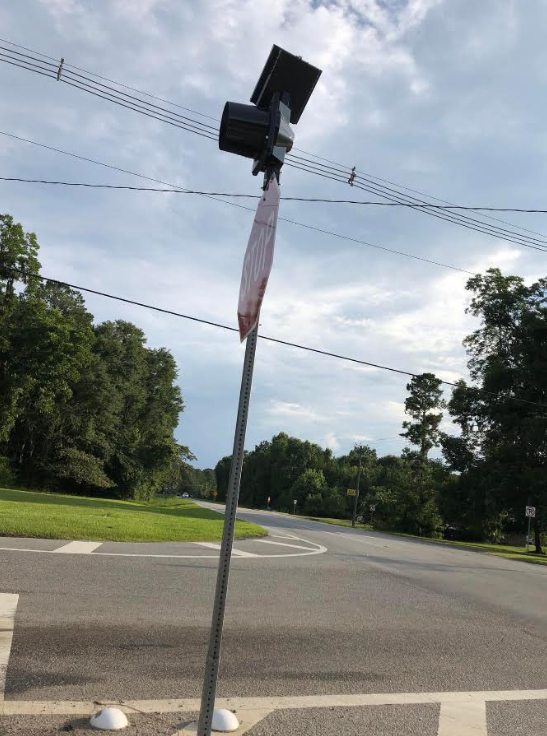
(Photo: Buffalo, New York Flock Camera on top of a stop sign taken by Victor Sullivan)
The data eventually led officers to identify Okello Chatrie as a suspect. Chatrie was convicted after his motion to suppress the evidence was denied.
The Court vacated the judgment and remanded the case to the Fourth Circuit. It did not rule on whether geofence warrants are entirely unconstitutional or if the specific warrant met probable cause standards. The lower court must now evaluate reasonableness.
While Chatrie involves Google location history, not license plate readers, attorneys with the American Civil Liberties Union and the Electronic Frontier Foundation said the ruling could influence how lower courts view other forms of digital tracking that map a person’s movements over time, including long-term Flock databases.
The legal questions come as agencies face discipline and criminal charges for misusing Flock data.
An Ogeechee investigator was arrested and charged with allegedly accessing the license plate reader system more than 60 times in less than a month.
The Habersham County Sheriff's Office in North Georgia announced that Deputy Christian Brewer was fired for misuse of license plate data.
The Sumter County, Florida, Sheriff’s Office suspended its Flock cameras after Detective Brandy Almany was arrested and terminated for “improper and unlawful” use of agency database systems to monitor an individual.
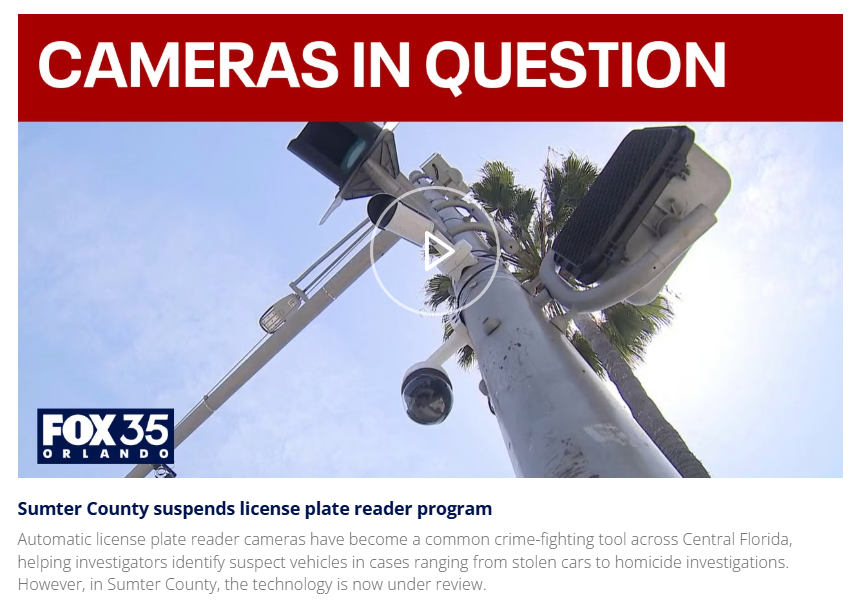
(Photo Credit: FOX 35 Orlando)
It remains unclear how lower courts will apply the Chatrie standard to Flock, where officers in multiple states have already been charged with pulling license plate histories for personal reasons.
Flock Safety’s website states each agency sets its own data retention policy, with a 30-day default. The company said every search is logged with the user’s name, agency, case number, and reason code. Agencies can run automated audits and receive alerts for searches without case numbers.
More than 70 percent of Flock customers share data with at least one other agency, according to the company. The network allows an officer in California to search a plate captured on a camera in Florida seconds later. There is no federal law regulating license plate readers. State laws vary. New Hampshire bans the devices except for tolls and bridges. California requires agencies to post usage policies.
The American Civil Liberties Union and the Electronic Frontier Foundation agree that the combination of mass data collection, broad sharing, and documented misuse raises transparency concerns. The Chatrie case confirms that courts are tightening limits on how police access location data held by private companies.
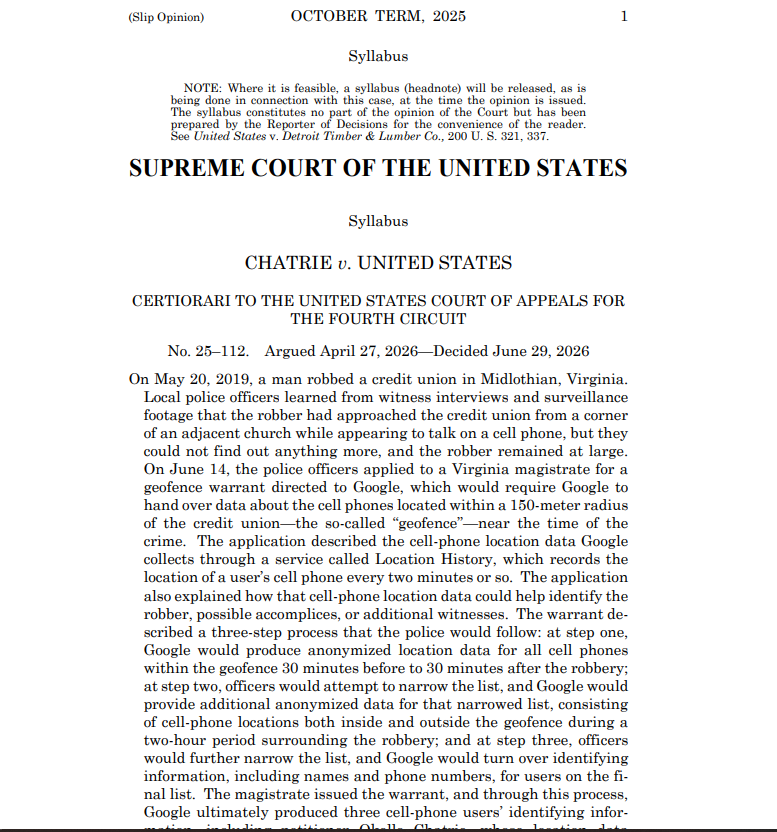
(Photo credit: U.S. Supreme Court document)
Chatrie v. United States will return to the Fourth Circuit to decide if the geofence warrant used to identify Chatrie was reasonable under the Fourth Amendment. The Supreme Court heard oral arguments on April 27, 2026.
To add to or correct any information in this report, please get in touch with me at pepper.w@lead4earth.org
0
2

Comments