(SAN FRANCISCO, CA.)- In the San Francisco Health Commission meeting on Mar. 3, the new budget proposal that includes a $17 million reduction in Community Based Organizations (CBOs) was affirmed.
Director of the Department of Public Health Daniel Tsai spoke on this matter and likened it to the “incredibly damaging federal and state cuts that will lead to several hundred million dollars worth of cuts in Medicaid”. From this, it is estimated that 25-50,000 San Francisco residents will lose health care coverage and the state will also “no longer cover individuals with unsatisfactory immigration statuses”.
Set to go into effect starting July of 2026, the large cut in San Francisco’s DPH is proof that the city is not going to take the approach that is spreading across the country- forcing the DPH to fully absorb the cuts independently. According to Director Tsai, it is provided for within the proposed budget that the department will “still grow in $300 million in the next 2 years”, supported by the city of San Francisco.
Director Tsai implored that this budget season has been extremely difficult and that the DPH is doing “everything possible to not touch direct patient and client-facing services”. The vast number of public comments that have been made are also highly valued by the DPH in the decision-making process.
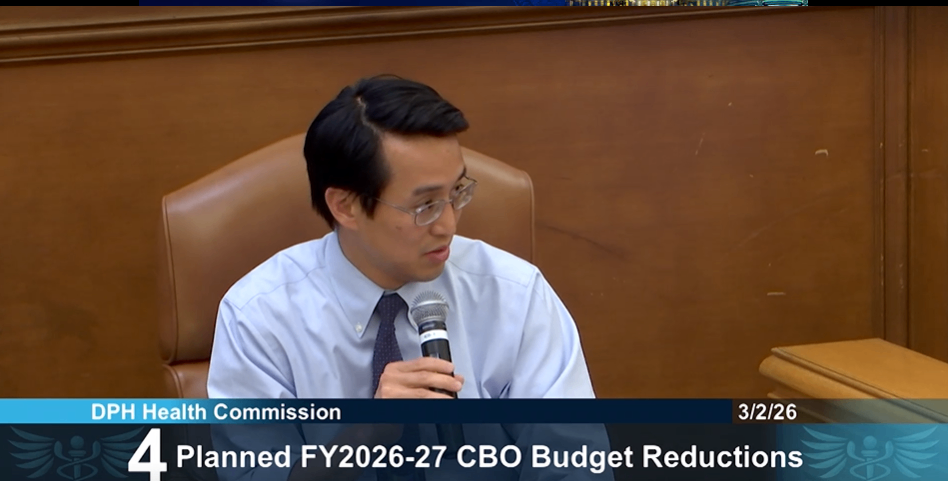
Photo Credit: YouTube
Many different concerns were brought up during the public comment portion, but uneasiness surrounding organizations that provided for HIV/AIDS care was commonly expressed.
The San Francisco Aids Foundation, Lyon-Martin Community Health Services, and SF Community Health Center are prominent and vital resources for HIV/AIDS prevention and care alongside LGBTQA+ and mental health support.
Community member Tab Buckner emphasized the importance of these services, “both care-wise and education-wise”, stating that “there’s still many people hanging by their fingernails”. Buckner cited public works and the police department as areas that receive significant funding, and questioned the city’s commitment to public safety if residents in need of “culturally relevant” HIV/AIDS support are not attended to.
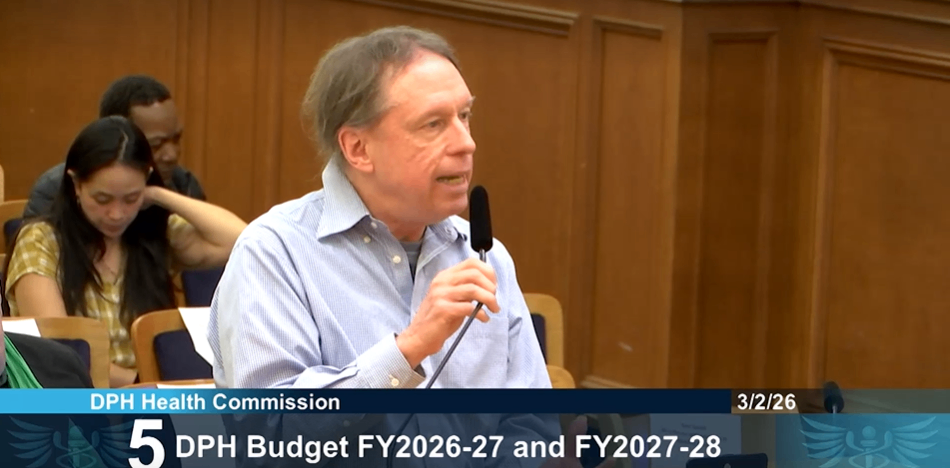
Photo Credit: YouTube
Mental health was also expressed as a pressing issue.
Board President of the Mental Health Association, Tenderloin People’s Congress, and SFPD Crisis Intervention Team Mental Health Working group member David Elliott Lewis discussed the city’s Memorandum of Understanding (MOU) to labor in terms of funding and emphasized that it is not an obligation to provide them with “hundreds of millions of dollars” if the consequences to residents are too great. He maintains that these are “life-saving programs” that deserve some of that funding.
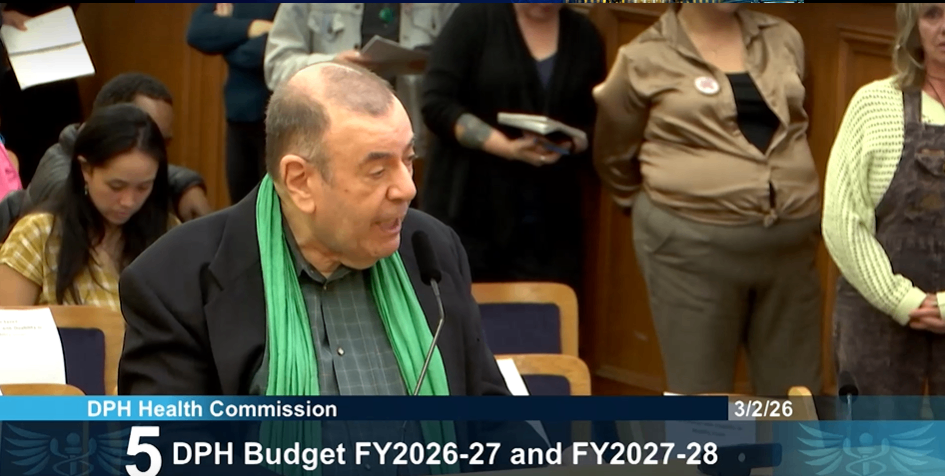
Photo Credit: YouTube
With this, it was mentioned in several public comments how many of these mental health organizations, alongside NAMI San Francisco and Sunday Streets, keep people housed and serve as vital eviction prevention tactics throughout the city, which is a crucial aspect of public health.
Other vulnerable populations of San Francisco, such as Black and Brown communities, face disproportionate and harmful impacts as well.
Trey Turner stated that these communities “shoulder a tremendous burden of negative health outcomes” and urged the city to “stop forcing them into positions of instability”. Demographics and health maps | SF.gov shows how the areas of the city that have the greatest proportion of Black residents also have the highest poverty rates, and likewise the lowest life expectancies. CBO’s do an immense amount of work to support these areas, and thus a budget cut would ultimately render some of these sectors more defenseless to significant public health issues.
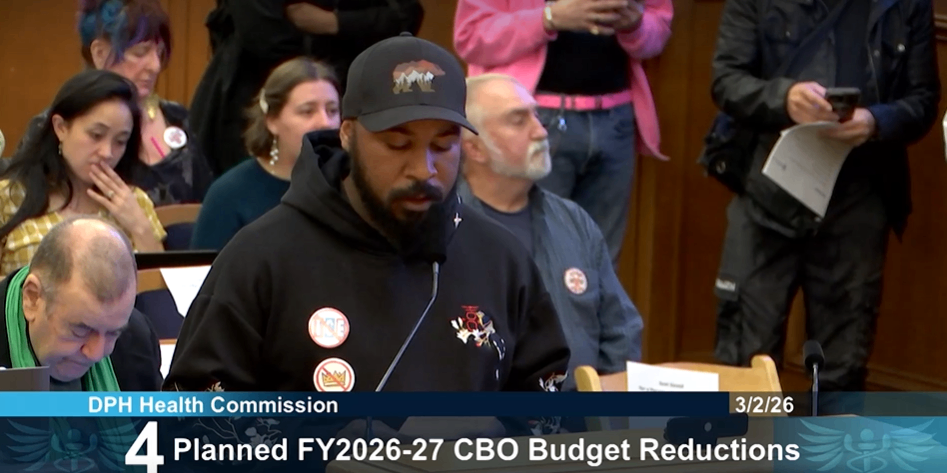
Photo Credit: YouTube
July will truly tell how these budget cuts will affect public health resources within the city.
Want more San Francisco news? Check out these articles:
Planning Commission Meeting Seeks Ambitious Environmental Goals | Open Governance
Budget Cuts Threaten SF Environment Department | Open Governance
Submit comments and story ideas to Enya Niebergall at enya.n@lead4earth.org.
0
0

Comments