(SAN FRANCISCO, CA.) - A major focus of the Feb. 26 Planning Commission meeting was a presentation of the Yosemite Slough Neighborhood Adaptation Strategy.
Presented by Senior Planner Danielle Ngo and Planner Sarah Richardson, this report represented the work of a 2-year planning effort that held the primary goal of increasing San Francisco’s long-term resilience to sea level rise. $649,000 was provided by the Governor's Office of Land Use and Climate Innovation in terms of grant money for the project
Because San Francisco is projected to sustain a sea level rise of 0.8 feet by 2050 and 6 feet by 2100, the importance of strategizing against these issues is clear. The Yosemite Slough Neighborhood Adaptation Strategy specifically planned around a sea level rise of 3.1 feet.
While San Francisco may not feel the negative impacts of sea level rise quite yet, communities up north are already having to grapple with the effects of this problem. Housing, streets, and shorelines are all being hit hard.
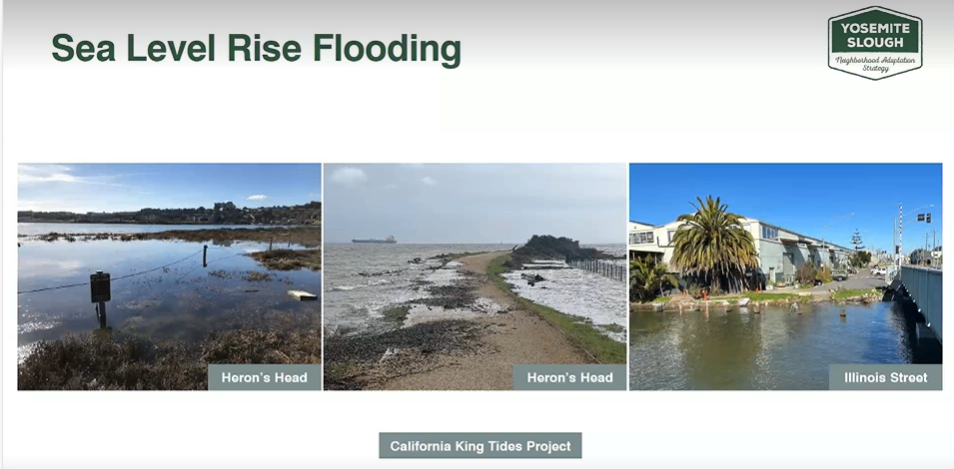
Photo Credit: YouTube
The shoreline plan for San Francisco will begin to be implemented later this year and focuses chiefly on the Yosemite Slough wetland in Bayview-Hunters Point. This area is of concern because it is low lying and stands on porous bay fill. Eventually the area could be facing “permanent inundation of streets as well as temporary flooding in buildings, etc.”
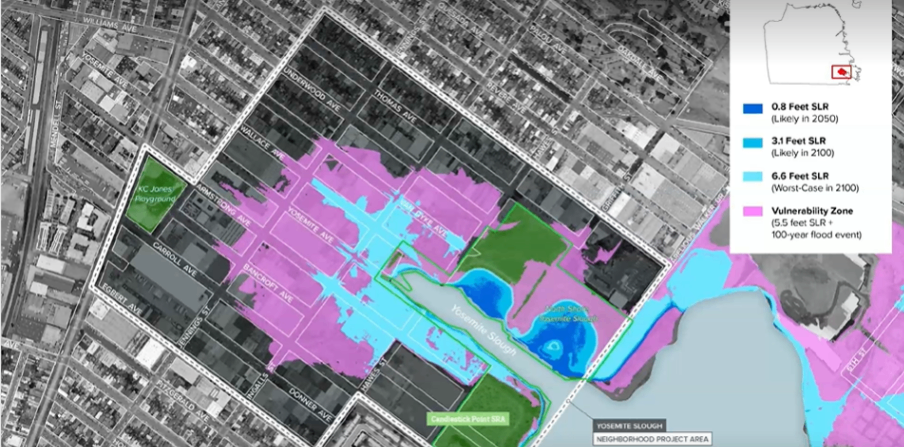
Photo Credit: YouTube
“Adapting infrastructure, collaborating with existing remediation and restoration efforts, building community capacity, maintaining resilient transportation infrastructure, and improving access to open space” were the 5 main outlined goals of the report. More specifically, adaptations such as seawalls and living seawalls (along the northwest and southern shorelines), ecotone levees, ecotone slope enhancement, and wetlands restoration were proposed.
The community engagement aspect for making this plan a reality was discussed as well. So far, they have been utilizing the City’s Environmental Justice Framework to guide outreach, namely community ambassadors meetings, Yosemite Slough walking tours, public workshops, and Technical Advisory Commission meetings.
With all of this being said, the planners are taking into account community input and critique. Priorities of community members include “improving environmental and public health”, “protecting against both stormwater and coastal flooding”, and “ease of maintenance and adaptability over time”. On the other hand, certain questions arose; namely, will the changes necessary for implementation lead to gentrification or “improve the quality of life and doing business in that area”. Also, should planning be centered around the currently residing businesses or on those of the future (for instance, “high tech manufacturing”).
Linda Fedak Richardson, longtime resident of Bayview-Hunters Point, commented on the Adaptation Strategy by “commending their excellent work” and also “encouraging all of the commissioners during their tenure’ to prioritize the shoreline plan in redeveloping the southeast section of her community.
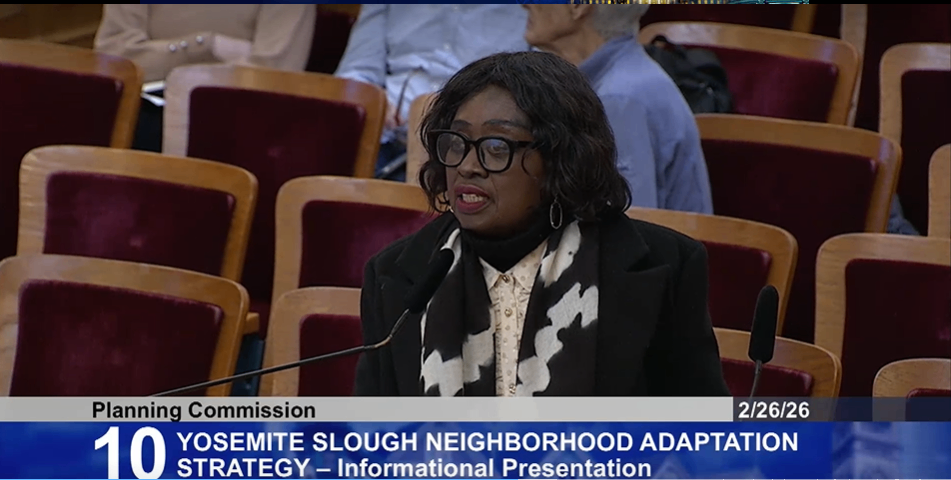
Photo Credit: YouTube
Another member of the Bayview-Hunters Point community, Judith Keenan, gave the perspective of working as a photographer in the area. She stated that “Yosemite Slough had been a dumping ground for a long time” and that the residents “don’t want to wait a year to get to the top of the list” in terms of being a primary concern in the city.
Overall, the Adaptation Strategy seems to lay the groundwork for an extremely necessary plan that will “estimate current and projected hazards” and “distinguish priorities for investments”. The questions that remain are only how the strategies will be implemented in ways that adhere to justice for the affected communities while simultaneously providing for their environmental safety and sustainability.
For the full Yosemite Slough Neighborhood Adaptation Strategy: Yosemite Slough Neighborhood Adaptation Strategy | SF Planning
Want more San Francisco news? Check out these articles:
Budget Cuts Threaten SF Environment Department | Open Governance
Grievances Bubble Over | Open Governance
Submit comments and story ideas to Enya Niebergall at enya.n@lead4earth.org
0
0

Comments